ABB
In Stock OK
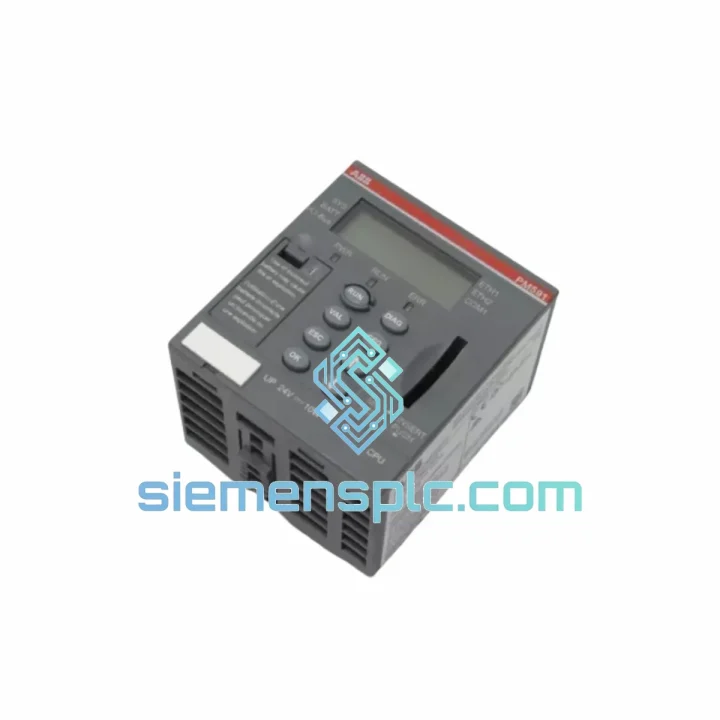
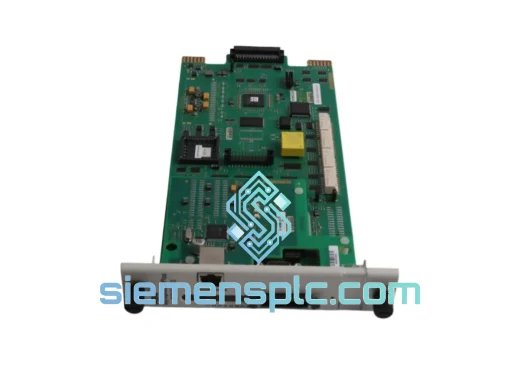
ABB 1SAP150100R0277 PLC CPU Module – AC500 PM571-ETH
Request verified availability, condition, replacement risk review, packing options and courier lead time for PM571-ETH.
BrandABB
Part NumberPM571-ETH
ConditionAvailability Check
Lead TimeRFQ Confirmation
DocumentsDatasheet / photos by RFQ
ShippingExport packing available
Auto-filled RFQ
PM571-ETH
Click Request Quote and the part number is inserted into the inquiry form automatically.
- Reply by email: [email protected]
- WhatsApp / Tel: +86 18359268345
- Mon-Sat 9:00-18:00 GMT+8
Procurement Data
Key Product Information
Core fields for model confirmation and RFQ routing. Detailed product narrative remains below.
- Brand
- ABB
- Primary Part Number
- PM571-ETH
- Product Type
- PLC CPU Module
- Series / Family
- AC500
- Country of Origin
- SE
- Catalog Category
- Communication
- Operating Temp.
- 0 °C to +60 °C
- Warranty
- 12 months from date of shipment
Model confirmed for inquiry
PM571-ETH
Send quantity, destination and urgency. The RFQ form keeps this part number attached.
Request Quote
Product Overview
ABB 1SAP150100R0277 PM571-ETH — Ethernet-Integrated CPU for AC500 Scalable PLC Systems
The ABB 1SAP150100R0277, commercially designated PM571-ETH, is a mid-range central processing unit within ABB’s AC500 scalable PLC platform. It occupies a well-defined position in the AC500 hierarchy: above the entry-level PM554 series and below the high-density PM591 tier, making it the default selection for standard networked machine control and process automation tasks that demand deterministic cycle execution combined with Ethernet-native connectivity.
In a control loop context, the PM571-ETH functions as the sole arbitration authority on its terminal base backplane. All I/O scan data from attached SM5xx modules is aggregated through the backplane bus at a fixed inter-module transfer rate, processed within the CPU’s task scheduler, and written back to output registers within a single deterministic cycle. The integrated 10/100 Mbit/s Ethernet port handles MODBUS TCP client/server transactions, FTP file transfers, and HTTP-based diagnostics concurrently with the PLC scan cycle — without degrading cycle time — because the communication stack executes in a lower-priority background task separated from the real-time control task by the CPU’s preemptive scheduler.
This architectural separation between the real-time control plane and the communication plane is the defining hardware advantage of the PM571-ETH over serial-only CPU variants. Engineers integrating this module into SCADA or MES architectures can poll process variables at 100 ms intervals over Modbus TCP while the PLC maintains a 1 ms cyclic task for time-critical interlocks — both operations coexist without mutual interference.
Real-time Stock & RFQ: [email protected] | WhatsApp: +86 18359268345
Technical Parameters
| Parameter | Value |
|---|---|
| Part Number | 1SAP150100R0277 |
| Commercial Designation | PM571-ETH |
| Platform | ABB AC500 Scalable PLC |
| Module Type | CPU / Central Processing Unit |
| Program Memory | 512 KB (non-volatile Flash) |
| Data Memory (RAM) | 512 KB SRAM |
| Retentive Memory | 32 KB battery-backed SRAM |
| Onboard Ethernet Ports | 1 × RJ45, 10/100 Mbit/s, auto-negotiation |
| Supported Protocols | MODBUS TCP (client/server), FTP, HTTP, SNTP |
| Fieldbus Expansion | PROFIBUS DP, CANopen, DeviceNet via CM modules |
| Programming Standard | IEC 61131-3 (LD, FBD, ST, IL, SFC) |
| Programming Software | ABB Automation Builder 2.x / PS501 Control Builder Plus |
| Supply Voltage | 24 V DC (supplied via AC500 terminal base backplane) |
| Power Consumption | ≤ 3.5 W (CPU only, excluding I/O modules) |
| Operating Temperature | 0 °C to +60 °C |
| Storage Temperature | –40 °C to +85 °C |
| Relative Humidity | 5 % to 95 %, non-condensing |
| Protection Rating | IP20 (IEC 60529) |
| Vibration Resistance | IEC 60068-2-6: 1 g, 10–150 Hz |
| Shock Resistance | IEC 60068-2-27: 15 g, 11 ms |
| EMC Immunity | IEC 61000-4-2/3/4/5/6/8 (Industrial Level) |
| Certifications | CE, UL, cUL, ATEX Zone 2 (II 3 G Ex nA IIC T4) |
| Dimensions (W × H × D) | 72 × 120 × 75 mm |
| Weight | approx. 300 g |
| Country of Origin | Germany |
| Warranty | 12 months from date of shipment |
Hardware Logical Analysis
The PM571-ETH is built on a 32-bit RISC processor core clocked at a frequency sufficient to sustain sub-millisecond cyclic task execution for programs up to the 512 KB memory ceiling. The backplane interface between the CPU and the terminal base (TB521-ETH, TB541, or TB561) uses a proprietary high-speed serial bus that transfers I/O image data in a time-deterministic manner. Each SM5xx I/O module connected to the terminal base presents its process image to the backplane bus within a fixed slot-time window, ensuring that the CPU’s I/O update phase completes in a bounded, predictable duration regardless of the number of modules populated — a critical property for applications with hard real-time constraints.
EMC Design: The module’s PCB layout follows a strict ground-plane partitioning strategy: the analog signal ground, digital logic ground, and chassis ground are separated at the board level and joined at a single star point near the backplane connector. This topology suppresses common-mode noise injection from the power supply rail and limits conducted emissions below the CISPR 11 Class A boundary. The Ethernet PHY is isolated from the CPU logic domain by a dedicated magnetics transformer integrated into the RJ45 connector assembly, providing 1.5 kV isolation between the network cable and the internal logic bus — a protection measure against ground potential differences in large industrial installations where cable runs may span multiple electrical panels.
Memory Architecture: Program code resides in Flash memory, which is write-protected during normal operation and only unlocked during a controlled download sequence initiated by the programming software. This prevents accidental program corruption from power transients during execution. The SRAM data memory is organized into two banks: a volatile working memory for non-retentive variables and a battery-backed retentive bank for persistent process values that must survive a power cycle — such as production counters, setpoints, and alarm acknowledgment states. The battery circuit includes a low-battery detection flag accessible via the CPU’s diagnostic status word, allowing the PLC program or SCADA system to generate a predictive maintenance alert before data loss occurs.
Task Scheduler: The PM571-ETH supports multiple concurrent task types: cyclic tasks (fixed interval, 1 ms minimum), event-driven tasks (triggered by hardware interrupt or software flag), and freewheeling tasks (executed as fast as possible in remaining CPU time). This multi-task architecture allows engineers to assign time-critical control loops to a 1 ms cyclic task while placing slower supervisory logic — such as recipe management or data logging — in a 100 ms cyclic or freewheeling task, optimizing CPU utilization without compromising control determinism.
System Integration Benefits
- Native Ethernet eliminates gateway hardware: Direct MODBUS TCP connectivity to SCADA, HMI, and MES systems removes the cost and latency of an external protocol converter, reducing network topology complexity and single-point-of-failure risk.
- IEC 61131-3 multi-language programming: Engineers can mix Ladder Diagram for relay-logic sequences, Structured Text for mathematical computations, and Sequential Function Chart for batch process control within a single project, reusing existing code libraries without language conversion.
- Deterministic I/O scan with bounded jitter: The backplane bus architecture guarantees that I/O update latency remains within ±0.1 ms of the nominal cycle time, a prerequisite for closed-loop PID control of fast-response actuators such as servo drives and proportional valves.
- Modular fieldbus expansion: A single CM module slot on the terminal base allows addition of PROFIBUS DP master/slave, CANopen master, or DeviceNet scanner capability without replacing the CPU, protecting the hardware investment when communication requirements evolve.
- Integrated web diagnostics: The built-in HTTP server exposes a read-only diagnostic page accessible from any standard browser on the plant network, displaying CPU load, task cycle times, I/O module status, and communication statistics — without requiring the programming software to be connected.
- ATEX Zone 2 certification: The module is certified for installation in potentially explosive atmospheres classified as Zone 2 (IEC 60079-10-1), enabling deployment in petrochemical, gas processing, and solvent-handling facilities without requiring an additional purged enclosure for the CPU.
- Battery-backed retentive memory with predictive alert: The low-battery diagnostic flag, readable via the PLC program or SCADA polling, enables a condition-based maintenance workflow that schedules battery replacement before data loss occurs, eliminating unplanned downtime from retentive memory corruption.
- Seamless firmware upgrade path: Firmware updates are applied via the Automation Builder programming interface over Ethernet without physical access to the module, supporting remote maintenance workflows in geographically distributed installations or locked-cabinet environments.
Quality Assurance & Global Logistics
Every ABB 1SAP150100R0277 unit supplied by siemensplc.com is sourced through verified supply channels and undergoes a structured incoming inspection process before dispatch. Each module is cross-referenced against ABB’s serial number traceability records to confirm authenticity and manufacturing origin. Functional verification includes backplane communication handshake testing, Ethernet link negotiation confirmation, and memory integrity checks — ensuring the unit arrives in fully operational condition.
Packaging follows ABB’s original OEM specification: anti-static inner bag, foam-cushioned cardboard insert, and outer carton rated for international air freight handling. A printed inspection record accompanies each shipment. A 12-month warranty covers manufacturing defects and functional failures under normal operating conditions, with a documented RMA process for warranty claims.
Logistics operations are based in Xiamen, China, a major international cargo hub with direct air freight connections to Frankfurt, Amsterdam, Los Angeles, Dubai, and Singapore. Standard export documentation — commercial invoice, packing list, and certificate of origin — is prepared for each shipment. DHL Express, FedEx International Priority, and UPS Worldwide Express are available for time-sensitive orders, with typical transit times of 3–5 business days to Europe and North America. Sea freight consolidation is available for large-volume orders. Export classification and HS code documentation are prepared in compliance with Chinese customs regulations and destination-country import requirements.
Contact Information
Email: [email protected]
WhatsApp: +86 18359268345
Web: siemensplc.com
Location: Xiamen, China
© 2026 siemensplc.com. All rights reserved.
Ready to quote
[email protected]
Send This Part Number to Sales
RFQ workflow
Quality workflow ->
Confirmation Process
01Model confirmation
We check the full part number, brand, series and visible nameplate information before quotation.
02Availability reply
Sales confirms stock path, condition option, quantity and realistic lead time for export dispatch.
03Packing & courier
DHL, FedEx, UPS or buyer courier arrangements can be reviewed with packing requirements.
Continue sourcing
Browse full catalog ->
Related Automation Parts
Similar brand or category products for fast comparison and multi-item RFQ lists.
ABB
RFQ Ready
ABB SPBRC410 PLC Communication Controller
AC500
Origin SE
PLC Communication Controller