
ABB
In Stock OK
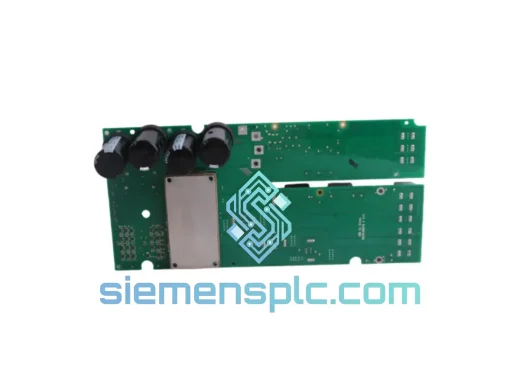
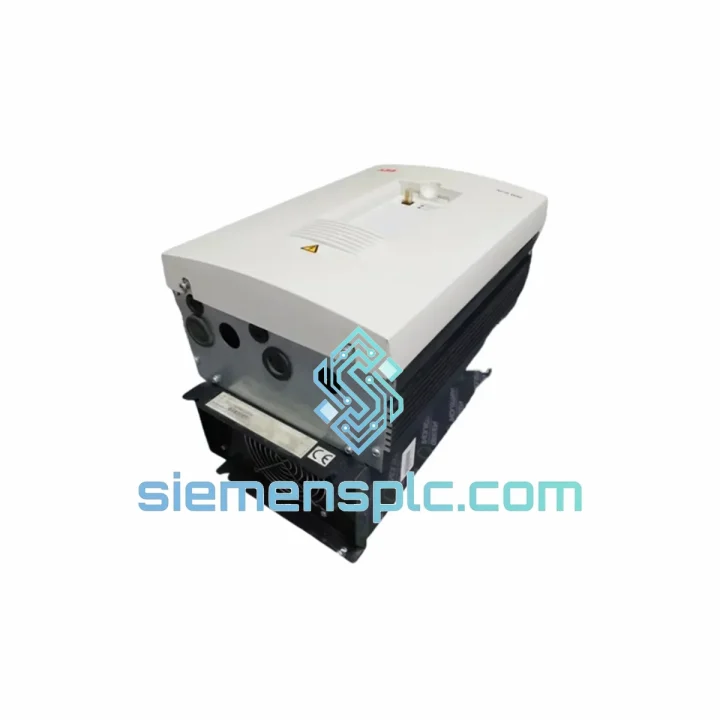
ABB ACS60100113 Variable Frequency Drive – ACS600 MultiDrive
Request verified availability, condition, replacement risk review, packing options and courier lead time for ACS60100113.
BrandABB
Part NumberACS60100113
ConditionAvailability Check
Lead TimeRFQ Confirmation
DocumentsDatasheet / photos by RFQ
ShippingExport packing available
Auto-filled RFQ
ACS60100113
Click Request Quote and the part number is inserted into the inquiry form automatically.
- Reply by email: [email protected]
- WhatsApp / Tel: +86 18359268345
- Mon-Sat 9:00-18:00 GMT+8
Procurement Data
Key Product Information
Core fields for model confirmation and RFQ routing. Detailed product narrative remains below.
- Brand
- ABB
- Primary Part Number
- ACS60100113
- Product Type
- Variable Frequency Drive
- Product Family
- Other series
- Country of Origin
- SE
- Catalog Category
- Motor Drives
- Warranty
- 12 months from date of shipment
Model confirmed for inquiry
ACS60100113
Send quantity, destination and urgency. The RFQ form keeps this part number attached.
Request Quote
Product Overview
ABB ACS60100113 MultiDrive Inverter Module – Common DC Bus Architecture for High-Power Industrial Motor Control
The ACS60100113 is a dedicated inverter module within ABB’s ACS600 MultiDrive platform, designed for integration into shared DC bus drive cabinets where multiple AC motors must be controlled from a single rectifier supply. Unlike standalone drives, this module operates exclusively on a pre-conditioned DC bus voltage, which fundamentally changes the energy balance of the system: braking energy from decelerating motors is not dissipated as heat through braking resistors but instead fed back onto the common bus and consumed by motoring drives elsewhere in the cabinet. This regenerative energy sharing is the defining architectural advantage of the MultiDrive topology and is the primary reason the ACS60100113 is specified in energy-intensive multi-motor applications such as rolling mills, paper machine sections, and marine thruster systems.
The module’s inverter stage employs IGBT switching technology with ABB’s Direct Torque Control (DTC) algorithm embedded in the drive’s control board. DTC operates without a shaft encoder in standard configurations, computing motor flux and torque directly from measured stator voltage and current vectors at a 40 µs control cycle. This yields torque step response times below 2 ms — a figure that pulse-width modulation (PWM) scalar control schemes cannot approach — making the ACS60100113 suitable for process lines where speed transients must be absorbed without mechanical shock to the drivetrain.
Real-time Stock & RFQ: [email protected] | WhatsApp: +86 18359268345
Technical Parameters
| Parameter | Specification |
|---|---|
| Part Number / SKU | ACS60100113 |
| Brand | ABB |
| Series | ACS600 MultiDrive |
| Module Type | Inverter Unit (INU) – Common DC Bus |
| Drive Topology | Voltage Source Inverter (VSI), 2-level IGBT |
| Control Algorithm | Direct Torque Control (DTC), sensorless or encoder-based |
| DC Bus Input Voltage | Nominal DC from ACS600 Supply Unit (ISU/AFE) |
| Output Phases | 3-phase AC to motor terminals |
| Switching Frequency | Variable, DTC-adaptive (typically 1–3 kHz effective) |
| Torque Response Time | < 2 ms (DTC, no encoder) |
| Control Cycle | 40 µs flux and torque computation |
| Cooling Method | Forced air (internal fan, cabinet-integrated) |
| Protection Class | IP00 (designed for enclosed cabinet installation) |
| Communication Interface | DDCS fiber optic (RDCO adapter); optional PROFIBUS, DeviceNet, Ethernet/IP via fieldbus adapters |
| Standards Compliance | CE (LVD + EMC Directive), UL, IEC 61800-5-1, IEC 61800-3 |
| Approximate Weight | 20 kg |
| Country of Origin | Germany |
| Warranty | 12 months from date of shipment |
Hardware Logical Analysis
The ACS60100113 inverter module is built around a three-phase IGBT bridge whose gate drive circuits are galvanically isolated from the control board via optocoupler barriers rated to withstand the transient common-mode voltages generated during IGBT switching events. This isolation architecture prevents high-frequency switching noise — with dV/dt values that can exceed 5 kV/µs at the motor terminals — from coupling back into the low-voltage signal processing circuitry, a failure mode that causes spurious fault trips in drives with inadequate isolation design.
The DC bus capacitor bank within the module serves a dual function: it filters the ripple current drawn by the IGBT bridge during commutation, and it provides a short-term energy reservoir that buffers the bus voltage during load transients. The capacitor sizing in the ACS600 MultiDrive is calculated for the aggregate load of all inverter modules on the bus, not for each module individually, which allows ABB to use a smaller per-module capacitance than would be required in a standalone drive of equivalent power — a direct contributor to the module’s compact form factor.
EMC performance is addressed at the hardware level through a combination of measures: the IGBT gate resistors are tuned to balance switching speed against dV/dt emission, the DC bus busbars within the cabinet are arranged to minimize loop inductance and thus reduce conducted emission amplitudes, and the control board’s analog input circuits include differential amplifiers with common-mode rejection ratios (CMRR) exceeding 60 dB at 50/60 Hz to suppress ground-loop interference from the industrial environment. The module does not include an integral EMC input filter — this is handled at the common supply unit level, which is the correct architectural approach for a shared DC bus system since a single filter serves all inverter modules simultaneously.
The DTC control board executes a motor model that tracks rotor flux position in real time without relying on a physical encoder. The model is initialized during an identification run (ID run) that applies a series of voltage vectors to the stationary motor and measures the resulting current responses to extract stator resistance, stator inductance, and rotor time constant. These parameters are stored in non-volatile memory and used continuously during operation to correct the flux estimate for temperature-dependent resistance drift — a source of steady-state speed error in simpler open-loop V/Hz drives.
System Integration Benefits
- Regenerative energy sharing across the DC bus: Braking energy from decelerating motors is absorbed by motoring drives on the same bus, reducing net energy drawn from the supply and lowering peak demand charges in facilities with kVA-based tariffs.
- Deterministic torque response for process-critical applications: The sub-2 ms DTC torque step response allows the drive to compensate for load disturbances — such as a paper web tension spike or a rolling mill bite — before the mechanical system has time to respond, protecting both product quality and drivetrain integrity.
- Modular replacement without full cabinet shutdown: Individual inverter modules can be isolated from the DC bus and replaced while other modules in the cabinet continue to operate, reducing maintenance downtime to the time required to swap a single module rather than shutting down an entire production line.
- Centralized diagnostics via DDCS fiber optic network: All modules in a MultiDrive cabinet communicate with the master control unit over a deterministic fiber optic ring, providing a single point of access for fault logs, parameter backup, and firmware updates across all drives simultaneously.
- Encoder-optional operation reduces mechanical complexity: DTC sensorless mode eliminates the encoder cable, encoder power supply, and encoder interface card from the motor circuit, removing a common failure point in environments with vibration, contamination, or extreme temperature.
- Fieldbus protocol flexibility: Optional adapter modules support PROFIBUS-DP, DeviceNet, Modbus RTU, and Ethernet/IP, allowing the ACS60100113 to integrate into existing plant networks without gateway hardware or protocol conversion overhead.
- Thermal management transparency: The module’s control board monitors IGBT junction temperature via NTC thermistors and reports thermal margin in real time over the DDCS network, enabling predictive maintenance scheduling before thermal derating or fault shutdown occurs.
- Consistent parameter architecture across ACS600 platform: All ACS600 MultiDrive modules share a common parameter set structure, so engineers familiar with one module can configure, commission, and troubleshoot any other module in the cabinet without relearning a new interface — a significant factor in reducing commissioning time on large multi-motor installations.
Quality Assurance & Global Logistics
Every ACS60100113 unit supplied by siemensplc.com is sourced as genuine ABB original hardware. ABB’s manufacturing facilities for the ACS600 platform operate under ISO 9001 quality management systems with full component traceability from PCB fabrication through final assembly and factory acceptance testing. Each module undergoes a factory test sequence that includes DC bus pre-charge verification, IGBT gate drive integrity checks, and a loaded output test before leaving the production facility.
Units held in our Xiamen, China inventory are stored in climate-controlled conditions with humidity control to prevent electrolytic capacitor degradation and PCB surface oxidation. Prior to shipment, each unit is inspected for physical integrity, label authenticity, and firmware version consistency. Anti-static packaging with shock-absorbing foam inserts is used for all shipments to protect the IGBT modules and control board components from electrostatic discharge and mechanical impact during transit.
Logistics from Xiamen cover all major global destinations. Standard export documentation includes commercial invoice, packing list, and certificate of origin. DDP (Delivered Duty Paid) and DAP (Delivered At Place) Incoterms are available for customers who require customs clearance to be handled on the supplier side. In-stock units typically ship within 1–3 business days of order confirmation. Express air freight options via DHL, FedEx, and UPS are available for urgent requirements, with transit times of 3–7 business days to most destinations in Europe, North America, Southeast Asia, and the Middle East.
A 12-month warranty is provided on all supplied units, covering manufacturing defects and component failure under normal operating conditions. Warranty claims are processed with a replacement-first policy to minimize customer downtime.
Contact Information
- Email: [email protected]
- WhatsApp: +86 18359268345
- Web: siemensplc.com
- Location: Xiamen, China
- © 2026 siemensplc.com. All rights reserved.
Ready to quote
[email protected]
Send This Part Number to Sales
RFQ workflow
Quality workflow ->
Confirmation Process
01Model confirmation
We check the full part number, brand, series and visible nameplate information before quotation.
02Availability reply
Sales confirms stock path, condition option, quantity and realistic lead time for export dispatch.
03Packing & courier
DHL, FedEx, UPS or buyer courier arrangements can be reviewed with packing requirements.
Continue sourcing
Browse full catalog ->
Related Automation Parts
Similar brand or category products for fast comparison and multi-item RFQ lists.
ABB
RFQ Ready
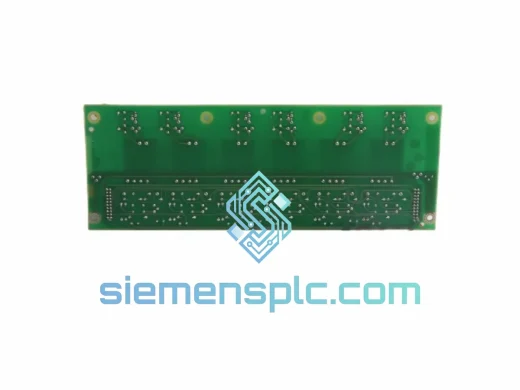
ABB ZINT-592 Fieldbus Interface Board – ZINT Series
ACS Drive
Origin SE
Interface Board
ABB
RFQ Ready
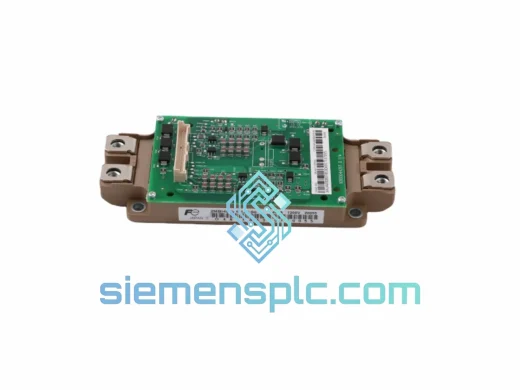
ABB YPK113A 61002774 Drive Control Board
In-Stock Xiamen
Origin SE
Drive Control Board