ABB
RFQ Ready
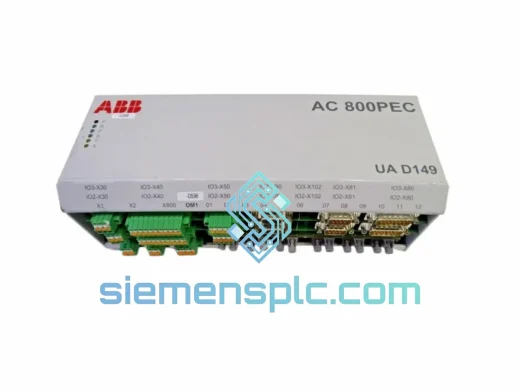
ABB HAC807B102 Analog Input Termination Unit – AC800M Series
AC800M
Origin SE
Analog Input Termination Unit
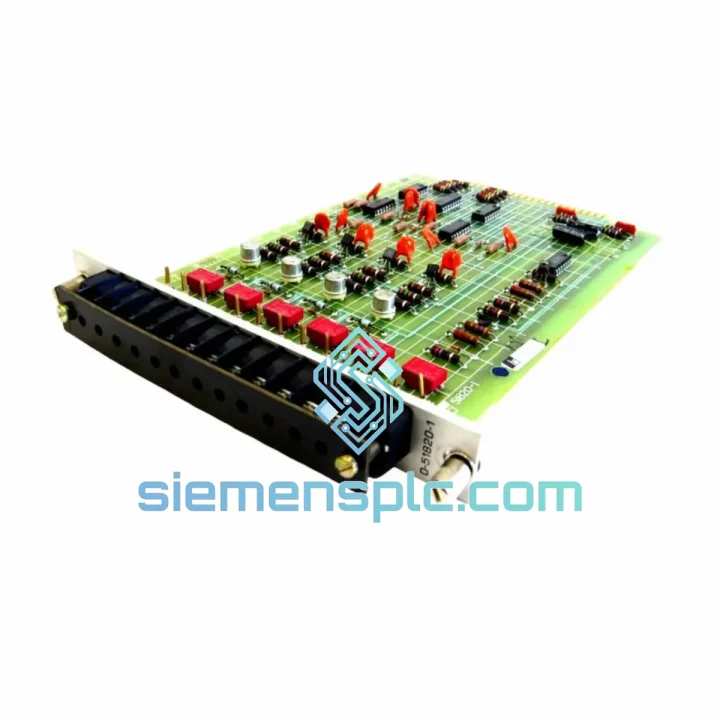
Request verified availability, condition, replacement risk review, packing options and courier lead time for AI835A-3BSE051306R1.
Click Request Quote and the part number is inserted into the inquiry form automatically.
Core fields for model confirmation and RFQ routing. Detailed product narrative remains below.
Your AC800M controller is throwing diagnostics. Channel faults are cascading. The AI835A is dead and your process engineer is standing next to you with a clipboard. You don’t need a sales pitch — you need the module on a plane tonight. We stock the ABB AI835A (3BSE051306R1) in Xiamen, China, and we ship DHL Express worldwide. Most orders clear customs and land on your bench within 3–5 business days. That’s the deal.
URGENT REQUIREMENT? Contact: [email protected] | WhatsApp: +86 18359268345
| Parameter | Specification | Status |
|---|---|---|
| Part Number | AI835A / 3BSE051306R1 | ✔ Ready to Ship |
| Manufacturer | ABB (ASEA Brown Boveri) | — |
| Module Type | Analog Input — Thermocouple / mV | — |
| Platform | S800 I/O / AC800M DCS | — |
| Channels | 8 (individually configurable per channel) | — |
| TC Types Supported | J, K, T, E, R, S, B, N (IEC 60584) | — |
| mV Input Range | −100 mV to +100 mV | — |
| Resolution | 16-bit ADC | — |
| Accuracy | ±0.1% of full scale (typical) | — |
| Channel Isolation | Galvanic, channel-to-channel and channel-to-bus | — |
| Cold Junction Compensation | Automatic (onboard CJC sensor) | — |
| Supply Voltage | 24 V DC via S800 ModuleBus carrier | — |
| Power Consumption | ≤ 3 W | — |
| Operating Temperature | 0 °C to +55 °C | — |
| Humidity | 5%–95% RH, non-condensing | — |
| Protection Rating | IP20 | — |
| Compatible Carriers | TB820V2, TB840A and equivalent S800 carriers | — |
| Certifications | CE, UL, cUL, ATEX Zone 2 | — |
| Country of Origin | Sweden | — |
| Weight | ~250 g | — |
Before you pull the module, confirm the fault is hardware — not configuration. In ABB Control Builder M, navigate to the I/O tree, right-click the AI835A node, and open the Diagnostic view. A solid red LED on the module face combined with a Module Fault or Communication Error in the diagnostic log is your green light to swap hardware. If you only see Channel Fault on one or two channels, check field wiring continuity first — open-circuit thermocouple leads are the #1 false alarm on this module.
Step-by-step hot-swap procedure (S800 I/O, non-redundant carrier):
Common fault codes and what they actually mean:
Firmware compatibility note: The AI835A 3BSE051306R1 is supported from AC800M firmware v4.1. If your system runs v3.x, a controller firmware upgrade is mandatory before the module will be recognized. Plan this upgrade during a scheduled maintenance window — it requires a controller restart and a brief process interruption.
DIP switch / addressing: Unlike older S800 modules, the AI835A uses software-based slot addressing via the ModuleBus carrier position. There are no physical DIP switches on the module for address configuration. Slot position on the carrier determines the I/O address automatically — just make sure the slot number in Control Builder M matches the physical carrier position.
The AI835A was engineered for the kind of environments that destroy consumer-grade electronics in weeks. ABB’s S800 I/O platform is deployed in offshore platforms in the North Sea, cement kilns in the Middle East, and pulp mills in Scandinavia — all of which subject electronics to vibration, thermal cycling, and humidity levels that would be considered abuse in any other context.
The module’s conformal-coated PCB resists moisture ingress and corrosive atmospheres. Galvanic isolation between every channel and the bus rail means a ground fault on one thermocouple loop cannot propagate to adjacent channels or corrupt the ModuleBus — a failure mode that has taken down entire I/O racks on non-isolated competitor modules. The onboard CJC sensor is thermally coupled to the module housing, not the PCB, which means it tracks actual terminal temperature accurately even when the cabinet interior heats up during summer shutdowns.
Vibration tolerance meets IEC 60068-2-6 (sinusoidal) and IEC 60068-2-64 (random) test profiles — relevant for modules mounted near rotating machinery, compressors, or on skid-mounted control panels subject to transport vibration. The module’s DIN-rail carrier mounting system uses a positive-locking mechanism that prevents vibration-induced loosening without requiring tools for removal during maintenance.
Operating range of 0 °C to +55 °C covers the vast majority of industrial cabinet environments. For installations in extreme cold (outdoor Arctic installations, unheated enclosures), the storage rating of −40 °C means the module survives cold-start conditions without damage — though active operation below 0 °C requires cabinet heating to maintain measurement accuracy.
Our warehouse is located in Xiamen, Fujian Province, China — one of the most logistics-efficient export hubs in Southeast China, with direct access to Xiamen Gaoqi International Airport and Xiamen Port. This geography is not accidental: it puts us within 24 hours of DHL and FedEx international hub connections to Europe, the Middle East, Southeast Asia, and the Americas.
Standard export workflow for urgent orders:
All shipments are insured at declared value. In the rare event of transit damage, we initiate the replacement process immediately upon receipt of photographic evidence — we do not wait for carrier claim resolution to ship your replacement unit.
Email: [email protected]
WhatsApp: +86 18359268345
Web: siemensplc.com
© 2026 siemensplc.com. All rights reserved.
We check the full part number, brand, series and visible nameplate information before quotation.
Sales confirms stock path, condition option, quantity and realistic lead time for export dispatch.
DHL, FedEx, UPS or buyer courier arrangements can be reviewed with packing requirements.
Similar brand or category products for fast comparison and multi-item RFQ lists.