ABB
In Stock OK
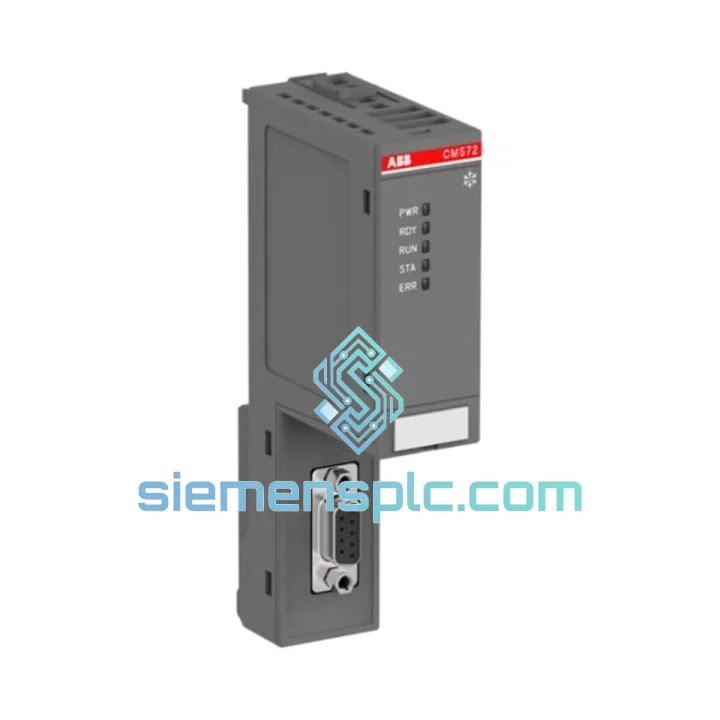
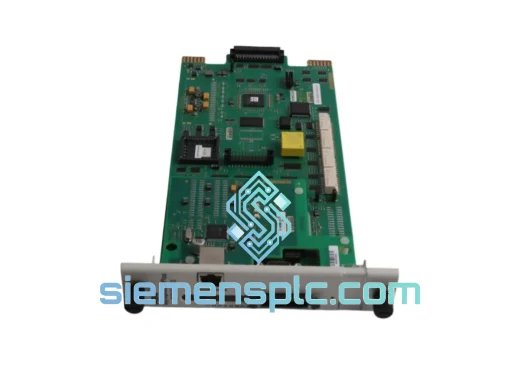
ABB CM578-CN 1SAP170800R0001 Communication Module – AC500 Series
Request verified availability, condition, replacement risk review, packing options and courier lead time for CM578-CN.
BrandABB
Part NumberCM578-CN
ConditionAvailability Check
Lead TimeRFQ Confirmation
DocumentsDatasheet / photos by RFQ
ShippingExport packing available
Auto-filled RFQ
CM578-CN
Click Request Quote and the part number is inserted into the inquiry form automatically.
- Reply by email: [email protected]
- WhatsApp / Tel: +86 18359268345
- Mon-Sat 9:00-18:00 GMT+8
Procurement Data
Key Product Information
Core fields for model confirmation and RFQ routing. Detailed product narrative remains below.
- Brand
- ABB
- Primary Part Number
- CM578-CN
- Product Type
- PLC Communication Module
- Series / Family
- AC500
- Country of Origin
- SE
- Catalog Category
- Communication
- Operating Temp.
- 0 °C to +60 °C
- Warranty
- 12 months from date of dispatch
Model confirmed for inquiry
CM578-CN
Send quantity, destination and urgency. The RFQ form keeps this part number attached.
Request Quote
Product Overview
ABB CM578-CN 1SAP170800R0001 — PROFIBUS DP Master/Slave Interface Module for AC500 PLC
The ABB CM578-CN (order reference 1SAP170800R0001) is a dedicated PROFIBUS DP communication module engineered for direct integration into the AC500 PLC platform. It occupies a communication module slot on the AC500 CPU carrier board, drawing power exclusively from the backplane bus and presenting a single 9-pin Sub-D RS-485 port to the field network. Within the AC500 architecture, the CM578-CN functions as the sole fieldbus gateway between the CPU’s internal process image and the PROFIBUS DP segment, handling all token-ring arbitration, GSD-based slave parameterization, and cyclic data exchange without burdening the CPU’s application task cycle.
PROFIBUS DP operates on a master-slave token-passing protocol defined under IEC 61158 and EN 50170. The CM578-CN implements DP Master Class 1 (DPM1) functionality, which means it autonomously manages the cyclic exchange of input and output data with up to 125 slave nodes per segment. In slave mode, the same module presents a defined I/O image to an upstream master, enabling hierarchical or peer-to-peer control topologies. Baud rate auto-detection spans the full PROFIBUS range from 9.6 kbit/s to 12 Mbit/s, with the module locking onto the segment baud rate at power-up without manual configuration.
In process industries and discrete manufacturing, the determinism of the fieldbus cycle is a hard constraint. At 12 Mbit/s with a 32-slave segment carrying 4 bytes of I/O per node, the PROFIBUS DP bus cycle completes in under 1 ms. The CM578-CN’s onboard microcontroller handles all DP protocol stack processing — frame assembly, CRC-16 verification, retry logic, and diagnostic collection — independently of the AC500 CPU scan cycle. This architectural separation ensures that fieldbus latency does not propagate into the PLC’s deterministic task scheduler.
Real-time Stock & RFQ: [email protected] | WhatsApp: +86 18359268345
Technical Parameters
| Parameter | Value |
|---|---|
| Part Number | 1SAP170800R0001 |
| Model | CM578-CN |
| Brand | ABB |
| Series | AC500 PLC Communication Modules |
| Fieldbus Protocol | PROFIBUS DP (IEC 61158 / EN 50170) |
| Operating Mode | DP Master Class 1 (DPM1) / DP Slave |
| Supported Baud Rates | 9.6 kbit/s, 19.2 kbit/s, 45.45 kbit/s, 93.75 kbit/s, 187.5 kbit/s, 500 kbit/s, 1.5 Mbit/s, 3 Mbit/s, 6 Mbit/s, 12 Mbit/s (auto-detect) |
| Physical Interface | 9-pin Sub-D female, RS-485 differential |
| Max. Slave Nodes (Master Mode) | 125 |
| Max. I/O Data per Slave | 244 bytes input + 244 bytes output |
| Power Supply | Via AC500 backplane (no external 24 V DC required) |
| Operating Temperature | 0 °C to +60 °C |
| Storage Temperature | -40 °C to +85 °C |
| Relative Humidity | 5 % to 95 % (non-condensing) |
| EMC Immunity | IEC 61000-4-2 (ESD), IEC 61000-4-4 (EFT/Burst), IEC 61000-4-5 (Surge) |
| Weight | 95 g |
| Certifications | CE, UL, cUL |
| Compatible CPU Families | AC500 PM554 / PM564 / PM573 / PM583 / PM591 / PM592 / PM595 (and -ETH variants) |
| Configuration Tool | ABB Automation Builder (CoDeSys 3.x-based) |
| Warranty | 12 months from date of dispatch |
| Country of Origin | Germany |
Hardware Logical Analysis
The CM578-CN’s internal architecture separates the PROFIBUS protocol engine from the AC500 backplane interface through a dual-port RAM (DPRAM) structure. The onboard PROFIBUS ASIC — a dedicated silicon implementation of the DP protocol stack — writes cyclic process data into one side of the DPRAM at the fieldbus cycle rate. The AC500 CPU reads and writes the opposite side of the DPRAM during its I/O update phase, synchronized by a handshake semaphore. This DPRAM decoupling eliminates any blocking dependency between the fieldbus cycle and the PLC scan cycle, which is a critical design requirement in applications where the CPU task period (e.g., 10 ms) differs from the PROFIBUS bus cycle (e.g., 2 ms at 1.5 Mbit/s with 20 slaves).
The RS-485 physical layer driver incorporates fail-safe biasing resistors on the module’s internal PCB, ensuring that the bus lines are pulled to a defined idle state (A line low, B line high) when no active driver is present. This prevents undefined bus states during power-up sequencing or when the CM578-CN is in slave mode and the upstream master has not yet initialized the segment. The 9-pin Sub-D connector pinout conforms to the PROFIBUS International standard, with pin 3 (RxD/TxD-P) and pin 8 (RxD/TxD-N) carrying the differential signal, and pin 6 providing the optional +5 V VP supply for bus termination resistors in passive termination connectors.
EMC hardening on the CM578-CN follows IEC 61000-4 series test levels appropriate for industrial environments. The RS-485 signal lines pass through common-mode chokes before reaching the Sub-D connector, attenuating high-frequency common-mode noise induced by adjacent variable-frequency drives or switching power supplies. The module’s PCB ground plane is connected to the AC500 chassis ground through the backplane connector, providing a low-impedance return path for shield currents from the PROFIBUS cable shield, which should be terminated at one end of each segment per PROFIBUS cabling guidelines.
Diagnostic transparency is implemented at two levels. At the DP protocol level, the CM578-CN collects slave diagnostic frames (Diag.ExtDiag, Diag.StatDiag, Diag.PrmFault) from each node and maps them into a diagnostic buffer accessible to the AC500 CPU via the backplane interface. At the module level, a set of LED indicators on the front face — typically RUN (green), BF (Bus Fault, red), and SF (System Fault, red) — provide immediate visual status without requiring a connected programming terminal. The BF LED activates on loss of any configured slave, giving maintenance personnel a sub-second visual indication of a fieldbus fault condition.
System Integration Benefits
- Zero-overhead CPU fieldbus processing: The CM578-CN’s onboard PROFIBUS ASIC handles all protocol stack execution autonomously. The AC500 CPU’s application program accesses process data through a mapped I/O image, with no fieldbus stack interrupts consuming CPU cycles during the application task.
- Deterministic bus cycle independent of CPU load: Because the PROFIBUS cycle runs on the module’s dedicated processor, CPU load spikes caused by complex application logic or communication tasks do not introduce jitter into the fieldbus exchange timing.
- Native Automation Builder hardware catalog integration: GSD files for all supported PROFIBUS DP slaves are managed within ABB’s Automation Builder IDE. The CM578-CN appears as a hardware object in the project tree; slave configuration, I/O mapping, and diagnostic variable assignment are performed graphically without manual register editing.
- Scalable slave addressing: With support for up to 125 slave nodes, a single CM578-CN can serve a full-scale PROFIBUS segment in mid-size plant sections — pump stations, conveyor zones, or packaging cells — without requiring an external DP master gateway or additional hardware.
- Dual-mode flexibility for hierarchical topologies: Configurable as either DPM1 master or DP slave, the CM578-CN supports architectures where an AC500 controller acts as a local sub-master under a plant-level DCS, or as a slave reporting to a supervisory PROFIBUS master from a third-party vendor.
- Structured slave diagnostics mapped to PLC variables: Slave diagnostic data — including station status bytes, manufacturer-specific extended diagnostics, and module status — are mapped to PLC variables accessible in the application program, enabling condition-based maintenance logic and alarm generation without custom communication function blocks.
- Backward compatibility across AC500 CPU generations: The CM578-CN is compatible with the full AC500 PM5xx CPU family, including both standard and ETH variants. This allows the same communication module to be reused when upgrading a CPU from PM554 to PM595 without rewiring the PROFIBUS segment or reconfiguring slave GSD assignments.
- Fail-safe bus idle state: Internal RS-485 bias resistors maintain a defined bus idle condition, preventing spurious data frames from being interpreted by slave nodes during module initialization or CPU restart sequences — a common source of nuisance faults in installations without proper bus termination discipline.
- Compact slot-based form factor: The module occupies a single communication slot on the AC500 CPU carrier, adding PROFIBUS DP connectivity without increasing panel depth or requiring external DIN-rail mounting space for a standalone gateway device.
- Long-lifecycle platform commitment: ABB’s AC500 platform carries a published 10-year minimum availability commitment. Spare module procurement planning for the CM578-CN can be aligned with plant maintenance cycles without risk of premature obsolescence.
Quality Assurance & Global Logistics
Every ABB CM578-CN 1SAP170800R0001 unit dispatched from our Xiamen, China facility is sourced through traceable supply channels and subjected to a structured incoming inspection protocol. Physical inspection covers connector pin integrity, housing condition, label legibility, and ESD packaging continuity. Units are stored in a temperature- and humidity-controlled warehouse environment consistent with ABB’s storage specifications (–40 °C to +85 °C, 5 % to 95 % RH non-condensing).
All units carry a 12-month warranty from the date of dispatch. Warranty coverage addresses manufacturing defects and functional failures under normal operating conditions as defined in ABB’s published datasheet. Warranty claims are processed with a target response time of 2 business days from receipt of the defective unit.
Logistics from Xiamen are executed via DHL Express, FedEx International Priority, or UCP air freight, depending on order volume and destination. Standard export documentation — commercial invoice, packing list, and certificate of origin — is prepared for every shipment. For regulated industries requiring additional documentation (CE declaration of conformity, material safety data, or third-party inspection certificates), these are available upon request at the quotation stage. Customs HS code classification and export licensing compliance are handled by our in-house trade compliance team, ensuring clearance without delays at major import ports in the EU, North America, Southeast Asia, and the Middle East.
Contact Information
Email: [email protected]
WhatsApp: +86 18359268345
Web: siemensplc.com
Location: Xiamen, China
© 2026 siemensplc.com. All rights reserved.
Ready to quote
[email protected]
Send This Part Number to Sales
RFQ workflow
Quality workflow ->
Confirmation Process
01Model confirmation
We check the full part number, brand, series and visible nameplate information before quotation.
02Availability reply
Sales confirms stock path, condition option, quantity and realistic lead time for export dispatch.
03Packing & courier
DHL, FedEx, UPS or buyer courier arrangements can be reviewed with packing requirements.
Continue sourcing
Browse full catalog ->
Related Automation Parts
Similar brand or category products for fast comparison and multi-item RFQ lists.
ABB
RFQ Ready
ABB SPBRC410 PLC Communication Controller
AC500
Origin SE
PLC Communication Controller