

ABB
In Stock OK
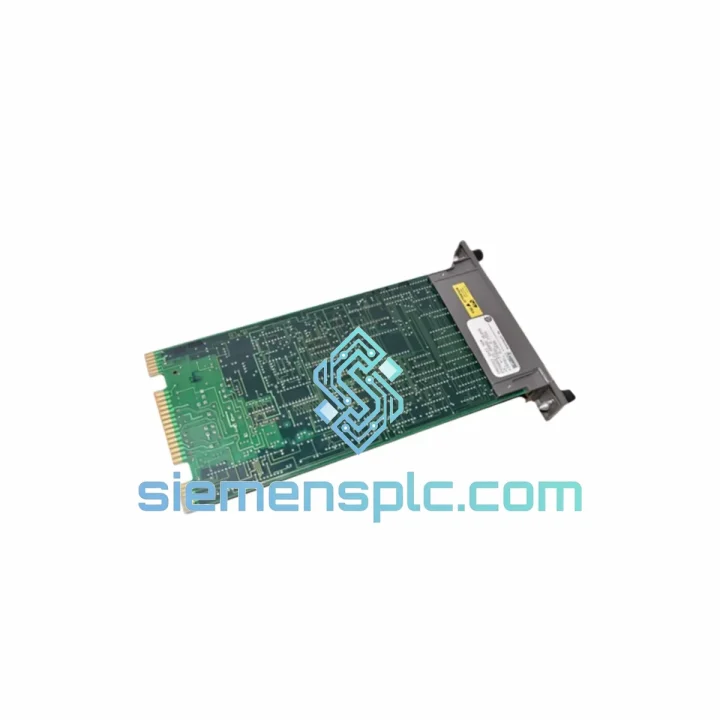
ABB IMHSS01 DCS Module – INFI 90 Logic Master
Request verified availability, condition, replacement risk review, packing options and courier lead time for IMHSS01.
BrandABB
Part NumberIMHSS01
ConditionAvailability Check
Lead TimeRFQ Confirmation
DocumentsDatasheet / photos by RFQ
ShippingExport packing available
Auto-filled RFQ
IMHSS01
Click Request Quote and the part number is inserted into the inquiry form automatically.
- Reply by email: [email protected]
- WhatsApp / Tel: +86 18359268345
- Mon-Sat 9:00-18:00 GMT+8
Procurement Data
Key Product Information
Core fields for model confirmation and RFQ routing. Detailed product narrative remains below.
- Brand
- ABB
- Primary Part Number
- IMHSS01
- Product Type
- DCS Module
- Series / Family
- INFI 90
- Manufacturer
- ABB (Asea Brown Boveri)
- Country of Origin
- SE
- Catalog Category
- Communication
- Operating Temp.
- 0 °C to +60 °C (standard industrial cabinet)
- Humidity
- 5% to 95% RH, non-condensing
- Warranty
- 12 months from date of shipment
Model confirmed for inquiry
IMHSS01
Send quantity, destination and urgency. The RFQ form keeps this part number attached.
Request Quote
Product Overview
ABB IMHSS01 Logic Master Module: Network 90 Bus Supervisory Controller for INFI 90 DCS
The ABB IMHSS01 Logic Master Module (LMM) functions as the supervisory arbitration node within the INFI 90 (Harmony) distributed control architecture. In any multi-drop Network 90 plant loop, exactly one module must assume the role of bus master — coordinating token passing, enforcing deterministic scan cycles, and resolving contention between peer controller nodes. The IMHSS01 fills this role with a hardware design that has accumulated decades of field validation across power generation, chemical processing, and heavy industrial environments.
Unlike generic I/O modules that simply relay field signals, the IMHSS01 operates at the network coordination layer. It maintains the global time base for the INFI-NET plant loop, issues and receives peer-to-peer data exchange blocks (DEBs), and executes high-level supervisory logic strategies that span multiple controller nodes. When this module is absent or faulted, the entire Network 90 segment loses its arbitration authority — downstream controllers revert to their last known states, and process loops that depend on cross-node data exchange go open. Recovery requires either a hot-swap replacement or a full segment restart, both of which carry significant operational risk in live plant environments.
The physical architecture of the IMHSS01 reflects the engineering constraints of its era: a single-slot plug-in card designed for the standard INFI 90 rack, with a dedicated backplane connector that carries both power rails and the high-speed serial bus interface. The module’s processor handles two concurrent tasks — executing the resident supervisory logic program and managing the real-time bus arbitration state machine. These tasks are time-sliced at the hardware level, ensuring that bus arbitration latency remains bounded regardless of the complexity of the supervisory logic being executed. This determinism is a non-negotiable requirement in process control applications where scan-cycle jitter directly affects loop stability.
EMC performance is addressed through board-level design: signal traces are impedance-matched to the backplane bus characteristic impedance, and the module’s ground plane is segmented to isolate the analog reference circuits from the digital switching noise generated by the bus transceiver. The INFI-NET physical layer uses transformer-coupled differential signaling, which provides common-mode rejection of conducted interference — a critical property in environments where variable-frequency drives, large motor starters, and high-current switching equipment share the same electrical infrastructure as the control system.
The IMHSS01 supports redundant LMM configurations. In a redundant pair, one module operates as the active bus master while the second monitors bus traffic in a hot-standby state. Switchover is triggered by a watchdog timeout or by an explicit health-status broadcast from the active module. The switchover sequence is designed to complete within one bus scan cycle, preventing downstream controllers from detecting a gap in the token-passing sequence. This bumpless transfer characteristic is essential in applications where even a single missed scan cycle can trigger a process alarm or a safety system response.
Real-time Stock & RFQ: [email protected] | WhatsApp: +86 18359268345
Technical Parameters
| Parameter | Value |
|---|---|
| Part Number | IMHSS01 |
| Manufacturer | ABB (Asea Brown Boveri) |
| Series / Platform | INFI 90 / Harmony DCS |
| Module Function | Logic Master Module (LMM) – Network 90 Bus Master |
| Bus Interface | INFI-NET / Network 90 Plant Loop (transformer-coupled differential) |
| Form Factor | Single-slot plug-in card, standard INFI 90 rack |
| Power Supply | Derived from INFI 90 rack backplane (±15 V, +5 V rails) |
| Operating Temperature | 0 °C to +60 °C (standard industrial cabinet) |
| Humidity | 5% to 95% RH, non-condensing |
| Redundancy | Hot-standby redundant LMM pair supported |
| Switchover Time | ≤ 1 bus scan cycle (bumpless transfer) |
| Weight | Approx. 780 g |
| Compatibility | ABB INFI 90 / Bailey Harmony control system families |
| Warranty | 12 months from date of shipment |
Hardware Logical Analysis
The IMHSS01’s internal architecture separates bus arbitration logic from supervisory program execution at the hardware scheduler level. The bus arbitration state machine runs on a dedicated interrupt-driven timer, ensuring that token-passing intervals remain fixed regardless of the supervisory logic scan load. This separation prevents a computationally intensive control strategy from introducing jitter into the bus timing — a failure mode that can cause downstream nodes to declare a bus fault and enter their fallback states.
The INFI-NET physical layer uses transformer coupling at each node, providing galvanic isolation between the bus cable and the module’s internal circuitry. This isolation blocks ground-loop currents that are common in large industrial facilities where control panels, field junction boxes, and motor control centers share a common building ground but may sit at different ground potentials due to resistive voltage drops in the grounding conductors. The differential signaling scheme provides an additional 40–60 dB of common-mode rejection, attenuating conducted interference from nearby power equipment.
The module’s watchdog circuit monitors both the internal processor heartbeat and the bus arbitration state machine independently. A fault in either subsystem triggers a controlled handoff to the standby LMM before the watchdog timeout expires, preventing the bus from entering a leaderless state. The watchdog timeout is configurable within the INFI 90 engineering tool, allowing system integrators to balance fault detection speed against nuisance trip sensitivity in high-noise environments.
Board-level EMC design includes a segmented ground plane that isolates the bus transceiver’s switching currents from the analog reference circuits used by the supervisory logic processor. Decoupling capacitors are placed at each power pin of the bus transceiver IC, with values selected to attenuate switching transients in the 1–100 MHz range — the frequency band most commonly associated with conducted emissions from variable-frequency drives operating in the same electrical zone.
System Integration Benefits
- Deterministic Scan Cycle: The hardware-level separation of bus arbitration and logic execution guarantees bounded scan-cycle timing, a prerequisite for stable PID loop performance in fast-responding processes such as combustion control and compressor surge protection.
- Bumpless Redundancy Switchover: Hot-standby architecture completes the active-to-standby transition within one bus scan cycle, preventing downstream controllers from registering a communication gap that would trigger alarm floods or safety system responses.
- Galvanic Bus Isolation: Transformer-coupled INFI-NET interface blocks ground-loop currents and provides common-mode rejection, maintaining signal integrity in electrically noisy plant environments without requiring additional isolation hardware.
- Peer-to-Peer Data Exchange: The LMM manages Data Exchange Blocks (DEBs) between all nodes on the Network 90 segment, enabling cross-controller data sharing without routing traffic through a central host — reducing latency and eliminating single-point communication bottlenecks.
- Configurable Watchdog Timing: Fault detection sensitivity is adjustable via the INFI 90 engineering tool, allowing integrators to optimize the balance between rapid fault response and immunity to transient noise-induced false trips.
- Supervisory Strategy Execution: Hosts high-level control strategies that coordinate multiple downstream controller nodes, enabling plant-wide optimization logic — such as load-following and constraint management — to execute within the DCS without requiring a separate supervisory computer.
- Diagnostic Transparency: The module broadcasts health-status frames on the Network 90 bus at each scan cycle, allowing the INFI 90 operator station to display real-time module status, bus error counts, and redundancy state without requiring manual interrogation.
- Drop-In Form-Fit-Function Replacement: The IMHSS01 conforms to the standard INFI 90 single-slot mechanical and electrical interface, enabling direct replacement of a faulted module without rack modification, rewiring, or firmware re-engineering in the majority of installed configurations.
- Wide Ecosystem Compatibility: Operates alongside the full range of INFI 90 I/O, communication, and controller modules — including IMMFP02/12 Multi-Function Processors, IMCPM02 Control Processors, and IMASI02/IMASO01 analog I/O modules — within a single rack or across multiple racks on the same Network 90 segment.
- Long-Term Parts Availability: The INFI 90 platform remains operational in thousands of facilities globally. Continued availability of the IMHSS01 in the spare-parts market supports plant life-extension programs without requiring a full DCS migration.
Quality Assurance & Global Logistics
Every IMHSS01 unit supplied through siemensplc.com undergoes a structured incoming inspection protocol before dispatch. Visual examination covers connector pin condition, PCB surface integrity, component seating, and label legibility. Functional verification confirms that the module powers up correctly and passes its internal self-test sequence. Serial numbers are recorded for full supply-chain traceability, and each unit is assigned a condition grade — new-old-stock (NOS) or professionally refurbished — that is disclosed in the formal quotation.
Packaging follows IEC 61340-5-1 ESD protection requirements: modules are sealed in anti-static bags, cushioned with closed-cell foam, and shipped in double-wall corrugated cartons rated for international air and sea freight handling. For time-critical plant shutdowns, expedited air freight from Xiamen Gaoqi International Airport (XMN) reaches major industrial hubs in Southeast Asia within 24–48 hours, Europe within 48–72 hours, and North America within 72–96 hours. All shipments include commercial invoices, packing lists, and certificates of origin. Export documentation support for controlled-destination requirements is available on request.
A 12-month warranty from the date of shipment covers manufacturing defects and functional failures under normal operating conditions. Warranty claims are processed with a target response time of one business day, and advance replacement units can be arranged for critical applications to minimize plant downtime.
Contact Information
Email: [email protected]
WhatsApp: +86 18359268345
Web: siemensplc.com
Location: Xiamen, China
© 2026 siemensplc.com. All rights reserved.
Ready to quote
[email protected]
Send This Part Number to Sales
RFQ workflow
Quality workflow ->
Confirmation Process
01Model confirmation
We check the full part number, brand, series and visible nameplate information before quotation.
02Availability reply
Sales confirms stock path, condition option, quantity and realistic lead time for export dispatch.
03Packing & courier
DHL, FedEx, UPS or buyer courier arrangements can be reviewed with packing requirements.
Continue sourcing
Browse full catalog ->
Related Automation Parts
Similar brand or category products for fast comparison and multi-item RFQ lists.


ABB
RFQ Ready
ABB ICT13A INICT13A DCS Communication Module
INFI 90
Origin SE
DCS Communication Module