ABB
RFQ Ready
ABB SEDG-01 EtherNet/IP DeviceNet Gateway – SDCS Communication
3AAA0000051448
Origin SE
Industrial Communication Gateway
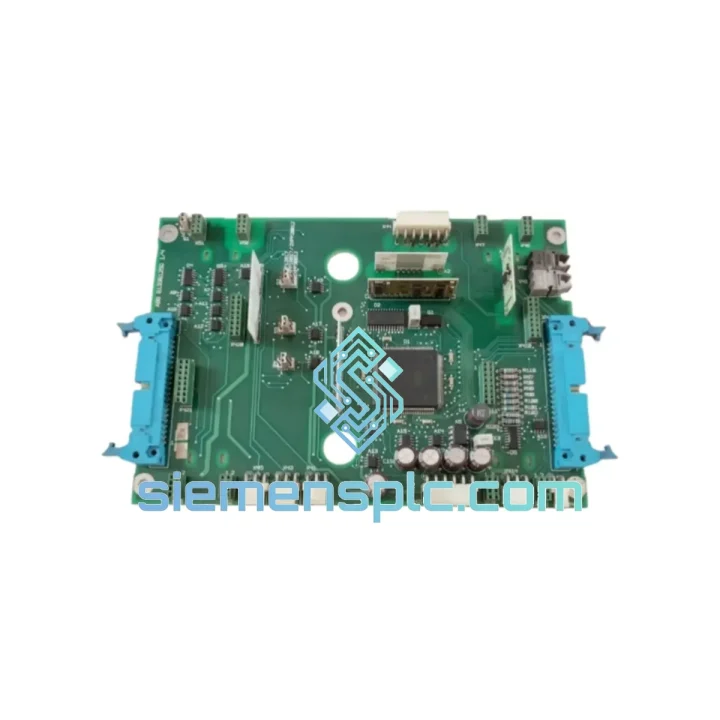
Request verified availability, condition, replacement risk review, packing options and courier lead time for NINT72C.
Click Request Quote and the part number is inserted into the inquiry form automatically.
Core fields for model confirmation and RFQ routing. Detailed product narrative remains below.
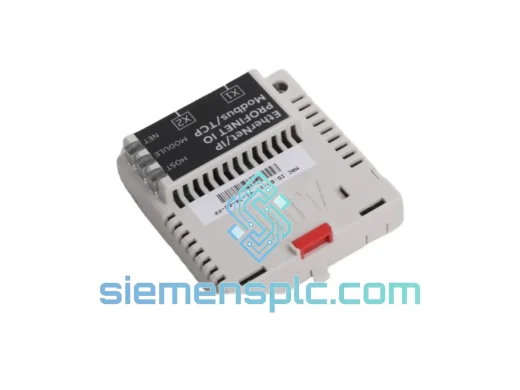
The ABB NINT72C is a plug-in communication interface module engineered for the INSUM (Industrial Network Integration System for Utility Motors) relay platform. Its primary function within a motor control loop is to serve as the data-link layer bridge between the motor protection relay and the plant-level supervisory network. Without this module, the relay operates in isolation — protection functions remain active, but all upstream visibility into motor status, fault events, and remote command execution is severed. The NINT72C restores that link with deterministic, low-latency data exchange over ABB’s proprietary INSUM fieldbus, enabling closed-loop motor management from the SCADA or DCS layer.
In a typical INSUM deployment, the NINT72C slots directly into the communication bay of compatible ABB motor management relays — including the MFAC and MMFC families. The module handles protocol framing, address arbitration, and cyclic data polling without requiring external wiring or additional interface hardware. This architecture reduces panel wiring complexity and eliminates the signal integrity risks associated with discrete analog or hardwired status outputs. The INSUM bus topology supports multi-drop configurations, allowing a single master station to poll dozens of relay nodes across a motor control center (MCC) with deterministic cycle times.
The NINT72C is deployed across demanding sectors including marine and offshore, pulp and paper, water and wastewater treatment, oil and gas processing, and power generation. In these environments, the module must sustain reliable communication under conditions of high ambient vibration, wide temperature swings, and significant electromagnetic interference from variable-frequency drives and high-current switching equipment. ABB’s INSUM hardware design addresses these constraints through a combination of optical isolation on the bus interface, shielded signal paths, and firmware-level watchdog supervision that detects and flags communication timeouts without triggering spurious relay trips.
Real-time Stock & RFQ: [email protected] | WhatsApp: +86 18359268345
| Parameter | Specification |
|---|---|
| Part Number / SKU | NINT72C |
| Manufacturer | ABB |
| Series | INSUM (Industrial Network Integration System for Utility Motors) |
| Module Category | Communication Interface Module |
| Form Factor | Plug-in module, direct insertion into INSUM relay communication slot |
| Communication Protocol | ABB INSUM proprietary fieldbus |
| Bus Topology | Multi-drop, master-slave polling architecture |
| Compatible Host Relays | ABB MFAC, MMFC, and INSUM-compatible motor management relays |
| Data Exchange Mode | Cyclic process data + acyclic parameter/diagnostic access |
| Isolation | Optical isolation on bus interface (per INSUM series standard) |
| Operating Temperature | Per ABB INSUM series specification (consult ABB datasheet for exact range) |
| Mounting | Tool-free plug-in, no external wiring harness required |
| Country of Origin | Germany |
| Warranty | 12 months from date of shipment |
The NINT72C’s hardware architecture is structured around three functional layers: the bus physical interface, the protocol processing core, and the relay backplane interface.
At the bus physical layer, the module employs optical isolation to decouple the INSUM fieldbus ground reference from the relay’s internal logic ground. This is not a cosmetic design choice — in MCC environments, ground potential differences between adjacent panels can reach several volts under fault conditions. Without galvanic isolation, these transients propagate directly into the relay’s communication circuitry, causing data corruption or permanent damage to the bus transceiver. The optical barrier eliminates this conduction path entirely, confining transient energy to the bus cable shield.
The protocol processing core handles INSUM frame assembly, CRC validation, and address decoding in hardware-assisted logic, reducing the processing burden on the relay’s main CPU. This separation of communication processing from protection logic is architecturally significant: it ensures that a bus overload condition — such as a master polling storm or a faulty node flooding the bus — cannot degrade the relay’s protection response time. The relay’s trip logic operates independently of the communication stack at all times.
The backplane interface between the NINT72C and the host relay uses a parallel data bus with handshake signaling. This interface transfers process data images — motor current, thermal model state, fault status bits — at a rate synchronized to the relay’s internal scan cycle. The NINT72C buffers this data and presents it to the INSUM master on demand, ensuring that the supervisory system always reads a coherent, time-stamped snapshot rather than a partially updated data set. This coherency mechanism is particularly important in protection applications where a split-read of current and status data could produce a misleading system state at the SCADA layer.
EMC performance is further reinforced by the module’s PCB layout, which routes high-frequency bus signals on inner layers with continuous ground planes above and below, minimizing radiated emissions and susceptibility to external fields from nearby VFD output cables and bus bars.
Every ABB NINT72C unit supplied by siemensplc.com is sourced through verified industrial automation supply channels and processed through a structured pre-shipment inspection protocol. Visual examination covers connector pin integrity, PCB surface condition, housing markings, and revision code verification against ABB’s published part number documentation. Units identified as surplus or refurbished undergo functional bench verification of the bus interface prior to listing.
Shipments originate from Xiamen, China — a major logistics hub with direct access to international air freight and sea freight routes serving Europe, Southeast Asia, the Middle East, and the Americas. Standard international orders are dispatched within 3–5 business days of order confirmation. Urgent requirements can be accommodated with express air freight options. All units are packed in ESD-protective anti-static bags, cushioned within rigid outer cartons rated for international transit, and accompanied by a packing list and inspection record. Full shipment tracking is provided from dispatch to delivery. The 12-month warranty covers manufacturing defects and verified functional failures under normal operating conditions.
Email: [email protected]
WhatsApp: +86 18359268345
Web: siemensplc.com
Location: Xiamen, China
© 2026 siemensplc.com. All rights reserved.
We check the full part number, brand, series and visible nameplate information before quotation.
Sales confirms stock path, condition option, quantity and realistic lead time for export dispatch.
DHL, FedEx, UPS or buyer courier arrangements can be reviewed with packing requirements.
Similar brand or category products for fast comparison and multi-item RFQ lists.