ABB
RFQ Ready
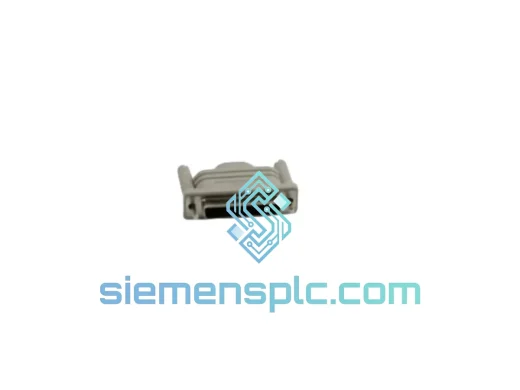
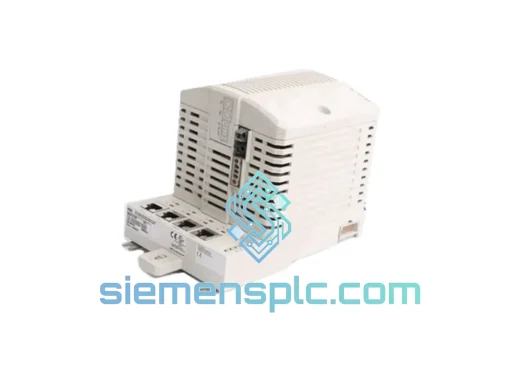
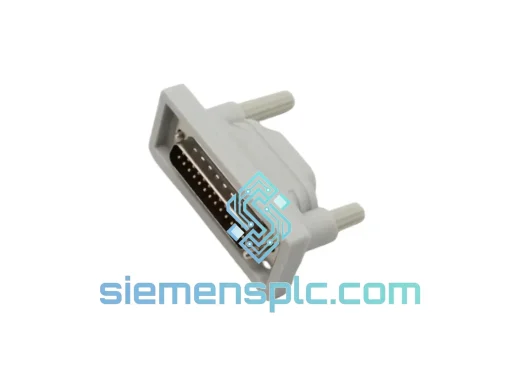
ABB TB850 Bus Terminator Module – AC 800M Series
AC 800M
Origin SE
Bus Terminator Module
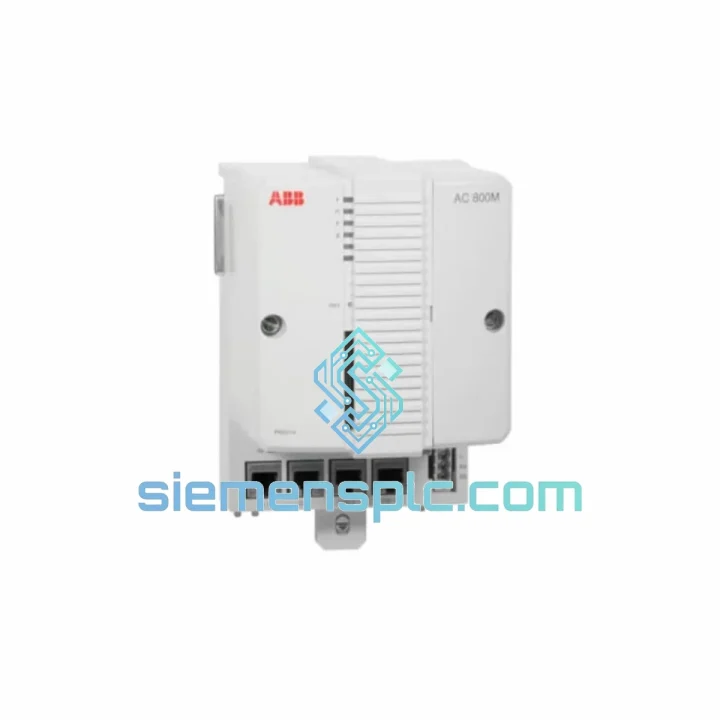
Request verified availability, condition, replacement risk review, packing options and courier lead time for PM891K02.
Click Request Quote and the part number is inserted into the inquiry form automatically.
Core fields for model confirmation and RFQ routing. Detailed product narrative remains below.
The ABB PM891K02 is a hot-standby redundant processor unit designed for the AC 800M controller platform, ABB’s flagship distributed control system (DCS) for continuous process industries. Within a control loop, this module occupies the highest-criticality position: it executes the real-time application program, arbitrates redundancy switchover, manages the S800 I/O backplane bus, and maintains synchronised state with its paired standby unit across a dedicated redundancy link. Its role is not peripheral — it is the deterministic execution engine upon which all field-level control decisions depend.
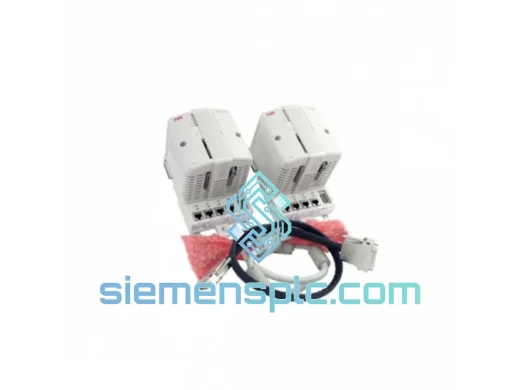
In a typical AC 800M station, two PM891K02 units are mounted on a TB807 termination board in an active/standby configuration. The active unit continuously mirrors its execution state — including task scheduler state, variable values, and communication session data — to the standby unit via a high-speed synchronisation channel. When a fault condition is detected (hardware watchdog expiry, power rail deviation, or communication loss), the standby unit assumes control within one scan cycle, with no detectable process disturbance. This bumpless transfer characteristic is what distinguishes the PM891K02 from simplex CPU architectures in applications where process uptime is measured in years, not hours.
The K02 suffix designates an extended-memory and enhanced-communication variant relative to the base PM891. Application program memory is expanded to accommodate large-scale control strategies — multi-loop PID cascades, advanced process control (APC) function blocks, and complex sequential logic — without requiring external memory expansion cards. The onboard Ethernet port supports simultaneous MMS/IEC 61850 communication for substation automation, Modbus TCP for legacy device integration, and OPC DA/UA server functionality for SCADA and historian connectivity.
Typical deployment environments include upstream oil and gas wellhead control systems, midstream pipeline SCADA with redundant controller nodes, downstream refinery DCS backbones, combined-cycle power plant turbine and boiler management systems, chemical reactor continuous control, and water treatment SCADA architectures. In each case, the PM891K02 provides the deterministic scan-cycle execution and fault-tolerant architecture that process safety and availability requirements demand.
Real-time Stock & RFQ: [email protected] | WhatsApp: +86 18359268345
| Parameter | Specification |
|---|---|
| Part Number | PM891K02 |
| Platform | ABB AC 800M |
| Module Function | Redundant Processor Unit (Hot-Standby CPU) |
| Redundancy Architecture | Active/Standby hot-standby; bumpless switchover ≤ 1 scan cycle |
| Application Memory | Extended (K02 variant); supports large-scale IEC 61131-3 programs |
| Communication Ports | Ethernet (RJ-45); supports MMS/IEC 61850, Modbus TCP, OPC DA/UA |
| Fieldbus Support | PROFIBUS DP (via CI857K01), FOUNDATION Fieldbus HSE (via CI854AK01) |
| I/O Capacity | Up to 64 S800 I/O modules per controller station |
| Remote I/O Distance | Up to 300 m via BC810 optical ModuleBus modem |
| Supply Voltage | 24 V DC (supplied via S800 I/O bus / SD821/SD822 PSU) |
| Operating Temperature | 0 °C to +55 °C |
| Storage Temperature | -40 °C to +70 °C |
| Relative Humidity | 5 % to 95 % RH, non-condensing |
| EMC Compliance | IEC 61000-4 series; EN 55011 Class A emissions |
| Safety Certifications | CE, UL 508, cUL, ATEX Zone 2 (with rated enclosure) |
| Programming Standard | IEC 61131-3 (FBD, LD, ST, IL, SFC) via ABB Control Builder M |
| Weight | 360 g |
| Country of Origin | Germany |
| Warranty | 12 months against manufacturing defects; DOA replacement within 7 business days |
The PM891K02 implements a dual-CPU architecture on a single module PCB: a primary application processor handles IEC 61131-3 task scheduling and execution, while a dedicated co-processor manages the redundancy synchronisation protocol and watchdog arbitration independently. This separation ensures that a fault in the application execution layer does not corrupt the redundancy handshake logic — a design discipline critical for SIL-rated system architectures.
The S800 ModuleBus backplane interface uses a deterministic token-passing protocol with a fixed cycle time, ensuring that I/O scan latency is bounded and predictable regardless of application program complexity. The backplane bus operates at a fixed clock rate with hardware-enforced slot arbitration, eliminating the variable-latency behaviour seen in shared-bus architectures under high I/O load conditions.
EMC hardening on the PM891K02 follows IEC 61000-4-2 (ESD), IEC 61000-4-4 (EFT/burst), and IEC 61000-4-5 (surge) test levels appropriate for industrial panel environments. The PCB layout employs ground plane segmentation between the digital logic domain and the backplane interface domain, with transient suppression diodes on all external-facing signal lines. This design approach maintains signal integrity in environments with significant conducted and radiated interference — common in switchgear rooms and motor control centres.
The onboard non-volatile memory retains the application program and configuration data across power cycles without battery backup, using flash memory with wear-levelling firmware. This eliminates the battery maintenance requirement that affects older DCS CPU designs and reduces the risk of data loss due to battery depletion during extended plant shutdowns.
The redundancy synchronisation link between the active and standby PM891K02 units operates on a dedicated point-to-point channel, physically separate from the process Ethernet network. State synchronisation occurs at every scan cycle boundary, transferring only the delta of changed variable values rather than the full memory image — a bandwidth-efficient approach that keeps synchronisation latency below the scan cycle period even for large application programs.
Every ABB PM891K02 unit supplied by siemensplc.com is sourced from verified supply chains with full traceability to ABB’s manufacturing and authorised distribution network. Prior to dispatch, each module undergoes a functional power-on verification test: supply voltage rails are checked, communication port link establishment is confirmed, and the module self-test diagnostic sequence is observed to completion. Serial number and firmware version are recorded and included with the shipment documentation.
Packaging follows ESD-safe handling protocols: modules are sealed in anti-static poly bags with humidity indicator cards, placed in foam-lined inner cartons, and packed in double-wall corrugated outer cartons rated for international air freight handling. Original ABB packaging is used where available from authorised stock.
Shipments originate from Xiamen, China, with same-day or next-business-day dispatch for in-stock units. Express air freight via DHL Express, FedEx International Priority, or UPS Worldwide Express is standard, with typical transit times of 3–5 business days to Europe, North America, Southeast Asia, and the Middle East. Full export documentation — commercial invoice, packing list, certificate of origin, and HS code declaration — is prepared for each shipment to facilitate customs clearance. For orders requiring ATEX or CE documentation packages, these are provided upon request at no additional charge.
A 12-month warranty covers manufacturing defects from the date of delivery. Dead-on-arrival (DOA) units are replaced within 7 business days of confirmed fault report. Warranty claims are processed directly — no third-party RMA routing.
Email: [email protected]
WhatsApp: +86 18359268345
Web: siemensplc.com
Location: Xiamen, China
© 2026 siemensplc.com. All rights reserved.
We check the full part number, brand, series and visible nameplate information before quotation.
Sales confirms stock path, condition option, quantity and realistic lead time for export dispatch.
DHL, FedEx, UPS or buyer courier arrangements can be reviewed with packing requirements.
Similar brand or category products for fast comparison and multi-item RFQ lists.