ABB
RFQ Ready
ABB UNS0864 HIEE405227R0001 Industrial Network Switch
AC800M
Origin SE
Industrial Network Switch
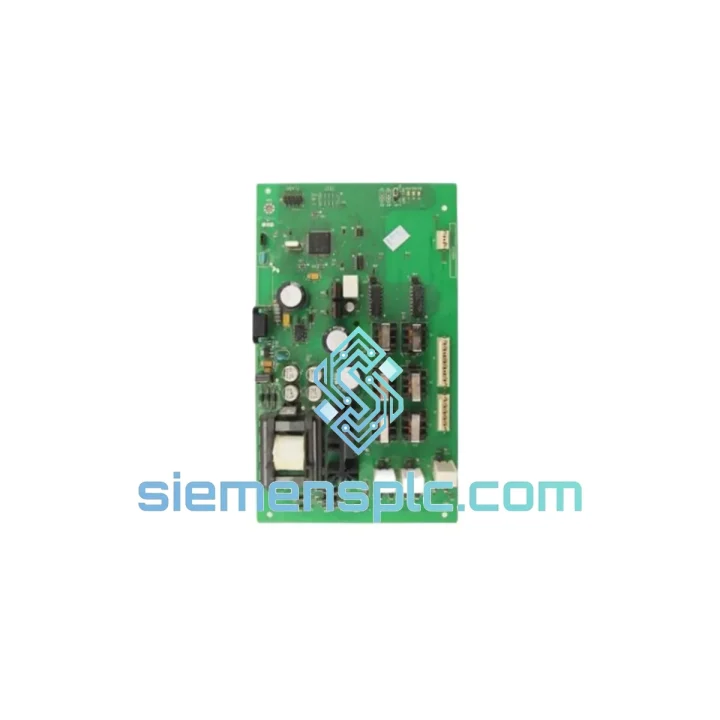
Request verified availability, condition, replacement risk review, packing options and courier lead time for PMSK106A-3BSE005676R1.
Click Request Quote and the part number is inserted into the inquiry form automatically.
Core fields for model confirmation and RFQ routing. Detailed product narrative remains below.
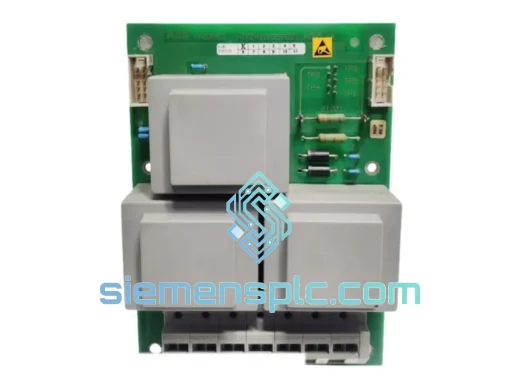
The PMSK106A, referenced under ABB catalog number 3BSE005676R1, is a dedicated analog transducer board manufactured for integration within ABB’s AC800M Distributed Control System platform. Its functional scope covers the complete signal conditioning chain from field transmitter input to backplane-ready digital representation: input buffering, span and zero calibration, galvanic isolation, analog-to-digital conversion, and ModuleBus protocol handoff to the AC800M processor module. In continuous-process environments — refinery distillation columns, combined-cycle heat recovery steam generators, chemical reactor temperature control loops, and pulp machine-direction weight control — the accuracy and latency of this conditioning chain directly determines whether the closed-loop controller operates within its designed performance envelope or accumulates systematic error that degrades product quality and safety margin.
The board accepts 4–20 mA current loop signals from field-mounted transmitters as its primary input type, with platform-dependent support for millivolt-range thermocouple and RTD bridge outputs depending on the specific AC800M I/O configuration in which the PMSK106A is deployed. The 4–20 mA standard was selected by process industries precisely because current transmission is immune to resistive voltage drop across long cable runs — a 500 Ω loop resistance produces no measurement error in a current-mode signal, whereas a voltage-mode signal would degrade proportionally. The PMSK106A’s input stage is designed around this current-mode paradigm, presenting a low input impedance that maintains loop compliance across the full 4–20 mA span without loading the transmitter beyond its drive capability.
Within the AC800M architecture, the PMSK106A occupies the signal acquisition layer between field instrumentation and the processor’s PID execution environment. The processor module does not interact directly with raw field signals; it reads pre-conditioned, isolated, digitized values from the memory-mapped ModuleBus address space that the PMSK106A populates on each scan cycle. This architectural separation is deliberate: it protects the processor from field-side electrical disturbances and allows the signal conditioning hardware to be replaced or recalibrated without modifying the control application software. For brownfield maintenance engineers managing AC800M installations commissioned in the 2000s and 2010s, this separation means a PMSK106A replacement is a hardware swap, not an engineering project.
The board’s production history within ABB’s catalog reflects the operational stability of its design. Long-running production runs in industrial control hardware are not a sign of stagnation — they are evidence that the design has been validated against the failure modes that matter in continuous-process environments: thermal cycling fatigue, vibration-induced solder joint cracking, electrolytic capacitor aging, and optocoupler LED degradation. The PMSK106A’s component selection and PCB layout reflect ABB’s industrial-grade design standards, which specify derating margins and component lifetimes consistent with 24/7 operation over multi-year maintenance intervals.
Real-time Stock & RFQ: [email protected] | WhatsApp: +86 18359268345
| Manufacturer | ABB |
| Part Number / SKU | PMSK106A |
| ABB Catalog Reference | 3BSE005676R1 |
| Module Function | Analog Transducer Board — Signal Conditioning & Galvanic Isolation |
| Compatible Platform | ABB AC800M DCS / Advant Controller Series |
| Primary Signal Input | 4–20 mA current loop (two-wire and four-wire transmitters) |
| Secondary Input Support | Millivolt thermocouple / RTD bridge (platform configuration dependent) |
| Isolation Method | Optocoupler-based galvanic isolation, channel-group architecture |
| Isolation Voltage Rating | ≥500 V DC (field-side to backplane, per ABB AC800M platform specification) |
| Supply Voltage | 24 V DC via AC800M backplane connector |
| Backplane Interface | ABB ModuleBus (memory-mapped, deterministic scan) |
| Operating Temperature | 0 °C to +55 °C ambient |
| Storage Temperature | −25 °C to +70 °C |
| Relative Humidity | 5–95% RH, non-condensing |
| EMC Compliance | EN 61000 series; CE marked per ABB product documentation |
| Quality Management | Manufactured under ISO 9001-certified QMS, ABB Västerås facility |
| Country of Origin | Sweden |
| Form Factor | PCB sub-module, rack-mount, AC800M cabinet compatible |
| Warranty | 12 months from shipment date |
Optocoupler Isolation Stage — Common-Mode Rejection at the Field Boundary: The most electrically hostile interface in any DCS installation is the boundary between field wiring and control room electronics. Ground potential differences between a field junction box mounted on a process vessel and the control room earth bus routinely reach 10–50 V under normal operating conditions, and can spike to several hundred volts during ground fault events. The PMSK106A addresses this through optocoupler-based galvanic isolation at the channel-group level. The optocoupler’s LED is driven by the field-side analog signal; the phototransistor output is referenced entirely to the backplane ground. No conductive path exists between the two domains. This architecture eliminates common-mode noise injection into the ADC input, prevents ground loop currents from corrupting the 4–20 mA measurement, and protects the backplane from field-side overvoltage events. The isolation voltage rating — consistent with ABB’s AC800M platform specification — provides margin against the transient overvoltages defined in EN 61000-4-5 surge immunity testing.
Input Buffering and Instrumentation Amplifier Stage: Before the isolation stage, the 4–20 mA input current is converted to a voltage across a precision burden resistor. This voltage is then buffered through an instrumentation amplifier with high common-mode rejection ratio (CMRR), typically exceeding 80 dB at 50/60 Hz. The instrumentation amplifier’s differential input topology rejects interference that appears equally on both signal conductors — the dominant noise coupling mechanism in parallel cable runs through cable trays shared with power wiring. The amplifier’s output drives the optocoupler LED through a current-setting resistor that linearizes the LED’s transfer characteristic, compensating for the optocoupler’s inherent nonlinearity and ensuring that the ADC receives a signal with monotonic, predictable transfer function across the full input span.
Analog-to-Digital Conversion and Scan Synchronization: The ADC stage samples the conditioned analog signal and presents a digital word to the ModuleBus interface logic. The sampling rate is synchronized to the AC800M processor’s scan cycle — typically 10 ms to 100 ms depending on the configured task period — ensuring that the processor reads a value that corresponds to the process state at the beginning of the current scan, not a stale value from a previous cycle. Anti-aliasing filtering ahead of the ADC input suppresses signal components above the Nyquist frequency for the configured scan rate, preventing aliasing artifacts from appearing as spurious process variable variations in the controller’s input data.
PCB Layout and EMC Ground Plane Architecture: The PMSK106A’s PCB implements a split ground plane strategy: the field-side analog circuitry references a field ground plane, and the backplane-side digital logic references the backplane ground plane. These two planes are connected only through the optocoupler isolation barrier, maintaining the galvanic separation at the PCB layout level as well as the component level. Decoupling capacitors — ceramic types for high-frequency bypass, electrolytic types for bulk energy storage — are placed at the power entry points of each functional block. Signal traces carrying analog voltages are routed away from digital clock lines and switching power supply traces to minimize capacitive and inductive crosstalk. The board meets EN 61000-4-4 electrical fast transient immunity and EN 61000-4-6 conducted RF immunity requirements consistent with ABB’s AC800M platform CE certification.
Thermal Derating and Component Longevity: All active components on the PMSK106A are specified to industrial temperature grades (typically −40 °C to +85 °C junction temperature rating), providing substantial derating margin at the 55 °C maximum ambient operating condition. Electrolytic capacitors — the component class most susceptible to thermal aging — are selected with voltage ratings at least 1.5× the actual operating voltage and temperature ratings of 105 °C, extending their calculated lifetime at operating temperature to values consistent with 10+ year maintenance intervals between board replacements in continuously energized installations.
Each PMSK106A unit shipped from our Xiamen, China operations center passes through a structured pre-dispatch verification sequence before packaging:
International dispatch from Xiamen operates via DHL Express, FedEx International Priority, and UPS Worldwide Expedited. In-stock orders are dispatched within 1–2 business days of payment confirmation. Full export documentation — commercial invoice, packing list, and certificate of origin — is provided as standard with every shipment. ECCN classification guidance and export license support are available on request for regulated destination countries. Customers in Europe, North America, Southeast Asia, the Middle East, and Australia are served from existing stock with typical transit times of 3–7 business days depending on destination and carrier selection.
Email: [email protected]
WhatsApp: +86 18359268345
Web: siemensplc.com
Location: Xiamen, China
© 2026 siemensplc.com. All rights reserved.
We check the full part number, brand, series and visible nameplate information before quotation.
Sales confirms stock path, condition option, quantity and realistic lead time for export dispatch.
DHL, FedEx, UPS or buyer courier arrangements can be reviewed with packing requirements.
Similar brand or category products for fast comparison and multi-item RFQ lists.