Schneider Electric
RFQ Ready
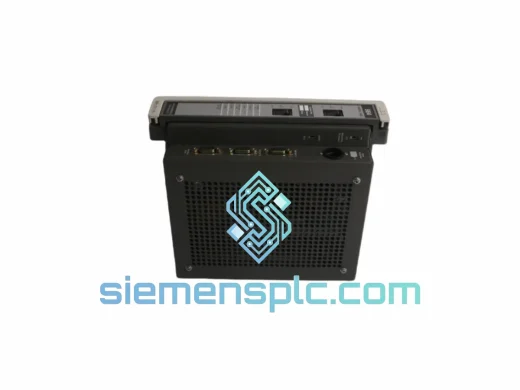
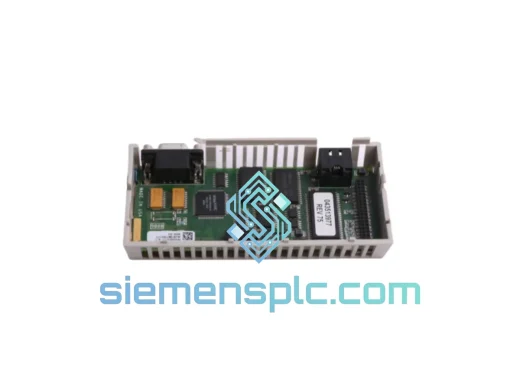
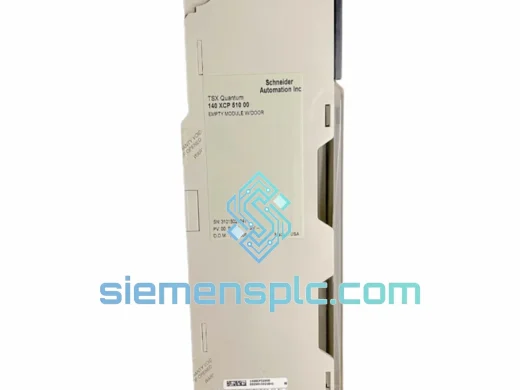
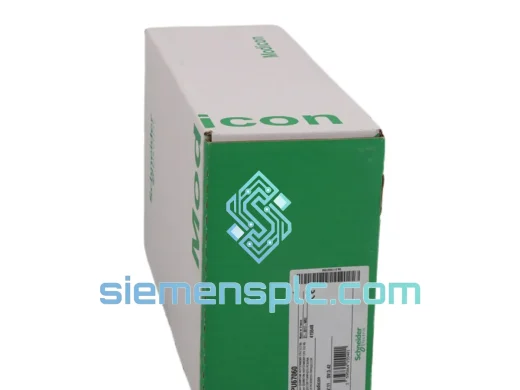
Schneider Electric 140CPU43412A PLC CPU Module
Modicon Quantum
Origin FR
PLC CPU Module
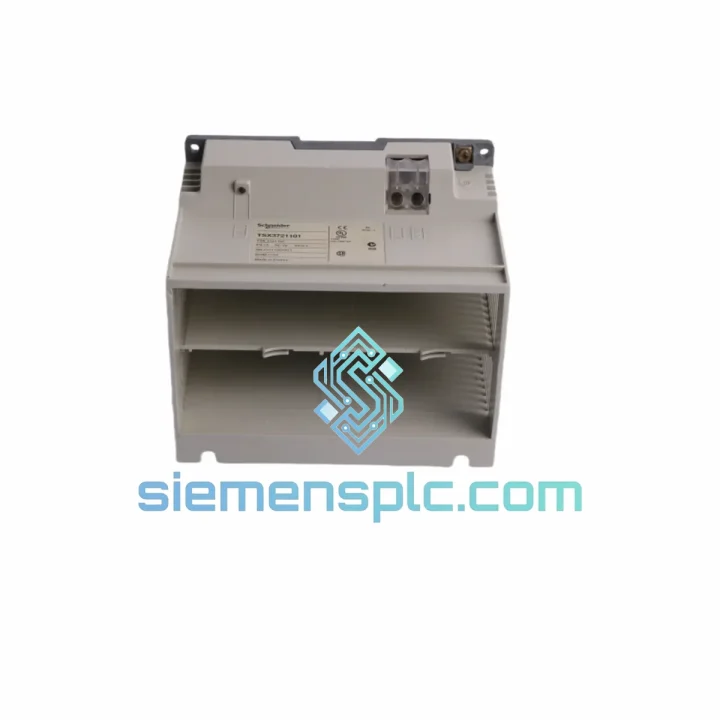
Request verified availability, condition, replacement risk review, packing options and courier lead time for TSX3721101.
Click Request Quote and the part number is inserted into the inquiry form automatically.
Core fields for model confirmation and RFQ routing. Detailed product narrative remains below.
The TSX3721101 is a self-contained programmable logic controller base unit from Schneider Electric’s Modicon TSX Micro family. It integrates the CPU, power supply interface, discrete I/O, and serial communication port into a single DIN-rail-mountable housing. Within a control loop, this unit functions as the deterministic execution engine: it scans field inputs at a fixed cycle, executes the stored IEC 61131-3 program, and drives output actuators—all within a bounded, repeatable scan time that is fundamental to reliable machine sequencing.
Unlike distributed I/O architectures that introduce fieldbus latency, the TSX3721101 places logic execution and I/O termination at the same physical node. This eliminates the round-trip communication delay between a remote CPU and I/O slave, making it the correct choice for applications where output response to input events must be deterministic within a single scan cycle—typically 1–10 ms depending on program size.
Real-time Stock & RFQ: [email protected] | WhatsApp: +86 18359268345
| Parameter | Specification |
|---|---|
| Part Number | TSX3721101 |
| Manufacturer | Schneider Electric |
| Product Family | Modicon TSX Micro |
| Controller Type | Compact PLC Base Unit (CPU + I/O integrated) |
| Supply Voltage | 24 VDC (–15% / +20%) |
| Power Consumption | ≤ 8 W typical at 24 VDC |
| Discrete Inputs | 12 × 24 VDC, sink/source (IEC Type 1/2) |
| Input Impedance | 3.4 kΩ nominal |
| Input ON Threshold | ≥ 15 VDC |
| Input OFF Threshold | ≤ 5 VDC |
| Discrete Outputs | 8 × transistor, NPN sink, 24 VDC / 0.5 A per point |
| Output Leakage Current | ≤ 1 mA (OFF state) |
| Output Voltage Drop | ≤ 1.2 VDC (ON state, rated current) |
| Output Short-Circuit Protection | Electronic, auto-reset |
| Isolation Method | Optical isolation, input-to-logic and output-to-logic |
| Communication Port | 1 × TER/AUX terminal port (Uni-Telway / programming) |
| Baud Rate | Up to 19,200 bps (Uni-Telway) |
| Programming Software | PL7 Micro / PL7 Pro (IEC 61131-3: LD, IL, SFC) |
| User Program Memory | Integrated RAM with EEPROM backup cartridge support |
| Scan Time | Proportional to program size; typically 1–10 ms for standard applications |
| Expansion Capability | Up to 3 TSX Micro extension modules (analog, discrete, specialty) |
| Max Expandable I/O | Up to ~104 discrete points with full expansion |
| Operating Temperature | 0 °C to +60 °C |
| Storage Temperature | –25 °C to +70 °C |
| Relative Humidity | 5% to 95% RH, non-condensing |
| Degree of Protection | IP20 (IEC 60529) |
| Mounting | 35 mm DIN rail (EN 60715) |
| Dimensions (W × H × D) | Approx. 170 × 90 × 75 mm |
| Weight | 640 g |
| Country of Origin | France |
| Certifications | CE (LVD + EMC), UL 508, cUL, RoHS |
| Warranty | 12 months against manufacturing defects |
The TSX3721101 is built on Schneider Electric’s established TSX Micro silicon platform, where the CPU core, I/O interface logic, and communication UART share a common internal bus arbitrated by the controller’s operating system. Understanding the hardware layers clarifies why this unit performs reliably in electrically noisy industrial environments.
Optical Isolation Architecture: All 12 discrete inputs pass through dedicated photocoupler stages before reaching the internal logic bus. Each photocoupler provides galvanic isolation rated to withstand common-mode transients typical of industrial field wiring—specifically the 1 kV / 1 μs burst pulses defined in IEC 61000-4-4 (EFT/Burst) and the 0.5 kJ surge levels of IEC 61000-4-5. This isolation barrier prevents ground loop currents and capacitively coupled noise from the field cable harness from corrupting the CPU’s internal data bus. The transistor output stage similarly incorporates isolation between the logic-level drive signal and the load-side switching transistor, protecting the CPU from inductive kickback generated by solenoid valves and relay coils.
EMC Filter Network on Inputs: Each input channel incorporates an RC filter network at the terminal block interface. This passive filter attenuates high-frequency noise (above approximately 1 kHz) before the signal reaches the photocoupler, providing a first line of defense against conducted RF interference from variable-frequency drives and switching power supplies operating in the same panel. The filter time constant is calibrated to maintain the specified 1.5 ms input response time while rejecting spurious transitions shorter than 0.5 ms—a common source of false input events in high-EMI environments.
Output Driver Protection: The NPN transistor output drivers incorporate internal clamping diodes across the collector-emitter junction. When an inductive load (solenoid, relay coil) is de-energized, the stored magnetic energy generates a reverse voltage spike. The clamp diode limits this spike to approximately 40 V above the supply rail, keeping the transistor within its safe operating area and eliminating the need for external freewheeling diodes on most standard 24 VDC loads. Electronic short-circuit protection with auto-reset prevents a shorted output from damaging the driver IC or tripping the panel supply.
Uni-Telway Bus Interface: The TER/AUX port implements Schneider Electric’s Uni-Telway protocol—a single-wire, multi-drop serial bus operating at up to 19,200 bps. The hardware UART is implemented in dedicated silicon separate from the CPU execution core, meaning communication interrupt handling does not consume CPU scan time. This architecture allows the controller to maintain deterministic scan performance even while actively exchanging data with a SCADA terminal or HMI panel over the serial link.
EEPROM Backup Mechanism: Program and data retention is handled by an EEPROM cartridge interface. Unlike battery-backed SRAM, EEPROM retains data indefinitely without a backup power source, eliminating the maintenance burden of periodic battery replacement. On power restoration, the CPU performs a checksum validation of the EEPROM contents before loading the program into execution RAM, ensuring that a corrupted backup is detected before the machine restarts.
Every TSX3721101 unit dispatched from our Xiamen, China facility is sourced through verified industrial distribution channels with full traceability to authorized Schneider Electric supply chains. Pre-shipment inspection covers factory label integrity (part number, date code, lot number, country of origin), seal and packaging condition, and power-on functional verification where applicable. Units are packed in anti-static bags within foam-lined cartons to withstand the mechanical shock and vibration of international air freight.
Logistics from Xiamen are handled via DHL Express, FedEx International Priority, and UPS Worldwide Expedited, with typical transit times of 3–7 business days to major industrial hubs in Europe, North America, Southeast Asia, and the Middle East. For project orders requiring consolidated shipments, EXW Xiamen terms are available to accommodate freight forwarder arrangements. Export documentation—commercial invoice, packing list, and certificate of origin—is prepared for every shipment. FORM E (ASEAN preferential tariff) and EUR.1 movement certificates are available on request for applicable destinations.
All units carry a 12-month warranty against manufacturing defects from the date of dispatch. DOA (dead-on-arrival) units are replaced within 7 business days upon confirmation. Warranty claims are processed through [email protected] with supporting documentation (order reference, photos, fault description).
Email: [email protected]
WhatsApp: +86 18359268345
Web: siemensplc.com
Location: Xiamen, China
© 2026 siemensplc.com. All rights reserved.
We check the full part number, brand, series and visible nameplate information before quotation.
Sales confirms stock path, condition option, quantity and realistic lead time for export dispatch.
DHL, FedEx, UPS or buyer courier arrangements can be reviewed with packing requirements.
Similar brand or category products for fast comparison and multi-item RFQ lists.