Allen-Bradley
RFQ Ready
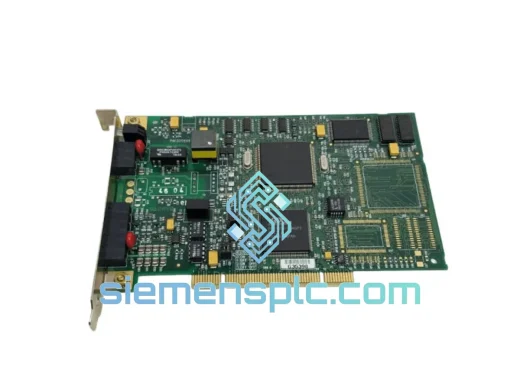
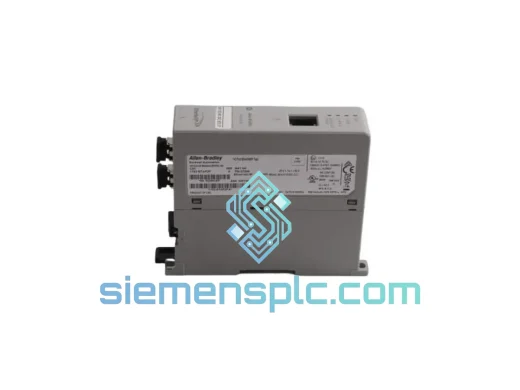
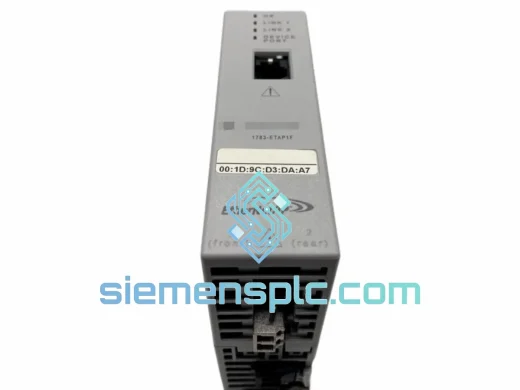
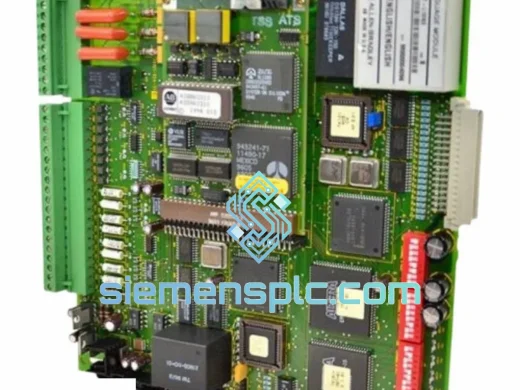
Allen-Bradley 1336T-GTB-SP1B Communication Board – 1336 PLUS Series
1336 PLUS
Origin US
PLC Communication Board
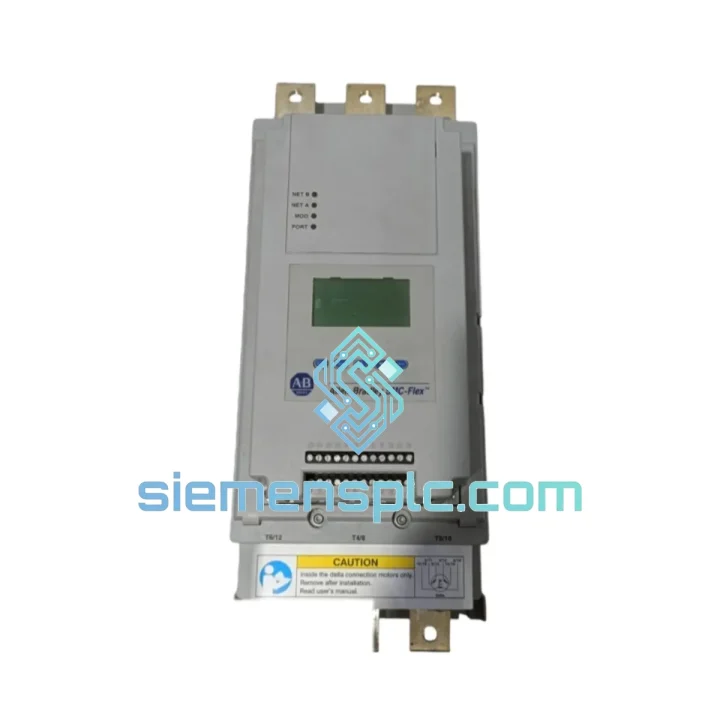
Request verified availability, condition, replacement risk review, packing options and courier lead time for 150-F135NBDB.
Click Request Quote and the part number is inserted into the inquiry form automatically.
Core fields for model confirmation and RFQ routing. Detailed product narrative remains below.
The Allen-Bradley 150-F135NBDB is a solid-state, reduced-voltage soft starter engineered by Rockwell Automation under the SMC Flex platform. Rated at 135 A full-load current with a supply voltage envelope of 200–480 V AC, 3-phase, 50/60 Hz, this controller governs the acceleration and deceleration profile of standard squirrel-cage induction motors through phase-angle firing of six anti-parallel SCR pairs — one pair per phase leg. The result is a continuously variable voltage ramp that eliminates the inrush torque spike characteristic of across-the-line starting, protecting both the driven load and the upstream power distribution infrastructure.
Within a control loop, the 150-F135NBDB occupies the power-conditioning layer between the motor branch circuit protection and the motor terminals. It receives velocity or torque references from a supervisory PLC — typically a ControlLogix or CompactLogix platform — via its integrated DeviceNet port, translates those references into gate-trigger timing signals for the SCR array, and simultaneously feeds back real-time current, voltage, and thermal data to the controller. This closed-loop diagnostic transparency is what separates the SMC Flex architecture from simpler, open-loop reduced-voltage starters.
Real-time Stock & RFQ: [email protected] | WhatsApp: +86 18359268345
| Parameter | Value |
|---|---|
| Catalog Number | 150-F135NBDB |
| Series | SMC Flex (Frame F) |
| Manufacturer | Allen-Bradley / Rockwell Automation |
| Motor Current Rating (FLA) | 135 A |
| Supply Voltage Range | 200–480 V AC, 3-Phase, 50/60 Hz |
| Control Voltage | 100–240 V AC, 50/60 Hz |
| Starting Topology | 6-SCR anti-parallel phase-angle control |
| Starting Modes | Voltage ramp, current limit, torque control, pump control |
| Internal Bypass Contactor | Included (rated for continuous full-voltage operation) |
| Communication Protocol | DeviceNet (built-in, Group 2 slave) |
| Electronic Overload Class | Class 10 / 15 / 20 / 30 (selectable) |
| Protection Functions | Phase loss, phase imbalance, stall, jam, ground fault, over-temperature |
| Enclosure / Mounting | IP20, open type, panel mount |
| Ambient Temperature (Operating) | 0 °C to +40 °C (derate above 40 °C) |
| Altitude (without derating) | Up to 1000 m |
| Approvals | UL, CE, CSA |
| Warranty | 12 months from date of shipment |
SCR Firing Architecture and Voltage Ramp Precision
The 150-F135NBDB employs a full six-SCR bridge topology — two anti-parallel thyristors per phase — rather than the three-SCR economy topology used in lower-cost starters. This arrangement ensures that both the positive and negative half-cycles of each phase are independently controlled, producing a symmetrical voltage waveform at the motor terminals throughout the ramp. Asymmetric half-cycle control, common in three-SCR designs, introduces a DC offset component that accelerates winding insulation degradation in motors with tight thermal margins. The six-SCR design eliminates this failure mode entirely.
Internal Bypass Contactor Logic
Once the motor reaches full speed, the internal bypass contactor closes, short-circuiting the SCR stack and transferring the full load current through a low-resistance copper path. This transition eliminates the continuous conduction losses across the thyristors — typically 1.5–2.5 V forward drop per SCR pair — and the associated thermal dissipation. The bypass logic includes a zero-crossing detection circuit that times contactor closure to within ±2 ms of the voltage zero-crossing, preventing the transient current spike that would otherwise occur from an unsynchronized bypass operation.
EMC Design and Conducted Emission Suppression
The SCR gate-trigger circuitry is optically isolated from the power stage, with a minimum isolation voltage of 2500 V RMS. This galvanic barrier prevents high-frequency switching noise generated during phase-angle firing from coupling back into the control logic or the DeviceNet communication bus. The unit’s internal snubber network — RC circuits across each SCR — limits the dV/dt rate to below 200 V/µs, keeping conducted emissions within EN 61800-3 Category C2 limits without requiring external line reactors in most standard installations.
Thermal Management and Overload Modeling
The electronic overload function uses a dual-element thermal model: a fast-response element tracking instantaneous current for jam and stall detection, and a slow-response element accumulating I²t for thermal memory across multiple start cycles. The thermal memory is retained in non-volatile memory through power cycles, preventing the common failure mode where a motor is restarted immediately after a trip, before the winding temperature has recovered. The selectable trip class (10/15/20/30) allows the overload characteristic to be matched to the motor’s thermal withstand curve as specified on the motor nameplate.
Every Allen-Bradley 150-F135NBDB unit dispatched from our Xiamen, China facility is sourced through verified supply channels with full lot traceability. Pre-shipment inspection covers visual examination of the SCR stack, bypass contactor mechanical operation, control board connector seating, and label authenticity verification against Rockwell Automation’s published catalog markings. Units are packed in anti-static foam-lined cartons with desiccant inserts, rated for the temperature and humidity excursions typical of air freight and sea freight transit.
Export documentation — commercial invoice, packing list, certificate of origin, and HS code declaration (HS 8537.10) — is prepared for every shipment. DHL Express, FedEx International Priority, and UPS Worldwide Express are available for time-critical orders, with transit times of 3–5 business days to most destinations in Europe, North America, and Southeast Asia. Sea freight consolidation is available for multi-unit project orders. A 12-month warranty covers manufacturing defects under normal operating conditions, with advance replacement available for qualified accounts.
Email: [email protected]
WhatsApp: +86 18359268345
Web: siemensplc.com
Location: Xiamen, China
© 2026 siemensplc.com. All rights reserved.
We check the full part number, brand, series and visible nameplate information before quotation.
Sales confirms stock path, condition option, quantity and realistic lead time for export dispatch.
DHL, FedEx, UPS or buyer courier arrangements can be reviewed with packing requirements.
Similar brand or category products for fast comparison and multi-item RFQ lists.