Allen-Bradley
RFQ Ready
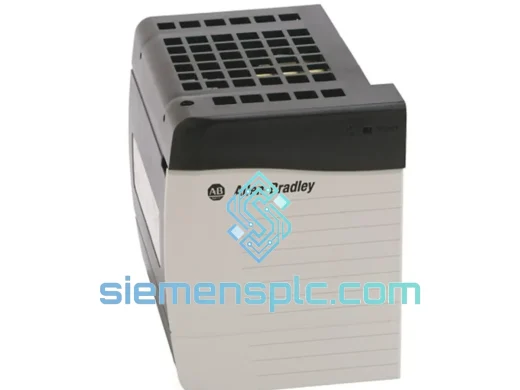
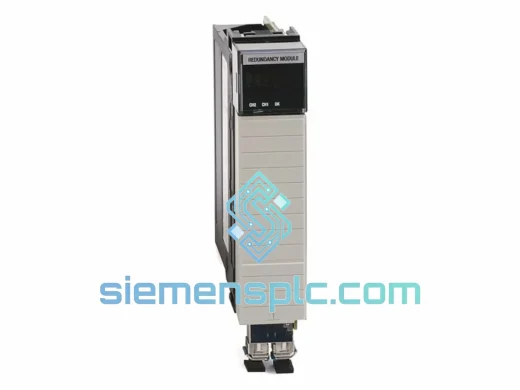
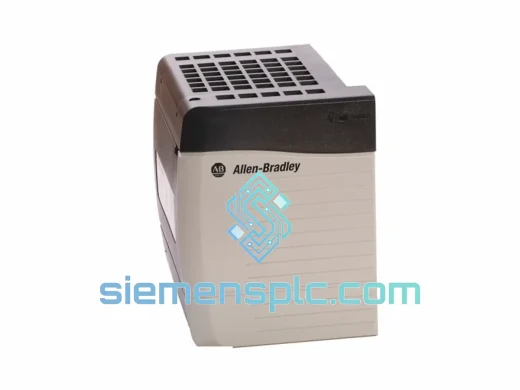
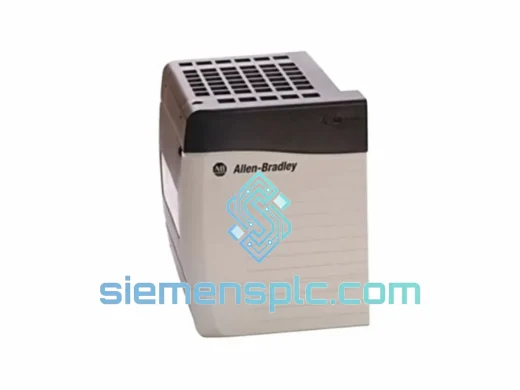
Allen-Bradley 1756-PAR2 Redundant Power Supply Adapter – ControlLogix Series
ControlLogix
Origin US
Redundant Power Supply Adapter
Request verified availability, condition, replacement risk review, packing options and courier lead time for 1756-PB75R.
Click Request Quote and the part number is inserted into the inquiry form automatically.
Core fields for model confirmation and RFQ routing. Detailed product narrative remains below.
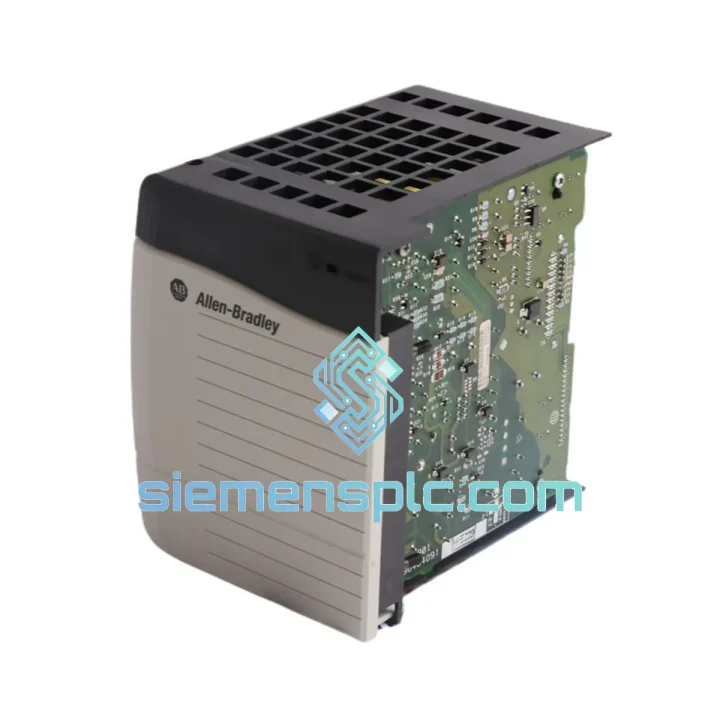
The 1756-PB75R is a 75W redundant-capable AC power supply module engineered for Rockwell Automation’s ControlLogix 1756 platform. Its primary function within a control loop is to maintain uninterrupted backplane power delivery across all installed modules — CPUs, I/O, communication bridges, and motion controllers — without introducing any transient disturbance during a primary supply fault event. In process industries where control continuity is a functional safety requirement, the 1756-PB75R operates as the last line of defense between a power anomaly and a process trip.
When deployed in a redundant pair configuration via the 1756-PSCA2 Power Supply Chassis Adapter, two 1756-PB75R units share the backplane load in active-standby topology. The switchover mechanism is hardware-arbitrated, with a transfer time measured in microseconds — well below the hold-up threshold of any ControlLogix CPU’s internal capacitance. This architecture eliminates single-point-of-failure exposure at the power layer without requiring any firmware configuration or software intervention.
Real-time Stock & RFQ: [email protected] | WhatsApp: +86 18359268345
| Parameter | Specification |
|---|---|
| Catalog Number | 1756-PB75R |
| Platform | Allen-Bradley ControlLogix 1756 |
| Backplane Output Power | 75 W continuous |
| AC Input Voltage Range | 85 – 265 V AC (universal, auto-ranging) |
| AC Input Frequency | 47 – 63 Hz |
| DC Backplane Rails | 1.2 V, 3.3 V, 5 V, 12 V |
| Inrush Current (max) | ≤ 40 A peak at 265 V AC cold start |
| Power Factor | ≥ 0.95 at full load (active PFC stage) |
| Efficiency | ≥ 85% at rated load |
| Redundancy Mode | Hot-swap active-standby via 1756-PSCA2 adapter |
| Switchover Time | < 1 ms (hardware-arbitrated, no CPU intervention) |
| Chassis Compatibility | All 1756 chassis: 4, 7, 10, 13, 17-slot |
| Operating Temperature | 0 °C to +60 °C (IEC 60068-2-1/2) |
| Storage Temperature | −40 °C to +85 °C |
| Relative Humidity | 5 – 95% RH, non-condensing |
| Vibration Resistance | 2 g, 10 – 500 Hz (IEC 60068-2-6) |
| Shock Resistance | 30 g, 11 ms half-sine (IEC 60068-2-27) |
| EMC Emissions | EN 55011 Class A; FCC Part 15 Class A |
| EMC Immunity | EN 61000-4-2/3/4/5/6/8 (ESD, RS, EFT, Surge, CS, PFMF) |
| Safety Certifications | UL 508, cUL, CE (LVD + EMC), ATEX Zone 2 (consult datasheet) |
| Slot Occupancy | 1 chassis slot (left-most position) |
| Weight | Approx. 980 g |
| Enclosure Rating | Open-type; install in IP54 or better enclosure |
| Warranty | 12 months from date of shipment |
The 1756-PB75R’s internal architecture is built around a two-stage power conversion topology. The first stage is an active Power Factor Correction (PFC) boost converter that rectifies the wide-range AC input and regulates an intermediate DC bus at approximately 400 V DC. This stage achieves a power factor of ≥ 0.95, reducing reactive current draw on facility distribution panels and complying with IEC 61000-3-2 harmonic limits — a requirement in CE-marked installations across the EU.
The second stage is a high-frequency LLC resonant converter operating at switching frequencies in the 100–300 kHz range. The LLC topology provides inherently low switching losses and near-zero voltage switching (ZVS) across the load range, which directly translates to reduced thermal dissipation and extended component life in 24/7 continuous operation environments. The multiple output rails (1.2 V, 3.3 V, 5 V, 12 V) are derived from this stage via synchronous rectification, with cross-regulation maintained within ±2% under dynamic load transients.
For EMC hardening, the module incorporates a multi-stage common-mode and differential-mode filter network at the AC input, including X2/Y2-class capacitors and a toroidal common-mode choke. This filter architecture suppresses conducted emissions below EN 55011 Class A limits and provides immunity against fast transient bursts (EFT) per IEC 61000-4-4 at ±2 kV on the power port — a critical requirement in environments with variable-frequency drives, contactors, and high-current switching loads on shared distribution panels.
The redundancy arbitration logic is implemented in dedicated hardware circuitry within the 1756-PSCA2 adapter, not in firmware. Each 1756-PB75R continuously monitors its own output voltage and current via internal sense lines. If the primary unit’s output drops below the undervoltage threshold (typically 4.75 V on the 5 V rail), the PSCA2’s analog comparator circuit activates the standby unit’s output FETs within one switching cycle — a deterministic, firmware-independent failover that cannot be delayed by CPU task scheduling or communication bus latency.
Thermal management relies on a forced-convection design with an internal fan and a thermally conductive chassis interface. The power semiconductors are mounted on an aluminum heat spreader bonded to the module’s rear wall, which interfaces with the chassis backplane’s airflow channel. Operating junction temperatures of the primary switching FETs are maintained below 125 °C at full load and 60 °C ambient, providing a thermal margin that directly extends MTBF beyond 300,000 hours under typical industrial duty cycles.
Every 1756-PB75R unit supplied through siemensplc.com is sourced as genuine Allen-Bradley / Rockwell Automation product. Each unit undergoes a structured pre-shipment verification protocol:
Shipments originate from our warehouse in Xiamen, China, with access to major international freight carriers including DHL Express, FedEx International Priority, and UPS Worldwide Expedited. Standard international delivery to North America, Europe, Southeast Asia, and the Middle East is achieved within 3–7 business days from confirmed order. Export documentation — including commercial invoice, packing list, and HS code 8537.10 classification — is prepared in compliance with Chinese customs regulations and destination country import requirements. All shipments are fully tracked with real-time status updates provided to the buyer.
Email: [email protected]
WhatsApp: +86 18359268345
Web: siemensplc.com
Location: Xiamen, China
© 2026 siemensplc.com. All rights reserved.
We check the full part number, brand, series and visible nameplate information before quotation.
Sales confirms stock path, condition option, quantity and realistic lead time for export dispatch.
DHL, FedEx, UPS or buyer courier arrangements can be reviewed with packing requirements.
Similar brand or category products for fast comparison and multi-item RFQ lists.