
Allen-Bradley
In Stock OK
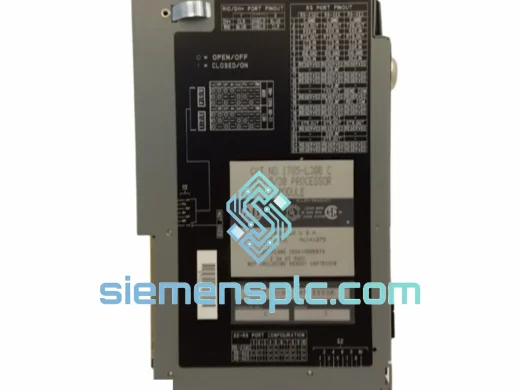
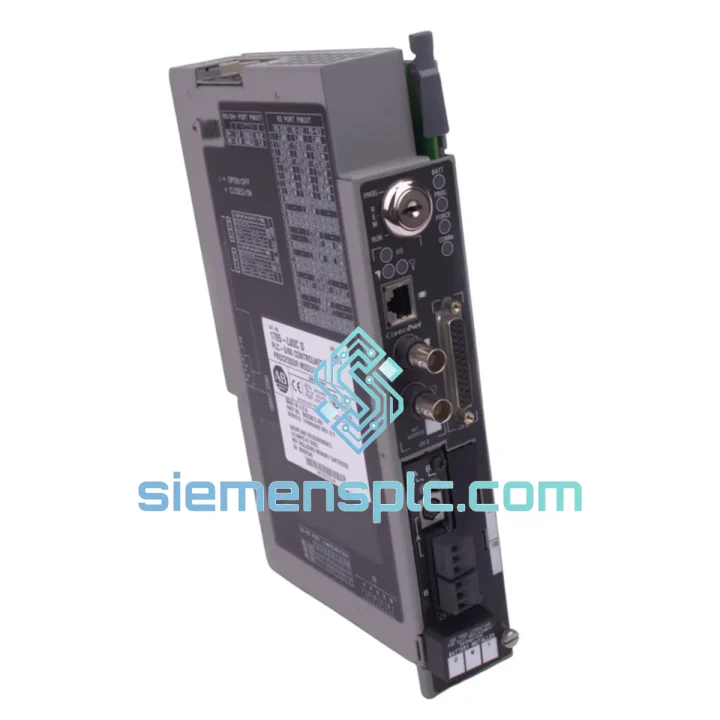
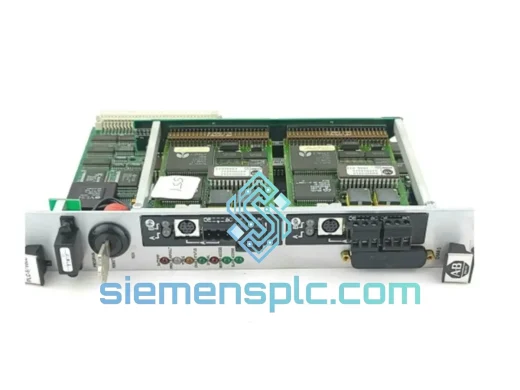
Allen-Bradley 1785-L80C PLC Controller – PLC-5 Series
Request verified availability, condition, replacement risk review, packing options and courier lead time for 1785-L80C.
BrandAllen-Bradley
Part Number1785-L80C
ConditionAvailability Check
Lead TimeRFQ Confirmation
DocumentsDatasheet / photos by RFQ
ShippingExport packing available
Auto-filled RFQ
1785-L80C
Click Request Quote and the part number is inserted into the inquiry form automatically.
- Reply by email: [email protected]
- WhatsApp / Tel: +86 18359268345
- Mon-Sat 9:00-18:00 GMT+8
Procurement Data
Key Product Information
Core fields for model confirmation and RFQ routing. Detailed product narrative remains below.
- Brand
- Allen-Bradley
- Primary Part Number
- 1785-L80C
- Product Type
- PLC Controller
- Series / Family
- PLC-5
- Manufacturer
- Allen-Bradley (Rockwell Automation)
- Country of Origin
- US
- Catalog Category
- PLCs & Controllers
- Operating Temp.
- 0 °C to +60 °C
- Warranty
- 12 months from date of shipment
Model confirmed for inquiry
1785-L80C
Send quantity, destination and urgency. The RFQ form keeps this part number attached.
Request Quote
Product Overview
Allen-Bradley 1785-L80C: High-Capacity ControlNet Processor in the PLC-5 Architecture
The 1785-L80C is the top-tier processor within the Allen-Bradley PLC-5 ControlNet sub-family. It occupies the master slot of a 1771 I/O chassis and governs all scan-cycle execution, data-table management, and ControlNet scheduled/unscheduled traffic arbitration from a single backplane-resident module. In distributed control architectures where determinism is a contractual requirement — not a design aspiration — the L80C’s Phase 1.25 ControlNet implementation provides the bounded latency that batch reactors, high-speed assembly lines, and safety-adjacent control loops demand.
Unlike general-purpose controllers that treat network communication as a background task, the 1785-L80C integrates its ControlNet port at the hardware level. The onboard ASIC handles media access control (MAC) independently of the ladder scan engine, ensuring that scheduled connection bandwidth is honored regardless of user-program execution time. This architectural separation is the foundation of the module’s deterministic behavior.
Real-time Stock & RFQ: [email protected] | WhatsApp: +86 18359268345
Technical Parameters
| Parameter | Specification |
|---|---|
| Manufacturer | Allen-Bradley (Rockwell Automation) |
| Part Number | 1785-L80C |
| Product Series | PLC-5 |
| Network Protocol | ControlNet Phase 1.25 (IEEE 802.4 token-bus derivative) |
| ControlNet Port | BNC coaxial, dual-port redundant media capable |
| User Memory | 100K words (largest in the PLC-5/C sub-family) |
| Data Table Size | Up to 32,767 elements per file type |
| I/O Addressing | Up to 3,072 discrete I/O points (local + remote) |
| Backplane Interface | 1771 parallel backplane, 8-bit data bus |
| Scan Time (typical) | 0.9 ms/K of Boolean logic |
| Communication Ports | ControlNet (onboard), DH+ via 1785-KA5 bridge |
| Programming Software | RSLogix 5 / RSLogix 5 Classic (FactoryTalk) |
| Operating Temperature | 0 °C to +60 °C |
| Storage Temperature | -40 °C to +85 °C |
| Relative Humidity | 5% to 95% non-condensing |
| Power Consumption | 3.5 A @ 5 VDC (backplane) |
| Module Width | Single-slot (1771 chassis) |
| Weight | Approx. 1,450 g |
| Certifications | UL, CE, CSA |
| Warranty | 12 months from date of shipment |
Hardware Logical Analysis
The 1785-L80C’s internal architecture reflects design decisions made for high-throughput, noise-dense industrial environments. Several hardware-level characteristics distinguish it from lower-tier PLC-5 variants:
Backplane Bus Arbitration: The 1771 backplane operates as a parallel, synchronous bus. The L80C’s processor card holds bus mastership and grants I/O module access in a deterministic round-robin sequence. This prevents any single I/O module from monopolizing bus bandwidth — a critical property when analog input modules with high conversion times share the chassis with fast digital output modules.
ControlNet MAC Layer Independence: The onboard ControlNet ASIC implements the CTDMA (Concurrent Time Domain Multiple Access) algorithm in dedicated silicon. Scheduled connections — those carrying I/O data with defined requested packet intervals (RPI) — are serviced by the ASIC without interrupting the ladder scan engine. Unscheduled connections (MSG instructions, explicit messaging) are queued and serviced during inter-scan gaps. This two-tier arbitration prevents network traffic spikes from inducing scan-time jitter.
EMC Design: The module’s PCB employs ground-plane isolation between the ControlNet analog front-end circuitry and the digital logic section. The BNC connector shell is bonded directly to chassis ground through the backplane connector, providing a low-impedance return path for common-mode noise induced on the coaxial cable. This design meets IEC 61000-4-4 (electrical fast transient) and IEC 61000-4-5 (surge) immunity levels appropriate for heavy industrial environments.
Memory Architecture: The 100K-word user memory is implemented as battery-backed SRAM. A lithium cell on the module maintains data-table and program integrity during power loss. The memory map is partitioned into fixed-function files (output, input, status, binary, timer, counter, control, integer, float) and user-defined files, with the L80C supporting the maximum file count in the PLC-5 family. This eliminates the memory fragmentation issues that constrain smaller L20 and L40 variants in large-scale applications.
Watchdog and Fault Isolation: A hardware watchdog timer monitors scan-cycle completion. If the scan does not complete within the configured watchdog interval, the processor transitions to fault mode and de-energizes all outputs through the backplane fault relay — a fail-safe behavior that does not depend on software execution. Fault codes are latched in the status file (S:6) and remain readable after power cycle, supporting post-incident diagnostics without external logging hardware.
System Integration Benefits
- Deterministic I/O Update Rates: Scheduled ControlNet connections deliver I/O data at user-configured RPIs (2 ms minimum), providing the bounded update latency required for closed-loop PID control over distributed I/O racks.
- Large Program Capacity Without Segmentation: 100K words of contiguous user memory eliminates the need to partition large control programs across multiple processors, reducing inter-processor communication overhead and simplifying program maintenance.
- Peer-to-Peer MSG Capability: The L80C supports MSG instructions for controller-to-controller data exchange over ControlNet without requiring a host PC or communication co-processor, enabling distributed architectures with autonomous inter-controller coordination.
- 1771 I/O Ecosystem Compatibility: Full backward compatibility with the entire 1771 I/O module library — including analog, thermocouple, RTD, high-speed counter, and specialty modules — protects existing field wiring and I/O infrastructure investments during processor upgrades.
- Diagnostic Transparency via Status File: The S: status file exposes 64 words of processor diagnostic data, including scan time, I/O fault flags, ControlNet connection status, and battery condition — all readable by the ladder program for in-process fault annunciation without external diagnostic tools.
- Redundant Media Support: ControlNet dual-port topology allows the L80C to operate on redundant coaxial cable runs. A cable fault on one trunk does not interrupt scheduled I/O traffic, supporting high-availability architectures without a redundant processor chassis.
- Phased Migration Path: The L80C’s ControlNet port is bridgeable to EtherNet/IP via 1756-CNB modules in a ControlLogix chassis, enabling incremental migration from PLC-5 to Logix platforms without a full cutover — preserving production continuity during modernization projects.
- Structured Exception Handling: The processor supports fault routine programming (S:29 fault code routing), allowing application-specific recovery logic to execute on detected faults before the processor halts — reducing unplanned downtime in processes where a controlled shutdown sequence is preferable to an immediate stop.
Quality Assurance & Global Logistics
Every 1785-L80C unit supplied by siemensplc.com is sourced from verified industrial surplus channels, authorized distributors, or decommissioned OEM installations with documented provenance. Pre-shipment verification includes physical inspection of connector integrity, label authenticity, and firmware revision markings. Functional units are bench-tested using RSLogix 5 to confirm processor boot sequence, memory integrity check completion, and ControlNet port initialization.
Packaging follows ESD-safe protocols: anti-static bag, foam-lined carton, desiccant pack, and tamper-evident outer seal. All shipments originate from Xiamen, China, dispatched via DHL Express, FedEx International Priority, or UPS Worldwide Express — with typical transit times of 3–5 business days to North America and Europe, and 2–4 business days to Southeast Asia. Full export documentation is provided with every shipment: commercial invoice, packing list, and certificate of origin. For regulated industries, test reports and inspection records are available upon request. A 12-month warranty covers functional defects from the date of shipment.
Contact Information
Email: [email protected]
WhatsApp: +86 18359268345
Web: siemensplc.com
Location: Xiamen, China
© 2026 siemensplc.com. All rights reserved.
Ready to quote
[email protected]
Send This Part Number to Sales
RFQ workflow
Quality workflow ->
Confirmation Process
01Model confirmation
We check the full part number, brand, series and visible nameplate information before quotation.
02Availability reply
Sales confirms stock path, condition option, quantity and realistic lead time for export dispatch.
03Packing & courier
DHL, FedEx, UPS or buyer courier arrangements can be reviewed with packing requirements.
Continue sourcing
Browse full catalog ->
Related Automation Parts
Similar brand or category products for fast comparison and multi-item RFQ lists.
Allen-Bradley
RFQ Ready
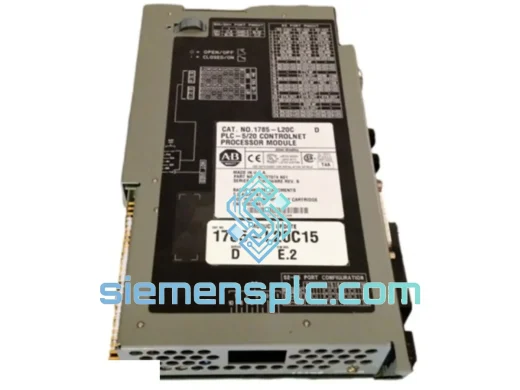
Allen-Bradley 1788-CNC CNC Interface Card – ControlNet Series
PLC-5
Origin US
CNC Interface Card
Allen-Bradley
RFQ Ready
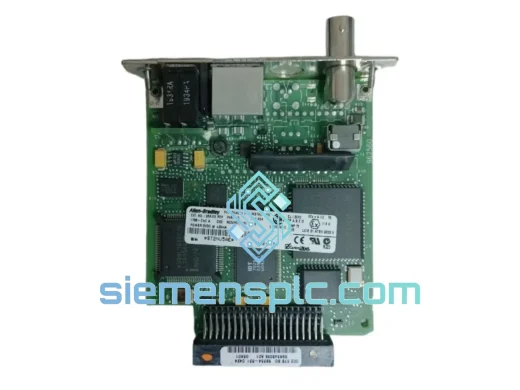
Allen-Bradley 1785-V40V CPU Module – PLC-5 Series
PLC-5
Origin US
CPU Module