Allen-Bradley
RFQ Ready
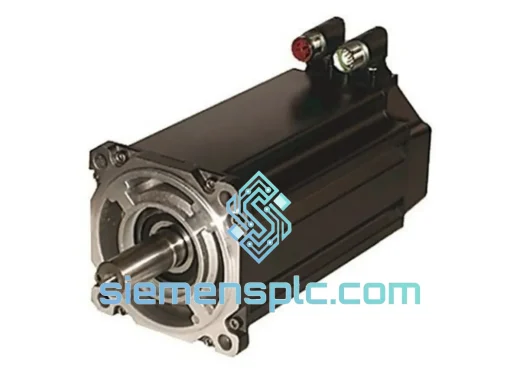
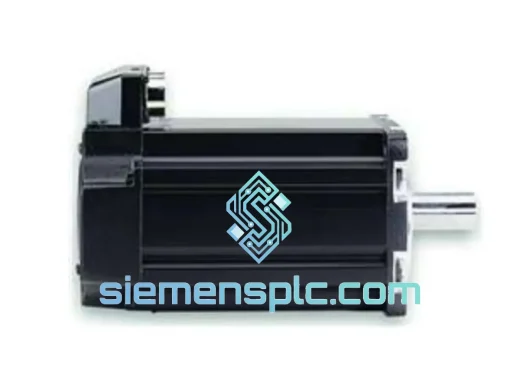
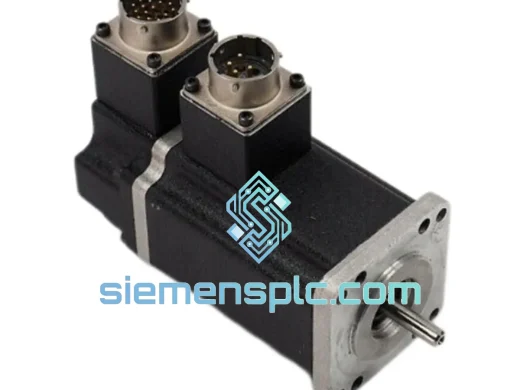
Allen-Bradley N-2302-1-F00AA AC Servo Motor
AC Servo Motor 1326 Series
Origin US
AC Servo Motor
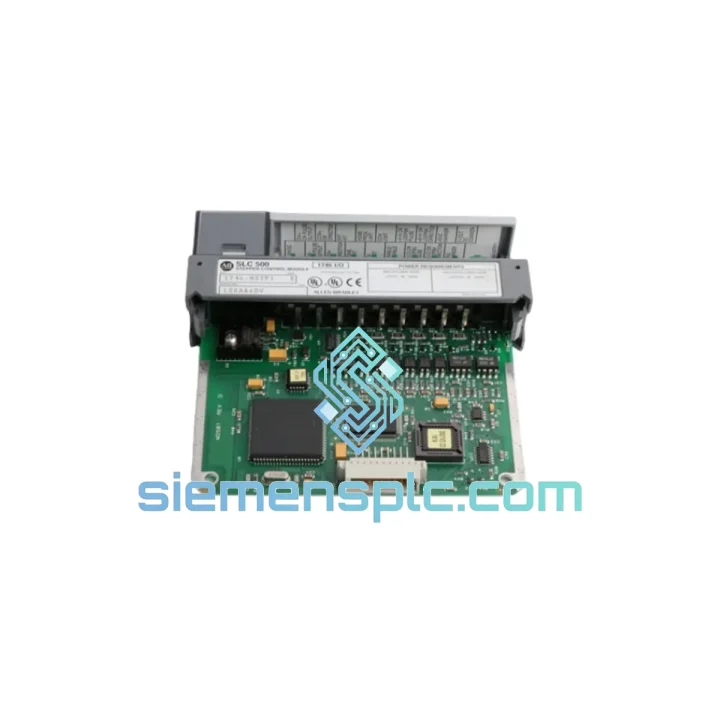
Request verified availability, condition, replacement risk review, packing options and courier lead time for 1746-HSTP1.
Click Request Quote and the part number is inserted into the inquiry form automatically.
Core fields for model confirmation and RFQ routing. Detailed product narrative remains below.
The 1746-HSTP1 occupies a single slot in any SLC 500 I/O chassis and delivers deterministic, open-loop stepper motor control directly over the SLC backplane without an external motion controller or gateway. The module generates differential step-and-direction pulse trains at up to 250 kHz, sufficient to drive micro-stepping amplifiers at resolutions of 1/16 step or finer, while consuming only 250 mA at 5 VDC and 75 mA at 24 VDC from the chassis power supply. Its four operating modes — Preset Position, Velocity, Home-to-Limit, and Registration — cover the full range of industrial positioning tasks encountered in packaging, machining, dispensing, and material handling. Because all motion commands are issued through standard SLC ladder MSG instructions and output image words, the module integrates into existing SLC 5/01 through 5/05 programs without additional software licenses or motion-specific programming environments. This architectural simplicity reduces commissioning time and eliminates the version-compatibility risks associated with dedicated motion controllers.
Real-time Stock & RFQ: [email protected] | WhatsApp: +86 18359268345
| Catalog Number | 1746-HSTP1 |
| Manufacturer | Allen-Bradley / Rockwell Automation |
| Platform Compatibility | SLC 500 I/O Chassis (all slot counts) |
| Module Type | Single-axis open-loop stepper control |
| Output Signal Type | Differential step & direction (RS-422 line driver) |
| Maximum Step Pulse Frequency | 250 kHz |
| Minimum Step Pulse Width | 2 µs |
| Control Modes | Preset Position, Velocity, Home-to-Limit, Registration |
| Backplane Current (5 VDC) | 250 mA |
| Backplane Current (24 VDC) | 75 mA |
| External I/O Power | 24 VDC user-supplied |
| Digital Inputs | Home, Overtravel+, Overtravel−, Registration (24 VDC sourcing) |
| Slot Width | Single-slot SLC 500 I/O module |
| Operating Temperature | 0 °C to +60 °C |
| Storage Temperature | −40 °C to +85 °C |
| Relative Humidity | 5 % to 95 % non-condensing |
| Vibration Resistance | 2 g, 10–500 Hz (IEC 68-2-6) |
| Shock Resistance | 30 g, 11 ms half-sine (IEC 68-2-27) |
| Certifications | UL 508, CSA C22.2 No. 142, CE (EMC 2014/30/EU, LVD 2014/35/EU), RoHS |
| Approximate Weight | 400 g |
| Warranty | 12 months from date of shipment |
The 1746-HSTP1 implements its pulse generation engine in dedicated on-board hardware logic rather than firmware running on a shared microcontroller. This distinction is significant: the step-pulse output frequency is maintained independently of the SLC processor scan cycle, so a momentary scan-time overrun caused by a complex ladder program does not introduce jitter into the motion profile. The module’s RS-422 differential line driver output provides ±200 mV common-mode rejection, which suppresses the high-frequency switching noise generated by PWM stepper amplifiers operating at 20–40 kHz chopper frequencies. Ground loops between the drive cabinet and the SLC chassis — a common EMC failure mode in mixed-signal industrial panels — are attenuated by the differential signaling architecture without requiring optical isolation on the step/direction path.
The four on-board digital inputs (Home, Overtravel+, Overtravel−, Registration) are hardware-latched at the module level. The Registration input, in particular, captures the exact step count at the moment a product-detect sensor fires, independent of the PLC scan boundary. This hardware-latch mechanism achieves position-capture latency below 10 µs, a figure unattainable through standard discrete input modules read at scan-cycle boundaries. The Home-to-Limit mode executes a two-phase homing sequence — coarse approach at programmed velocity, deceleration on limit contact, and fine back-off to a defined offset — entirely within the module’s internal state machine, freeing the SLC processor from managing homing logic in ladder code.
Internally, the module maps its command and status data into the SLC output and input image tables using a 32-word block structure. Motion commands (target position, velocity, acceleration rate, deceleration rate, mode select) are written to the output image; status words (current position accumulator, fault bits, motion-complete flag, limit-switch states) are read from the input image. This memory-mapped architecture means the SLC processor can monitor real-time position feedback at every scan without issuing explicit read commands, enabling tight integration with process interlocks and safety logic in the same ladder program.
Every 1746-HSTP1 unit dispatched from our Xiamen, China facility passes a structured pre-shipment verification protocol. Physical inspection confirms the absence of board-level corrosion, connector pin damage, and counterfeit label indicators. Date-code and serial-number records are cross-referenced against Allen-Bradley manufacturing documentation. A functional power-on test verifies backplane communication handshake and LED status response. Units are packed in anti-static bags with humidity indicator cards, placed in foam-lined cartons rated for international air freight handling.
Xiamen’s geographic position — adjacent to Xiamen Gaoqi International Airport and within 48 hours of major global air hubs — enables next-flight-out dispatch for urgent requirements. Standard shipment options include DHL Express (2–4 business days to Europe and North America), FedEx International Priority, and UPS Worldwide Express. For large-volume orders, sea freight consolidation via Xiamen Port is available with full export documentation including commercial invoice, packing list, and certificate of conformance. All units carry a 12-month warranty from the date of shipment. Warranty claims are processed within 5 business days of receipt of the returned unit.
Email: [email protected]
WhatsApp: +86 18359268345
Web: siemensplc.com
Location: Xiamen, China
© 2026 siemensplc.com. All rights reserved.
We check the full part number, brand, series and visible nameplate information before quotation.
Sales confirms stock path, condition option, quantity and realistic lead time for export dispatch.
DHL, FedEx, UPS or buyer courier arrangements can be reviewed with packing requirements.
Similar brand or category products for fast comparison and multi-item RFQ lists.