Allen-Bradley
RFQ Ready
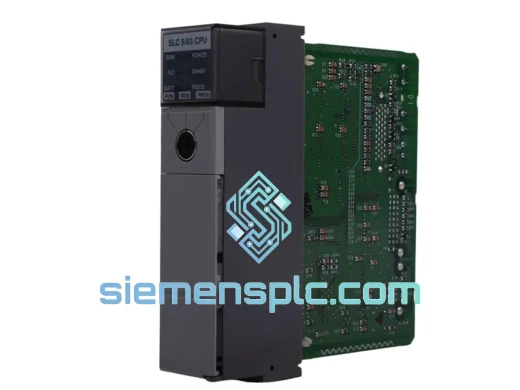
Allen-Bradley 1747-L542 PLC Controller Module
SLC 500
Origin US
PLC Controller Module
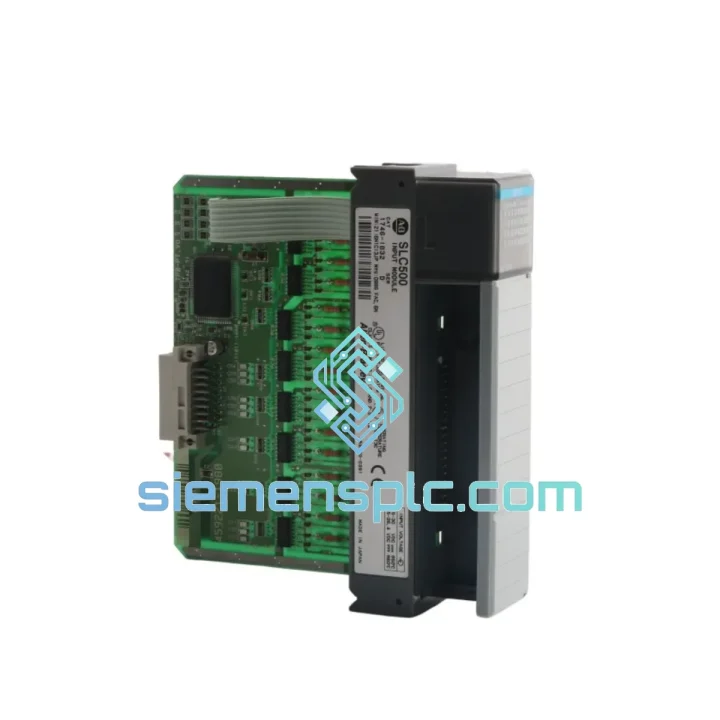
Request verified availability, condition, replacement risk review, packing options and courier lead time for 1746-BTM.
Click Request Quote and the part number is inserted into the inquiry form automatically.
Core fields for model confirmation and RFQ routing. Detailed product narrative remains below.
The Allen-Bradley 1746-BTM is a purpose-engineered barrel temperature control module developed for the SLC 500 modular I/O platform. Its primary function within a control loop is to serve as a self-contained, multi-zone thermal regulation unit — integrating thermocouple/RTD signal conditioning, onboard PID execution, and backplane-native data exchange into a single slot-width module. Unlike generic analog input modules that offload PID computation to the processor, the 1746-BTM executes closed-loop control autonomously per zone, decoupling thermal regulation latency from the main processor scan cycle. This architecture is critical in plastic injection molding and extrusion applications where barrel zone temperature deviation beyond ±1 °C can cause material degradation, dimensional instability, or screw wear.
The module manages up to 8 independent barrel zones, each with its own setpoint, PID gain set, and output drive signal. Zone outputs are configurable for time-proportioning relay or analog (4–20 mA) actuation, accommodating both resistive heater bands and SCR-driven heating elements. The 1746-BTM communicates with the SLC processor via the local backplane I/O bus, mapping zone process values, setpoints, and alarm states directly into the processor’s data file — enabling RSLogix 500 ladder logic to monitor, adjust, and interlock thermal zones without additional gateway hardware.
📩 Real-time Stock & RFQ: [email protected] | WhatsApp: +86 18359268345
| Parameter | Specification |
|---|---|
| Part Number | 1746-BTM |
| Manufacturer | Allen-Bradley / Rockwell Automation |
| Platform | SLC 500 Modular I/O System |
| Module Type | Barrel Temperature Control Module (onboard PID) |
| Temperature Input Channels | Up to 8 zones |
| Sensor Input Types | Type J Thermocouple, Type K Thermocouple, PT100 RTD (100 Ω) |
| Input Resolution | 0.1 °C (thermocouple); 0.1 °C (RTD) |
| Temperature Accuracy | ±0.5 °C typical across calibrated range |
| Control Algorithm | PID (Proportional-Integral-Derivative), per-zone execution |
| Output Type | Time-proportioning relay output or 4–20 mA analog output (model-dependent) |
| Relay Output Rating | 2 A @ 120/240 VAC, resistive load |
| Backplane Interface | SLC 500 local I/O bus (1746 backplane) |
| Power Consumption | Supplied via SLC 500 backplane (1746-Pxxx series) |
| Operating Temperature | 0 °C to +60 °C |
| Storage Temperature | −40 °C to +85 °C |
| Relative Humidity | 5% to 95% non-condensing |
| Vibration Resistance | IEC 68-2-6: 2 g, 10–500 Hz |
| Shock Resistance | IEC 68-2-27: 30 g, 11 ms half-sine |
| Certifications | UL Listed, CE Marked, CSA Certified |
| Chassis Compatibility | 1746-A4, A7, A10, A13 (any slot) |
| Processor Compatibility | SLC 5/01 through SLC 5/05 (1747-L20 to L553) |
| Programming Software | RSLogix 500 / RSLogix Micro |
| Warranty | 12 months from date of shipment (supplied by siemensplc.com) |
Distributed PID Execution Architecture
The 1746-BTM implements a distributed control model: each of its 8 zones runs an independent PID loop on the module’s own microprocessor, not on the SLC CPU. This means the thermal control cycle time is fixed at the module level (typically 100–500 ms per zone, configurable) and is entirely decoupled from the SLC processor’s ladder scan time. In a 10-slot chassis running mixed I/O, the SLC processor scan may range from 5 ms to 50 ms depending on program complexity — if barrel PID were executed in ladder logic, scan jitter would directly translate into output timing variation and thermal instability. The 1746-BTM eliminates this dependency entirely.
Signal Conditioning and Cold Junction Compensation
For thermocouple inputs (Type J: −210 °C to +760 °C; Type K: −200 °C to +1372 °C), the module integrates hardware cold junction compensation (CJC) at the terminal block. A precision thermistor measures the terminal block temperature in real time, and the module’s signal processor applies the ITS-90 thermocouple polynomial correction digitally. This eliminates the ±2–5 °C error that would otherwise result from ambient temperature variation at the panel enclosure — a non-trivial error source in machine rooms where ambient temperature can swing 15–20 °C between shifts.
EMC Design and Noise Immunity
Barrel heater circuits are among the most electrically hostile loads in industrial machinery: SCR phase-angle firing generates conducted and radiated EMI across a broad spectrum. The 1746-BTM addresses this through optocoupler isolation on all analog input channels, providing galvanic separation between the thermocouple/RTD field wiring and the module’s digital logic. The isolation barrier is rated to withstand 1500 VAC continuous, protecting the backplane and processor from common-mode transients induced by heater switching. Additionally, the module’s PCB layout employs ground plane partitioning to separate analog signal ground from digital logic ground, reducing internal crosstalk between channels to below 0.05 °C equivalent noise.
Output Drive and Time-Proportioning Logic
For relay output variants, the module implements time-proportioning control with a configurable cycle time (typically 1–30 seconds). The duty cycle of the relay output is modulated by the PID output percentage, converting a continuous PID demand signal into a pulse-width-modulated relay switching pattern. This approach is compatible with standard resistive heater bands without requiring external SCR drives, reducing BOM cost in retrofit applications. For analog output variants, the 4–20 mA signal drives external SCR power controllers directly, enabling smoother thermal regulation with reduced heater thermal cycling.
Every 1746-BTM unit supplied by siemensplc.com is sourced through verified channels — authorized surplus distributors, OEM-certified remanufacturers, and factory-sealed new old stock (NOS) — with full traceability to original manufacture. Units are not sourced from unverified secondary markets or grey-channel brokers.
4-Stage Inspection Protocol:
Global Logistics from Xiamen, China: Our warehouse and dispatch center is located in Xiamen, Fujian Province — a major international logistics hub with direct access to DHL, FedEx, UPS, and SF Express international networks. Standard export documentation (commercial invoice, packing list, country of origin certificate) is prepared for every shipment. Typical transit times: 3–5 business days to Europe and North America via express courier; 5–7 business days to Southeast Asia and the Middle East. All shipments are fully insured and tracked from dispatch to delivery. Emergency same-day dispatch is available for in-stock units ordered before 14:00 CST.
Available documentation per shipment: functional test report, calibration certificate, country of origin declaration, 12-month warranty certificate, and MSDS/material safety data sheet upon request.
📧 Email: [email protected]
💬 WhatsApp: +86 18359268345
🌐 Web: siemensplc.com
📍 Location: Xiamen, China
© 2026 siemensplc.com. All rights reserved.
We check the full part number, brand, series and visible nameplate information before quotation.
Sales confirms stock path, condition option, quantity and realistic lead time for export dispatch.
DHL, FedEx, UPS or buyer courier arrangements can be reviewed with packing requirements.
Similar brand or category products for fast comparison and multi-item RFQ lists.