Allen-Bradley
RFQ Ready
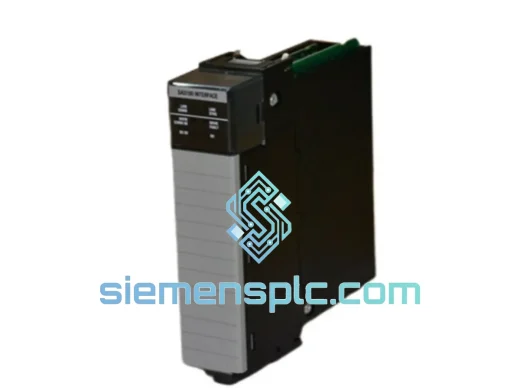
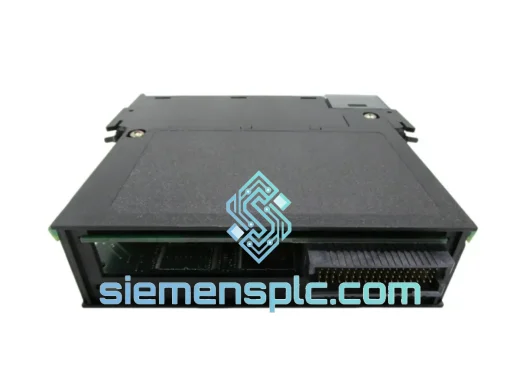
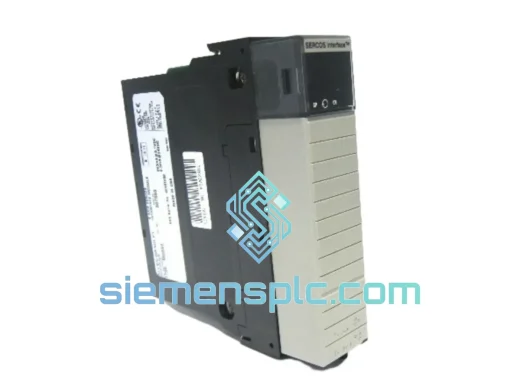
Allen-Bradley 1756-M08SE Servo Motion Module
ControlLogix
Origin US
Servo Motion Module
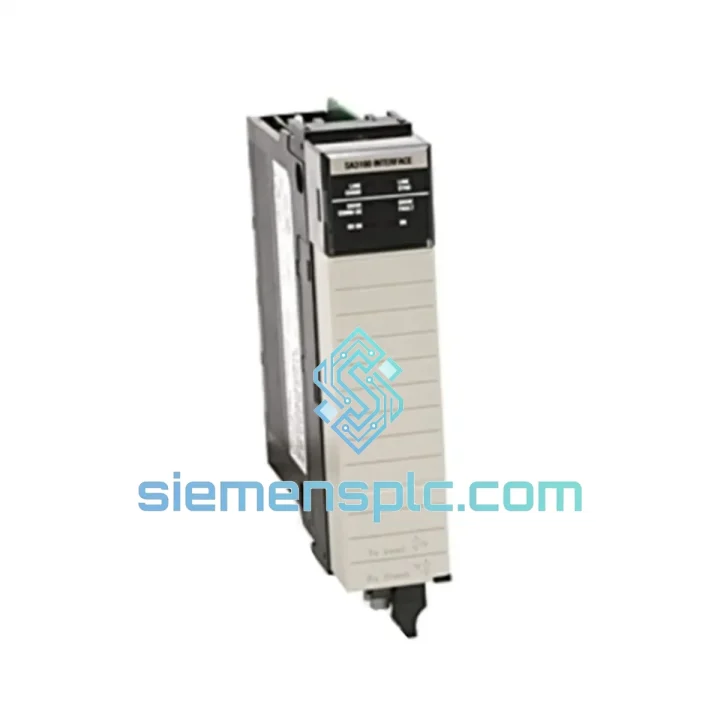
Request verified availability, condition, replacement risk review, packing options and courier lead time for 1756-DMF30.
Click Request Quote and the part number is inserted into the inquiry form automatically.
Core fields for model confirmation and RFQ routing. Detailed product narrative remains below.
The Allen-Bradley 1756-DMF30 is a chassis-resident drive interface module engineered for the ControlLogix 1756 platform. Its primary function within a control loop is to serve as the deterministic bridge between the Logix controller’s motion planner and external variable-frequency drives (VFDs) or servo amplifiers. Rather than relying on a separate motion controller or external gateway, the 1756-DMF30 occupies a standard 1756 chassis slot and communicates directly over the ControlLogix backplane at the native backplane data rate, eliminating the latency penalties associated with network-bridged drive coordination.
In a coordinated motion architecture, the Logix controller executes the motion profile in its periodic task, and the 1756-DMF30 translates those velocity and torque references into drive-compatible command signals. This tight coupling allows the controller to enforce axis synchronization with sub-millisecond jitter tolerance — a requirement in applications such as flying shear, registration control, and multi-zone tension management. The module supports up to 30 drive axes per chassis slot, making it a high-density solution for systems where chassis real estate and backplane power budget are constrained.
📧 Real-time Stock & RFQ: [email protected] | WhatsApp: +86 18359268345
| Parameter | Value |
|---|---|
| Part Number | 1756-DMF30 |
| Platform | ControlLogix 1756 |
| Module Category | Drive Module (DMF) |
| Maximum Coordinated Axes | 30 per module |
| Backplane Interface | ControlLogix proprietary high-speed backplane |
| Chassis Compatibility | All 1756 chassis (4, 7, 10, 13, 17-slot) |
| Slot Width | Single slot |
| Operating Temperature | 0 °C to 60 °C (32 °F to 140 °F) |
| Storage Temperature | −40 °C to +85 °C |
| Relative Humidity | 5 % to 95 %, non-condensing |
| Vibration Rating | IEC 68-2-6 compliant |
| Shock Rating | IEC 68-2-27 compliant |
| Certifications | UL Listed, CE Marked, cUL |
| Configuration Software | RSLogix 5000 / Studio 5000 Logix Designer |
| Drive Interface Protocol | SERCOS, Analog ±10 V, or digital pulse (revision-dependent) |
| Backplane Current Draw | Refer to 1756-DMF30 product bulletin for exact mA rating |
| Warranty | 12 months from date of shipment |
The 1756-DMF30’s internal architecture is structured around three functional layers: the backplane interface ASIC, the axis management processor, and the drive output stage.
Backplane Interface ASIC: The module uses a dedicated application-specific integrated circuit to handle backplane arbitration. This ASIC implements the ControlLogix backplane protocol at the hardware level, ensuring that axis command data is transferred to the module within the controller’s scheduled task window without software overhead on the CPU. The deterministic nature of this transfer is what allows the Logix motion planner to guarantee axis synchronization across multiple modules in the same chassis.
Axis Management Processor: An onboard DSP handles the per-axis command interpolation and feedback processing. When the Logix controller sends a velocity setpoint, the DSP performs the interpolation between scan cycles to generate a smooth command trajectory for the drive. This prevents step-change commands from reaching the drive amplifier, which would otherwise induce mechanical shock in the drivetrain. The DSP also monitors axis fault states and reports them back to the controller via the backplane in the same scan cycle, enabling the controller to execute fault-response logic without a network round-trip delay.
EMC Design: The module’s PCB layout follows Rockwell Automation’s internal EMC design standard, which mandates physical separation between the backplane interface circuitry and the drive output stage. Differential signal routing is used on all high-frequency traces, and the chassis ground plane provides a low-impedance return path for common-mode noise currents. This design approach allows the 1756-DMF30 to operate in environments with significant conducted and radiated interference — typical of motor drive installations — without requiring additional external filtering on the backplane signal lines.
Thermal Management: The module relies on convection cooling through the chassis airflow path. The component layout is optimized to place high-dissipation components along the airflow axis, and the module’s thermal design is validated to maintain junction temperatures within specification at the rated 60 °C ambient. No external fan or heat sink is required under standard installation conditions.
Every 1756-DMF30 unit supplied by siemensplc.com is sourced through verified procurement channels. Genuine Allen-Bradley modules carry Rockwell Automation’s factory serialization, which can be cross-referenced against Rockwell’s product authentication database. We do not source from unverified secondary markets, and each unit is inspected for physical integrity — connector condition, label authenticity, and firmware revision — prior to dispatch.
Our logistics operation is based in Xiamen, China, a major export hub with direct access to international freight carriers including DHL Express, FedEx International Priority, and UPS Worldwide Expedited. Standard export documentation — commercial invoice, packing list, and certificate of origin — is prepared for every shipment. For customers in regions with specific import requirements (CE declaration, RoHS compliance documentation), supplementary documentation is available upon request.
Transit times from Xiamen to major industrial centers are typically 3–5 business days via express air freight. Sea freight consolidation is available for bulk orders where lead time permits. All shipments are tracked end-to-end, and tracking information is provided to the buyer at the time of dispatch. A 12-month warranty covers manufacturing defects and confirmed functional failures under normal operating conditions.
📧 Email: [email protected]
📱 WhatsApp: +86 18359268345
🌐 Web: siemensplc.com
📍 Location: Xiamen, China
© 2026 siemensplc.com. All rights reserved.
We check the full part number, brand, series and visible nameplate information before quotation.
Sales confirms stock path, condition option, quantity and realistic lead time for export dispatch.
DHL, FedEx, UPS or buyer courier arrangements can be reviewed with packing requirements.
Similar brand or category products for fast comparison and multi-item RFQ lists.