
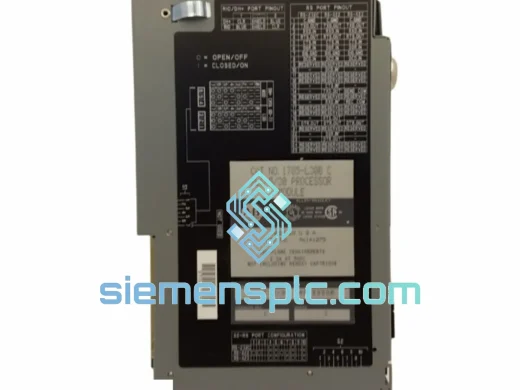
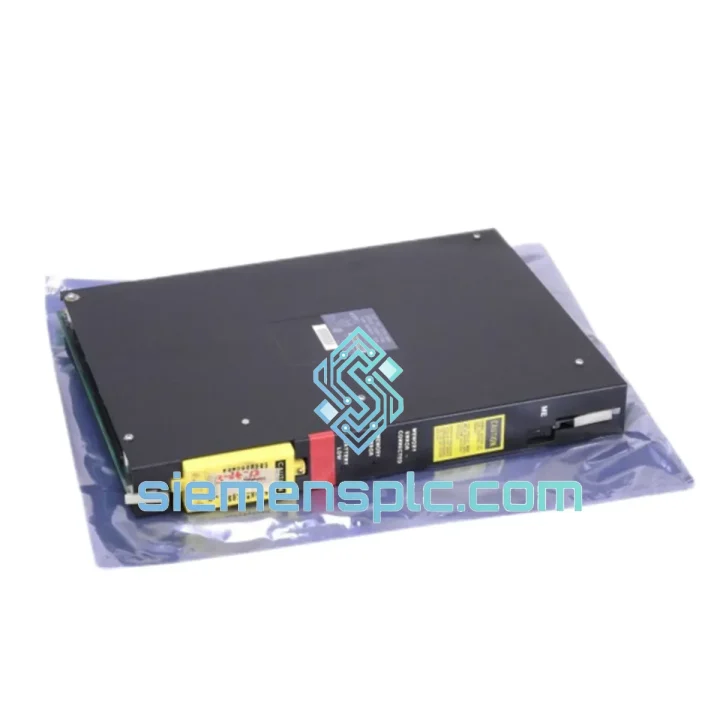
Allen-Bradley
In Stock OK
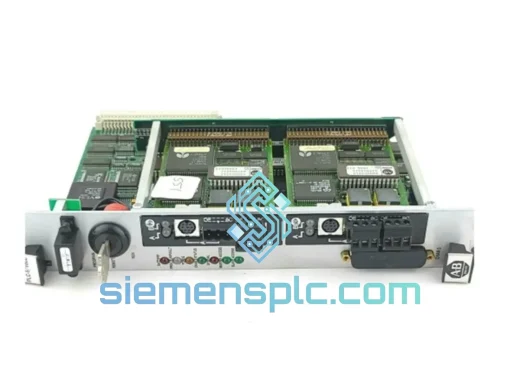
Allen-Bradley 1775-MEA PLC Memory Module
Request verified availability, condition, replacement risk review, packing options and courier lead time for 1775-MEA.
BrandAllen-Bradley
Part Number1775-MEA
ConditionAvailability Check
Lead TimeRFQ Confirmation
DocumentsDatasheet / photos by RFQ
ShippingExport packing available
Auto-filled RFQ
1775-MEA
Click Request Quote and the part number is inserted into the inquiry form automatically.
- Reply by email: [email protected]
- WhatsApp / Tel: +86 18359268345
- Mon-Sat 9:00-18:00 GMT+8
Procurement Data
Key Product Information
Core fields for model confirmation and RFQ routing. Detailed product narrative remains below.
- Brand
- Allen-Bradley
- Primary Part Number
- 1775-MEA
- Product Type
- PLC Memory Module
- Series / Family
- PLC-5
- Manufacturer
- Allen-Bradley (Rockwell Automation)
- Country of Origin
- US
- Catalog Category
- PLCs & Controllers
- Operating Temp.
- 0°C to +60°C (IEC 60068-2-1/2)
- Humidity
- 5%–95% non-condensing
Model confirmed for inquiry
1775-MEA
Send quantity, destination and urgency. The RFQ form keeps this part number attached.
Request Quote
Product Overview
Allen-Bradley 1775-MEA: Stop the Bleeding — Every Minute of PLC-5 Downtime Has a Price Tag
Your PLC-5 rack just faulted. The line is down. Maintenance is on the phone. You already know the 1775-MEA is the culprit — the E32/E33 memory fault codes don’t lie. The question isn’t what failed. The question is how fast can you get a replacement on the floor. We stock the Allen-Bradley 1775-MEA and ship same-day from Xiamen via DHL/FedEx Express. While your competitors are waiting 4–6 weeks for a factory order, your line is back up.
URGENT REQUIREMENT? Contact: [email protected] | WhatsApp: +86 18359268345
Quick Technical Datasheet
| Part Number | 1775-MEA ✅ Ready to Ship |
| Manufacturer | Allen-Bradley (Rockwell Automation) |
| Series | PLC-5 |
| Memory Type | Error Correcting RAM (ECC DRAM) — SECDED architecture |
| Capacity | 64K words (64 × 1,024 × 16-bit) |
| Error Correction | Single-bit correction / Double-bit detection (SECDED) |
| Compatible Controllers | PLC-5/10, /12, /15, /25, /30, /40, /60, /80 |
| Backplane Interface | 1771 I/O chassis backplane — single slot |
| Operating Temperature | 0°C to +60°C (IEC 60068-2-1/2) |
| Storage Temperature | −40°C to +85°C |
| Humidity | 5%–95% non-condensing |
| Power | Via 1771 backplane — no external supply needed |
| Certifications | UL Listed, CE Marked, CSA Certified |
| Condition | Original surplus — functionally tested, documented |
| Stock Status | ✅ In Stock — Ready to Ship from Xiamen |
Troubleshooting & Replacement Tips
Ten years on the floor taught me one thing: most engineers waste 45 minutes chasing the wrong fault before they accept it’s the memory module. Here’s how to confirm it fast and swap it right.
Confirming the 1775-MEA as the Root Cause
- Fault Codes E32 / E33 — These are the definitive signatures of a memory integrity failure in the PLC-5 platform. If you’re seeing either of these in your fault queue, the 1775-MEA is the first module to pull.
- Intermittent Program Corruption — Ladder rungs executing incorrectly or I/O scan data appearing scrambled without any wiring change? Classic DRAM degradation. The SECDED ECC in the 1775-MEA corrects single-bit upsets in real time — once it’s gone, every cosmic ray or power transient is a potential fault event.
- Nuisance Faults After Power Cycling — If the controller recovers after a cold restart but faults again within hours or days, you’re dealing with accumulated DRAM errors, not a logic bug. Don’t waste time re-downloading the program. Replace the module.
Replacement Procedure — Step by Step
- Back up your program first. Use RSLogix 5 with a 1784-KTX/KTXD card to upload the full ladder project to your programming terminal. Verify the upload is complete and readable before touching the hardware. This is non-negotiable.
- Power down the 1771 chassis. The 1775-MEA is a cold-swap module — do not attempt hot insertion. Shut down the PLC-5 processor and confirm the chassis power supply is de-energized. Lock out / tag out per your site LOTO procedure.
- Note the slot position. The 1775-MEA must be installed in the same chassis slot as the original. The PLC-5 processor maps memory module addresses by physical slot location. Installing in the wrong slot will cause an immediate fault on power-up.
- Check the backplane keying. Verify the 1771 chassis keying strips match the 1775-MEA module key. Incorrect keying prevents full backplane engagement and causes intermittent contact faults that are extremely difficult to diagnose.
- Seat the module firmly. Apply even pressure across the front face of the module until the backplane connector is fully engaged. A partially seated module will generate sporadic communication errors that mimic other fault types.
- Power up and verify. After restoring power, monitor the processor status indicators. The 1775-MEA does not require separate initialization — it is recognized automatically by the PLC-5 processor during the power-up self-test. If the processor faults immediately, recheck slot position and backplane keying before assuming a module defect.
- Download and verify the program. Use RSLogix 5 to download your backed-up project and perform an online comparison. Confirm all rung outputs, timer presets, and counter values match your reference. Run the system through one complete operating cycle before returning to production.
Common Mistakes That Will Cost You Another Hour
- Skipping the program backup and assuming the new module retains the old program — it doesn’t. RAM is volatile.
- Installing the module in an adjacent empty slot instead of the original position — the processor will fault immediately.
- Forgetting to check firmware compatibility between the 1775-MEA series revision (A or B) and the host PLC-5 processor firmware. Series B modules are backward compatible with Series A processors, but confirm before installation if your processor firmware is below Series D.
- Powering up without re-downloading the program and assuming the controller will auto-recover — it won’t.
Reliability in Harsh Conditions
The 1775-MEA wasn’t designed for a climate-controlled server room. It was built for the environments where control systems actually live — and where they actually fail.
In oil and gas compressor stations operating at ambient temperatures swinging from −20°C to +55°C with continuous mechanical vibration from reciprocating compressors, the 1775-MEA’s SECDED ECC architecture absorbs the single-bit upsets that standard DRAM cannot survive. IEC 60068-2-6 Class 3 vibration profiles — the kind generated by 1,500 RPM gas compressors running 24/7 — stress solder joints and connector contacts in ways that only manifest after years of service. Our inspection process includes thermal cycling and vibration-induced contact verification specifically because these are the failure modes that kill legacy memory modules in the field.
In chemical plant environments rated ISA-71.04 G3 for airborne corrosives — hydrogen sulfide, chlorine, ammonia — PCB surface contamination accelerates leakage currents that corrupt DRAM cells over time. Every 1775-MEA we ship has been visually inspected at board level under magnification for corrosion on the memory array, connector pins, and bypass capacitors. Units showing any surface oxidation beyond cosmetic are rejected before testing begins.
In automotive body-in-white welding lines, EN 61000-4-4 Level 4 conducted transient immunity is the baseline requirement — 4kV fast transients on the power bus from resistance spot welders firing at 60–120 cycles per hour. The 1775-MEA’s backplane-powered design isolates the memory array from direct exposure to these transients, and the ECC layer corrects any bit upsets that penetrate the chassis shielding. This is why PLC-5/40 installations in welding lines have run 1775-MEA modules for 15–20 years without replacement — until the DRAM itself reaches end of statistical life.
Every unit we ship has passed a four-stage inspection: visual and physical examination, functional bench test in a live 1771 chassis with full ECC verification, thermal cycling to expose cold-solder and intermittent contact faults, and final documentation review with serial number traceability. You receive the test report with your shipment.
Global Express Logistics
We operate from Xiamen, China — one of the most connected export hubs in Asia, with direct DHL and FedEx Express gateway access. When you place an order before 14:00 CST, your 1775-MEA ships the same day.
Typical Transit Times from Xiamen:
- Southeast Asia (Singapore, Thailand, Malaysia, Vietnam): 1–2 business days via DHL Express
- Middle East (UAE, Saudi Arabia, Qatar): 2–3 business days via FedEx International Priority
- Europe (Germany, UK, Netherlands, France): 3–4 business days via DHL Express Worldwide
- North America (USA, Canada, Mexico): 3–5 business days via FedEx International Priority
- South America (Brazil, Chile, Colombia): 4–6 business days via DHL Express
- Australia / New Zealand: 2–3 business days via DHL Express
Every shipment includes full export documentation: commercial invoice, packing list, ECCN classification, and certificate of origin. ESD-safe anti-static packaging with foam cushioning is standard — the module arrives in the same condition it left our warehouse. For emergency shutdown situations requiring weekend delivery, contact us directly on WhatsApp for expedited handling options.
We have shipped Allen-Bradley legacy modules to 60+ countries. Customs clearance documentation is prepared to the import requirements of your destination country. If your procurement team requires a formal proforma invoice before purchase order issuance, we generate it within 2 hours of your inquiry.
Contact Information
Email: [email protected]
WhatsApp: +86 18359268345
Web: siemensplc.com
© 2026 siemensplc.com. All rights reserved.
Ready to quote
[email protected]
Send This Part Number to Sales
RFQ workflow
Quality workflow ->
Confirmation Process
01Model confirmation
We check the full part number, brand, series and visible nameplate information before quotation.
02Availability reply
Sales confirms stock path, condition option, quantity and realistic lead time for export dispatch.
03Packing & courier
DHL, FedEx, UPS or buyer courier arrangements can be reviewed with packing requirements.
Continue sourcing
Browse full catalog ->
Related Automation Parts
Similar brand or category products for fast comparison and multi-item RFQ lists.
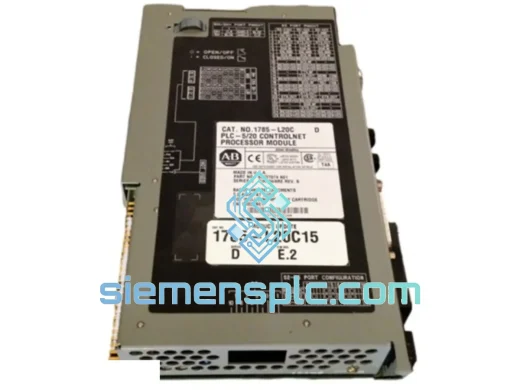
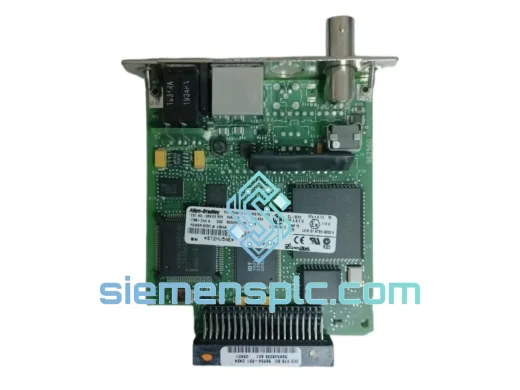
Allen-Bradley
RFQ Ready
Allen-Bradley 1788-CNC CNC Interface Card – ControlNet Series
PLC-5
Origin US
CNC Interface Card
Allen-Bradley
RFQ Ready
Allen-Bradley 1785-V40V CPU Module – PLC-5 Series
PLC-5
Origin US
CPU Module