Allen-Bradley
RFQ Ready
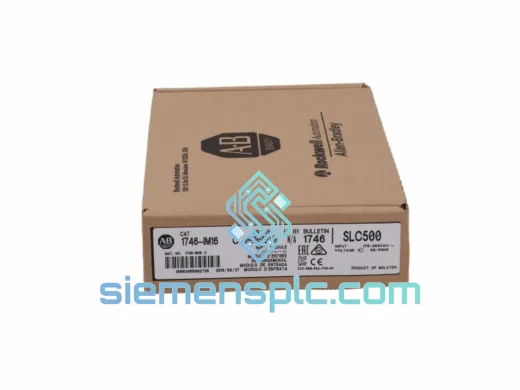
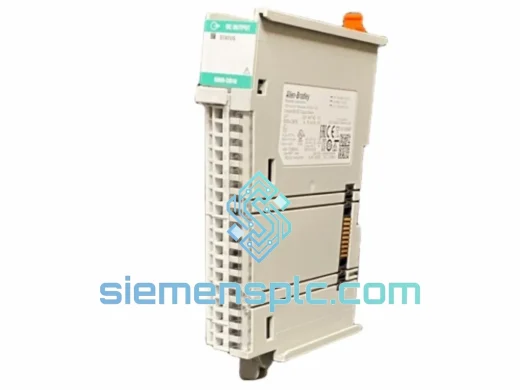
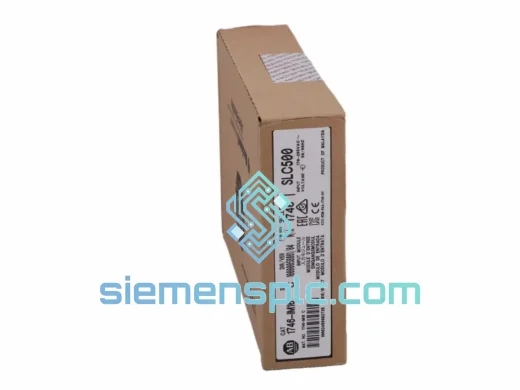
Allen-Bradley DIM16 Discrete Input Module
SLC 500
Origin US
Discrete Input Module
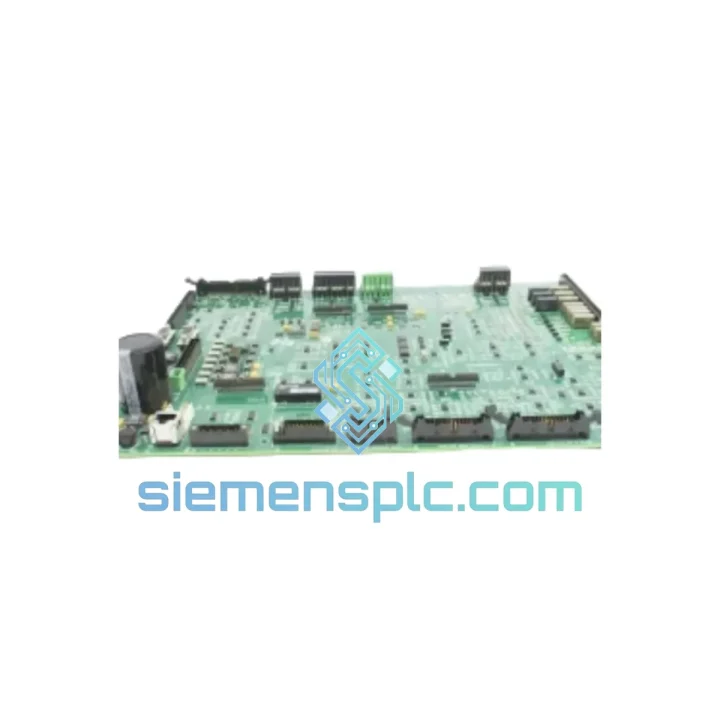
Request verified availability, condition, replacement risk review, packing options and courier lead time for 80190-560-02-R.
Click Request Quote and the part number is inserted into the inquiry form automatically.
Core fields for model confirmation and RFQ routing. Detailed product narrative remains below.
The Allen-Bradley 80190-560-02-R is a board-level analog input module manufactured by Rockwell Automation, engineered for deployment within Allen-Bradley control architectures where multi-channel analog signal conditioning and acquisition are required at the hardware layer. Unlike rack-mounted I/O modules that abstract field signals through backplane arbitration, the 80190-560-02-R operates as a direct-interface analog front-end board — positioned between field instrumentation and the controller’s signal processing core. Its role in the control loop is to receive raw analog signals from field devices (transmitters, sensors, transducers), condition those signals to a normalized range, perform analog-to-digital conversion, and present digitized process values to the controller’s scan cycle with minimal latency and maximum fidelity.
For process engineers and control system architects, the significance of this board lies in its position at the signal chain’s origin. Any noise, offset drift, or resolution limitation introduced at this stage propagates through every downstream calculation — PID output, alarm threshold evaluation, historian logging, and safety interlock logic. Selecting a verified OEM board rather than an unvalidated substitute eliminates an entire class of commissioning risk that is disproportionately expensive to diagnose once a system is in service.
Real-time Stock & RFQ: [email protected] | WhatsApp: +86 18359268345
| Parameter | Specification |
|---|---|
| Part Number | 80190-560-02-R |
| Manufacturer | Allen-Bradley / Rockwell Automation |
| Module Classification | Analog Input Board (Board-Level) |
| Signal Input Type | Analog (voltage and/or current — confirm per datasheet revision) |
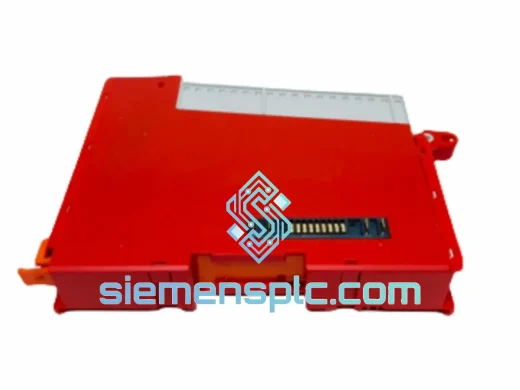
| Form Factor | PCB board-level module; chassis/card-cage dependent |
| Operating Temperature | 0°C to +60°C (standard industrial range) |
| Storage Temperature | -40°C to +85°C |
| Relative Humidity | 5% to 95% non-condensing |
| Compliance | CE, RoHS (verify against specific revision label) |
| Weight | Approx. 200 g |
| Country of Origin | United States |
| Lead Time (In-Stock) | Ships within 1–3 business days from Xiamen, China |
| Lead Time (Out-of-Stock) | Global sourcing: 7–21 business days depending on availability |
| Warranty | 12 months from date of shipment — covers manufacturing defects and functional failure under normal operating conditions |
Full electrical parameters (channel count, input impedance, ADC resolution, common-mode rejection ratio, isolation voltage) are available upon request. Submit your RFQ to [email protected] with your application details for a complete datasheet package.
Signal Conditioning Front-End
At the hardware level, the 80190-560-02-R incorporates an analog signal conditioning stage ahead of the ADC. This stage typically includes input protection circuitry (transient voltage suppression, current-limiting resistors), anti-aliasing low-pass filtering, and a programmable gain amplifier (PGA) or fixed-gain stage to normalize field signal levels to the ADC’s full-scale input range. The anti-aliasing filter is a non-negotiable design element: without it, high-frequency noise components above the Nyquist frequency fold back into the digitized signal as baseband artifacts that are indistinguishable from legitimate process variation.
Analog-to-Digital Conversion Architecture
Board-level analog input modules in the Allen-Bradley product line at this generation typically employ successive approximation register (SAR) ADC topology or sigma-delta conversion, depending on the target resolution and throughput requirements. SAR ADCs offer deterministic conversion time — a fixed number of clock cycles per sample — which is critical for control loops where scan-cycle jitter must be bounded. Sigma-delta converters trade throughput for resolution, making them appropriate for slow-moving process variables (temperature, level) where 16-bit or higher resolution is more valuable than conversion speed.
Channel Isolation and EMC Design
In industrial environments, ground potential differences between field instruments and the control cabinet are a persistent source of measurement error and hardware damage. The 80190-560-02-R’s board design addresses this through channel-to-backplane isolation — typically implemented via optocouplers or transformer-coupled isolation barriers — that breaks the DC ground path while passing the signal. This isolation architecture also provides a defined common-mode rejection ratio (CMRR), which quantifies the board’s ability to reject voltages that appear equally on both signal conductors (common-mode noise) while amplifying only the differential signal of interest. A CMRR of 80 dB or greater is the accepted threshold for process instrumentation in electrically noisy environments such as motor control centers and variable-frequency drive (VFD) installations.
Backplane Interface Logic
On the controller side, the board interfaces with the Allen-Bradley backplane or card-cage bus through a defined register map. The controller’s I/O scan reads digitized channel values from these registers at each scan cycle. The board’s local logic manages the sequencing of multiplexed channel sampling, ADC triggering, and register update — ensuring that the controller always reads a coherent, fully converted value rather than a partially updated register. This handshake mechanism is what prevents scan-cycle aliasing, where a controller reads a channel mid-conversion and receives an indeterminate value.
Thermal Stability and Long-Term Drift
Precision analog boards are sensitive to thermal gradients across the PCB. The 80190-560-02-R’s component selection and layout are optimized for the 0–60°C operating range, with matched-temperature-coefficient resistor networks in the gain and reference circuits to minimize gain drift over the operating temperature range. For applications where ambient temperature varies significantly across seasons or shifts, this thermal stability directly translates to measurement repeatability without field recalibration.
Genuine Allen-Bradley Origin
Every 80190-560-02-R unit supplied by siemensplc.com is sourced through verified industrial supply channels. OEM part number markings, revision labels, and date codes are authenticated prior to listing. Units exhibiting signs of remarking, counterfeit labeling, or non-OEM component substitution are rejected at intake inspection. For procurement teams operating under anti-counterfeit compliance programs (AS6081, CCAP-101), documentation packages including sourcing records and inspection reports are available upon request.
Pre-Shipment Inspection Protocol
Each unit undergoes a structured pre-shipment inspection covering: visual examination of PCB, connector pins, and component population; label and part number verification against the purchase order; ESD-safe packaging confirmation; and weight verification against the known specification. New factory-sealed units are shipped in original OEM packaging where available. Surplus units are repackaged in anti-static ESD bags with moisture barrier protection.
12-Month Warranty Coverage
All units carry a 12-month warranty from the date of shipment. Warranty coverage addresses manufacturing defects and functional failure under normal operating conditions as defined by the OEM’s environmental specifications. Warranty claims are processed with a target response time of 48 hours. Replacement units are dispatched from Xiamen stock upon claim approval, with the defective unit returned for root-cause analysis.
Logistics from Xiamen, China
Xiamen Gaoqi International Airport and Xiamen Port together form one of China’s most efficient export logistics nodes, with direct cargo connections to major industrial hubs in Europe, North America, Southeast Asia, the Middle East, and Australia. Standard export shipments are dispatched via DHL Express, FedEx International Priority, or UPS Worldwide Expedited, with door-to-door transit times of 3–7 business days to most destinations. Full export documentation is provided with every shipment: commercial invoice, packing list, certificate of origin, and airway bill. For orders requiring customs pre-clearance documentation or specific HS code declarations, our logistics team coordinates directly with the freight forwarder to prevent customs holds.
Payment and Trade Terms
Accepted payment methods include T/T (bank wire transfer), PayPal, Western Union, and major credit cards. For qualified buyers, net-30 terms and L/C arrangements are available. Multi-currency invoicing is supported — USD, EUR, GBP, CNY, and HKD. Contact [email protected] to discuss trade terms for volume orders.
Email: [email protected]
WhatsApp: +86 18359268345
Web: siemensplc.com
Location: Xiamen, Fujian, China
Business Hours: Monday–Saturday, 09:00–18:00 CST (UTC+8)
© 2026 siemensplc.com. All rights reserved.
We check the full part number, brand, series and visible nameplate information before quotation.
Sales confirms stock path, condition option, quantity and realistic lead time for export dispatch.
DHL, FedEx, UPS or buyer courier arrangements can be reviewed with packing requirements.
Similar brand or category products for fast comparison and multi-item RFQ lists.