Bently Nevada
RFQ Ready
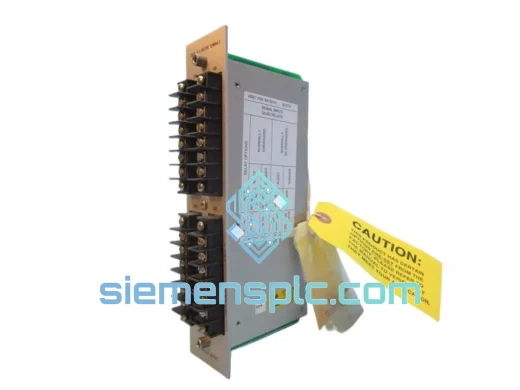
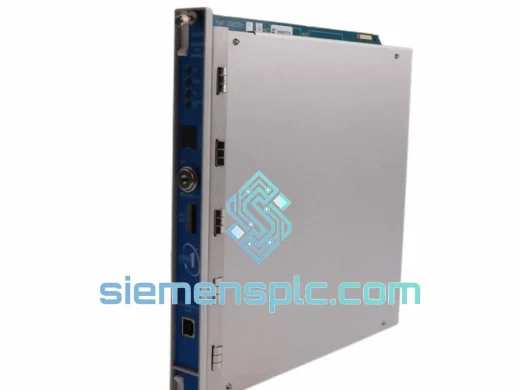
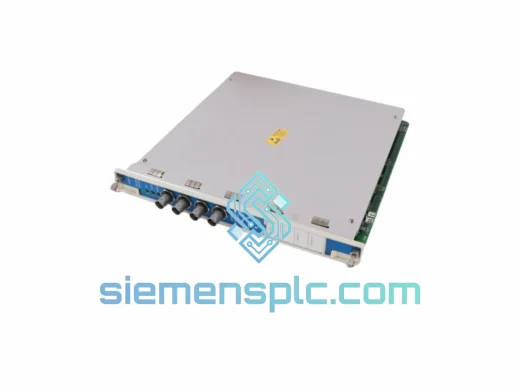
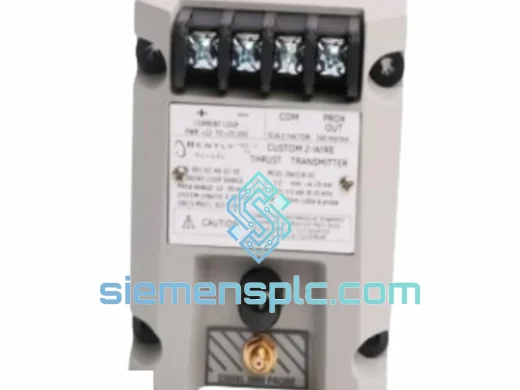
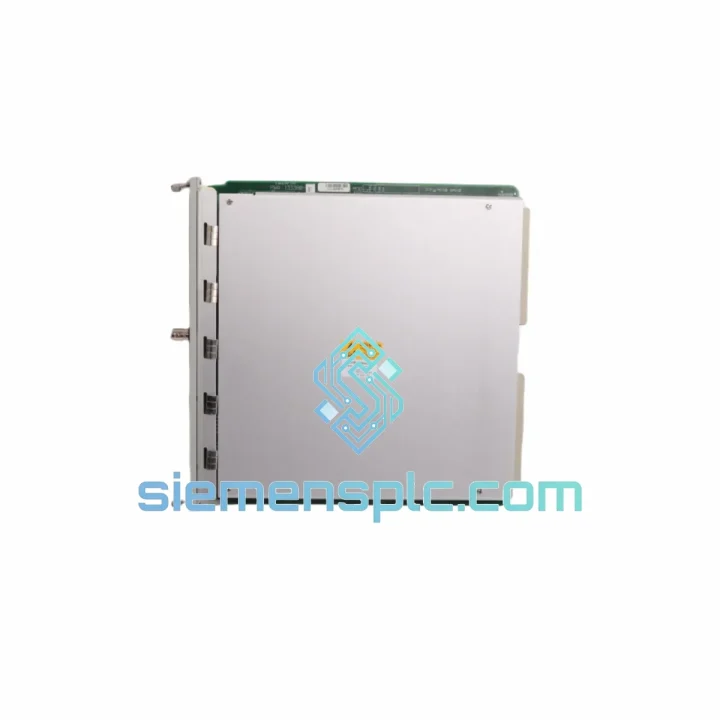
Bently Nevada 991-06-XX-01-00 Thrust Position Transmitter
3500 Series
Origin US
Thrust Position Transmitter
Request verified availability, condition, replacement risk review, packing options and courier lead time for 3500/53.
Click Request Quote and the part number is inserted into the inquiry form automatically.
Core fields for model confirmation and RFQ routing. Detailed product narrative remains below.
The Bently Nevada 3500/53 (Part No. 133388-01) is a dedicated overspeed detection module engineered for continuous, deterministic speed monitoring within the Bently Nevada 3500 Series Machinery Protection System. Its primary function in a control loop is to serve as the final protective layer between a runaway rotating machine and a catastrophic mechanical failure. Unlike a standard speed transmitter, this module does not merely report speed — it executes a hardware-level trip decision through a 2-out-of-3 (2oo3) voting architecture, ensuring that a single sensor failure or signal anomaly cannot generate a spurious trip, while simultaneously guaranteeing that a genuine overspeed condition triggers a relay output within a deterministic response window.
In turbine protection loops, the 3500/53 sits downstream of three independent speed probes — typically passive magnetic pickups or active proximity transducers — and upstream of the emergency trip solenoid valve (ETS). The module’s internal logic continuously compares the three speed channels at the hardware level. When any two of the three channels simultaneously exceed the configured overspeed setpoint, the module asserts its relay output, initiating a controlled machine trip. This 2oo3 architecture achieves a Probability of Failure on Demand (PFD) consistent with IEC 61511 SIL 2 requirements, making it suitable for deployment in Safety Instrumented Systems (SIS) without additional external voting hardware.
The 3500/53 communicates with the rest of the 3500 rack via the proprietary backplane bus, transmitting real-time speed values, channel health status, and trip relay state to the rack’s communication gateway module (e.g., 3500/92). This data is available to upstream SCADA, DCS, or condition monitoring platforms via Modbus RTU, Modbus TCP, or OPC-DA, depending on the gateway configuration. The module requires no external power wiring — all operating power is sourced from the 3500 rack backplane through the 3500/15 Power Supply Module.
Real-time Stock & RFQ: [email protected] | WhatsApp: +86 18359268345
| Parameter | Specification |
|---|---|
| Manufacturer | Bently Nevada (Baker Hughes) |
| Model | 3500/53 |
| Part Number | 133388-01 |
| Module Function | Overspeed Detection, Triple-Redundant Speed Monitoring |
| Speed Input Channels | 3 independent channels (2oo3 voting logic) |
| Sensor Compatibility | Passive magnetic pickups; active proximity probes (Bently Nevada 3300 XL, 3300 NSv series) |
| Trip Logic | 2-out-of-3 (2oo3) hardware voting |
| Relay Output | Dedicated trip relay; normally energized (fail-safe de-energize-to-trip) |
| Speed Measurement Range | 0 – 20,000 RPM (configurable via RCS software) |
| Frequency Input Range | 0.1 Hz – 10 kHz |
| Overspeed Setpoint Resolution | 1 RPM |
| Response Time (Trip) | ≤ 20 ms from overspeed condition to relay de-energization |
| Power Supply | Via 3500 rack backplane (3500/15 Power Supply Module) |
| Operating Temperature | 0 °C to +65 °C (32 °F to 149 °F) |
| Storage Temperature | –40 °C to +85 °C |
| Relative Humidity | 5% – 95% non-condensing |
| EMC Compliance | CE (EN 61326-1); IEC 61000-4 series immunity |
| Safety Integrity Level | SIL 2 capable (IEC 61508 / IEC 61511) |
| Certifications | CE, CSA, FM (Class I, Div. 2) |
| Form Factor | Single-slot 3500 rack module |
| Weight | Approx. 840 g |
| Configuration Interface | Bently Nevada Rack Configuration Software (RCS) via RS-232 or Ethernet gateway |
| Warranty | 12 months from date of shipment |
The 3500/53’s internal architecture is built around three parallel signal conditioning chains, each dedicated to one speed input channel. Each chain consists of a passive-to-active signal converter (for magnetic pickup inputs), a zero-crossing detector, a frequency-to-digital converter, and a dedicated channel processor. The three channel processors feed into a central arbitration logic block — implemented in a field-programmable gate array (FPGA) — which executes the 2oo3 voting algorithm in hardware, not firmware. This distinction is significant: hardware-level voting eliminates the latency and non-determinism associated with software polling loops, achieving the ≤ 20 ms trip response time regardless of rack communication bus load.
EMC and Signal Integrity Design: Each speed input channel is galvanically isolated from the backplane and from the other channels using optocoupler-based isolation barriers rated at 500 V DC working voltage. This isolation architecture prevents ground loop currents — common in large rotating machinery installations where the machine frame, sensor housing, and control cabinet may sit at different ground potentials — from corrupting the speed signal or generating false zero-crossings. The input stage also incorporates a hardware-based Schmitt trigger with configurable hysteresis, which suppresses high-frequency noise superimposed on the speed signal without introducing phase delay that would distort the RPM calculation.
Fail-Safe Relay Architecture: The trip relay is configured in a normally energized (NE) state. Under normal operating conditions, the relay coil is continuously energized, holding the relay contacts in the closed (safe) position. A genuine overspeed condition, a loss of module power, or a detected internal hardware fault all result in relay de-energization, which opens the trip circuit and initiates a machine shutdown. This fail-safe design ensures that a module power supply failure or internal component fault defaults to a protective trip rather than a masked fault condition — a fundamental requirement for SIL 2 safety loop design.
Backplane Communication Protocol: The module communicates with the 3500 rack’s internal bus using a proprietary synchronous serial protocol operating at a fixed cycle time. Speed values, channel status flags (OK/Not OK), and relay state are transmitted to the rack’s communication gateway on every bus cycle, providing sub-second data latency to upstream monitoring systems. The module also receives configuration parameters (setpoints, time delays, channel enable/disable) from the gateway via the same bus, eliminating the need for local DIP switch configuration and enabling remote setpoint adjustment through the RCS software interface.
Every Bently Nevada 3500/53 133388-01 unit supplied by siemensplc.com is sourced as genuine OEM hardware. Units are inspected upon receipt against the original Bently Nevada part number label, firmware revision marking, and physical condition criteria. Pre-shipment functional verification confirms relay operation, channel input response, and backplane communication handshake before any unit is dispatched.
Our logistics operations are based in Xiamen, China — a major international port city with direct access to DHL Express, FedEx International Priority, and UPS Worldwide Express services. Standard express delivery to Europe, North America, Southeast Asia, and the Middle East is achieved within 3–7 business days from shipment. For bulk orders, sea freight consolidation from Xiamen Port is available with full export documentation including commercial invoice, packing list, and certificate of origin.
All international shipments are accompanied by export compliance documentation. HS Code classification and ECCN determination are provided upon request for import clearance in regulated markets. Units are packed in anti-static foam-lined cartons with humidity indicator cards, meeting IPC/JEDEC J-STD-033 handling requirements for moisture-sensitive electronic assemblies.
A 12-month warranty from the date of shipment covers manufacturing defects and functional failures under normal operating conditions. Warranty claims are processed with a target replacement dispatch of 5 business days from confirmed fault diagnosis. Traceability documentation — including source records and inspection reports — is available upon request for quality audit purposes.
Email: [email protected]
WhatsApp: +86 18359268345
Web: siemensplc.com
Location: Xiamen, China
© 2026 siemensplc.com. All rights reserved.
We check the full part number, brand, series and visible nameplate information before quotation.
Sales confirms stock path, condition option, quantity and realistic lead time for export dispatch.
DHL, FedEx, UPS or buyer courier arrangements can be reviewed with packing requirements.
Similar brand or category products for fast comparison and multi-item RFQ lists.