Bently Nevada
RFQ Ready
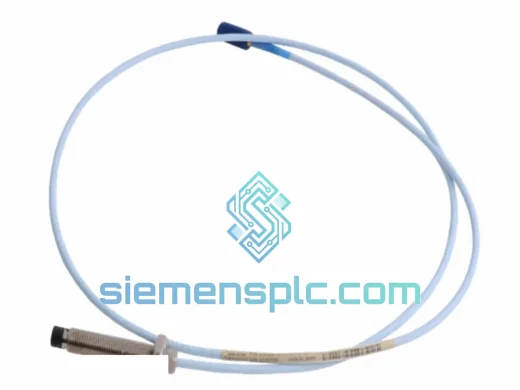
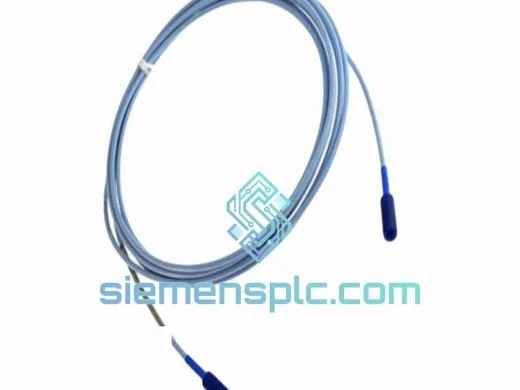
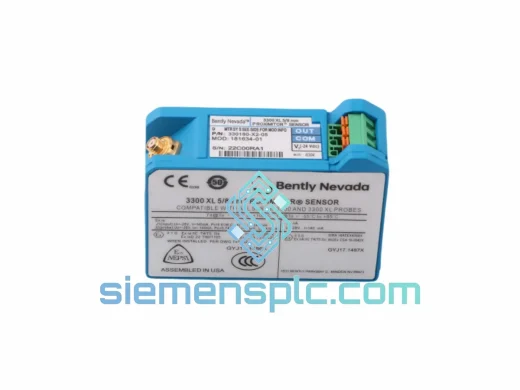
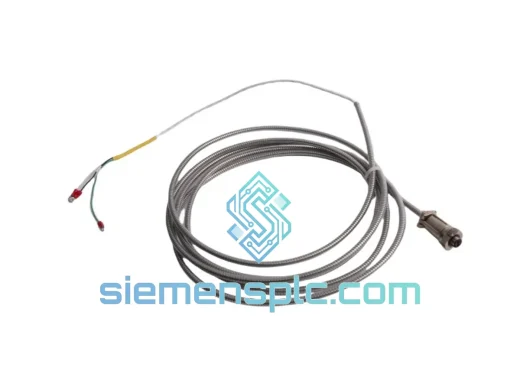
Bently Nevada 84661-12 Velomitor Interconnect Cable
3300 Series
Origin US
Vibration Monitoring Cable
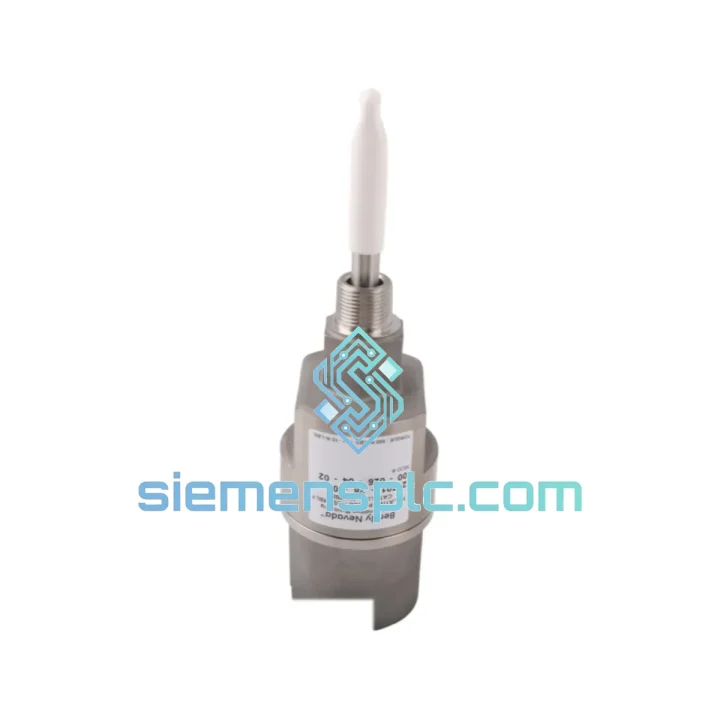
Request verified availability, condition, replacement risk review, packing options and courier lead time for 24701-28-05-20-040-03-02.
Click Request Quote and the part number is inserted into the inquiry form automatically.
Core fields for model confirmation and RFQ routing. Detailed product narrative remains below.
The Bently Nevada 24701-28-05-20-040-03-02 is a precision-machined proximity probe housing assembly engineered for deployment within the 3300 XL Series eddy-current transducer system. Its primary function is to provide a mechanically stable, thermally compensated mounting interface between the proximity probe tip and the target shaft surface, maintaining a fixed radial gap under continuous dynamic loading. In rotating machinery protection architectures — gas turbines, steam turbines, centrifugal compressors, and high-speed pumps — probe housing geometry directly governs measurement repeatability. A dimensional deviation of even 0.05 mm in the housing bore or thread pitch translates into a calibration offset that propagates through the entire vibration channel, potentially masking sub-synchronous instability or early-stage rub events.
This assembly is designed to accept the standard 8 mm eddy-current probe tip used across the 3300 XL transducer family. The housing thread specification and locknut geometry conform to Bently Nevada’s dimensional standard, ensuring that probe installation torque and gap-setting procedures follow the same protocol as OEM-installed units. No field re-calibration of the Proximitor® sensor is required when replacing a housing of identical part number, provided the probe-to-target gap is re-established per the system’s calibration curve (typically 1.0 mm nominal gap = −7.87 V DC output for a 200 mV/mil driver).
The housing material and surface finish are selected to minimize eddy-current field distortion at the probe tip exit plane. Any ferromagnetic contamination or surface irregularity in the housing bore would introduce a secondary eddy-current loop that offsets the linear output range of the transducer. Bently Nevada’s manufacturing specification for this part controls bore concentricity, thread runout, and surface roughness (Ra) to tolerances that preserve the probe’s published sensitivity of 7.87 V/mm ± 0.5% across the full operating temperature range of −35 °C to +177 °C.
From a system architecture perspective, the 24701-28-05-20-040-03-02 housing is a passive mechanical component, but its dimensional integrity is a prerequisite for the active signal chain to function within specification. The Proximitor® sensor’s internal oscillator drives the probe coil at approximately 1.0 MHz. The resulting eddy-current field penetrates the target shaft to a skin depth determined by shaft conductivity and permeability. Any mechanical play between the probe body and the housing bore introduces micro-vibration of the probe tip, which appears as broadband noise in the vibration spectrum — a diagnostic artifact that can obscure real sub-synchronous or super-synchronous fault signatures.
For facilities operating under API 670 (Machinery Protection Systems) or ISO 10816 vibration severity standards, maintaining OEM-specified housing assemblies is not merely a best practice — it is a compliance requirement. Substituting non-OEM housings with unverified dimensional tolerances risks voiding the system’s SIL (Safety Integrity Level) certification and may invalidate insurance coverage for machinery damage events.
Real-time Stock & RFQ: [email protected] | WhatsApp: +86 18359268345
| Parameter | Value |
|---|---|
| Part Number | 24701-28-05-20-040-03-02 |
| Manufacturer | Bently Nevada (Baker Hughes) |
| Series | 3300 XL Proximity Transducer System |
| Component Classification | Proximity Probe Housing Assembly |
| Probe Compatibility | 8 mm eddy-current proximity probe, 3300 XL family |
| Nominal Probe Gap (calibrated) | 1.0 mm (−7.87 V DC output reference) |
| Transducer Sensitivity | 7.87 V/mm ± 0.5% (200 mV/mil) |
| Operating Temperature Range | −35 °C to +177 °C |
| Oscillator Drive Frequency | ~1.0 MHz (Proximitor® internal) |
| Housing Weight | 1,380 g (approx.) |
| Country of Origin | United States of America |
| Applicable Standards | API 670, ISO 10816, CE, RoHS-compatible |
| Condition | Genuine OEM — New / Surplus New |
| Warranty | 12 months from date of shipment |
The mechanical design of the 24701-28-05-20-040-03-02 housing addresses three principal failure modes observed in proximity probe installations on high-speed rotating machinery:
1. Thermal Expansion Mismatch. At bearing pedestals on gas turbines, ambient temperatures routinely exceed 120 °C during steady-state operation. The housing material’s coefficient of thermal expansion (CTE) is matched to the probe body’s CTE to prevent differential growth that would alter the installed gap. A 10 °C temperature rise on a mismatched housing-probe pair can shift the gap by 3–5 μm — equivalent to 23–39 mV of output offset, sufficient to trigger a false alert on a tightly configured alarm setpoint.
2. EMC and Shielding Integrity. The housing provides a continuous conductive path from the probe body to the machine casing ground. This ground continuity is essential for suppressing common-mode noise induced by variable-frequency drives (VFDs), high-current bus bars, and RF sources in the plant environment. A housing with corroded or mechanically compromised threads breaks this ground path, increasing the noise floor of the vibration channel by 10–20 dB in the 10 Hz–1 kHz band — the frequency range most relevant to rotor unbalance, misalignment, and oil-whirl detection.
3. Probe Tip Concentricity and Bore Geometry. The housing bore is machined to a tolerance that constrains probe tip lateral displacement to less than 0.01 mm relative to the housing centerline. This concentricity specification ensures that the eddy-current field pattern at the probe exit plane remains axially symmetric. Asymmetric field patterns introduce a once-per-revolution modulation artifact in the vibration signal — a 1X component that cannot be distinguished from genuine rotor unbalance without phase reference data, complicating diagnostic interpretation.
4. Thread Engagement and Locknut Torque Retention. The housing thread design incorporates a controlled thread engagement length that distributes probe installation torque across multiple thread flanks, preventing stress concentration at the probe body shoulder. The locknut geometry is matched to Bently Nevada’s standard torque specification (typically 20–25 N·m), ensuring that probe position is maintained under continuous vibration loading without creep or self-loosening — a failure mode that has caused probe-to-shaft contact events on high-speed compressors operating above 10,000 RPM.
Every 24701-28-05-20-040-03-02 unit dispatched from our Xiamen, China facility undergoes a structured pre-shipment verification sequence. Physical inspection covers housing thread condition, bore surface finish, connector interface geometry, and manufacturer markings against Bently Nevada’s published part number documentation. Units are individually packaged in anti-static, moisture-barrier enclosures with tamper-evident sealing before placement in export-grade cartons.
Shipment from Xiamen is executed via DHL Express, FedEx International Priority, or UPS Worldwide Expedited, with typical transit times of 3–5 business days to Southeast Asia, the Middle East, and Europe, and 5–7 business days to North and South America. Full export documentation is provided with every shipment: commercial invoice, packing list, certificate of origin, and — upon request — a Certificate of Conformance (CoC). HS Code 9026.80 applies to this product category for customs classification purposes.
A 12-month warranty covers all units against manufacturing defects and dimensional non-conformance. Defective units are replaced at no charge, with return freight covered for confirmed warranty claims. Volume pricing and blanket purchase order arrangements are available for MRO procurement teams managing multi-unit spare parts programs.
Email: [email protected]
WhatsApp: +86 18359268345
Web: siemensplc.com
Location: Xiamen, China
© 2026 siemensplc.com. All rights reserved.
We check the full part number, brand, series and visible nameplate information before quotation.
Sales confirms stock path, condition option, quantity and realistic lead time for export dispatch.
DHL, FedEx, UPS or buyer courier arrangements can be reviewed with packing requirements.
Similar brand or category products for fast comparison and multi-item RFQ lists.