
Honeywell
In Stock OK
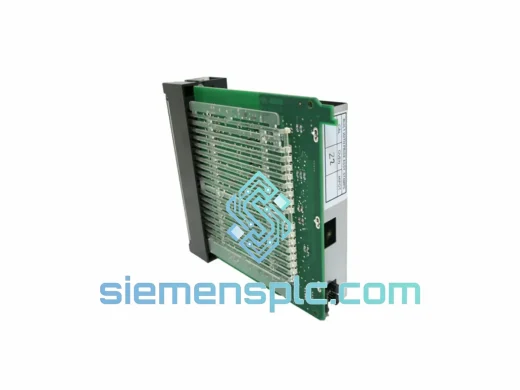
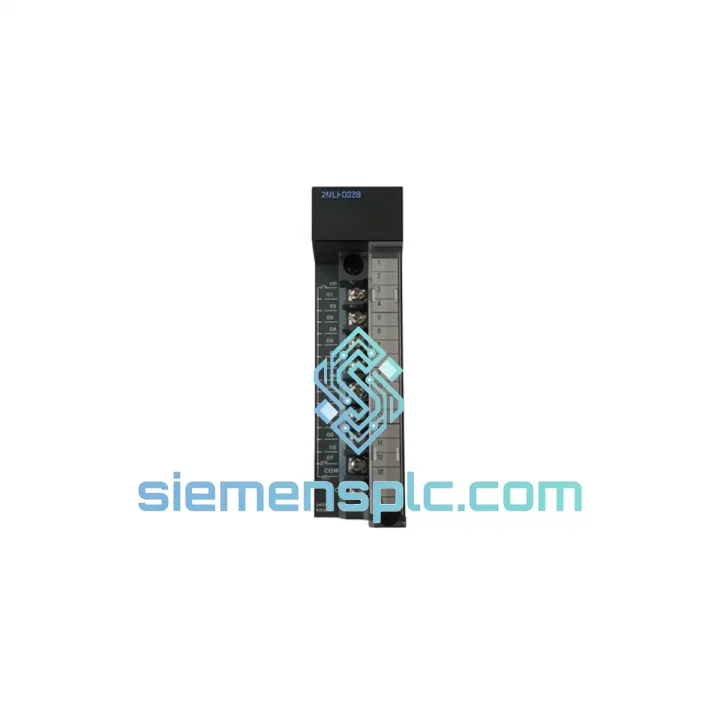
Honeywell 2MLI-D22B Digital Input Module – TDC-3000 DCS
Request verified availability, condition, replacement risk review, packing options and courier lead time for 2MLI-D22B.
BrandHoneywell
Part Number2MLI-D22B
ConditionAvailability Check
Lead TimeRFQ Confirmation
DocumentsDatasheet / photos by RFQ
ShippingExport packing available
Auto-filled RFQ
2MLI-D22B
Click Request Quote and the part number is inserted into the inquiry form automatically.
- Reply by email: [email protected]
- WhatsApp / Tel: +86 18359268345
- Mon-Sat 9:00-18:00 GMT+8
Procurement Data
Key Product Information
Core fields for model confirmation and RFQ routing. Detailed product narrative remains below.
- Brand
- Honeywell
- Primary Part Number
- 2MLI-D22B
- Product Type
- Digital Input Module
- Product Family
- Other series
- Manufacturer
- Honeywell Process Solutions
- Country of Origin
- US
- Catalog Category
- I/O Modules
- Operating Temp.
- 0 °C to +60 °C (32 °F to 140 °F)
- Warranty
- 12 months from date of shipment
Model confirmed for inquiry
2MLI-D22B
Send quantity, destination and urgency. The RFQ form keeps this part number attached.
Request Quote
Product Overview
Honeywell 2MLI-D22B – Discrete Input Acquisition Card for TDC-3000 Distributed Control Systems
The Honeywell 2MLI-D22B is a discrete digital input module engineered for the TDC-3000 / TotalPlant Solution (TPS) Distributed Control System platform. Within a process control architecture, this card occupies the critical boundary between field instrumentation and the Local Control Network (LCN), converting dry-contact and wet-contact field signals into structured digital data that the Application Module (AM) and Universal Station (US) can act upon in real time. Its role is not passive signal relay — it performs signal conditioning, debounce filtering, and optical isolation before presenting validated binary states to the LCN backplane, ensuring that transient field noise does not propagate into the control logic layer.
In refinery, petrochemical, and power generation environments where the TDC-3000 backbone remains the primary control infrastructure, the 2MLI-D22B represents a non-substitutable discrete I/O asset. Its revision suffix ‘B’ denotes a specific firmware and hardware iteration within the MLI (Multifunction Link Interface) family, and cross-substitution with revision ‘A’ or ‘C’ variants requires explicit firmware compatibility verification against the installed TDC-3000 system version.
Real-time Stock & RFQ: [email protected] | WhatsApp: +86 18359268345
Technical Parameters
| Parameter | Specification |
|---|---|
| Part Number | 2MLI-D22B |
| Manufacturer | Honeywell Process Solutions |
| Module Series | MLI – Multifunction Link Interface, TDC-3000 / TPS |
| Module Function | Discrete Digital Input (DI) |
| Input Channel Count | 22 discrete input channels |
| Input Signal Type | Dry contact / wet contact (field-side) |
| Isolation Method | Opto-electronic isolation, field-to-backplane |
| Backplane Interface | Local Control Network (LCN) card cage bus |
| Form Factor | Single-slot card for TDC-3000 standard card cage |
| Operating Temperature | 0 °C to +60 °C (32 °F to 140 °F) |
| Storage Temperature | -40 °C to +85 °C |
| Relative Humidity | 5% to 95% non-condensing |
| Power Supply | Backplane-supplied (no external field power required for dry-contact inputs) |
| Certifications | CE, UL (verify against Honeywell datasheet for specific lot) |
| Weight | Approx. 100 g (card only, without FTA) |
| Warranty | 12 months from date of shipment |
Hardware Logical Analysis
The 2MLI-D22B’s internal architecture is structured around three functional stages: field-side signal conditioning, opto-isolation barrier, and LCN-side digital encoding.
Stage 1 – Field-Side Signal Conditioning: Each of the 22 input channels incorporates a hardware debounce circuit with a configurable time constant. This prevents contact chatter from dry-contact field devices — a common failure mode in motor control center (MCC) auxiliary contacts and limit switches — from generating spurious state transitions in the DCS historian or alarm management system. The debounce threshold is set at the hardware level, independent of the Application Module scan cycle, which means signal integrity is maintained even during AM loading conditions.
Stage 2 – Opto-Electronic Isolation Barrier: Between the field wiring terminals and the LCN backplane logic, each channel passes through a dedicated optocoupler. This galvanic isolation barrier sustains a minimum 500 V AC isolation voltage between field ground and system ground, preventing ground loop currents — which are endemic in large industrial facilities with distributed earthing — from corrupting the digital state representation. The optocoupler response time is matched to the debounce filter output, ensuring no additional latency is introduced at this stage.
Stage 3 – LCN Backplane Digital Encoding: Post-isolation, the 22 channel states are serialized and presented to the LCN backplane bus via the MLI interface logic. The module participates in the LCN token-passing protocol, which guarantees deterministic data delivery to the Application Module within the defined scan period. The ‘B’ revision of this module includes updated ASIC logic that improves backplane arbitration timing margin compared to the ‘A’ revision, reducing the probability of bus contention errors in high-density card cage configurations.
EMC Design: The PCB layout employs ground plane segmentation to isolate field-side and system-side return paths. Ferrite bead filtering is applied at the card edge connector to attenuate high-frequency common-mode noise injected from adjacent power supply cards. The module meets NAMUR NE 21 EMC requirements for process control equipment, which specifies immunity to conducted and radiated disturbances in the 150 kHz to 1 GHz range.
System Integration Benefits
- Direct LCN Backplane Compatibility: The 2MLI-D22B communicates natively over the TDC-3000 LCN token-ring bus without protocol conversion gateways, eliminating an entire class of integration failure points and reducing end-to-end signal latency to within the LCN scan period (typically 500 ms or less depending on network load).
- Deterministic Scan Cycle Participation: As a native LCN node, the module’s data is available to the Application Module on every AM scan cycle. There is no polling overhead or asynchronous interrupt handling required, which preserves AM processing bandwidth for control algorithm execution.
- Hardware-Level Debounce Filtering: Contact chatter suppression at the hardware stage prevents false alarm generation and spurious historian entries, directly reducing operator alarm fatigue and improving the signal-to-noise ratio of the process event log.
- Galvanic Isolation per Channel: Individual optocoupler isolation on all 22 channels means a field wiring fault on one channel — including a ground fault — does not affect the signal integrity of adjacent channels, preserving partial system operability during field maintenance activities.
- Revision-Specific Firmware Stability: The ‘B’ revision designation ensures compatibility with a defined set of TDC-3000 system software versions. Deploying the correct revision eliminates the risk of undocumented behavioral differences that can arise when mixing revision levels within a card cage.
- Simplified Spare Parts Logistics: The standardized single-slot card form factor means one spare unit covers any compatible slot in the TDC-3000 card cage, reducing the minimum spare holding requirement and associated capital cost for plant maintenance inventories.
- Diagnostic Transparency via LCN: Module health status, including power supply rail monitoring and backplane communication error counts, is reported through the standard TDC-3000 diagnostic framework accessible from the Universal Station. Fault isolation to the card level is achievable without physical inspection of the card cage.
- Non-Disruptive Replacement Procedure: The card cage slot design supports module extraction and insertion with the card cage powered, subject to the specific chassis revision’s hot-swap capability. This allows corrective maintenance to be performed during planned process windows without requiring a full DCS shutdown.
- Long-Term Platform Support: Honeywell’s extended lifecycle support programs for TDC-3000 / TPS infrastructure ensure that firmware updates and technical bulletins remain available for this module family, protecting the capital investment in existing DCS installations.
Quality Assurance & Global Logistics
Every Honeywell 2MLI-D22B unit dispatched from our Xiamen, China facility is sourced through verified industrial automation supply channels and subjected to a structured pre-shipment inspection protocol. Physical integrity checks confirm that the card PCB, edge connector, and component population are free from mechanical damage, corrosion, or evidence of prior field installation without disclosure. Label authenticity is verified against Honeywell’s part numbering and date code conventions.
Units are stored in ESD-controlled, climate-regulated warehousing maintained at 20–25 °C and 40–60% RH to prevent electrostatic discharge damage and moisture ingress to the PCB substrate. Shipping packaging uses anti-static foam inserts and moisture barrier bags with desiccant, conforming to JEDEC J-STD-033 handling guidelines for moisture-sensitive electronic assemblies.
International shipments from Xiamen are dispatched via DHL Express, FedEx International Priority, or UCP air freight depending on order volume and destination. Standard transit times to major industrial hubs are 3–7 business days to Europe, 5–10 business days to the Americas, and 2–5 business days to Southeast Asia. Expedited same-day dispatch is available for in-stock units ordered before 14:00 CST. Full export documentation — including commercial invoice, packing list, certificate of origin, and ECCN classification — is provided with every international shipment. A 12-month warranty covers functional defects from date of shipment.
Contact Information
Email: [email protected]
WhatsApp: +86 18359268345
Web: siemensplc.com
Location: Xiamen, China
© 2026 siemensplc.com. All rights reserved.
Ready to quote
[email protected]
Send This Part Number to Sales
RFQ workflow
Quality workflow ->
Confirmation Process
01Model confirmation
We check the full part number, brand, series and visible nameplate information before quotation.
02Availability reply
Sales confirms stock path, condition option, quantity and realistic lead time for export dispatch.
03Packing & courier
DHL, FedEx, UPS or buyer courier arrangements can be reviewed with packing requirements.
Continue sourcing
Browse full catalog ->
Related Automation Parts
Similar brand or category products for fast comparison and multi-item RFQ lists.
Honeywell
RFQ Ready
Honeywell 900B01-0301 Analog Output Module – HC900 Series
Origin US
Analog Output Module
Honeywell
RFQ Ready
Honeywell 900H02-0202 Relay Digital Output Module
Origin US
Relay Digital Output Module
Honeywell
RFQ Ready
Honeywell 900A01-0001 Analog Input Module – HC900 Series
Origin US
Analog Input Module