
Honeywell
In Stock OK
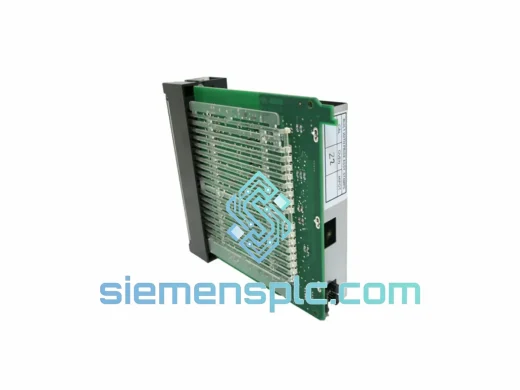
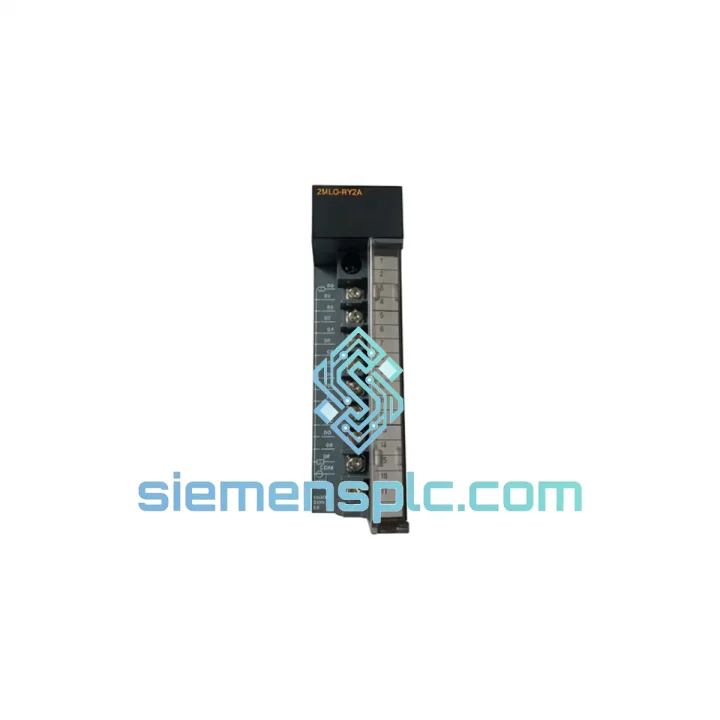
HONEYWELL 2MLQ-RY2B DCS Relay Output Module – TDC-3000 TPS Series
Request verified availability, condition, replacement risk review, packing options and courier lead time for 2MLQ-RY2B.
BrandHoneywell
Part Number2MLQ-RY2B
ConditionAvailability Check
Lead TimeRFQ Confirmation
DocumentsDatasheet / photos by RFQ
ShippingExport packing available
Auto-filled RFQ
2MLQ-RY2B
Click Request Quote and the part number is inserted into the inquiry form automatically.
- Reply by email: [email protected]
- WhatsApp / Tel: +86 18359268345
- Mon-Sat 9:00-18:00 GMT+8
Procurement Data
Key Product Information
Core fields for model confirmation and RFQ routing. Detailed product narrative remains below.
- Brand
- Honeywell
- Primary Part Number
- 2MLQ-RY2B
- Product Type
- DCS Relay Output Module
- Product Family
- Other series
- Manufacturer
- HONEYWELL Process Solutions
- Country of Origin
- US
- Catalog Category
- I/O Modules
- Operating Temp.
- 0 °C to +60 °C
- Warranty
- 12 months from shipment date
Model confirmed for inquiry
2MLQ-RY2B
Send quantity, destination and urgency. The RFQ form keeps this part number attached.
Request Quote
Product Overview
HONEYWELL 2MLQ-RY2B: Dry-Contact Relay Output Module for TDC-3000 / TPS Distributed Control Systems
Discrete output integrity is a non-negotiable requirement in continuous process plants. A relay contact that fails to open or close on command can leave a motor starter energized, hold a solenoid valve in an unsafe position, or defeat a safety interlock before the fault is detected. The HONEYWELL 2MLQ-RY2B is a relay-type digital output module purpose-built for the TDC-3000 and TPS (Total Plant Solution) DCS platforms. It delivers galvanically isolated dry-contact switching to field actuators with the deterministic timing and diagnostic transparency that refinery, chemical, and power generation control loops require.
Positioned on the command side of the I/O subsystem, the 2MLQ-RY2B accepts output state commands from the Process Manager (PM) or Advanced Process Manager (APM) controller over the Local Control Network (LCN) or Data Hiway. Each channel drives a relay coil whose contact closure or opening actuates motors, on/off valves, dampers, and interlock circuits. The module installs into standard TDC/TPS card cage assemblies without additional mounting hardware, occupying a single card slot and drawing power from the cage backplane.
Real-time Stock & RFQ: [email protected] | WhatsApp: +86 18359268345
Technical Parameters
| Parameter | Specification |
|---|---|
| Part Number | 2MLQ-RY2B |
| Manufacturer | HONEYWELL Process Solutions |
| Module Function | Relay-type Digital Output (DO) |
| Compatible Platform | HONEYWELL TDC-3000 / TPS DCS |
| Contact Configuration | Dry contact — Form A (SPST-NO) / Form C (SPDT), relay-switched |
| Isolation Architecture | Galvanic — relay coil physically separates backplane logic from field wiring |
| Communication Bus | LCN (Local Control Network) / Data Hiway |
| Host Controllers | Process Manager (PM), Advanced Process Manager (APM) |
| Installation Method | Card cage slot — TDC/TPS standard cage, backplane-powered |
| Operating Temperature | 0 °C to +60 °C |
| Storage Temperature | −40 °C to +70 °C |
| Relative Humidity | 5 % to 95 % RH, non-condensing |
| Module Weight | 190 g |
| Regulatory Compliance | CE, UL, IEC 61131-2 |
| Warranty | 12 months from shipment date |
Hardware Logical Analysis
Field-side electrical environments in process plants impose conditions that solid-state output devices handle poorly without extensive external protection: inductive kickback from motor starters, de-energization spikes from solenoid coils, and ground potential differences between field junction boxes and the control room that can reach tens of volts. The 2MLQ-RY2B addresses these conditions through its relay contact architecture rather than through software-defined protection parameters.
The relay coil is driven by the module’s logic-side circuitry, which receives output state commands from the LCN. The contact circuit — the side that interfaces with field wiring — is physically separated from the coil by the relay’s mechanical construction. This air-gap isolation means field-side transients, common-mode voltages, and ground loops cannot propagate back into the DCS backplane or LCN communication bus. The isolation barrier is not dependent on firmware configuration; it is inherent to the relay’s physical structure.
The module implements a latch-and-hold output register. At each PM/APM scan cycle, the controller writes the commanded output state to the module’s register map over the LCN. The module’s onboard logic latches this state and drives the relay coil accordingly. If a momentary LCN communication gap occurs, the latched state is maintained — relay contacts do not chatter or revert to an undefined condition. A watchdog timer monitors LCN communication continuity; if the timeout threshold is exceeded, the module transitions relay outputs to a pre-configured fail-state (de-energized or hold-last-state, depending on configuration), providing predictable behavior during network fault conditions.
EMC performance is addressed at the PCB layout level. Relay coil drive traces are routed with physical separation from LCN communication lines. Decoupling capacitors at the coil driver stage suppress high-frequency switching transients generated at relay energization and de-energization. The card cage backplane provides a common ground reference plane that, combined with the relay’s galvanic isolation, prevents common-mode interference from coupling into the control network. This layout approach supports compliance with IEC 61000-4 series immunity levels applicable to industrial control equipment operating in heavy electrical environments — switchgear rooms, motor control centers, and substation-adjacent control rooms.
System Integration Benefits
- Scan-cycle-aligned output timing: Relay state transitions execute within the PM/APM scan cycle period, providing deterministic command-to-actuation latency for interlock logic and sequencing applications where timing margins are defined in the control narrative.
- Field-side power independence: Dry-contact outputs carry no DCS supply voltage on the field side — field devices supply their own actuator power through the relay contacts. This eliminates shared power rail vulnerabilities and simplifies field wiring classification in hazardous area installations.
- Backplane fault containment: Galvanic isolation prevents field-side fault conditions — short circuits, overvoltage events, insulation failures — from propagating to the LCN or controller backplane, protecting the broader DCS architecture from cascade failures originating in field wiring.
- In-service module replacement: The TDC/TPS card cage supports hot-swap module exchange. The 2MLQ-RY2B can be removed and replaced during plant operation without requiring an I/O subsystem shutdown, reducing maintenance-induced process interruptions.
- System-level diagnostic visibility: Module health status, relay output state feedback, and LCN communication fault conditions are reported through HONEYWELL’s platform diagnostic framework and are accessible at the operator station without additional field instrumentation or handheld tools.
- Mixed I/O cage compatibility: The 2MLQ-RY2B coexists in card cages alongside analog I/O, digital input, and specialty modules. Relay output channels can be allocated within shared cage assemblies, avoiding the cost and space overhead of dedicated relay output chassis.
- Fail-state configurability: Watchdog-triggered fail-state behavior — de-energize or hold-last-state — is configurable per module, allowing the control engineer to align fail-state logic with the process safety requirements defined in the HAZOP and SIL assessment documentation.
- Installed base longevity: The TDC-3000 / TPS platform has an active installed base spanning more than three decades across global refining, petrochemical, and power generation facilities. Spare module availability, firmware compatibility, and HONEYWELL’s long-term support commitment protect capital investment in existing DCS infrastructure without requiring platform migration.
Quality Assurance & Global Logistics
Every 2MLQ-RY2B unit supplied through siemensplc.com is sourced as genuine HONEYWELL hardware. Pre-shipment verification at our Xiamen, China facility includes part number and revision confirmation against HONEYWELL’s published documentation, board-level visual inspection for solder joint integrity and connector pin condition, and functional power-on verification where test infrastructure permits. Units are packed in anti-static bags with moisture barrier film, cushioned within rigid cartons rated for international air and sea freight handling. Each shipment is accompanied by a commercial invoice, packing list, and certificate of conformance to support customs clearance at destination.
Shipping is executed via DHL Express, FedEx International Priority, and UPS Worldwide for time-sensitive orders. Estimated transit times from Xiamen: Southeast Asia 2–4 business days, Europe 5–7 days, Americas 5–8 days by air express. Sea freight consolidation is available for bulk procurement. In-stock units ship within 3–5 business days of order confirmation. All units carry a 12-month warranty from shipment date covering manufacturing defects and verified functional failures under normal operating conditions.
Contact Information
Email: [email protected]
WhatsApp: +86 18359268345
Web: siemensplc.com
Location: Xiamen, China
© 2026 siemensplc.com. All rights reserved.
Ready to quote
[email protected]
Send This Part Number to Sales
RFQ workflow
Quality workflow ->
Confirmation Process
01Model confirmation
We check the full part number, brand, series and visible nameplate information before quotation.
02Availability reply
Sales confirms stock path, condition option, quantity and realistic lead time for export dispatch.
03Packing & courier
DHL, FedEx, UPS or buyer courier arrangements can be reviewed with packing requirements.
Continue sourcing
Browse full catalog ->
Related Automation Parts
Similar brand or category products for fast comparison and multi-item RFQ lists.
Honeywell
RFQ Ready
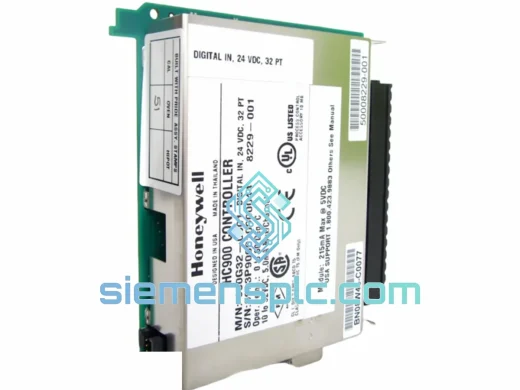
Honeywell 900B01-0301 Analog Output Module – HC900 Series
Origin US
Analog Output Module
Honeywell
RFQ Ready
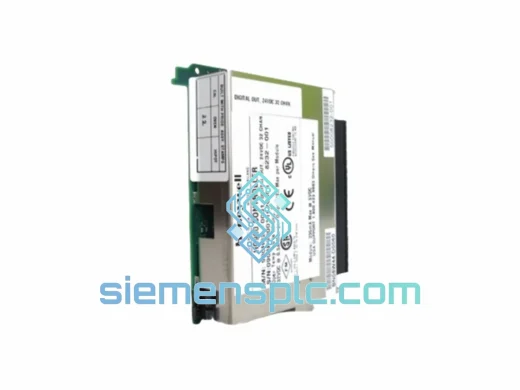
Honeywell 900H02-0202 Relay Digital Output Module
Origin US
Relay Digital Output Module
Honeywell
RFQ Ready
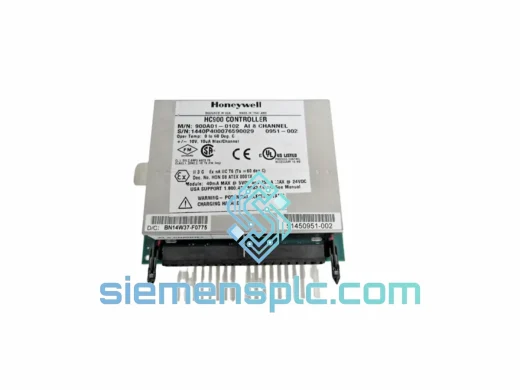
Honeywell 900A01-0001 Analog Input Module – HC900 Series
Origin US
Analog Input Module