Bently Nevada
RFQ Ready
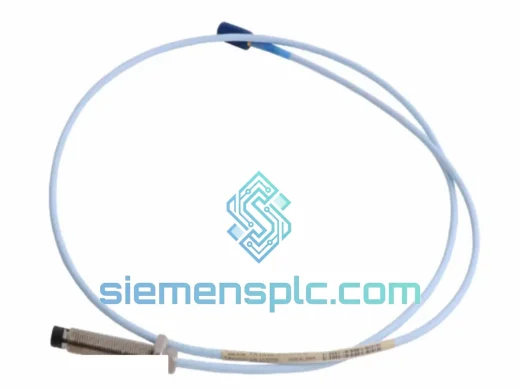
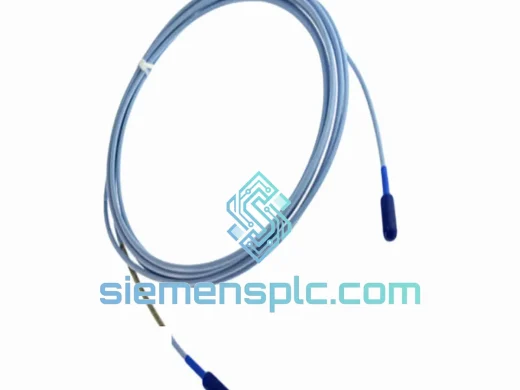
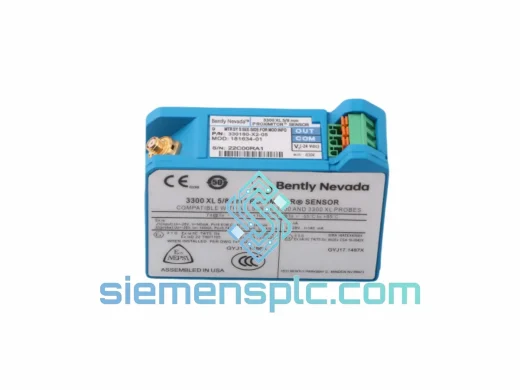
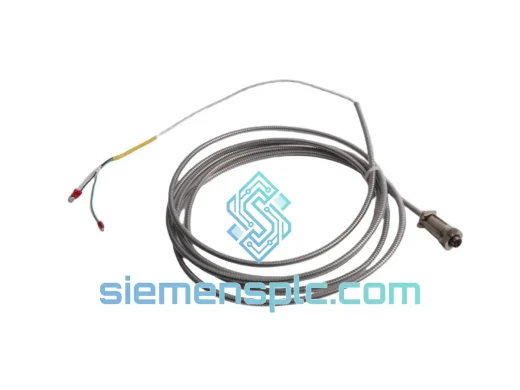
Bently Nevada 84661-12 Velomitor Interconnect Cable
3300 Series
Origin US
Vibration Monitoring Cable
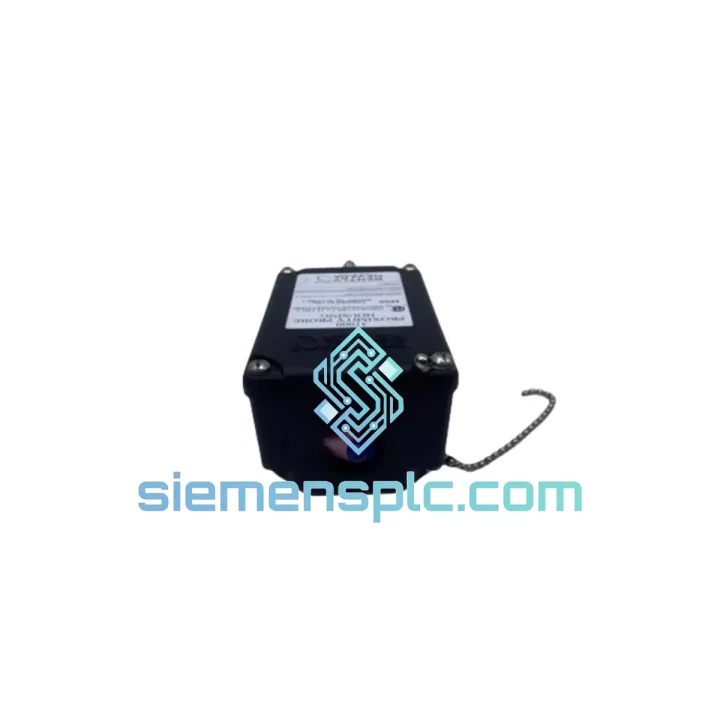
Request verified availability, condition, replacement risk review, packing options and courier lead time for 32000-28-05-00-060-03-02.
Click Request Quote and the part number is inserted into the inquiry form automatically.
Core fields for model confirmation and RFQ routing. Detailed product narrative remains below.
Every hour a gas turbine, centrifugal compressor, or steam turbine sits idle because of a failed proximity probe housing costs real money — production losses, contractual penalties, and the kind of pressure that makes a plant manager’s phone ring at 3 AM. The Bently Nevada 32000-28-05-00-060-03-02 Proximity Probe Housing Assembly is stocked and ready to ship from Xiamen today. No waiting on OEM lead times. No chasing distributors across time zones. You call, we ship.
This housing assembly is a precision-machined enclosure within the Bently Nevada 3300 XL Proximity Transducer System — the de facto standard for API 670-compliant machinery protection worldwide. When the housing fails, the probe loses its calibrated air gap, eddy-current linearity collapses, and your vibration monitor starts generating false alarms or, worse, missing real faults. A bad housing is not a minor inconvenience. It is a single point of failure in your entire condition monitoring chain.
URGENT REQUIREMENT? Contact: [email protected] | WhatsApp: +86 18359268345
| Parameter | Specification |
|---|---|
| Part Number / SKU | 32000-28-05-00-060-03-02 |
| Brand | Bently Nevada (Baker Hughes) |
| Series | 3300 XL Proximity Transducer System |
| Product Type | Proximity Probe Housing Assembly |
| Probe Compatibility | 3300 XL 8mm Proximity Probes (330103 series) |
| Integrated Cable Length | 0.60 m — encoded as “-060-” in part number |
| Mounting Standard | 3300 XL series thread spec (per OEM installation drawing) |
| Environmental Rating | Industrial-grade per Bently Nevada 3300 XL spec |
| Compliance | API 670 (5th Edition) machinery protection |
| Weight | Approx. 1,400 g (as configured) |
| Origin | China (Xiamen stocking point) |
| Availability | ✔ Ready to Ship |
When do you actually need to replace this housing? Three scenarios trigger an immediate swap:
1. Probe gap drift without mechanical cause. If your 3500/3300 rack is reporting shaft displacement creep and you have already ruled out rotor bow and bearing wear, pull the housing. Corrosion or mechanical deformation of the housing bore shifts the probe tip axially, destroying the calibrated gap. The 3300 XL system is calibrated for a nominal 1.0 mm gap at -10 VDC output. Even 0.1 mm of axial shift introduces measurable non-linearity.
2. Sealing failure in wet or chemically aggressive environments. Lube oil mist, process gas condensate, and steam ingress attack the housing O-ring seats. Once moisture reaches the probe tip, the eddy-current field is disrupted and output becomes erratic. You will see this as high-frequency noise on the vibration channel — not a clean waveform, but a ragged, unstable baseline.
3. Thread damage from repeated field access. On machines with frequent probe pull-and-inspect cycles — compressors on dirty service, for example — the housing threads wear. A housing that will not torque to spec is a housing that will back out under vibration. Do not re-use a stripped housing. Replace it.
Replacement procedure — field notes:
Common fault codes associated with housing failure on Bently Nevada 3500 racks:
The 3300 XL housing assembly is not designed for a climate-controlled instrument room. It lives bolted to a bearing housing on a gas turbine running at 3,600 RPM, surrounded by lube oil mist at 80°C, with the machine vibrating at amplitudes that would shake loose anything not engineered to stay put.
The housing material and sealing design address three primary degradation mechanisms that field engineers encounter repeatedly:
Vibration fatigue. The housing is machined to tight tolerances so that the probe assembly — housing, probe body, locknut — behaves as a rigid unit. There is no resonant frequency within the operating range of typical turbomachinery (10 Hz to 1,000 Hz) that will excite the housing into self-loosening. This matters because a housing that works loose under vibration does not fail suddenly — it drifts, producing a slow, insidious gap change that looks like a real process event until someone physically checks the installation.
Thermal cycling. Machines start cold and run hot. The housing must maintain dimensional stability across the full thermal range — from ambient startup to steady-state bearing housing temperatures that can exceed 120°C on high-speed machinery. Differential thermal expansion between the housing and the machine casing is managed through the thread engagement design. The 32000-28-05-00-060-03-02 maintains probe positioning integrity across this range without requiring re-gapping after thermal stabilization.
Chemical exposure. Lube oil, process gas condensate, cleaning solvents used during maintenance outages — the housing sealing system is designed to exclude all of these from the probe tip environment. The O-ring material selection is compatible with the lubricant types used in the majority of turbomachinery applications. If your machine runs on a synthetic ester-based lubricant, confirm O-ring compatibility with Bently Nevada’s material specification before installation.
Our stocking point is Xiamen, China — a major international freight hub with daily DHL Express and FedEx International Priority departures to every major industrial region on the planet.
Typical transit times from Xiamen:
What is included with every shipment:
For shutdown and turnaround projects where every hour counts, contact us directly on WhatsApp for real-time stock confirmation and same-day dispatch cut-off times. We do not route urgent inquiries through a ticketing system. You get a direct response from a technical team member who knows what the part is and what it does.
Email: [email protected]
WhatsApp: +86 18359268345
Web: siemensplc.com
© 2026 siemensplc.com. All rights reserved.
We check the full part number, brand, series and visible nameplate information before quotation.
Sales confirms stock path, condition option, quantity and realistic lead time for export dispatch.
DHL, FedEx, UPS or buyer courier arrangements can be reviewed with packing requirements.
Similar brand or category products for fast comparison and multi-item RFQ lists.