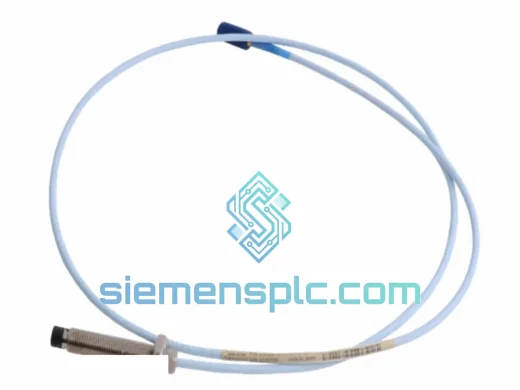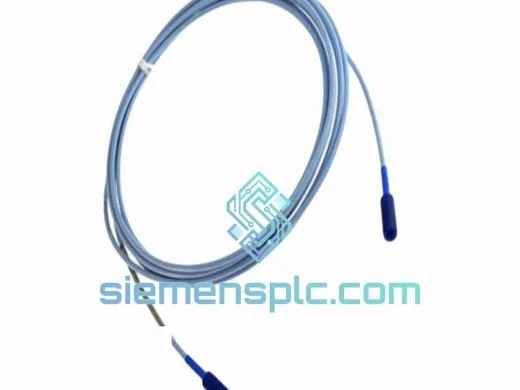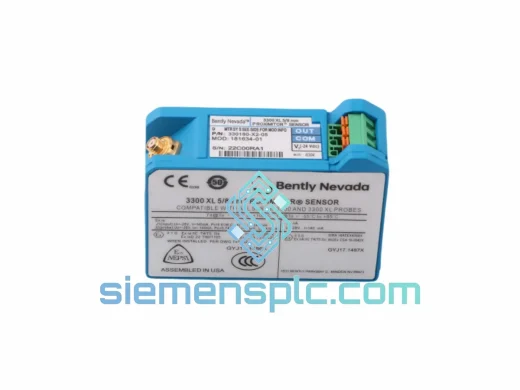
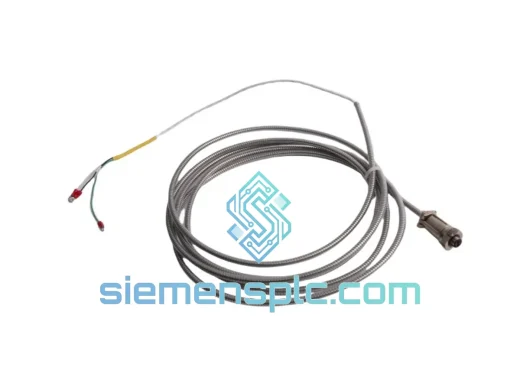
Bently Nevada
RFQ Ready
Bently Nevada 84661-12 Velomitor Interconnect Cable
3300 Series
Origin US
Vibration Monitoring Cable
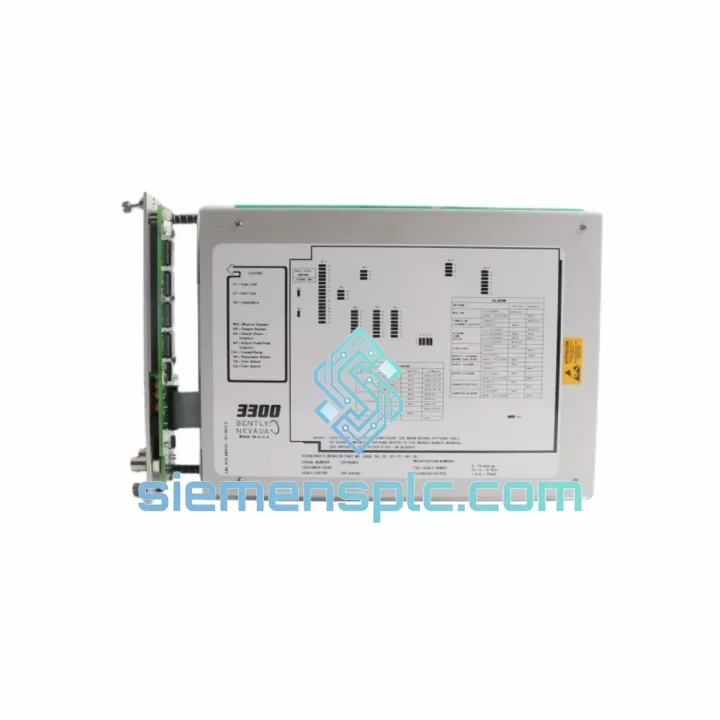
Request verified availability, condition, replacement risk review, packing options and courier lead time for 3300/40.
Click Request Quote and the part number is inserted into the inquiry form automatically.
Core fields for model confirmation and RFQ routing. Detailed product narrative remains below.
Your turbine is on turning gear. The control room is watching. Every hour offline costs real money — and the 3300/40 eccentricity monitor sitting dead in the rack is the only thing standing between you and restart. We stock it. We ship it today. From Xiamen to your plant gate via DHL Express, typically 3–5 business days worldwide.
URGENT REQUIREMENT? Contact: [email protected] | WhatsApp: +86 18359268345
| Part Number | 3300/40 |
| Manufacturer | Bently Nevada (Baker Hughes) |
| Series | 3300 Series Vibration Monitoring System |
| Function | Shaft Eccentricity Monitor (TIR measurement) |
| Measurement Range | 0–25 mil pp (0–635 µm pp), configurable |
| Input Transducer | Bently Nevada 3300 XL 8mm / 11mm Proximity Probes |
| Analog Output | 4–20 mA, proportional to eccentricity TIR |
| Relay Outputs | Alert and Danger relay, configurable setpoints |
| Rack Compatibility | 3300 Series 4-slot (3300/05) and 6-slot (3300/06) racks |
| Power Supply | Via rack backplane (3300/15 or 3300/20 PSU) |
| Operating Temperature | 0°C to +65°C |
| Certifications | CE marked; SIL-capable configurations available |
| Weight | Approx. 1,140 g |
| Availability | ✅ Ready to Ship — Xiamen Warehouse |
Ten years of field calls on 3300-series racks teach you the same lessons. Here is what actually matters when you pull a 3300/40 and slot in a replacement:
1. Confirm the rack slot address before you touch anything. The 3300/40 does not use DIP switches for slot addressing — the rack backplane assigns the slot position automatically. However, if your System 1 software has a hard-coded channel map, a module moved to a different slot will report on the wrong channel. Photograph the original slot position before removal.
2. Check the gap voltage on your proximity probe before blaming the module. A failed 3300/40 is often actually a probe gap that has drifted out of the –10 VDC ± 1 V linear range. Measure gap voltage at the I/O terminal block with a calibrated DMM. If it reads –7 V or –13 V, the probe or extension cable is the culprit, not the monitor card.
3. Slow-roll speed window matters. The 3300/40 measures eccentricity only within a configured slow-roll speed window (typically 5–600 RPM). If the module shows a valid signal at rest but blanks out during startup, verify the speed window setpoints in the rack configuration. A common field error is a speed window set too narrow after a previous firmware update.
4. Alert/Danger relay latching state. After module swap, the relay outputs may be in a latched trip state. Do not attempt to reset from the DCS before the module has completed its power-on self-test (approximately 15 seconds). Premature reset commands can cause the module to re-latch immediately, creating a false fault loop.
5. Firmware revision matching. If your plant runs Bently Nevada System 1 software, the 3300/40 firmware revision must be compatible with the System 1 version installed. Mismatched firmware can cause the module to appear as an unknown device in the rack gateway. Request the firmware revision label from us at time of order — we will match it to your existing rack population where stock allows.
Common fault codes seen in the field:
The 3300/40 was engineered for continuous 24/7 operation in environments that would kill consumer-grade electronics inside a week. The module’s conformal-coated PCB resists condensation and airborne contaminants common in coastal petrochemical plants and offshore platforms. Vibration tolerance is designed to exceed IEC 60068-2-6 test profiles — the same vibration that shakes loose poorly soldered boards on cheaper alternatives does not affect the 3300/40’s signal integrity.
Operating temperature ceiling of +65°C means the module handles the heat load inside a poorly ventilated control cabinet during a summer shutdown without thermal throttling or false trips. In high-humidity environments — think paper mills, coastal power stations, tropical refineries — the sealed backplane connector system prevents the creep corrosion that causes intermittent contact faults on older rack systems.
Every unit we ship from Xiamen is stored in a climate-controlled warehouse, packed in anti-static ESD-safe bags with desiccant packs and humidity indicator cards. You receive the module in the same condition it left the factory — not degraded by months in an uncontrolled storage environment.
Our dispatch hub is in Xiamen, China — one of the most connected export ports in Asia, with direct DHL Express and FedEx International Priority lanes to every major industrial region.
All shipments include a commercial invoice, packing list, and certificate of conformance. For plants requiring import documentation (HS code 8543.70 or 9030.89 depending on customs classification), we prepare the paperwork in advance to prevent customs clearance delays. Tracking numbers are issued within 2 hours of dispatch. For critical shutdowns, we can arrange Saturday pickup with DHL on request.
We have shipped 3300-series modules to power stations in Germany, refineries in Saudi Arabia, LNG terminals in Australia, and paper mills in Scandinavia. The logistics process is not new to us — it is a repeatable system built around one objective: getting your plant back online as fast as physically possible.
📧 Email: [email protected]
💬 WhatsApp: +86 18359268345
🌐 Web: siemensplc.com
© 2026 siemensplc.com. All rights reserved.
We check the full part number, brand, series and visible nameplate information before quotation.
Sales confirms stock path, condition option, quantity and realistic lead time for export dispatch.
DHL, FedEx, UPS or buyer courier arrangements can be reviewed with packing requirements.
Similar brand or category products for fast comparison and multi-item RFQ lists.