Bently Nevada
RFQ Ready
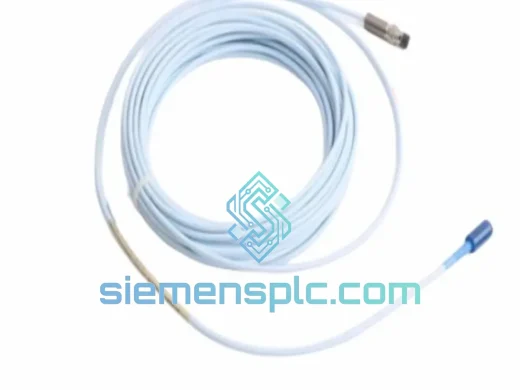
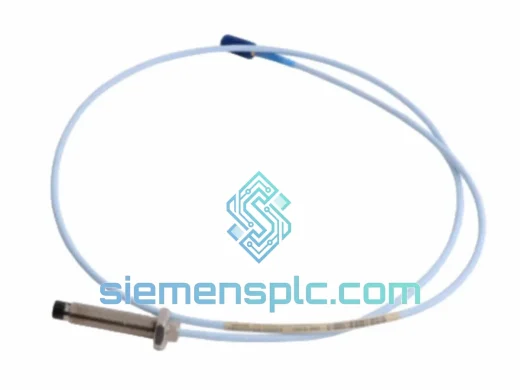
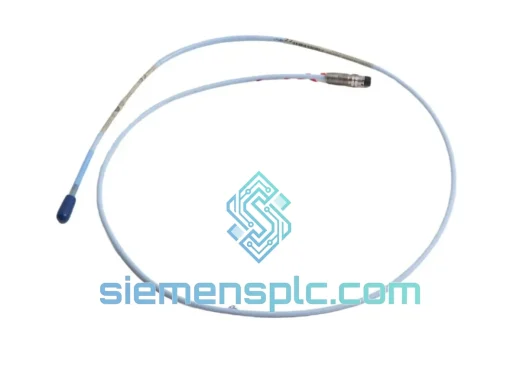
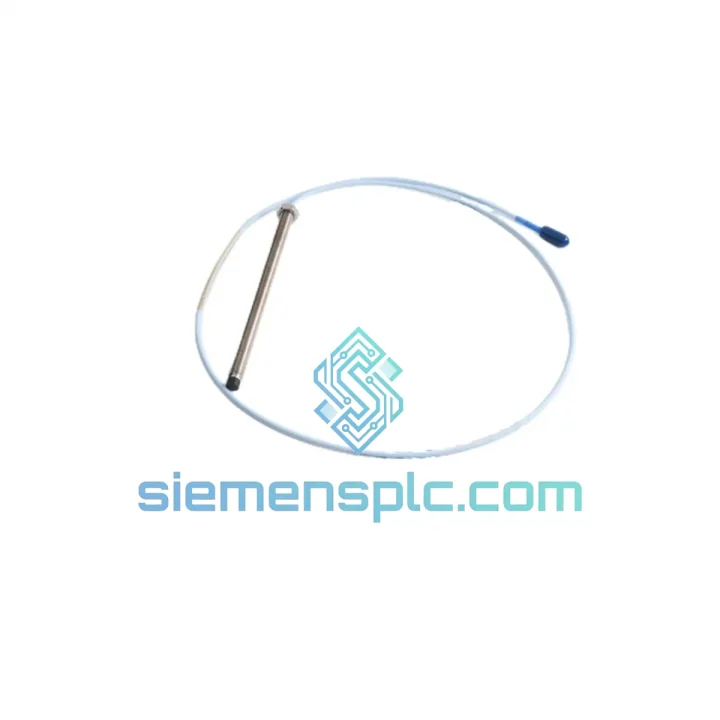
Bently Nevada 330196-05-30-10-00 Proximity Probe – 3300 XL ETR
3301
Origin US
Proximity Probe
Request verified availability, condition, replacement risk review, packing options and courier lead time for 330101-00-60-10-02-00.
Click Request Quote and the part number is inserted into the inquiry form automatically.
Core fields for model confirmation and RFQ routing. Detailed product narrative remains below.
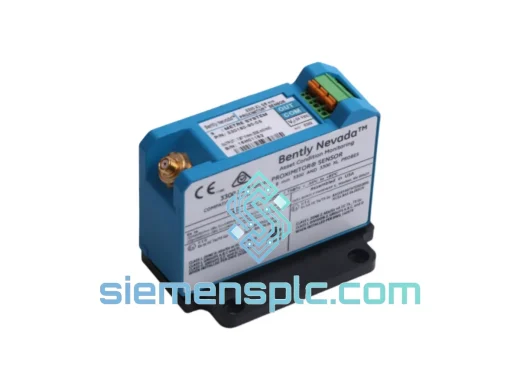
The 330101-00-60-10-02-00 is a 5 mm tip diameter, 5-metre integral-cable eddy current proximity probe manufactured by Bently Nevada (a Baker Hughes business). Within a rotating machinery protection loop, this probe functions as the primary sensing element responsible for converting mechanical shaft displacement into a proportional DC voltage signal. It operates in conjunction with a 3300 XL proximitor driver and a matched extension cable to form a calibrated three-component transducer chain compliant with API 670, the industry standard for machinery protection instrumentation on critical turbomachinery.
The probe’s role in the control loop is unambiguous: it provides continuous, non-contact measurement of radial shaft vibration and axial position with a DC-coupled frequency response extending from 0 Hz to 10,000 Hz. This bandwidth captures both quasi-static shaft centerline migration and high-frequency sub-synchronous instabilities — data that is indispensable for condition-based maintenance programs and safety-instrumented shutdown logic. The output signal feeds directly into DCS analog input cards, vibration monitors, or SIS logic solvers without signal conditioning beyond the proximitor driver itself.
Real-time Stock & RFQ: [email protected] | WhatsApp: +86 18359268345
| Manufacturer | Bently Nevada / Baker Hughes |
| Part Number | 330101-00-60-10-02-00 |
| Platform | 3300 XL Proximity Transducer System |
| Sensing Principle | Eddy current (non-contact, inductive) |
| Probe Tip Diameter | 5 mm (0.197 in) |
| Integral Cable Length | 5.0 m (16.4 ft) |
| Connector | 2-pin MIL-C-26482 bayonet |
| Linear Measurement Range | 0.25 mm – 2.25 mm (10 – 90 mil) |
| Scale Factor (nominal) | 7.87 V/mm (200 mV/mil) |
| Frequency Response (–3 dB) | DC – 10,000 Hz |
| Supply Voltage | –24 VDC nominal (via proximitor driver) |
| Output Voltage Range | –2 VDC to –18 VDC |
| Operating Temperature | –35 °C to +177 °C |
| Probe Body Material | 316 stainless steel |
| Thread | M8 × 1.0 |
| IP Rating | IP67 (probe body) |
| Standard Target Material | AISI 4140 steel |
| Compatible Proximitor | 330180 (8 mm), 330185 (11 mm) |
| Compatible Extension Cable | 330130 series |
| Certifications | CE, ATEX (zone classification per datasheet) |
| API Compliance | API 670 (5th Edition) |
| Warranty | 12 months from date of shipment |
The 330101-00-60-10-02-00 probe tip houses a precision-wound coil embedded in a thermoplastic-filled stainless steel housing. When energized by the proximitor driver’s internal oscillator (nominally 1.0 MHz carrier frequency), the coil generates a toroidal electromagnetic field that extends axially beyond the probe face. As a conductive target enters this field, eddy currents are induced on the target surface, extracting energy from the oscillator circuit and reducing the coil’s effective Q-factor. The proximitor’s demodulation stage converts this impedance variation into the linear DC output voltage.
The 5 mm tip geometry is a deliberate engineering choice. Compared to the 8 mm variant (330105 series), the smaller tip produces a tighter, more focused field with a proportionally shorter linear range — 2.0 mm span versus 4.0 mm — but achieves superior spatial resolution for small-diameter shafts (typically below 50 mm journal diameter) where the target-to-probe area ratio would otherwise degrade linearity. The integral cable design eliminates the field-splice junction between probe and extension cable, removing a common source of impedance discontinuity and RF signal reflection that can introduce scale factor error at the proximitor.
EMC performance is addressed through the coaxial cable construction of the integral lead: the inner conductor carries the RF signal while the outer braid provides a continuous Faraday shield referenced to the proximitor’s signal common. This architecture attenuates capacitively coupled interference from adjacent power cables and motor drives — a critical requirement in turbine halls where variable-frequency drives and high-voltage bus bars operate in close proximity to instrumentation wiring. The stainless steel probe body further acts as a mechanical EMI shield for the tip coil assembly.
Thermal stability is maintained by the selection of low-thermal-coefficient coil wire and a potting compound with a matched coefficient of thermal expansion relative to the stainless housing. Over the rated –35 °C to +177 °C range, scale factor drift remains within ±1% of nominal — a specification that eliminates the need for temperature compensation in most turbomachinery applications where bearing metal temperatures are monitored independently.
Every unit of the 330101-00-60-10-02-00 offered through siemensplc.com is sourced from authorized industrial distribution channels or verified surplus inventories with documented chain of custody. Prior to listing, each probe undergoes a structured incoming inspection protocol: visual examination of the probe body, tip face, and cable jacket for mechanical damage; connector pin inspection for corrosion and seating integrity; and cable continuity verification from tip coil to connector pins. Units that fail any inspection criterion are quarantined and excluded from sale — no exceptions.
Original factory packaging, calibration documentation, and serialized labels are preserved and shipped with the unit where available. For applications requiring traceable calibration records, we can provide the factory calibration certificate cross-referenced to the probe serial number upon request prior to order placement.
Logistics operations are managed from Xiamen, China, a major international port city with direct access to DHL Express, FedEx International Priority, and UPS Worldwide Expedited services. Standard export documentation — commercial invoice, packing list, certificate of origin, and HS code declaration (HS 9031.80) — is prepared for every shipment. Typical transit times are 3–5 business days to North America and Europe, 2–4 business days to Southeast Asia. For urgent plant shutdowns or unplanned outages, same-day dispatch is available for orders confirmed before 14:00 CST.
All shipments are insured against loss and transit damage. A tracking number is issued within 24 hours of dispatch. Import duty and customs clearance support documentation can be provided on request for buyers in regulated markets.
Email: [email protected]
WhatsApp: +86 18359268345
Web: siemensplc.com
Location: Xiamen, China
© 2026 siemensplc.com. All rights reserved.
We check the full part number, brand, series and visible nameplate information before quotation.
Sales confirms stock path, condition option, quantity and realistic lead time for export dispatch.
DHL, FedEx, UPS or buyer courier arrangements can be reviewed with packing requirements.
Similar brand or category products for fast comparison and multi-item RFQ lists.