Bently Nevada
RFQ Ready
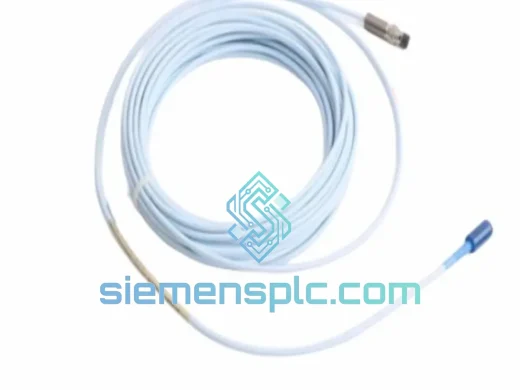
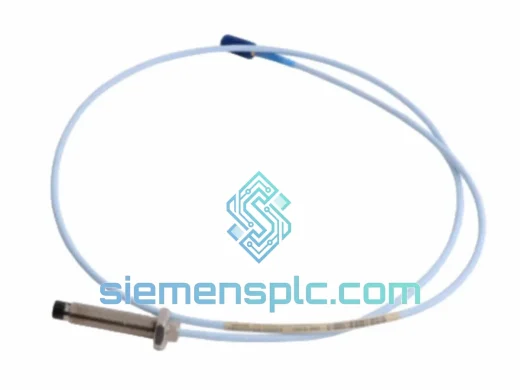
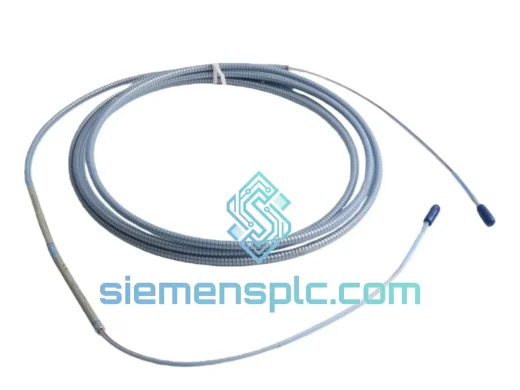
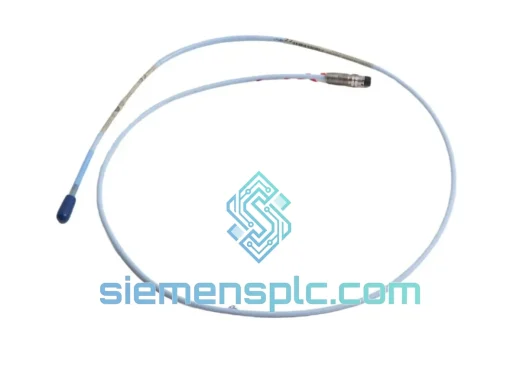
Bently Nevada 330196-05-30-10-00 Proximity Probe – 3300 XL ETR
3301
Origin US
Proximity Probe
Request verified availability, condition, replacement risk review, packing options and courier lead time for 330104-00-20-15-12-05.
Click Request Quote and the part number is inserted into the inquiry form automatically.
Core fields for model confirmation and RFQ routing. Detailed product narrative remains below.
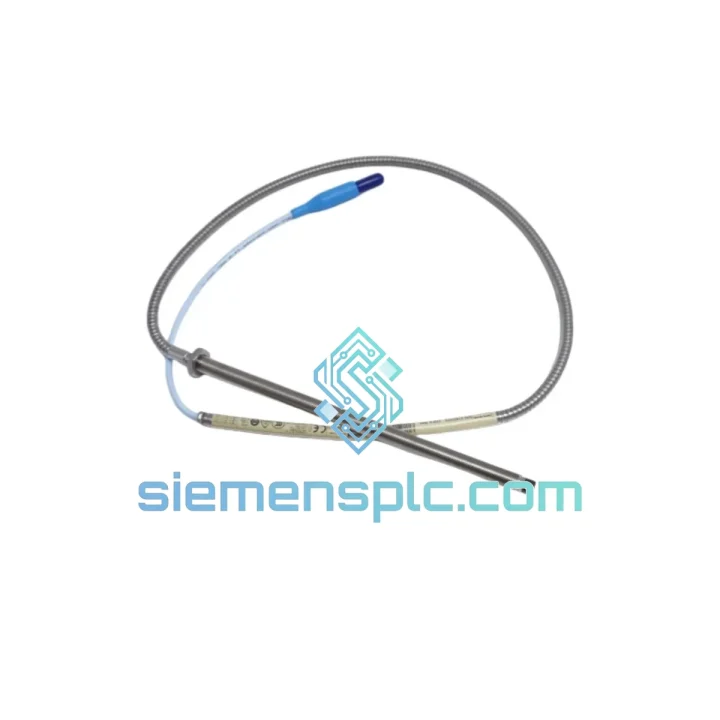
The Bently Nevada 330104-00-20-15-12-05 is a factory-calibrated 8 mm eddy-current proximity probe within the 3300 XL Proximity System — a three-component measurement chain (probe, extension cable, proximitor/oscillator-demodulator) engineered to deliver continuous, non-contact shaft displacement data to machinery protection monitors. The part number encodes specific mechanical and electrical configuration: 8 mm probe body, 5 m integral armored cable, 15 ft (4.57 m) extension cable, standard armoring, and a defined connector termination. Each digit in the suffix is a functional specification, not a revision marker.
Within a closed-loop machinery protection architecture, this probe occupies the transducer position in the measurement chain. Its output — a DC voltage proportional to probe-to-shaft gap — feeds directly into Bently Nevada 3300 or 3500 series monitor cards, where the signal is processed for radial vibration amplitude, DC gap (shaft centerline position), and phase angle relative to a Keyphasor reference. The monitor card then executes alarm and trip logic based on configurable setpoints, with response times governed by the monitor’s filter settings rather than any limitation in the probe itself. The probe’s role is to deliver a low-noise, high-linearity analog signal across its calibrated gap range; all protection decision logic resides downstream.
Real-time Stock & RFQ: [email protected] | WhatsApp: +86 18359268345
| Parameter | Specification |
|---|---|
| Part Number | 330104-00-20-15-12-05 |
| Brand | Bently Nevada (Baker Hughes) |
| Series | 3300 XL Proximity System |
| Probe Tip Diameter | 8 mm |
| Integral Cable Length | 5 m (armored coaxial) |
| Extension Cable Length | 15 ft / 4.57 m |
| Total System Cable Length (max) | 9 m (probe + extension combined) |
| Oscillation Frequency (nominal) | ~1.0 MHz |
| Scale Factor | 200 mV/mil (7.87 V/mm) |
| Linear Measurement Range | 80–180 mil (2.03–4.57 mm) |
| Nominal DC Output Voltage | −18 VDC (at mid-range gap, matched proximitor) |
| Supply Voltage (via proximitor) | −24 VDC nominal |
| Target Material (factory cal.) | AISI 4140 steel |
| Operating Temperature — Probe Body | −35 °C to +177 °C |
| Operating Temperature — Extension Cable | −35 °C to +105 °C |
| Probe Housing Material | 316 stainless steel |
| Thread Size | M10 × 1.0 |
| Connector Termination | Integral coaxial, armored jacket |
| Compliance | API 670 (5th Ed.), CE (EMC Directive 2014/30/EU), RoHS 2011/65/EU |
| Warranty | 12 months from date of shipment |
Oscillator-Demodulator Circuit Interaction: The 330104-00-20-15-12-05 probe coil forms the inductive element of a Colpitts-type LC resonant circuit housed within the matched 3300 XL proximitor. At the nominal 1.0 MHz oscillation frequency, the coil radiates an electromagnetic field with a usable depth of penetration into the target of approximately 0.25 mm for AISI 4140 steel — sufficient to couple with the shaft surface without sensitivity to subsurface microstructure. As the shaft-to-probe gap decreases, eddy-current loading on the coil increases, reducing oscillator amplitude. The demodulator converts this amplitude variation to the DC output voltage at the specified 200 mV/mil scale factor. The linearity of this conversion across the 80–180 mil range is maintained within ±1% of full-scale output when total cable capacitance remains within the 9 m system length constraint.
Cable Capacitance and System Length Constraint: The 9 m maximum total cable length is not an arbitrary installation guideline — it is a hard electrical boundary. Coaxial cable capacitance (approximately 100 pF/m for the 3300 XL cable) loads the oscillator tank circuit. Exceeding 9 m shifts the oscillator operating point outside the demodulator’s linear region, producing a non-linear scale factor that cannot be corrected by proximitor adjustment. Field installations that require longer cable runs must use a signal conditioning amplifier at the proximitor output rather than extending the coaxial cable between probe and proximitor.
EMC Architecture — Coaxial Shielding Continuity: The integral armored cable provides a continuous coaxial shield from the probe body to the proximitor input connector. This shield is grounded at the proximitor end only (single-point grounding), preventing ground loop currents from injecting common-mode noise into the measurement signal. In installations adjacent to variable-frequency drives, high-voltage switchgear, or large motor starters, this single-point shield grounding scheme is the primary defense against conducted EMI. The shield’s mechanical armor layer additionally provides protection against physical damage in cable trays shared with power cabling — a common installation scenario in compressor trains and turbine packages.
Target Material Electromagnetic Properties: The eddy-current coupling coefficient is a function of target electrical conductivity (σ) and relative magnetic permeability (μr). AISI 4140 steel (σ ≈ 4.0 × 10⁶ S/m, μr ≈ 100 at low field) is the factory calibration standard. Austenitic stainless steels (e.g., 316L: σ ≈ 1.35 × 10⁶ S/m, μr ≈ 1.0) and nickel-base superalloys (e.g., Inconel 718: σ ≈ 0.8 × 10⁶ S/m) produce significantly different coupling, shifting the effective scale factor by 10–30% from nominal. Installations on non-standard shaft materials require a target material correction factor to be applied during proximitor calibration — a procedure defined in Bently Nevada Application Note 44 and required by API 670 Section 5.4.3.
Mechanical Mounting and Cable Fatigue Considerations: The M10 × 1.0 threaded probe body allows gap setting via locknut adjustment with a resolution of 1.0 mm per full rotation. The armored cable exits the probe body at a fixed radial angle; the minimum bend radius of the armored cable (typically 50 mm for the 3300 XL cable) must be maintained at the probe body junction. Installations that route the cable through a tight radius at the probe exit point introduce cyclic bending stress at the cable-to-probe junction — a fatigue failure mode that manifests as intermittent signal dropout before complete open-circuit failure. Bracket design must account for this constraint, particularly on machines with significant casing thermal growth between cold and operating conditions.
All Bently Nevada 330104-00-20-15-12-05 units supplied through siemensplc.com are procured through verified OEM-authorized distribution channels. Pre-shipment verification includes physical inspection of probe housing, cable jacket integrity, connector condition, and label markings cross-referenced against OEM part number documentation. Serial numbers are logged against procurement records. No refurbished, reconditioned, repaired, or grey-market inventory is stocked or supplied.
Dispatch originates from our warehouse in Xiamen, China. In-stock orders are processed and dispatched within 1–3 business days. International freight is arranged via DHL Express, FedEx International Priority, or UPS Worldwide Expedited, with typical door-to-door transit times of 3–7 business days to industrial procurement destinations in Europe, Southeast Asia, the Middle East, South Asia, and the Americas. Each shipment includes a commercial invoice, packing list, and — upon request — a certificate of conformance and country-of-origin documentation for import customs clearance. HS code classification support and project procurement documentation packages are available on request.
A 12-month warranty is provided from the confirmed date of shipment, covering manufacturing defects under operating conditions consistent with Bently Nevada installation, operation, and maintenance guidelines for the 3300 XL Proximity System.
📧 Email: [email protected]
💬 WhatsApp: +86 18359268345
🌐 Web: siemensplc.com
📍 Location: Xiamen, China
© 2026 siemensplc.com. All rights reserved.
We check the full part number, brand, series and visible nameplate information before quotation.
Sales confirms stock path, condition option, quantity and realistic lead time for export dispatch.
DHL, FedEx, UPS or buyer courier arrangements can be reviewed with packing requirements.
Similar brand or category products for fast comparison and multi-item RFQ lists.