
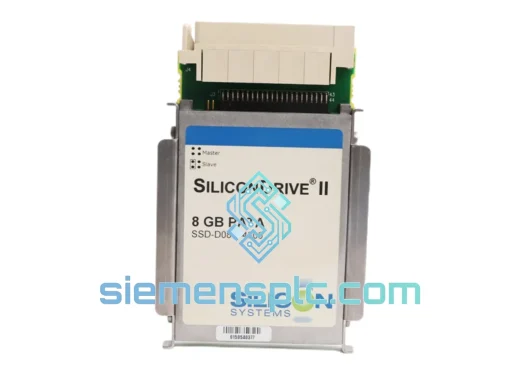
Honeywell
In Stock OK
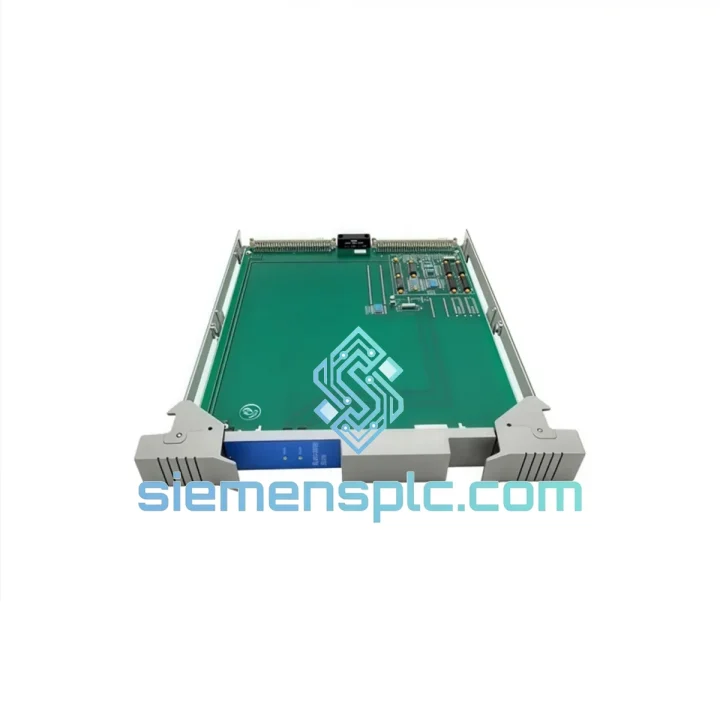
Honeywell 51304501-100 Redundancy Driver Module – TDC 3000
Request verified availability, condition, replacement risk review, packing options and courier lead time for 51304501-100.
BrandHoneywell
Part Number51304501-100
ConditionAvailability Check
Lead TimeRFQ Confirmation
DocumentsDatasheet / photos by RFQ
ShippingExport packing available
Auto-filled RFQ
51304501-100
Click Request Quote and the part number is inserted into the inquiry form automatically.
- Reply by email: [email protected]
- WhatsApp / Tel: +86 18359268345
- Mon-Sat 9:00-18:00 GMT+8
Procurement Data
Key Product Information
Core fields for model confirmation and RFQ routing. Detailed product narrative remains below.
- Brand
- Honeywell
- Primary Part Number
- 51304501-100
- Product Type
- Redundancy Driver Module
- Series / Family
- TDC 3000
- Manufacturer
- Honeywell Process Solutions
- Country of Origin
- US
- Catalog Category
- Motor Drives
- Operating Temp.
- 0 °C to +60 °C (32 °F to 140 °F)
- Warranty
- 12 months replacement warranty from siemensplc.com
- Compliance
- IEC 61511 compatible (validated redundant configuration); ATEX Zone 2 / Class I Div 2 per Honeywell system documentation
Model confirmed for inquiry
51304501-100
Send quantity, destination and urgency. The RFQ form keeps this part number attached.
Request Quote
Product Overview
Honeywell 51304501-100 Redundancy Driver Module – Fault-Tolerant Control Architecture for TDC 3000 DCS
The Honeywell 51304501-100 is a dedicated Redundancy Driver Module engineered for the TDC 3000 and TotalPlant Solution (TPS) distributed control system platforms. Within a high-availability control loop, this module occupies the arbitration layer between the primary and standby controller cards, continuously monitoring heartbeat signals, synchronizing process data states, and executing bumpless switchover logic when a primary-side fault is detected. Its role is not peripheral — it is the mechanism by which the TDC 3000 achieves its published mean time between failures (MTBF) targets in continuous-process environments where a single unplanned trip can cost tens of thousands of dollars per hour in lost production.
Unlike software-based redundancy schemes that rely on OS-level watchdog timers, the 51304501-100 implements hardware-level arbitration. The module maintains a dedicated synchronization bus between the primary and backup controller slots, transferring process variable (PV) values, setpoints, output states, and alarm masks at a cycle rate that keeps the standby controller within one scan of the primary. When a fault condition is detected — whether a power rail deviation, a backplane communication timeout, or an internal self-diagnostic failure — the switchover is executed in hardware, with no dependency on the host processor completing a software handshake. This architecture eliminates the class of failures where a software-based redundancy manager itself becomes the single point of failure.
The module is designed for direct installation into standard TDC 3000 and TPS card cages without chassis modification. It interfaces with the Local Control Network (LCN) and Universal Control Network (UCN) backplane infrastructure natively, making it a drop-in replacement for aging or failed units in existing installations. Field engineers report that replacement procedures, when following Honeywell’s documented hot-swap protocol, can be completed in under 15 minutes without process interruption — a critical advantage in facilities that operate on continuous 24/7 production schedules.
Deployment environments for the 51304501-100 span the full range of heavy-process industries: oil and gas refineries managing distillation column control and compressor train automation; chemical and petrochemical plants running fault-tolerant batch reactors; power generation facilities where turbine governor systems demand sub-second failover; pharmaceutical manufacturing lines operating under GMP-compliant redundant control architectures; and LNG terminals and offshore platforms where environmental harshness and remote location make bumpless redundancy non-negotiable. In each of these contexts, the 51304501-100 is not a convenience feature — it is a safety and availability requirement.
Real-time Stock & RFQ: [email protected] | WhatsApp: +86 18359268345
Technical Parameters
| Parameter | Specification |
|---|---|
| Part Number / SKU | 51304501-100 |
| Manufacturer | Honeywell Process Solutions |
| Platform / Series | TDC 3000 / TotalPlant Solution (TPS) |
| Module Classification | Redundancy Driver Module |
| Form Factor | Plug-in card, standard TDC 3000 card cage |
| Redundancy Architecture | Hardware-arbitrated hot-standby, bumpless switchover |
| Synchronization Bus | Dedicated inter-module redundancy link (LCN/UCN backplane) |
| Switchover Trigger | Hardware fault detection: power rail, backplane timeout, self-diagnostic failure |
| Switchover Execution | Hardware-level, no host processor dependency |
| Operating Temperature | 0 °C to +60 °C (32 °F to 140 °F) |
| Storage Temperature | -40 °C to +85 °C |
| Relative Humidity | 5% to 95% non-condensing |
| Power Supply | Derived from TDC 3000 card cage backplane (5 VDC / 24 VDC rails) |
| Module Weight | 150 g |
| Compliance | IEC 61511 compatible (validated redundant configuration); ATEX Zone 2 / Class I Div 2 per Honeywell system documentation |
| Warranty | 12 months replacement warranty from siemensplc.com |
| Condition | Genuine Honeywell — New surplus / Tested & verified |
| Ship-from Location | Xiamen, China |
Hardware Logical Analysis
The 51304501-100’s internal architecture reflects Honeywell’s design philosophy for the TDC 3000 platform: determinism over flexibility, hardware enforcement over software policy. Several design decisions are worth examining in detail.
Hardware-Arbitrated Switchover Logic: The redundancy arbitration circuit operates independently of the main processor on the controller card. It monitors a set of discrete fault signals — backplane voltage rails, inter-module heartbeat pulses, and internal self-test registers — through dedicated logic gates rather than through a software polling loop. This means the switchover decision is made at gate propagation speeds, not at OS scheduler speeds. The practical result is a switchover time measured in milliseconds rather than the hundreds of milliseconds typical of software-managed redundancy schemes.
EMC Design and Signal Integrity: The module’s PCB layout incorporates ground plane segmentation between the analog monitoring circuits and the digital arbitration logic, reducing conducted noise coupling between the two domains. Differential signaling is used on the inter-module synchronization bus, providing common-mode rejection for noise induced by the industrial backplane environment. Bulk decoupling capacitors are placed at each power entry point to suppress high-frequency transients from the card cage power distribution network — a known noise source in densely populated TDC 3000 chassis.
State Synchronization Mechanism: The module maintains a shadow register set that mirrors the primary controller’s output latch states. At each synchronization cycle, the primary controller writes its current output values to the redundancy bus; the 51304501-100 captures these values and holds them in the standby controller’s input buffer. On switchover, the standby controller reads from this buffer rather than from a cold-start state, ensuring that the first output scan after failover produces values consistent with the last known good state of the primary — the definition of bumpless transfer.
Self-Diagnostic Coverage: The module runs a continuous background self-test that exercises its own arbitration logic, memory registers, and bus interface circuits. Faults detected in the redundancy module itself are reported to the TDC 3000 system historian and operator console via the LCN diagnostic channel, allowing maintenance personnel to identify a degraded redundancy state before it becomes a single-point-of-failure condition. This diagnostic transparency is a key differentiator from passive redundancy schemes that provide no visibility into the health of the standby path.
System Integration Benefits
- Zero-bump process continuity: Hardware-level switchover preserves output states across the failover event, eliminating the process upsets — valve kicks, flow transients, temperature excursions — that accompany non-bumpless redundancy transitions.
- Reduced mean time to repair (MTTR): Hot-swap capability allows the failed module to be extracted and replaced while the standby controller maintains process control, compressing maintenance windows from hours to minutes.
- Deterministic failover timing: Hardware arbitration produces a switchover latency that is bounded and repeatable, enabling safety engineers to include the failover time in SIL calculations under IEC 61511 without relying on probabilistic software timing estimates.
- Diagnostic transparency: Continuous self-test results are surfaced through the LCN diagnostic channel to the TDC 3000 operator console and historian, giving maintenance teams real-time visibility into redundancy system health without requiring dedicated diagnostic hardware.
- Backplane compatibility across TDC 3000 revisions: The module’s LCN/UCN interface is compatible across the TDC 3000 and TPS platform generations, reducing the number of spare part variants that a facility’s maintenance inventory must carry.
- No reconfiguration on replacement: The module derives its operating parameters from the card cage backplane and the controller cards it serves; no firmware download or parameter entry is required after physical installation, reducing the risk of configuration error during emergency replacement.
- Support for IEC 61511 SIL-rated architectures: When deployed in a validated redundant configuration per Honeywell’s system documentation, the 51304501-100 contributes to the hardware fault tolerance (HFT) requirements of SIL 2 and SIL 3 safety instrumented system architectures.
- Long-lifecycle spare availability: With TDC 3000 installations operating well beyond their original design life at many facilities, the availability of verified genuine spare modules from a reliable distributor directly extends the operational life of the control system without requiring a full DCS migration project.
Quality Assurance & Global Logistics
Every Honeywell 51304501-100 unit dispatched from siemensplc.com is sourced through verified industrial supply channels — decommissioned plant upgrades, authorized surplus distributors, and direct OEM-traceable inventory. No gray-market or counterfeit-risk sources are used. Each unit undergoes a structured intake inspection protocol: visual examination of the PCB, connector pins, and component population; board-level cleaning to IPC-7711/7721 standards; and functional power-on verification against known-good reference parameters before the unit is accepted into stock.
Units are stored in a climate-controlled warehouse in Xiamen, China, in anti-static ESD bags within foam-lined cartons, meeting IPC/JEDEC J-STD-033 handling requirements for moisture-sensitive electronic assemblies. Serial numbers and hardware revision levels are recorded at intake and are available to customers on request, supporting traceability requirements for regulated industries.
Logistics from Xiamen reach major industrial hubs efficiently: DHL Express and FedEx International Priority services provide 2–5 business day delivery to most destinations in North America, Europe, the Middle East, and Southeast Asia. Export documentation — commercial invoice, packing list, certificate of origin — is prepared to the importing country’s customs requirements. For time-critical plant emergencies, same-day dispatch is available for in-stock units when orders are confirmed before 14:00 CST. A 12-month replacement warranty covers all units sold through siemensplc.com, with advance replacement available for qualified accounts to minimize downtime exposure.
Contact Information
Email: [email protected]
WhatsApp: +86 18359268345
Web: siemensplc.com
Location: Xiamen, China
© 2026 siemensplc.com. All rights reserved.
Ready to quote
[email protected]
Send This Part Number to Sales
RFQ workflow
Quality workflow ->
Confirmation Process
01Model confirmation
We check the full part number, brand, series and visible nameplate information before quotation.
02Availability reply
Sales confirms stock path, condition option, quantity and realistic lead time for export dispatch.
03Packing & courier
DHL, FedEx, UPS or buyer courier arrangements can be reviewed with packing requirements.
Continue sourcing
Browse full catalog ->
Related Automation Parts
Similar brand or category products for fast comparison and multi-item RFQ lists.
Honeywell
RFQ Ready
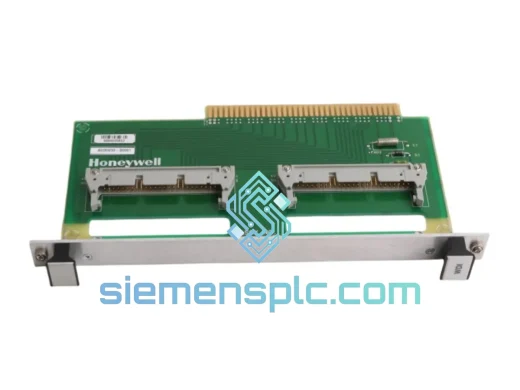
Honeywell 51304903-200 DCS Storage Module – TDC 3000
TDC 3000
Origin US
DCS Storage Module
Honeywell
RFQ Ready
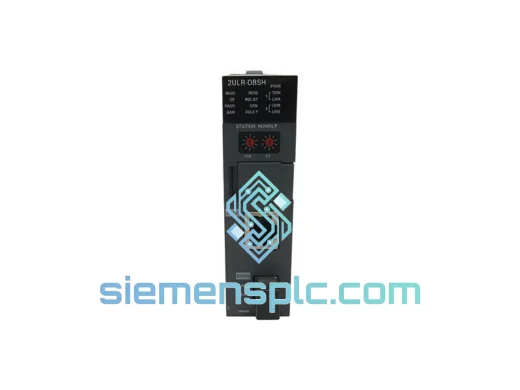
Honeywell 2MLR-DBSH DCS Expansion Driver Module
TDC 3000
Origin US
DCS Expansion Module
Honeywell
RFQ Ready
Honeywell 2MLR-DBSFS DCS Expansion Module
TDC 3000
Origin US
DCS Expansion Module