Honeywell
RFQ Ready
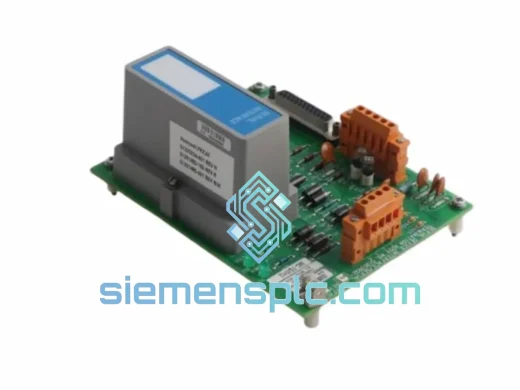
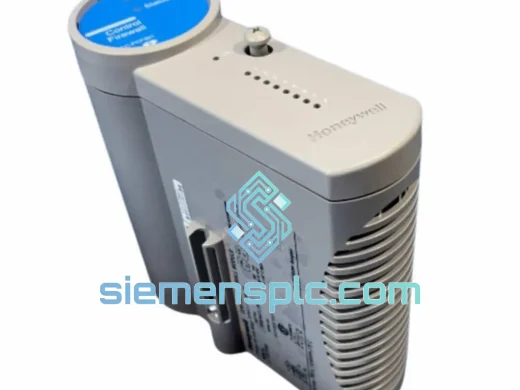
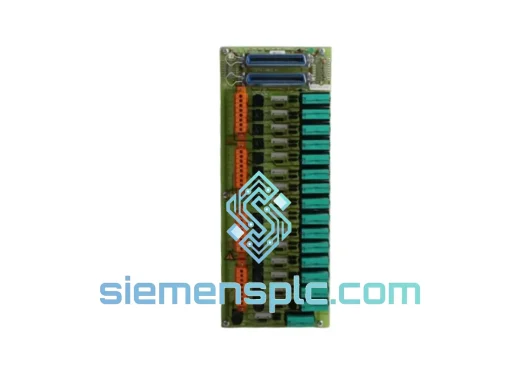
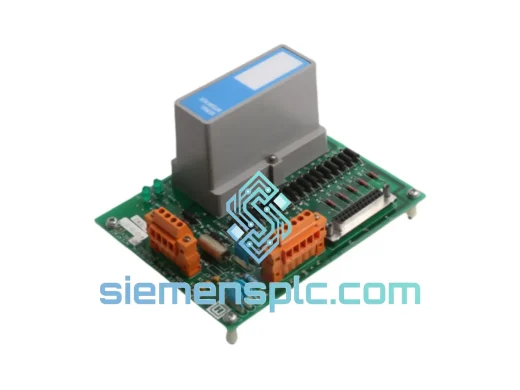
Honeywell MU-TSIM12 51303932-401 Serial Interface Module
Experion PKS
Origin US
Serial Interface Module
Request verified availability, condition, replacement risk review, packing options and courier lead time for 51305508-200.
Click Request Quote and the part number is inserted into the inquiry form automatically.
Core fields for model confirmation and RFQ routing. Detailed product narrative remains below.
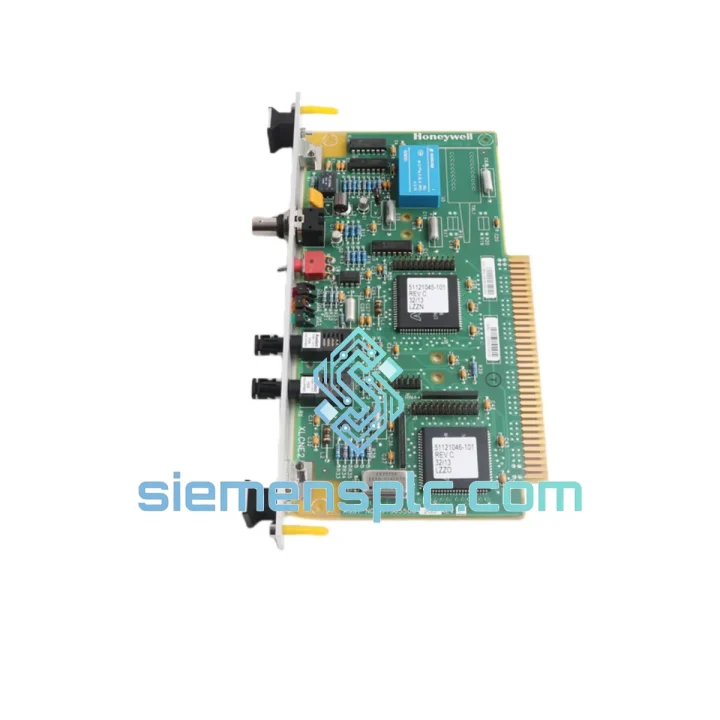
You already know what a dead XLCNE2 costs. The moment this fiber network interface board drops out of your Experion PKS or TotalPlant node, the entire communication backbone between that controller and the plant network goes dark. It’s not a degraded signal — it’s a hard cut. Operators lose real-time data. Alarms queue up with no acknowledgment path. If your redundant LCN or FTE path absorbs the load, congratulations: you’re now running a critical process on a single thread with zero fault tolerance. That’s not a maintenance issue. That’s a production risk that your insurance carrier would very much like to know about.
The Honeywell 51305508-200 — PWA XLCNE2 Multimode CE — is not a part you improvise around. There is no bypass. There is no software workaround. You need the board, seated in the correct chassis slot, with clean fiber connections, and a firmware-compatible system configuration. That’s it. The only variable you can control right now is how fast you get the part.
We stock the 51305508-200 in our Xiamen warehouse. Not “available to order” — physically on the shelf, tested, packaged, and ready to move. Confirmed orders before 14:00 CST ship same day via DHL Express or FedEx International Priority. Frankfurt, Dubai, Singapore, Houston, Tokyo — your freight hub is covered. We’ve done this before. We’ll do it again today if you call now.
⚡ URGENT REQUIREMENT? Contact: [email protected] | WhatsApp: +86 18359268345
| Parameter | Specification |
|---|---|
| Part Number | 51305508-200 |
| Module Name | PWA XLCNE2 Multimode CE — Fiber Optic Network Interface Board |
| Manufacturer | Honeywell Process Solutions |
| Compatible Platforms | Experion PKS, TotalPlant Solution (TPS), PlantScape |
| Network Type | LCN (Local Control Network) / FTE (Fault Tolerant Ethernet) |
| Fiber Type | Multimode — 62.5/125 µm or 50/125 µm OM2/OM3 |
| Compliance | CE Marked — EMC Directive 2014/30/EU, LVD 2014/35/EU |
| Form Factor | PCB Assembly — direct chassis slot installation |
| Operating Temperature | 0°C to +60°C |
| Storage Temperature | -25°C to +70°C |
| Humidity | 5–95% RH, non-condensing |
| Conformal Coating | IPC-CC-830 compliant |
| Country of Origin | United States |
| Condition | New OEM / Tested Surplus (specify at inquiry) |
| Warranty | 12 months (New) / 90 days (Tested Surplus) |
| Stock Status | ✅ Ready to Ship — Xiamen Warehouse |
| Same-Day Cutoff | 14:00 CST on confirmed orders |
Ten years of emergency callouts on Honeywell DCS platforms produce patterns. Here’s what actually happens in the field — not the theory, the reality.
Scenario A — Node Offline, All Local Hardware Appears Healthy
The node has vanished from the operator console. PSU LEDs are green. I/O cards are seated and not faulted. Nothing in the cabinet looks wrong. Before you start pulling cards, check the 51305508-200 first. A failed XLCNE2 board drops the node from the network while all local hardware continues to run normally. The node is alive — it just can’t talk to anyone. In roughly four out of ten “node offline” callouts on TPS and Experion PKS systems, this board is the root cause. Swap it before you chase anything else.
Scenario B — Redundancy Manager Logging Repeated Failover Cycles
Your FTE or LCN redundancy manager is cycling: primary drops, secondary takes over, primary recovers, repeat. This is a degraded fiber interface, not a cable fault. The optical transceiver on the 51305508-200 degrades gradually under thermal stress. The signal becomes marginal — not absent — so the network layer sees it as intermittent. Run an optical power meter on the fiber run first to eliminate cable attenuation as the cause. If the fiber is clean and within spec, the board is failing. Replace it.
Scenario C — Replacement Board Installed, Node Won’t Join Network
You’ve seated a new 51305508-200 and the node powers up, but it won’t join the LCN or FTE segment. Work through this checklist in order:
Step-by-Step Field Replacement:
The 51305508-200 was designed for the environments where Honeywell DCS systems actually operate. Not a climate-controlled server room — a refinery control building running at 50°C ambient in August, a petrochemical plant with trace hydrocarbon vapor in the air, an offshore platform where the cabinet vibrates continuously from diesel generators running at 1,500 RPM ten meters away.
The multimode fiber interface eliminates the ground loop and EMI susceptibility problems inherent to copper-based network interfaces in heavy industrial environments. A fiber run through a cable tray adjacent to a 6.6 kV motor feeder carries zero induced noise. This is not a theoretical advantage — it’s the engineering reason Honeywell specified fiber for the LCN backbone from the beginning.
The PCB assembly carries IPC-CC-830 compliant conformal coating, providing resistance to humidity, condensation, and mild chemical vapor. In fertilizer and chemical processing environments where ammonia or chlorine vapor is present at trace concentrations, conformal coating is the difference between a board that runs five years and one that fails in eighteen months from contact corrosion on the edge connector.
Vibration tolerance is validated to IEC 60068-2-6 test profile Fc — 10 to 150 Hz at 1.0 g acceleration. This covers most pump skid and compressor package installations. For extreme vibration environments, mount the chassis on anti-vibration isolators per Honeywell’s cabinet installation guidelines. The board itself is not the weak point in high-vibration installations; the fiber connector mating interface is. Add a cable clamp within 100 mm of each fiber connector to prevent flex fatigue at the termination point.
Thermal cycling performance is qualified through 500 cycles between -25°C and +70°C with no measurable degradation in optical output power or network performance. The optical transceiver is the component most sensitive to sustained high-temperature operation. A cabinet running 15°C above design ambient will approximately halve the transceiver’s service life. If you’re seeing repeated XLCNE2 failures at the same node, check cabinet cooling before you order the next replacement board.
Our Xiamen warehouse stores all stock in climate-controlled conditions at 20°C ±3°C and 40–60% RH. Each board is individually sealed in anti-static packaging with a desiccant sachet and a humidity indicator card. New OEM stock carries a verified shelf life of 36 months from our intake date.
Xiamen Gaoqi International Airport has daily freighter departures to Frankfurt, Dubai, Singapore, Los Angeles, and Tokyo. Your emergency order does not sit in a consolidation queue waiting for a weekly freight cycle. We pick, pack, and hand off to the carrier the same day you confirm — that’s the operational model, not a marketing claim.
Carrier Options:
Dispatch Cutoff: Orders confirmed with payment before 14:00 CST ship same business day. Orders confirmed after 14:00 CST ship the following morning. Saturday dispatch is available for critical shutdowns — contact us directly to arrange outside standard hours.
Shipment Documentation: Every shipment includes a commercial invoice, packing list, certificate of conformance, and country of origin declaration. IEC test reports, MSDS, and customs pre-clearance documentation are available on request at time of order.
Customs Compliance: We declare accurate commercial values and correct HS codes on all shipments. For customers in jurisdictions with import duty exemptions on industrial automation components, we provide supporting documentation to facilitate customs clearance without delay.
Indicative Transit Times from Xiamen: Singapore 1 day · UAE 2 days · Germany 2–3 days · USA 2–3 days · Brazil 3–5 days. Add one buffer day for customs clearance in your project schedule.
📧 Email: [email protected]
📱 WhatsApp: +86 18359268345
🌐 Web: siemensplc.com
© 2026 siemensplc.com. All rights reserved.
We check the full part number, brand, series and visible nameplate information before quotation.
Sales confirms stock path, condition option, quantity and realistic lead time for export dispatch.
DHL, FedEx, UPS or buyer courier arrangements can be reviewed with packing requirements.
Similar brand or category products for fast comparison and multi-item RFQ lists.