Honeywell
RFQ Ready
Honeywell TK-ODD321 Discrete Output Module – Safety Manager
Safety Manager
Origin US
Discrete Output Module
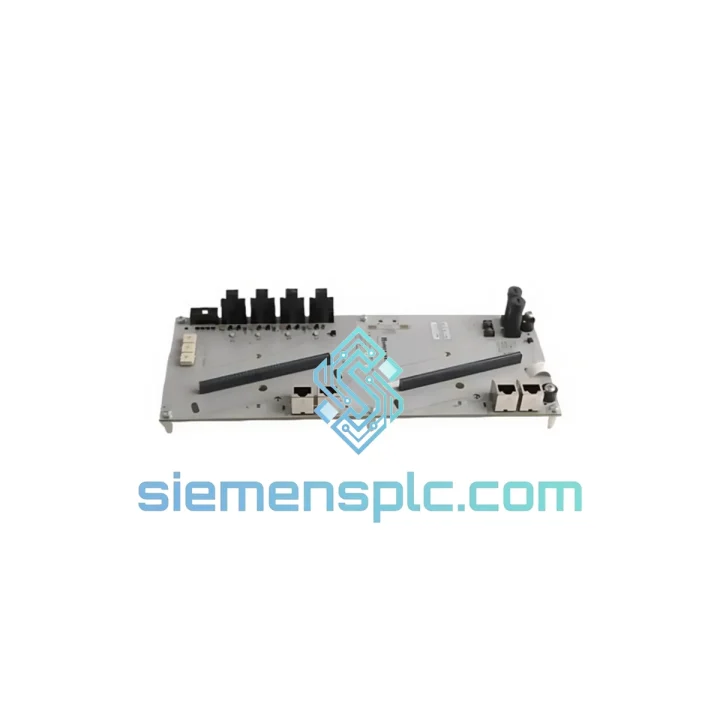
Request verified availability, condition, replacement risk review, packing options and courier lead time for CR-SDSGSW.
Click Request Quote and the part number is inserted into the inquiry form automatically.
Core fields for model confirmation and RFQ routing. Detailed product narrative remains below.
The CR-SDSGSW occupies a well-defined position in the Safety Manager SC (SMSC) I/O subsystem: it is the certified discrete output interface between the safety controller and field actuators — solenoid valves, shutdown relays, motor starters, and de-energize-to-trip (DETT) devices — in Safety Instrumented Functions (SIFs) rated up to SIL 2 per IEC 61508 Ed. 2. Unlike general-purpose digital output cards, every channel on the CR-SDSGSW carries continuous loop-current supervision, meaning the module does not merely assert a logic state; it actively verifies that the downstream field device has responded within the expected electrical envelope. This distinction is architecturally significant: it shifts fault detection from periodic proof-testing to online, scan-cycle-level diagnostics, compressing the mean time to detect (MTTD) from months to milliseconds.
Within the SMSC backplane, the CR-SDSGSW communicates over Honeywell’s proprietary deterministic safety bus. The controller — executing IEC 61131-3 Function Block Diagram or Ladder Logic compiled in Safety Builder — evaluates voting logic (1oo1D, 1oo2D, or 2oo3 at system level) and writes commanded states to the module’s output registers each scan cycle. The module’s onboard microcontroller then drives the solid-state output stage and simultaneously samples the loop-current feedback path. Any deviation — open circuit, short to supply, short to ground, or load impedance outside tolerance — is flagged as a diagnostic event, reported back to the controller via the backplane, and surfaced in Experion PKS or Safety Builder’s fault log with channel-level granularity. This closed-loop verification architecture is what enables the module to claim diagnostic coverage (DC) consistent with SIL 2 requirements without relying on external test equipment during normal operation.
The solid-state output stage eliminates the mechanical wear inherent in relay-based alternatives. With no contact bounce, no arcing, and no coil inductance to manage, the CR-SDSGSW delivers repeatable switching characteristics across its rated service life — a material advantage in high-cycle applications such as compressor anti-surge valve control or burner management system (BMS) purge sequences where output state transitions may occur thousands of times per year.
Real-time Stock & RFQ: [email protected] | WhatsApp: +86 18359268345
| Parameter | Value |
|---|---|
| Part Number / SKU | CR-SDSGSW |
| Manufacturer | Honeywell Process Solutions |
| Platform | Safety Manager SC (SMSC) |
| Module Function | Safety Digital Output (SDO) |
| Output Channels | 8 channels, solid-state, individually supervised |
| Nominal Output Voltage | 24 V DC |
| Max Output Current per Channel | 0.5 A (derate per Honeywell power budget) |
| Diagnostic Coverage | Open-circuit & short-circuit detection, per channel, online |
| Safety Integrity Level | SIL 2 capable (IEC 61508 Ed. 2) |
| Functional Safety Standards | IEC 61508 Ed. 2, IEC 61511 |
| Backplane Communication | Honeywell proprietary safety bus (SMSC chassis) |
| Mounting | SMSC I/O rack slot, DIN-rail chassis |
| Operating Temperature | 0 °C to +60 °C |
| Storage Temperature | –40 °C to +85 °C |
| Relative Humidity | 5 % to 95 % RH, non-condensing |
| Ingress Protection | IP20 (module); IP54 with rated enclosure |
| Certifications | TÜV SÜD, CE, ATEX Zone 2 (with enclosure) |
| Country of Origin | USA |
| Approximate Weight | 1.0 kg |
| Warranty | 12 months from date of shipment (siemensplc.com) |
The CR-SDSGSW’s output stage is built around solid-state switching elements — typically power MOSFETs or IGBT-class devices — rather than electromechanical relays. This choice has direct consequences for EMC performance: the absence of inductive coil switching eliminates a primary source of conducted and radiated emissions at the output terminal. The module’s PCB layout routes high-current output traces with controlled impedance and includes transient voltage suppression (TVS) diodes on each channel output to clamp inductive kickback from solenoid valve coils, which routinely generate transients of 100 V or more when de-energized. This clamping is not merely protective — it also prevents false diagnostic trips caused by voltage spikes coupling into adjacent channel sense lines.
The loop-current supervision circuit operates on a differential measurement principle. A precision shunt resistor in series with each output channel converts load current to a voltage signal, which is sampled by an onboard ADC. The ADC result is compared against configurable high and low thresholds stored in the module’s non-volatile parameter memory. If the measured current falls below the low threshold (open-circuit condition) or exceeds the high threshold (short-circuit or overload), the module sets the corresponding channel diagnostic bit in its status register. The controller reads this register every safety scan cycle — typically 100 ms to 500 ms depending on SMSC configuration — and processes the diagnostic event according to the safety application logic.
Redundancy arbitration at the system level is handled by the SMSC controller, not the module itself. In a 1oo2D configuration, two CR-SDSGSW modules drive the same field actuator through separate wiring paths. The controller’s voting logic ensures that a single module failure — detected via the diagnostic feedback — does not prevent the safety function from executing. The module’s role is to provide accurate, timely diagnostic data; the controller’s role is to act on it. This separation of concerns is consistent with IEC 61508’s architectural constraints for Type B subsystems.
The module’s onboard firmware is stored in write-protected flash memory and is validated at power-up via a cyclic redundancy check (CRC). Any firmware corruption detected during the self-test sequence causes the module to enter a safe state — all outputs de-energized — and report a hardware fault to the controller. This behavior satisfies the IEC 61508 requirement for self-diagnostic coverage of the programmable electronics within the safety subsystem.
Every CR-SDSGSW unit listed on siemensplc.com is sourced through verified supply channels and subjected to a multi-stage incoming inspection protocol before being offered for sale. Physical inspection covers label authenticity, housing integrity, connector pin condition, and firmware revision verification against Honeywell’s published revision history. Units with evidence of counterfeit markings, unauthorized firmware modification, or physical damage are quarantined and removed from inventory — they are never listed.
Serialized traceability records are maintained for each unit, linking the module’s serial number to its sourcing record, inspection date, and inspector ID. These records are available to customers on request and support the documentation requirements of IEC 61511 Management of Functional Safety audits.
Shipments originate from our warehouse in Xiamen, China. Standard export packaging uses anti-static foam inserts and moisture-barrier bags rated for the module’s storage temperature range. For time-critical project requirements, DHL Express and FedEx International Priority services deliver to most industrial hubs in Asia, Europe, the Middle East, and the Americas within 3–5 business days. Sea freight consolidation is available for bulk orders. All shipments include a commercial invoice, packing list, and certificate of origin. Customers requiring third-party inspection (SGS, BV, or equivalent) prior to shipment can arrange this through our logistics team.
A 12-month warranty from the date of shipment covers manufacturing defects and functional failures under normal operating conditions. Warranty claims are processed with a target response time of 48 hours. Replacement units are dispatched from Xiamen stock; defective units are returned for root-cause analysis and Honeywell liaison where applicable.
Email: [email protected]
WhatsApp: +86 18359268345
Web: siemensplc.com
Location: Xiamen, China
© 2026 siemensplc.com. All rights reserved.
We check the full part number, brand, series and visible nameplate information before quotation.
Sales confirms stock path, condition option, quantity and realistic lead time for export dispatch.
DHL, FedEx, UPS or buyer courier arrangements can be reviewed with packing requirements.
Similar brand or category products for fast comparison and multi-item RFQ lists.