FOXBORO
RFQ Ready
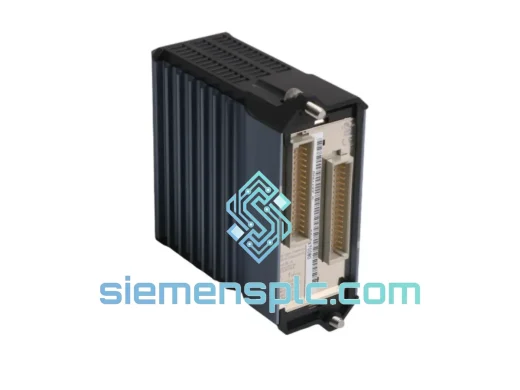
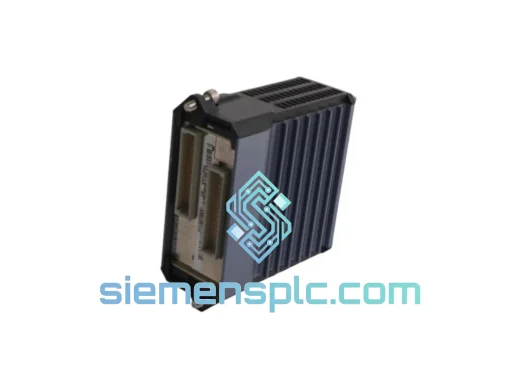
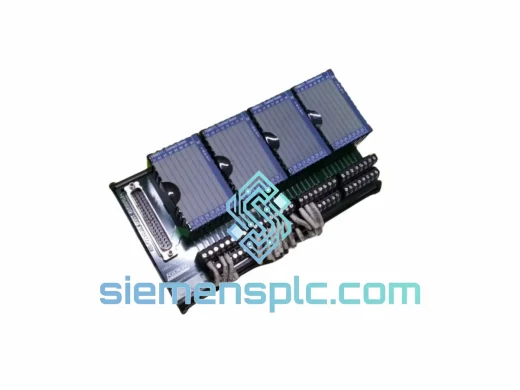
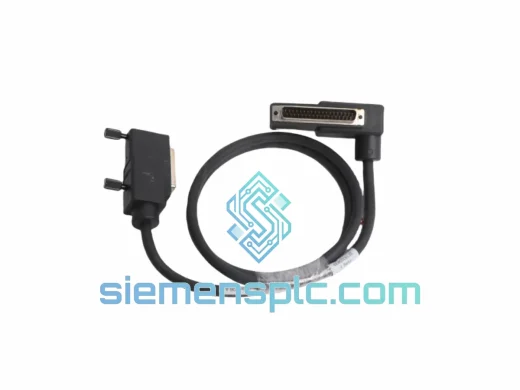
FOXBORO RH916DB DCS Termination Cable – I/A Series
I/A Series
Origin FR
DCS Termination Cable
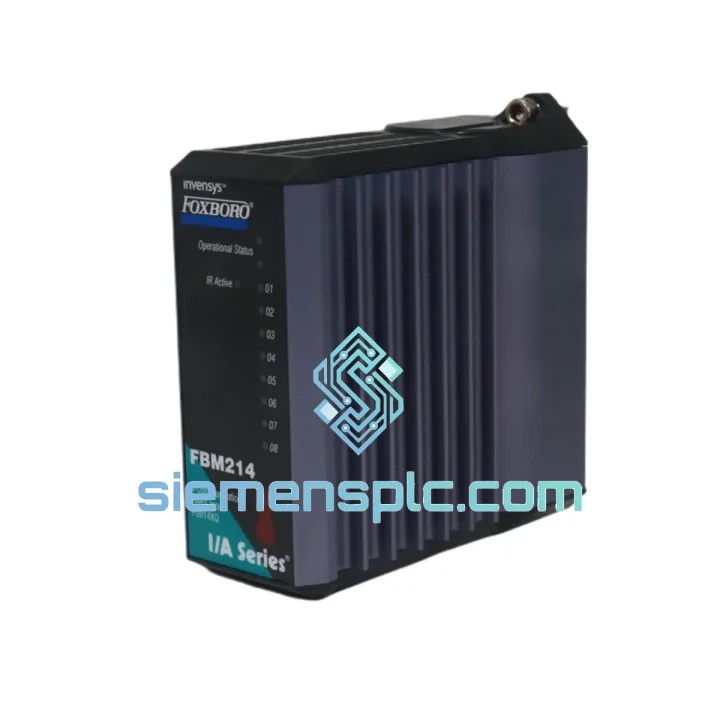
Request verified availability, condition, replacement risk review, packing options and courier lead time for FBM214.
Click Request Quote and the part number is inserted into the inquiry form automatically.
Core fields for model confirmation and RFQ routing. Detailed product narrative remains below.
Within the Foxboro I/A Series and Foxboro Evo Distributed Control System, every field bus module (FBM) occupies a precisely defined functional layer. The FBM214 sits at the serial communication interface layer: its sole architectural mandate is to accept structured serial data frames from field-connected devices and present those values as deterministic process variable tags on the I/A Series Nodebus or Fieldbus, ready for consumption by the upstream Control Processor (CP). This is not a general-purpose gateway. The FBM214 is a purpose-built, optically isolated, protocol-aware input module whose design eliminates the need for any external serial-to-Ethernet converter, standalone Modbus gateway, or third-party protocol bridge in the marshalling cabinet.
The module’s relevance extends across continuous-process industries — petrochemical refining, power generation, offshore oil and gas, municipal water treatment, and pulp and paper — wherever a field device communicates digitally over RS-232, RS-422, or RS-485 and that data must enter the DCS control strategy as a first-class process variable. In these environments, the FBM214 is not a convenience; it is the architecturally correct solution for serial device integration within the I/A Series I/O subsystem.
📩 Real-time Stock & RFQ: [email protected] | WhatsApp: +86 18359268345
| Parameter | Specification |
|---|---|
| Part Number | FBM214 |
| Platform Compatibility | Foxboro I/A Series (Series 200 / 500), Foxboro Evo DCS |
| Module Function | Serial Communication Input Interface |
| Serial Port Standards | RS-232 / RS-422 / RS-485 (software-configurable) |
| Baud Rate Range | 300 bps – 19,200 bps (configurable via ICC database) |
| Protocol Support | Modbus RTU, Modbus ASCII, proprietary serial protocols via configuration |
| Isolation | Optical isolation between serial port and internal Fieldbus logic |
| Power Source | Derived from FBM baseplate bus; nominal 24 VDC |
| Data Presentation | Structured PV tags in I/A Series ICC database; fixed-period Nodebus delivery |
| Form Factor | Standard FBM plug-in module; compatible with all I/A Series FBM baseplates |
| Connector Interface | DIN-rail baseplate edge connector — no direct field wiring to module body |
| Hot-Swap Support | Supported on compatible baseplates (tool-free removal) |
| Operating Temperature | 0 °C to +60 °C (32 °F to 140 °F) |
| Storage Temperature | −40 °C to +85 °C |
| Relative Humidity | 5 % to 95 % RH, non-condensing |
| Vibration Compliance | IEC 68-2-6 |
| EMC Compliance | IEC 61000 series (industrial EMC environment) |
| Certifications | CE (EMC & LVD), UL/cUL Listed |
| Approximate Weight | 320 g |
| Warranty | 12 months from date of shipment |
The FBM214’s internal architecture reflects a deliberate separation of concerns between the serial port domain and the Fieldbus domain. At the physical layer, the RS-232/422/485 port terminates into a dedicated UART controller that handles baud rate generation, start/stop bit framing, and parity checking independently of the module’s main logic. This UART operates asynchronously — it receives serial frames from the field device at whatever rate the device transmits, buffers the incoming data, and signals the protocol parser when a complete frame is available.
The optical isolation barrier between the UART stage and the internal logic bus is the module’s primary EMC defense mechanism. In industrial marshalling environments, RS-485 cable runs of 50–1,200 meters are common, and those cables act as antennas for conducted and radiated interference from variable-frequency drives, high-current switching contactors, and ground potential differences between field junction boxes and the control room. The optical coupler breaks the galvanic path entirely, ensuring that transient voltages induced on the field cable — which can reach several hundred volts in severe cases — cannot propagate into the Fieldbus logic domain or corrupt the Nodebus data stream.
On the Fieldbus side, the module’s internal processor maps parsed serial data values into the I/A Series process variable tag structure and delivers them to the Nodebus on a deterministic, fixed-period schedule. This is architecturally significant: the Control Processor does not poll the FBM214 on demand. Instead, the FBM214 pushes data to the Nodebus at a rate synchronized with the I/A Series control period, ensuring that the CP always reads a value of known age. This determinism is what allows serial-sourced data to participate in closed-loop control strategies — not merely in data logging or alarm management — without introducing variable latency into the control loop scan cycle.
The module’s configuration is stored entirely in the I/A Series ICC (Integrated Control Configurator) database, not in module firmware or hardware jumpers. Baud rate, protocol selection, data frame format, and tag mapping are all defined at the system level. This means a replacement FBM214 inserted into the baseplate slot automatically inherits the full configuration from the ICC database without any local parameterization — a property that directly supports rapid corrective maintenance in 24/7 continuous process plants.
Every FBM214 unit dispatched from our Xiamen, China facility is sourced from verified industrial surplus channels, authorized decommissioning projects, and established distributor networks with documented provenance. Before any unit is offered for sale, it passes through a structured pre-shipment verification protocol:
Shipping from Xiamen, China covers global destinations with standard transit times of 3–7 business days to major industrial hubs in Southeast Asia, the Middle East, Europe, and the Americas via DHL Express, FedEx International Priority, and UPS Worldwide. For plant shutdown or turnaround (TAR) scenarios requiring same-day or next-business-day dispatch, expedited handling is available — specify urgency in your RFQ. Full export documentation is provided with every international shipment: commercial invoice, packing list, and country of origin certificate. A 12-month warranty covers manufacturing defects and verified functional failures from the date of shipment.
📧 Email: [email protected]
📱 WhatsApp: +86 18359268345
🌐 Web: siemensplc.com
📍 Location: Xiamen, China
© 2026 siemensplc.com. All rights reserved.
We check the full part number, brand, series and visible nameplate information before quotation.
Sales confirms stock path, condition option, quantity and realistic lead time for export dispatch.
DHL, FedEx, UPS or buyer courier arrangements can be reviewed with packing requirements.
Similar brand or category products for fast comparison and multi-item RFQ lists.