Siemens
RFQ Ready
Siemens 6RY1803-1DA04 Motor Protection Relay
SINAMICS
Origin DE
Motor Protection Relay
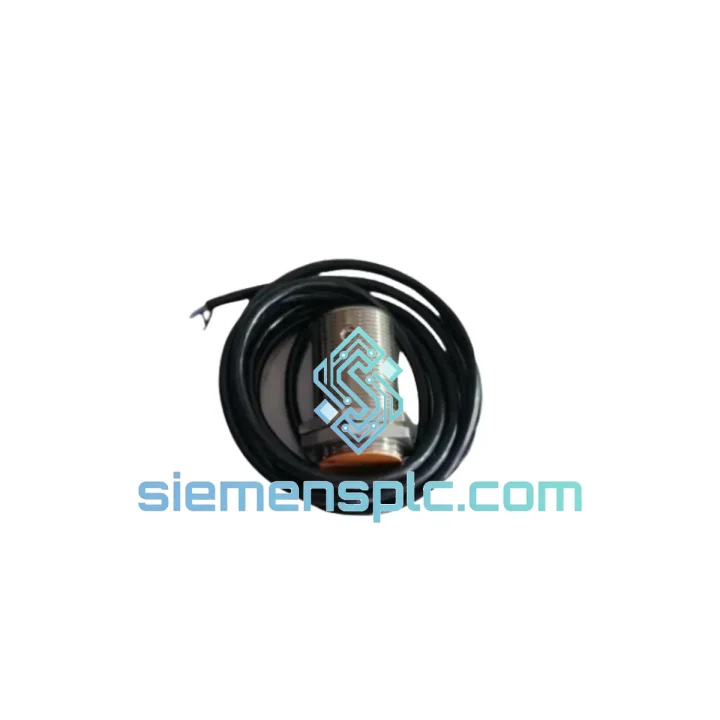
Request verified availability, condition, replacement risk review, packing options and courier lead time for 3RG4014-4AB02.
Click Request Quote and the part number is inserted into the inquiry form automatically.
Core fields for model confirmation and RFQ routing. Detailed product narrative remains below.
Every minute a line sits idle costs real money. If your proximity sensor has failed and production is halted, you don’t need a catalog — you need a part on a plane. The Siemens 3RG4014-4AB02 is in stock at our Xiamen warehouse right now. Same-day dispatch available on confirmed orders before 15:00 CST. We’ve shipped this exact part to automotive stamping lines in Germany, food packaging plants in Southeast Asia, and petrochemical facilities in the Middle East — all under emergency conditions. We know what’s at stake.
URGENT REQUIREMENT? Contact: [email protected] | WhatsApp: +86 18359268345
| Parameter | Specification | Status |
|---|---|---|
| Part Number | 3RG4014-4AB02 | ✅ Ready to Ship |
| Manufacturer | Siemens AG | 100% Original OEM |
| Series | 3RG40 | — |
| Housing Form | Cylindrical, M14 threaded barrel | — |
| Sensing Distance (Sn) | 4 mm nominal (steel target) | — |
| Output Type | PNP, Normally Open (NO) | — |
| Supply Voltage (Vs) | 10 – 30 V DC | — |
| Output Current (max) | 200 mA | — |
| Voltage Drop (max) | ≤ 2.5 V | — |
| No-load Current (max) | ≤ 15 mA | — |
| Switching Frequency | ≤ 1500 Hz | — |
| Protection Class | IP67 (IEC 60529) | — |
| Connection | 2 m PVC cable, 3-wire | — |
| Operating Temperature | -25 °C to +70 °C | — |
| Compliance | IEC 60947-5-2, CE, RoHS | — |
| Weight (approx.) | ~200 g (with cable) | — |
| Origin | Germany | — |
After ten years of field work, these are the failure modes and swap pitfalls I see most often with the 3RG4014-4AB02 and the broader 3RG40 family:
1. Confirming the sensor has actually failed — not the wiring
Before pulling the sensor, check voltage at the brown wire (pin 1) with the machine powered. You should read supply voltage (nominally 24 VDC). If you read zero, the fault is upstream — blown fuse, failed power supply, or broken cable. A dead sensor with good supply voltage will show correct Vs on pin 1 but no switching signal on the black wire (pin 4) when a metal target is within 4 mm. Use a multimeter in DC voltage mode, not continuity — the PNP output won’t ring out correctly with a continuity test.
2. Sensing distance drift before total failure
The most common early-failure symptom is intermittent false triggering or reduced sensing range. If your PLC is logging sporadic input pulses with no mechanical cause, measure the actual switching distance with a steel shim set. If the sensor only triggers at ≤ 2 mm instead of the rated 4 mm, the oscillator coil is degrading. Replace immediately — it will fail completely within days under production load.
3. Mechanical installation — thread engagement and flush vs. non-flush
The 3RG4014-4AB02 is a non-flush (unshielded) design. Do not embed it in a metal bracket flush with the face — this will detune the oscillator and reduce sensing distance by 30–50%. Minimum side clearance to ferrous metal: 14 mm. Minimum rear clearance: 20 mm. Torque the M14 locknut to 15–20 Nm. Over-torquing cracks the housing and voids IP67 integrity.
4. PLC input card compatibility check
This sensor outputs PNP (sourcing). Verify your input card is configured for PNP/Type 1 or Type 3 inputs per IEC 61131-2. Connecting a PNP sensor to an NPN-only input card will result in no signal — the card will not be damaged, but the input will never switch. On Siemens S7-300/400 SM321 cards, check the wiring diagram for the specific module variant (e.g., 6ES7 321-1BH02-0AA0 is PNP-compatible).
5. Cable routing and EMI
Do not route the sensor cable parallel to motor drive cables or high-current AC lines for more than 300 mm. Induced noise on the signal wire causes phantom switching. Use shielded cable extensions if the original 2 m cable is insufficient, and ground the shield at the control cabinet end only. Grounding both ends creates a ground loop.
6. Firmware and configuration — nothing to do
Unlike smart IO-Link sensors, the 3RG4014-4AB02 is a standard discrete sensor. There is no firmware, no address setting, no DIP switch, and no parameterization required. Swap the part, reconnect the cable, verify the LED indicator lights when a target is present, and you’re done. Total swap time on a properly accessible installation: under 4 minutes.
Common fault codes associated with this sensor on Siemens PLCs:
The 3RG40 series was not designed for a climate-controlled lab. It was built for the floor — and the 3RG4014-4AB02 reflects that in every design decision.
Vibration resistance: The sensor body withstands continuous vibration per IEC 60068-2-6 (10–55 Hz, 1 mm amplitude). The M14 stainless steel housing resists the micro-movement fatigue that destroys plastic-bodied sensors on press lines and compactor frames within months. The cable entry is strain-relieved and sealed; the junction between cable and housing is the most common failure point on cheaper sensors — Siemens addresses this with a molded PVC overmold that maintains IP67 even after 10,000+ flex cycles.
Thermal cycling: Operating range is -25 °C to +70 °C, but the sensor has been validated for storage down to -40 °C. In foundry environments where ambient temperature swings 60 °C between shift start and peak production, the internal oscillator circuit maintains calibrated sensing distance within ±10% across the full range. Cheaper alternatives drift significantly at temperature extremes, causing nuisance trips that operators mask with timer delays — masking the symptom while the real problem compounds.
Ingress protection: IP67 means the sensor survives temporary immersion to 1 m depth for 30 minutes. In practice, this covers high-pressure washdown in food and beverage lines, coolant flood in CNC machining centers, and condensation in cold-store conveyor applications. The M14 thread and locknut interface is sealed with an O-ring; inspect and replace this O-ring if the sensor has been removed and reinstalled more than three times.
Chemical resistance: The PVC cable jacket and stainless steel housing resist most cutting fluids, hydraulic oils, and mild cleaning agents. Avoid prolonged contact with ketones (acetone, MEK) and concentrated acids — these will degrade the cable jacket over time.
Our warehouse is located in Xiamen, Fujian Province, China — one of the most logistics-connected export hubs in Asia. Here’s exactly how your part moves from our shelf to your facility:
Step 1 — Order confirmation and stock verification (0–2 hours): Once payment or PO is confirmed, our warehouse team physically pulls and photographs the unit. You receive a stock confirmation with batch number and condition report before we pack.
Step 2 — Export documentation (2–4 hours): We prepare the commercial invoice, packing list, and HS code declaration (HS 8536.90 for proximity switches). For customers requiring a Certificate of Origin or specific customs documentation, advise us at order time — we can accommodate most requirements within the same business day.
Step 3 — Carrier handoff (same day or next morning): We ship via DHL Express, FedEx International Priority, or UPS Worldwide Express depending on destination and urgency. All three carriers have daily pickup from Xiamen. Typical transit times: Europe 3–5 days, North America 4–6 days, Southeast Asia 2–3 days, Middle East 4–5 days, Australia 3–4 days.
Step 4 — Tracking and customs clearance support: You receive a tracking number within 2 hours of carrier pickup. If your shipment is held at customs, our logistics team provides supporting documentation on request — we’ve cleared shipments into over 40 countries and know the common sticking points for industrial electronics imports.
Step 5 — Delivery and follow-up: For emergency orders, we follow up proactively at each transit milestone. If there is any delay, we contact you before you have to chase us.
Minimum order: 1 unit. No handling fee for express shipments. Bulk orders (10+ units) qualify for freight consolidation and reduced per-unit shipping cost — contact us for a quote.
Email: [email protected]
WhatsApp: +86 18359268345
Web: siemensplc.com
© 2026 siemensplc.com. All rights reserved.
We check the full part number, brand, series and visible nameplate information before quotation.
Sales confirms stock path, condition option, quantity and realistic lead time for export dispatch.
DHL, FedEx, UPS or buyer courier arrangements can be reviewed with packing requirements.
Similar brand or category products for fast comparison and multi-item RFQ lists.