GE
RFQ Ready
GE IC697CMM741 PLC Communication Module – Series 90-70
Fanuc
Origin US
PLC Communication Module
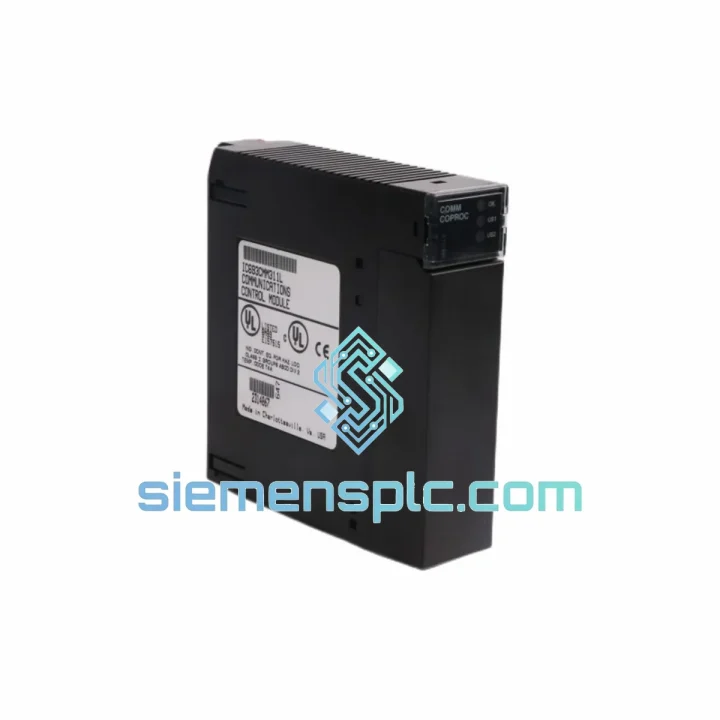
Request verified availability, condition, replacement risk review, packing options and courier lead time for IC693CMM311.
Click Request Quote and the part number is inserted into the inquiry form automatically.
Core fields for model confirmation and RFQ routing. Detailed product narrative remains below.
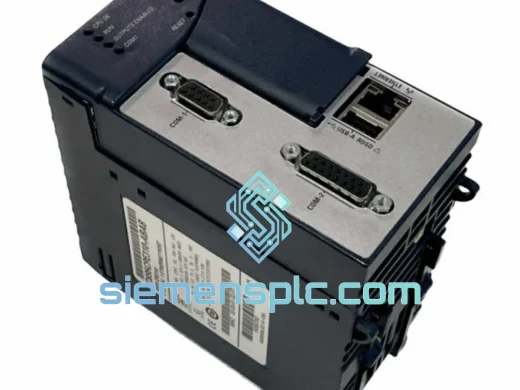
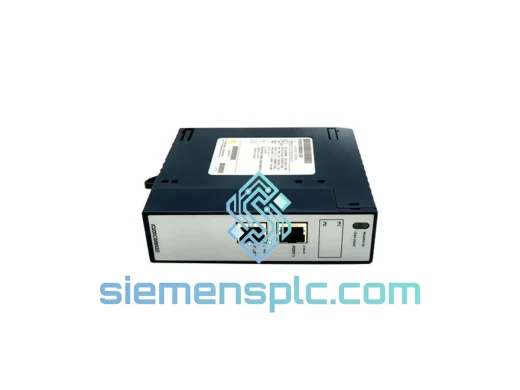
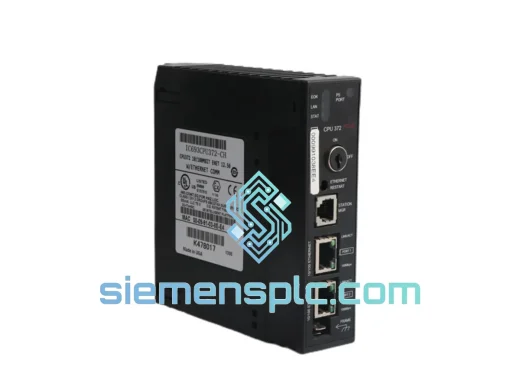
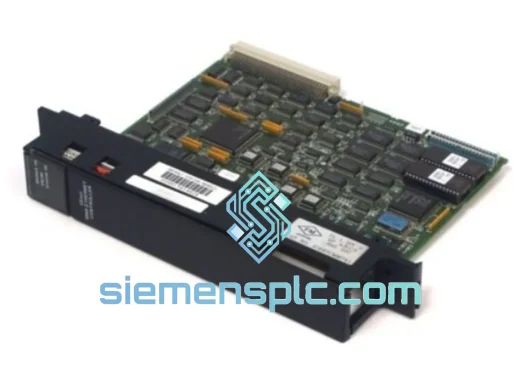
The IC693CMM311 is a single-slot Communications Co-Processor Module (CCM) designed for the GE Series 90-30 PLC rack. It occupies one I/O slot on any Series 90-30 baseplate and operates as an autonomous serial communications processor, offloading protocol handling from the CPU backplane bus so that scan-cycle determinism is preserved under sustained message traffic. The module supports three distinct serial protocols — RTU (Remote Terminal Unit), SNP (Serial Network Protocol), and SNPx (Serial Network Protocol Extended) — selectable via configuration software without hardware modification. This protocol flexibility allows a single module to serve as a master or slave node in SCADA polling architectures, peer-to-peer PLC networks, or host-computer supervisory links, depending on the application topology.
The IC693CMM311 communicates with the Series 90-30 CPU through the rack’s internal backplane bus using a shared-memory mailbox mechanism. The CPU writes outgoing message frames to a dedicated dual-port RAM region; the CCM reads, encapsulates, and transmits them independently. Incoming frames are buffered in the same dual-port RAM and flagged via interrupt to the CPU ladder logic. This architecture decouples serial I/O latency from the PLC scan cycle, ensuring that a slow remote device or a retransmission event does not extend the CPU sweep time. The result is a communications subsystem with deterministic behavior that does not degrade control loop performance.
The module’s RS-232 and RS-485/422 physical interfaces are software-selectable, supporting point-to-point wiring at RS-232 levels or multi-drop bus topologies at RS-485 differential levels with up to 32 nodes per segment. Baud rates are configurable from 300 bps to 19,200 bps, covering legacy RTU field devices as well as higher-throughput SNPx host links. The RS-485 driver includes automatic transmit-enable control, eliminating the need for external half-duplex switching hardware in two-wire bus installations.
Real-time Stock & RFQ: [email protected] | WhatsApp: +86 18359268345
| Parameter | Specification |
|---|---|
| Part Number | IC693CMM311 |
| Manufacturer | General Electric (GE Fanuc) |
| Compatible Platform | GE Series 90-30 PLC |
| Module Type | Communications Co-Processor Module (CCM) |
| Supported Protocols | RTU, SNP, SNPx |
| Physical Interface | RS-232 / RS-485 / RS-422 (software-selectable) |
| Baud Rate Range | 300 bps – 19,200 bps |
| RS-485 Node Capacity | Up to 32 nodes per segment |
| Rack Slot Requirement | 1 slot (any I/O slot on Series 90-30 baseplate) |
| Backplane Interface | Series 90-30 internal bus, dual-port RAM mailbox |
| Operating Temperature | 0 °C to +60 °C |
| Storage Temperature | -40 °C to +85 °C |
| Relative Humidity | 5% – 95% non-condensing |
| Power Consumption | Supplied via backplane (5 VDC bus) |
| Module Weight | Approx. 280 g |
| Dimensions | Standard Series 90-30 single-slot form factor |
| Configuration Tool | GE Proficy Machine Edition / Logicmaster 90-30 |
| Warranty | 12 months from date of shipment |
Dual-Port RAM Mailbox Architecture: The IC693CMM311 implements a dual-port static RAM region accessible simultaneously by the module’s onboard microprocessor and the Series 90-30 CPU via the backplane bus. Message queuing, acknowledgment flags, and error status registers are mapped into this shared address space. The CPU ladder logic reads and writes discrete bit-level status flags within the mailbox to initiate transmissions and confirm receipt, keeping the communications handshake entirely within the PLC’s native data table without requiring special function blocks that consume significant scan time.
Autonomous Protocol Engine: The module’s embedded microprocessor handles all protocol state-machine processing — frame assembly, CRC generation and verification, timeout management, and retry sequencing — without CPU intervention. For RTU mode, the module manages the inter-character gap timing (3.5 character times) required by the Modbus RTU specification, ensuring protocol-compliant framing even when the host CPU is executing a long scan. For SNP and SNPx, the module manages session establishment, sequence numbering, and window-based flow control independently.
EMC Design Considerations: The RS-485 differential driver circuit provides inherent common-mode noise rejection, with a common-mode voltage range of -7 V to +12 V. The module’s PCB layout routes high-frequency switching signals away from the analog front-end of the serial interface, and the backplane connector includes ground plane stitching to reduce conducted emissions onto the rack bus. In industrial environments with variable-frequency drives or high-current switching loads nearby, the differential signaling architecture maintains signal integrity at cable runs up to 1,200 m at lower baud rates.
Transmit-Enable Automation: In RS-485 half-duplex mode, the module’s UART controller asserts the transmit-enable line precisely at the start of each transmitted byte and de-asserts it within one bit-time after the last stop bit. This hardware-level control eliminates the propagation delay uncertainty that occurs when transmit-enable is managed by software, preventing bus contention on multi-drop segments where multiple nodes share a single twisted-pair.
Configuration Non-Volatility: Protocol selection, baud rate, parity, stop bits, and address parameters are stored in onboard non-volatile memory. The module retains its configuration through power cycles without requiring the CPU to re-download parameters on each startup, reducing initialization time in applications where fast restart after power restoration is operationally critical.
Every IC693CMM311 unit supplied by siemensplc.com is sourced as genuine GE Fanuc / General Electric original equipment. Each module undergoes incoming inspection that includes visual examination of the PCB, connector integrity verification, and functional power-on testing against known-good Series 90-30 rack configurations before dispatch. Units are stored in ESD-controlled warehouse conditions in Xiamen, China, with temperature and humidity monitoring to preserve component integrity during storage.
Packaging follows IPC/JEDEC J-STD-033 guidelines for moisture-sensitive electronic assemblies. Modules are shipped in anti-static bags within foam-lined cartons, with desiccant packs included for ocean freight shipments. For air freight orders, DHL Express, FedEx International Priority, and UPS Worldwide Express services are available, with typical transit times of 3–7 business days to major industrial hubs in Europe, North America, Southeast Asia, and the Middle East. Export documentation — including commercial invoice, packing list, and certificate of origin — is prepared in compliance with Chinese customs regulations and destination-country import requirements.
A 12-month warranty covers defects in materials and workmanship from the date of shipment. Warranty claims are processed with a target response time of 48 hours. Replacement units are dispatched from Xiamen stock upon confirmation of the defect, and failed units are returned via prepaid shipping label. Technical support for installation, configuration, and integration questions is provided by engineers with hands-on experience in GE Series 90-30 system architecture.
Email: [email protected]
WhatsApp: +86 18359268345
Web: siemensplc.com
Location: Xiamen, China
© 2026 siemensplc.com. All rights reserved.
We check the full part number, brand, series and visible nameplate information before quotation.
Sales confirms stock path, condition option, quantity and realistic lead time for export dispatch.
DHL, FedEx, UPS or buyer courier arrangements can be reviewed with packing requirements.
Similar brand or category products for fast comparison and multi-item RFQ lists.