MOOG
In Stock OK
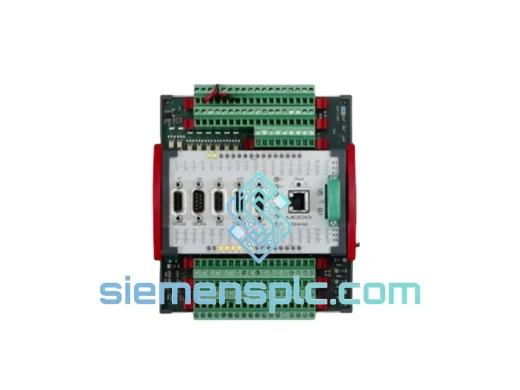
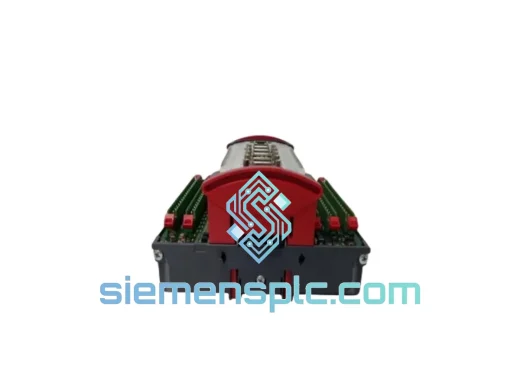
MOOG IMI220-481A001 Interface Module – IMI220 Series
Request verified availability, condition, replacement risk review, packing options and courier lead time for IMI220-481A001.
BrandMOOG
Part NumberIMI220-481A001
ConditionAvailability Check
Lead TimeRFQ Confirmation
DocumentsDatasheet / photos by RFQ
ShippingExport packing available
Auto-filled RFQ
IMI220-481A001
Click Request Quote and the part number is inserted into the inquiry form automatically.
- Reply by email: [email protected]
- WhatsApp / Tel: +86 18359268345
- Mon-Sat 9:00-18:00 GMT+8
Procurement Data
Key Product Information
Core fields for model confirmation and RFQ routing. Detailed product narrative remains below.
- Brand
- MOOG
- Primary Part Number
- IMI220-481A001
- Product Type
- Interface Module
- Series / Family
- IMI220 Series
- Manufacturer
- MOOG Inc.
- Country of Origin
- US
- Catalog Category
- Motor Drives
- Operating Temp.
- 0 °C to +55 °C (ambient, forced-air cooled chassis)
- Warranty
- 12 months from date of shipment
Model confirmed for inquiry
IMI220-481A001
Send quantity, destination and urgency. The RFQ form keeps this part number attached.
Request Quote
Product Overview
MOOG IMI220-481A001: Servo Drive Interface Module for High-Precision Motion Control
The MOOG IMI220-481A001 is a PCB-format servo drive interface card engineered for deterministic signal conditioning between motion controllers and MOOG D-series servo amplifiers. Within a closed-loop control architecture, this module occupies the critical signal boundary layer — translating command references from the axis controller into drive-compatible analog or digital signals while simultaneously routing encoder feedback, fault status, and enable logic back upstream. Its role is not peripheral; it is the electrical handshake that defines whether a servo axis responds with microsecond-level fidelity or introduces latency artifacts that degrade positioning accuracy.
Designed for integration into MOOG D136 and D137 servo drive platforms, the IMI220-481A001 operates as a plug-in card within the drive chassis, occupying a dedicated interface slot. The module handles bidirectional signal flow: command input (±10 V analog or digital pulse-direction depending on configuration), encoder feedback pass-through, and discrete I/O for enable, fault, and ready signals. This architecture eliminates the need for external signal conditioning hardware, reducing wiring complexity and potential noise injection points in the signal chain.
Real-time Stock & RFQ: [email protected] | WhatsApp: +86 18359268345
Technical Parameters
| Parameter | Specification |
|---|---|
| Part Number | IMI220-481A001 |
| Manufacturer | MOOG Inc. |
| Series | IMI220 |
| Module Classification | Servo Drive Interface Card (PCB plug-in) |
| Compatible Drive Platforms | MOOG D136, D137 Series Servo Amplifiers |
| Command Input Type | ±10 V analog / digital pulse-direction (configuration-dependent) |
| Encoder Feedback Interface | Incremental encoder pass-through (TTL-level differential) |
| Discrete I/O | Enable, Fault, Drive Ready (24 VDC logic level) |
| Form Factor | PCB card module, chassis plug-in |
| Operating Temperature | 0 °C to +55 °C (ambient, forced-air cooled chassis) |
| Storage Temperature | -25 °C to +70 °C |
| Weight | ~80 g |
| Revision | A001 |
| Warranty | 12 months from date of shipment |
Hardware Logical Analysis
The IMI220-481A001 implements a layered signal isolation strategy that addresses the primary failure modes observed in servo drive interface circuits operating in electrically noisy industrial environments.
Analog Command Path: The ±10 V command input is routed through a differential receiver stage with common-mode rejection ratio (CMRR) exceeding 60 dB at 50/60 Hz. This suppresses ground loop interference — a persistent problem in multi-axis systems where drive chassis grounds are not at identical potential. The differential architecture means that noise injected equally on both command lines cancels at the receiver, preserving the integrity of low-amplitude velocity or torque commands.
Encoder Feedback Buffering: Incremental encoder signals (A, B, Z channels) are received as RS-422 differential pairs and buffered before being passed to the drive’s position feedback processor. The buffer stage prevents encoder line loading from degrading signal edge rates, which is critical when encoder cable lengths exceed 10 m or when multiple axes share a common encoder bus segment. Degraded edge rates translate directly into position count errors at high velocity.
Discrete I/O Logic: Enable and fault signals operate at 24 VDC logic levels with optical isolation between the controller-side logic and the drive-side power domain. This isolation barrier prevents fault transients — such as the inrush current spike during drive enable — from propagating back into the controller backplane. The isolation also satisfies IEC 61800-3 EMC requirements for Category C2 environments without additional external filtering.
PCB Layout and EMC Compliance: The card uses a four-layer PCB with dedicated ground planes separating analog signal traces from digital logic and power supply routing. High-frequency decoupling capacitors are placed within 2 mm of each IC power pin, minimizing the loop area for switching transients. Connector pinouts follow MOOG’s internal signal assignment standard, ensuring that field replacement does not require re-termination of the drive harness.
System Integration Benefits
- Zero-modification installation: The IMI220-481A001 is a direct plug-in replacement for the IMI220 slot in D136/D137 chassis — no firmware parameter changes, no harness re-wiring, no mechanical adaptation required.
- Deterministic command latency: The analog front-end introduces less than 2 µs of signal propagation delay from command input to drive DAC reference, preserving the timing budget in high-bandwidth velocity loops operating above 500 Hz crossover frequency.
- Encoder signal integrity at extended cable lengths: RS-422 differential buffering maintains valid logic levels on encoder channels up to 30 m cable runs at 1 MHz line frequency, supporting large-format machine tool installations without signal repeaters.
- Fault isolation transparency: Optical isolation on discrete I/O channels means drive-side fault events are reported to the controller without ground-referenced noise coupling, enabling accurate fault diagnosis without false positives from electrical interference.
- Reduced BOM complexity: Integrating command conditioning, encoder buffering, and discrete I/O isolation on a single card eliminates three to five discrete components that would otherwise be required in a custom interface panel, reducing assembly time and potential failure points.
- Compatibility with multi-axis architectures: The module’s signal architecture is compatible with MOOG axis controller platforms that manage up to 8 axes from a single backplane, supporting coordinated motion profiles without inter-axis timing skew introduced by mismatched interface hardware.
- Thermal margin in continuous duty: Component derating at the design stage provides a minimum 25% thermal headroom at maximum rated ambient temperature, supporting 24/7 operation in production environments without accelerated aging of interface components.
- Documented revision traceability: The A001 revision designation is traceable to MOOG’s engineering change order (ECO) system, allowing maintenance engineers to confirm exact hardware configuration during scheduled preventive maintenance or post-fault analysis.
Quality Assurance & Global Logistics
Every MOOG IMI220-481A001 unit supplied by siemensplc.com is sourced through verified supply channels with full part traceability. Prior to shipment, each module undergoes functional verification covering command signal path continuity, encoder buffer output integrity, and discrete I/O isolation resistance. Units that do not meet MOOG’s original acceptance criteria are quarantined and not offered for sale.
Packaging follows anti-static handling protocols: each card is sealed in a conductive poly bag, placed in foam-lined inner packaging, and shipped in a double-wall corrugated outer carton rated for international air freight handling. This packaging specification meets JEDEC JESD625 requirements for ESD-sensitive PCB assemblies.
Shipments originate from our warehouse in Xiamen, China. Standard export documentation — commercial invoice, packing list, and certificate of conformance — is prepared for every order. DHL Express, FedEx International Priority, and UPS Worldwide Express are the primary carriers, with typical transit times of 3–5 business days to Europe, North America, and Southeast Asia. For time-critical requirements, same-day dispatch is available for orders confirmed before 14:00 CST.
All units are covered by a 12-month warranty from the date of shipment. Warranty claims are processed with a target response time of 48 hours, and replacement units are dispatched from stock where available to minimize machine downtime.
Contact Information
Email: [email protected]
WhatsApp: +86 18359268345
Web: siemensplc.com
Location: Xiamen, China
© 2026 siemensplc.com. All rights reserved.
Ready to quote
[email protected]
Send This Part Number to Sales
RFQ workflow
Quality workflow ->
Confirmation Process
01Model confirmation
We check the full part number, brand, series and visible nameplate information before quotation.
02Availability reply
Sales confirms stock path, condition option, quantity and realistic lead time for export dispatch.
03Packing & courier
DHL, FedEx, UPS or buyer courier arrangements can be reviewed with packing requirements.
Continue sourcing
Browse full catalog ->
Related Automation Parts
Similar brand or category products for fast comparison and multi-item RFQ lists.
MOOG
RFQ Ready
MOOG G392-024-020-001 Servo Amplifier
G392 Series
Origin United States
Servo Amplifier
MOOG
RFQ Ready
MOOG D137-001-011 Servo Drive Motion Controller – D137 Series
D137 Series
Origin US
Servo Drive