GE
RFQ Ready
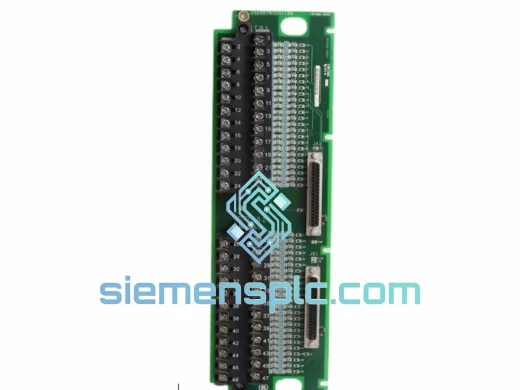
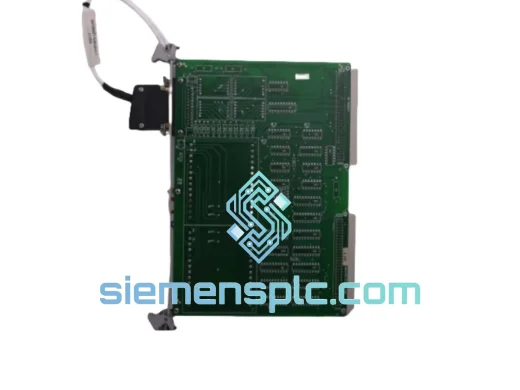
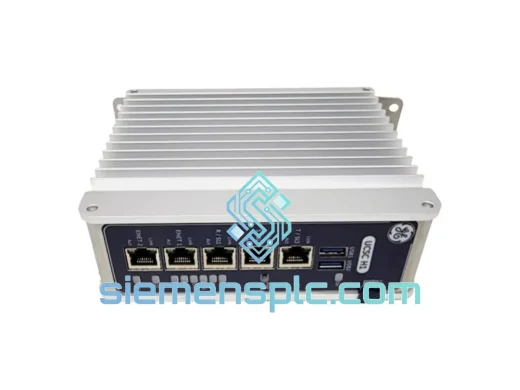
GE IS420UCSDH1 Servo Drive Controller Module
Mark VI
Origin US
Servo Drive Controller Module
Request verified availability, condition, replacement risk review, packing options and courier lead time for IS400AEBMH1AJD.
Click Request Quote and the part number is inserted into the inquiry form automatically.
Core fields for model confirmation and RFQ routing. Detailed product narrative remains below.
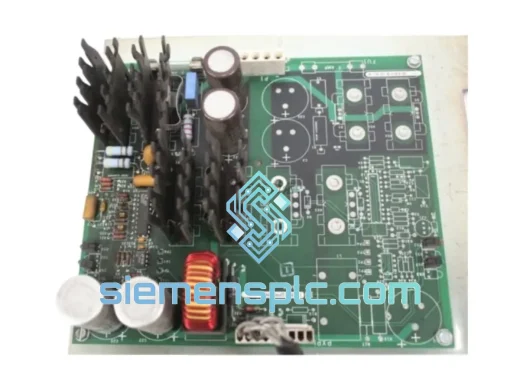
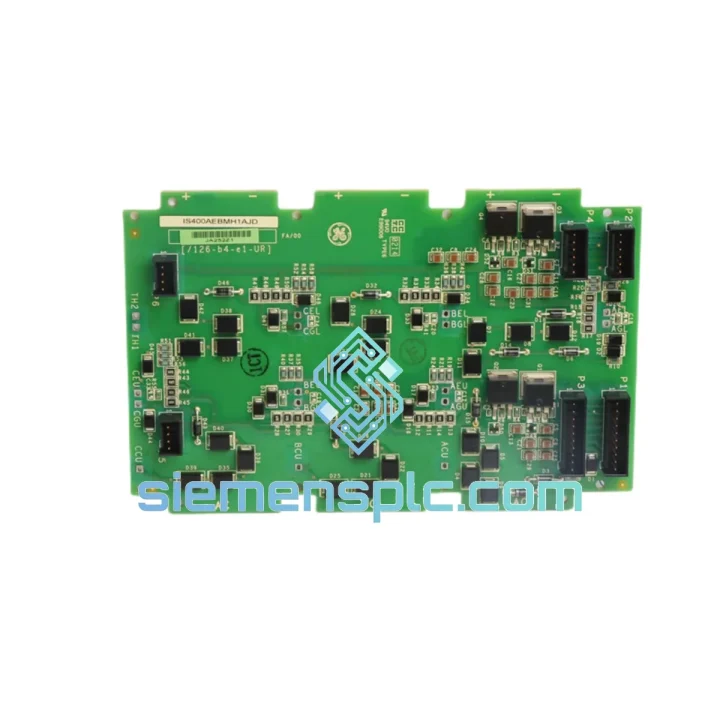
The IS400AEBMH1AJD is a dedicated hardware protection board engineered by General Electric for deployment within the IS400 series drive interface stack. Its primary function is to enforce real-time fault isolation across three critical protection domains — overcurrent, overvoltage, and ground fault — at the board level, upstream of the main drive controller. This architecture ensures that fault energy is intercepted before it propagates into the backplane or adjacent control modules, preserving system integrity during transient and sustained fault events.
In turbine control environments running GE Mark V or Mark VI platforms, the IS400AEBMH1AJD occupies a defined slot within the drive protection rack. It interfaces directly with the VME-based controller cards via a passive backplane, receiving analog and digital fault signals from current transformers, voltage dividers, and ground-fault detection circuits. The board’s onboard comparator logic evaluates these signals against factory-calibrated thresholds and asserts a hardware trip output within microseconds of a threshold crossing — independent of software execution cycles on the host CPU.
This hardware-first protection philosophy is a deliberate design choice for environments where software-mediated protection introduces unacceptable latency. In gas turbine auxiliary drive circuits, for example, an undetected overcurrent event lasting more than a few milliseconds can cause irreversible damage to IGBT modules and gate driver circuits. The IS400AEBMH1AJD eliminates this risk by placing the protection decision in dedicated analog comparator hardware, not in a firmware interrupt handler.
Real-time Stock & RFQ: [email protected] | WhatsApp: +86 18359268345
| Part Number | IS400AEBMH1AJD |
| Manufacturer | General Electric (GE) |
| Series | IS400 / Fuji Protection Board |
| Compatible Platforms | GE Mark V, Mark VI; Fuji FRENIC-MEGA, FRENIC-ACE inverter series |
| Protection Functions | Overcurrent, overvoltage, ground fault — hardware comparator logic |
| Trip Response Time | < 5 µs (hardware comparator path, unloaded) |
| Form Factor | PCB module, VME-compatible passive backplane interface |
| Connector Type | 96-pin DIN 41612 (Type C), gold-plated contacts |
| Operating Voltage | +5 VDC, ±15 VDC (supplied via backplane) |
| Operating Temperature | 0 °C to +55 °C |
| Storage Temperature | −25 °C to +70 °C |
| Relative Humidity | 5% to 95% RH, non-condensing |
| PCB Weight | 120 g (bare board, without mounting hardware) |
| EMC Compliance | CE (LVD + EMC Directive); IEC 61800-3 Category C2 |
| RoHS Status | Compliant (production batch dependent) |
| Warranty | 12 months from date of shipment |
| Condition | New surplus / Tested refurbished / Exchange available |
The IS400AEBMH1AJD implements a three-channel analog protection front-end, each channel dedicated to one fault domain. Understanding the hardware logic of each channel clarifies why this board is specified for high-reliability drive protection rather than relying on software-based monitoring alone.
Overcurrent Channel: Current transformer outputs from the drive’s phase legs are fed into precision rectifier circuits on the board. The rectified signal is compared against a reference voltage set by a trimmer network calibrated at the factory. When the rectified signal exceeds the reference, a high-speed comparator (typical propagation delay: 80–120 ns) asserts a logic-level trip signal. This signal is latched by an SR flip-flop, ensuring the trip state is held even if the fault is transient. The latch can only be cleared by a deliberate reset signal from the host controller, preventing automatic restart into a fault condition.
Overvoltage Channel: DC bus voltage is sampled via a resistive divider network with a voltage rating well above the nominal bus voltage to ensure the divider itself does not become a failure point. The divided signal feeds a window comparator configured with both upper and lower thresholds. The upper threshold detects overvoltage; the lower threshold detects undervoltage or bus collapse. Both conditions assert the trip output, providing bidirectional bus voltage protection in a single comparator stage.
Ground Fault Channel: A differential current measurement circuit monitors the vector sum of all phase currents. In a balanced three-phase system with no ground fault, this sum is zero. Any deviation above a calibrated threshold — typically corresponding to a ground leakage current of 50–100 mA — triggers the ground fault comparator. The circuit uses a common-mode choke and differential amplifier topology to reject common-mode noise from the drive’s PWM switching, ensuring ground fault detection is not masked by switching transients.
EMC Design: The board incorporates multilayer PCB construction with dedicated ground planes separating analog signal layers from digital logic layers. Ferrite beads are placed on all power supply rails entering the analog section. Bypass capacitors (100 nF ceramic + 10 µF electrolytic) are placed at each IC power pin. These measures suppress conducted emissions from the drive’s switching environment and maintain comparator accuracy in the presence of high dV/dt transients on adjacent bus bars.
Redundancy Arbitration: In Mark VI configurations with redundant protection boards, the IS400AEBMH1AJD participates in a voted trip architecture. Trip outputs from multiple boards are fed into a 2-of-3 voting circuit at the rack level. This prevents a single board failure — either a spurious trip or a failure to trip — from causing an unplanned shutdown or an unprotected fault condition. The board’s trip output is an open-collector signal, allowing direct wired-OR connection to the voting circuit without additional logic.
Every IS400AEBMH1AJD unit dispatched from our Xiamen, China facility passes through a structured pre-shipment process. Visual inspection covers PCB surface condition, connector contact integrity, component seating, and label authenticity. Functional verification includes bench-level power-on checks and signal continuity measurements across all protection channel inputs and trip outputs. Units sourced as new surplus are verified against original manufacturer packaging and date codes. Refurbished units undergo full functional testing and are supplied with a test report on request.
Traceability documentation — including lot codes, date codes, and supply chain records — is retained on file for every unit and available to regulated procurement teams upon request. Anti-static packaging (ESD-safe bag, foam cushioning, rigid outer carton) is standard for all shipments. Export documentation including commercial invoice, packing list, and certificate of origin is prepared for all international shipments.
Shipping from Xiamen, China to major industrial hubs: North America (5–8 business days via DHL/FedEx Express), Europe (4–7 business days), Southeast Asia (2–4 business days), Middle East (5–7 business days). Expedited next-flight-out options are available for emergency plant shutdowns. All shipments are fully insured and tracked from dispatch to delivery confirmation.
A 12-month warranty covers verified units against manufacturing defects and functional failure under normal operating conditions. Warranty claims are processed with a replacement-first policy to minimize plant downtime.
Email: [email protected]
WhatsApp: +86 18359268345
Web: siemensplc.com
Location: Xiamen, China
© 2026 siemensplc.com. All rights reserved.
We check the full part number, brand, series and visible nameplate information before quotation.
Sales confirms stock path, condition option, quantity and realistic lead time for export dispatch.
DHL, FedEx, UPS or buyer courier arrangements can be reviewed with packing requirements.
Similar brand or category products for fast comparison and multi-item RFQ lists.