Emerson
RFQ Ready
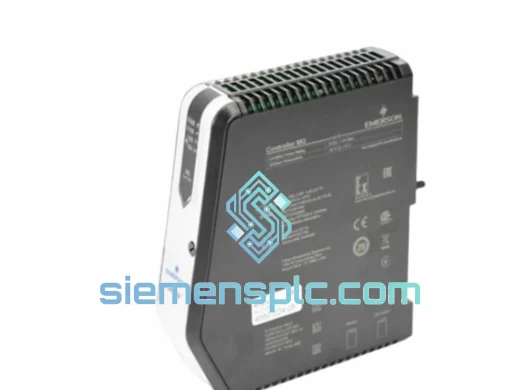
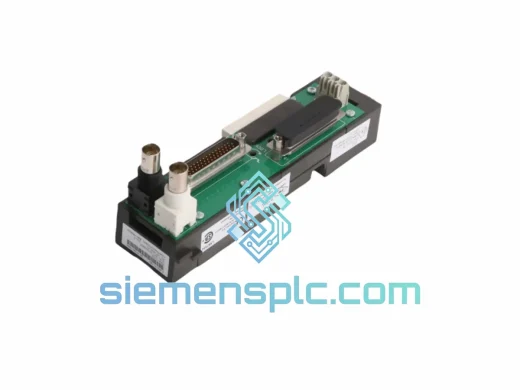
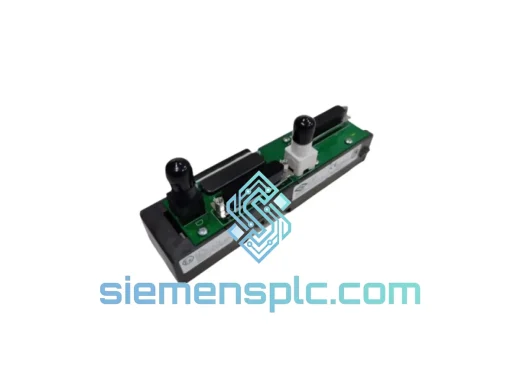
EMERSON SE4301T02 KL3003X1-BA1 12P4632X132 Digital Input Module
DeltaV
Origin US
Digital Input Module
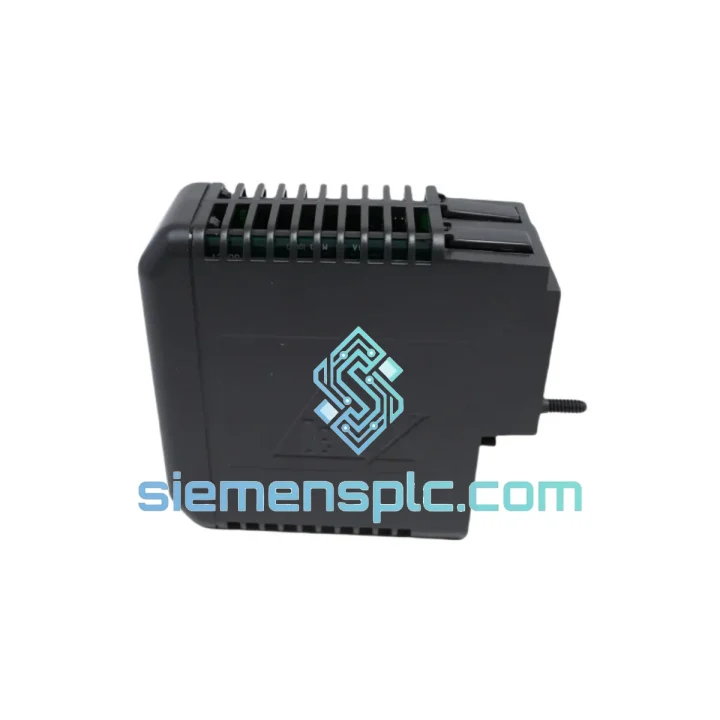
Request verified availability, condition, replacement risk review, packing options and courier lead time for KJ3241X1-BA2.
Click Request Quote and the part number is inserted into the inquiry form automatically.
Core fields for model confirmation and RFQ routing. Detailed product narrative remains below.
The KJ3241X1-BA2 is a carrier-slot serial communication card engineered specifically for Emerson’s DeltaV Distributed Control System I/O subsystem. Its functional mandate is precise: to terminate RS-232 and RS-485 serial field buses directly within the DeltaV I/O carrier, placing serial instrument data on the same deterministic backplane data path used by hardwired analog and digital channels. This architectural approach eliminates the external protocol gateway entirely — no standalone converter box, no separate IP address, no additional failure node between the field device and the control algorithm.
In process plants where legacy serial instruments remain embedded in critical measurement loops — Modbus RTU flow computers on custody transfer headers, RS-485 analyzers on distillation column overhead streams, third-party RTUs in remote pump stations — the KJ3241X1-BA2 provides the integration path that preserves those assets without compromising the temporal integrity of the DeltaV control loop. Serial data collected by this card is presented to the DeltaV controller within the same scan cycle window as all other I/O, meaning a PID block consuming a Modbus-sourced flow measurement operates with the same update latency as one consuming a hardwired 4–20 mA signal.
The card supports RS-232 (EIA/TIA-232-F, point-to-point, full-duplex, cable runs to 15 m at standard baud rates) and RS-485 (EIA/TIA-485-A, multi-drop half-duplex, up to 32 addressable nodes per segment, cable runs to 1,200 m at 9,600 baud with 120 Ω line termination). All communication parameters — baud rate from 300 to 115,200 bps, data word length, parity, stop bits — are configured entirely in DeltaV Control Studio. No physical jumpers or DIP switches require field adjustment, which is operationally significant in hazardous-area panel installations where physical access is restricted.
Protocol handling — Modbus RTU framing, CRC validation, exception code processing, and proprietary serial formats — is managed by the card’s onboard microcontroller in coordination with DeltaV’s I/O subsystem firmware. This offloads serial transaction management from the DeltaV controller CPU, preserving controller scan cycle headroom for control algorithm execution. The card draws all operating power from the DeltaV I/O bus backplane; no external 24 VDC supply wiring to the card is required.
Rated for continuous industrial service at 0 °C to +60 °C ambient with storage tolerance to −40 °C / +85 °C, the KJ3241X1-BA2 carries CE and UL certifications and conforms to Emerson’s I/O subsystem surge and transient immunity specifications. Units are stocked at our Xiamen, China facility, inspected prior to dispatch, and covered by a 12-month hardware warranty from shipment date.
📩 Real-time Stock & RFQ: [email protected] | WhatsApp: +86 18359268345
| Part Number | KJ3241X1-BA2 |
| Manufacturer | Emerson Electric Co. |
| Compatible Platform | DeltaV DCS I/O Subsystem (S-series, M-series controllers) |
| Module Function | Dual-mode Serial Interface Card (RS-232 / RS-485) |
| Physical Standards | EIA/TIA-232-F; EIA/TIA-485-A |
| RS-232 Topology | Point-to-point, full-duplex |
| RS-232 Max Cable Length | 15 m at standard baud rates |
| RS-485 Topology | Multi-drop, half-duplex |
| RS-485 Max Cable Length | 1,200 m at 9,600 baud (120 Ω termination required) |
| RS-485 Node Capacity | Up to 32 nodes per segment |
| Baud Rate Range | 300 – 115,200 bps (software-configurable) |
| Data Format | 7 or 8 data bits; even / odd / no parity; 1 or 2 stop bits |
| Supported Protocols | Modbus RTU; proprietary serial (via DeltaV Control Studio mapping) |
| Power Supply | DeltaV I/O bus backplane (no external wiring required) |
| Operating Temperature | 0 °C to +60 °C |
| Storage Temperature | −40 °C to +85 °C |
| Form Factor | DeltaV I/O plug-in card (carrier-slot mounted) |
| Approximate Weight | 200 g |
| Certifications | CE, UL |
| Country of Origin | United States |
| Warranty | 12 months from date of shipment |
Backplane Bus Architecture vs. External Gateway Topology: Conventional serial integration approaches route field device data through an external Modbus-to-Ethernet gateway, which then communicates with the DCS controller over an OPC-DA or Modbus TCP connection. This introduces a minimum of two additional protocol translation steps, an IP network hop with variable latency, and a hardware node with its own power supply, firmware, and failure mode. The KJ3241X1-BA2 collapses this chain: the card occupies a standard DeltaV I/O carrier slot and communicates with the controller via the proprietary DeltaV I/O bus at the backplane level. Serial transaction data arrives at the controller within the same deterministic scan window as hardwired I/O — no IP stack, no gateway buffer, no additional latency source.
Galvanic Isolation on the RS-485 Field Port: In large industrial facilities, RS-485 multi-drop networks frequently span buildings or process units where field devices are grounded at different earth potential references. Ground potential differences of 1–5 V are common; in facilities with heavy motor drive installations, transient differentials can reach tens of volts. Without isolation, these common-mode voltages appear across the RS-485 receiver’s differential input and can corrupt data frames or damage the receiver IC. The KJ3241X1-BA2 implements galvanic isolation between the serial field port and the backplane bus circuitry — typically via optocoupler arrays on the receive data path and an isolated DC-DC converter supplying the RS-485 driver stage. This barrier blocks DC and low-frequency common-mode currents from reaching the backplane, protecting both the card and the DeltaV I/O carrier from ground loop damage.
EMC Hardening at the PCB Level: The card’s printed circuit board layout follows Emerson’s I/O subsystem EMC design rules. RS-485 differential pair traces are length-matched and routed with controlled impedance to minimize reflections at high baud rates. Transient Voltage Suppressor (TVS) diode arrays are placed on the field-side connector pins to clamp surge voltages per IEC 61000-4-5 (surge immunity, 1 kV line-to-line, 2 kV line-to-earth). Ferrite bead filters on the backplane power rails attenuate conducted emissions from the field-side circuitry. These measures allow the module to maintain data integrity in environments with significant electromagnetic interference — motor variable-frequency drives, high-voltage switchgear, and arc furnace installations represent the practical upper boundary of the card’s EMC design envelope.
Hot-Swap Mechanical and Electrical Design: The card’s backplane connector uses a staggered pin sequence: power pins engage first during insertion, signal pins engage last. This sequencing prevents transient bus disturbances that would otherwise occur if signal pins made contact before the card’s power supply rails had stabilized. The result is live insertion and removal capability within an operating DeltaV I/O carrier without controller shutdown or process interruption — a requirement in continuous-process industries where unplanned shutdowns carry significant economic and safety consequences.
Onboard Microcontroller and Firmware Protocol Engine: Serial protocol management — Modbus RTU frame construction, CRC-16 calculation, slave address arbitration, exception code handling, and communication timeout supervision — executes on the card’s dedicated microcontroller rather than on the DeltaV controller CPU. This firmware-resident protocol engine presents processed tag values to the DeltaV controller via the backplane bus, not raw serial byte streams. The controller CPU therefore handles only the final data consumption step, preserving scan cycle budget for control algorithm execution in CPU-intensive applications.
Each KJ3241X1-BA2 unit dispatched from our Xiamen, China facility is a genuine Emerson-manufactured component. Units are sourced through verified supply channels and retain original manufacturer labels, firmware revision markings, and production date codes — all traceable to Emerson’s manufacturing records. Pre-shipment inspection covers physical integrity of the PCB and connector, label and date code verification, and ESD-protective packaging integrity. Certificate of Conformance (CoC) and inspection records are available upon request for procurement compliance and incoming quality control documentation requirements.
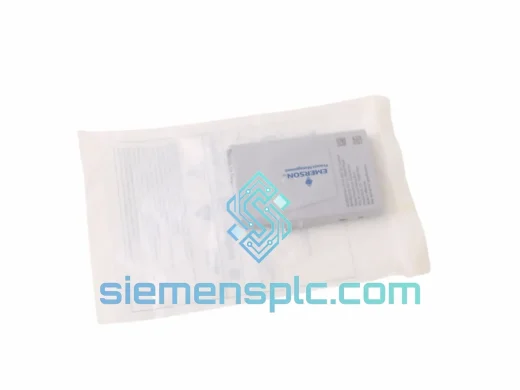
Each card is packaged in an ESD-protective anti-static bag with a humidity indicator card, enclosed in foam-lined rigid outer packaging rated for international air freight handling per ISTA 2A transit testing standards. Export documentation — commercial invoice, packing list, and HS code declaration (853710) — is prepared in compliance with Chinese customs export regulations and destination-country import requirements. Dangerous goods declarations are not required for this product class.
Shipment is executed via DHL Express, FedEx International Priority, or UPS Worldwide Express, with typical transit times of 3–5 business days to North America and Europe, 2–4 business days to Southeast Asia, and 4–7 business days to the Middle East and South America. Same-day dispatch is available for orders confirmed before 14:00 CST on business days. Full tracking information is provided at time of dispatch. For time-critical MRO procurement, contact us directly to confirm real-time stock status and expedited shipping options before placing an order.
A 12-month hardware warranty covers manufacturing defects under normal operating conditions from the date of shipment. Warranty claims are processed with replacement dispatch or credit note, subject to return inspection at our Xiamen facility. Volume procurement contracts may qualify for extended warranty terms — contact our sales team for details.
📧 Email: [email protected]
💬 WhatsApp: +86 18359268345
🌐 Web: siemensplc.com
📍 Location: Xiamen, China
© 2026 siemensplc.com. All rights reserved.
We check the full part number, brand, series and visible nameplate information before quotation.
Sales confirms stock path, condition option, quantity and realistic lead time for export dispatch.
DHL, FedEx, UPS or buyer courier arrangements can be reviewed with packing requirements.
Similar brand or category products for fast comparison and multi-item RFQ lists.