Phoenix Contact
RFQ Ready
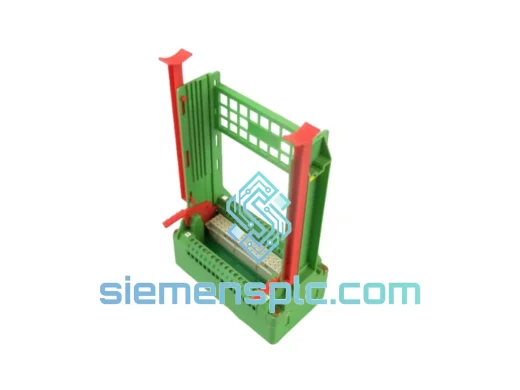
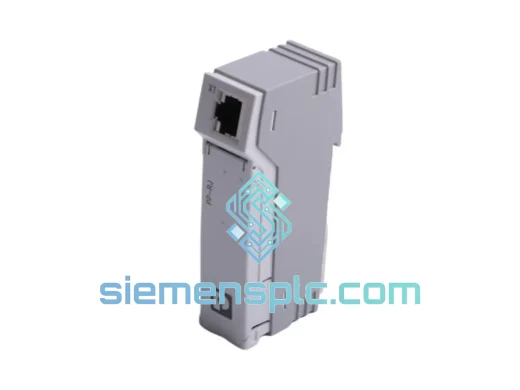
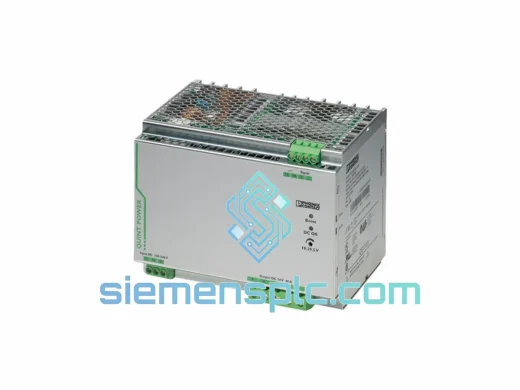
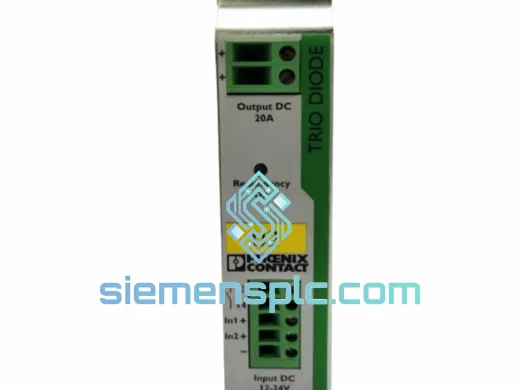
Phoenix Contact TRIO-DIODE/12-24DC/2X10/1X20 2866514 Redundancy Diode Module
Origin DE
Redundancy Diode Module
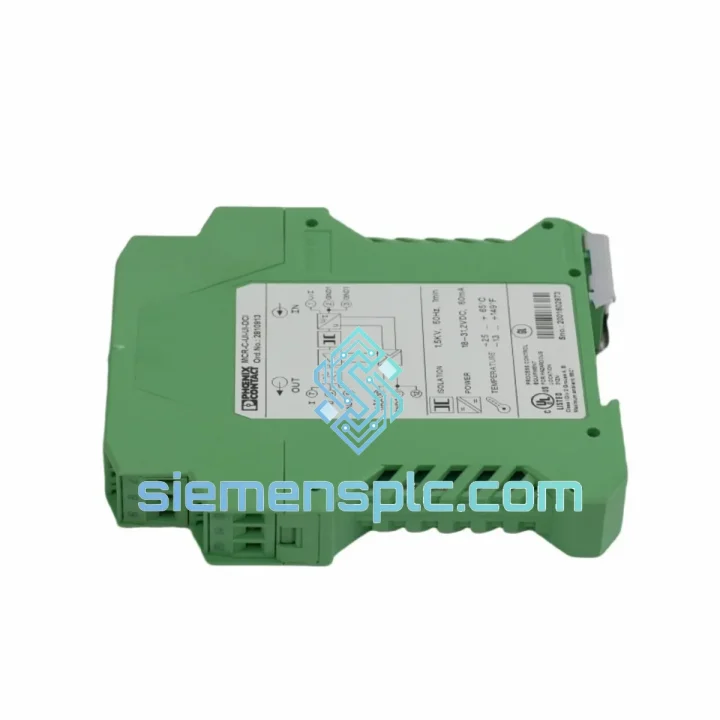
Request verified availability, condition, replacement risk review, packing options and courier lead time for MCR-C-UI-UI-DCI.
Click Request Quote and the part number is inserted into the inquiry form automatically.
Core fields for model confirmation and RFQ routing. Detailed product narrative remains below.
A failed isolation amplifier in a live 4–20 mA loop doesn’t just corrupt a reading — it can cascade into a full process shutdown. If your Phoenix Contact MCR-C-UI-UI-DCI has gone down, you already know the pressure. Ground loop faults, floating analog inputs, erratic PLC readings — these don’t wait for a scheduled maintenance window. We stock the MCR-C-UI-UI-DCI in Xiamen and dispatch same-day on confirmed orders. While your procurement team is still raising a PO, your replacement is already moving.
URGENT REQUIREMENT? Contact: [email protected] | WhatsApp: +86 18359268345
| Parameter | Specification | Status |
|---|---|---|
| Part Number | MCR-C-UI-UI-DCI | ✔ Ready to Ship |
| Manufacturer | Phoenix Contact | 100% Original |
| Series | MCR (Measurement, Control, Regulation) | — |
| Function | Isolation Amplifier / Signal Conditioner | — |
| Input Signal | Universal: 0–20 mA / 4–20 mA / 0–10 V / 0–5 V (DIP-selectable) | — |
| Output Signal | Universal: 0–20 mA / 4–20 mA / 0–10 V / 0–5 V (DIP-selectable) | — |
| Isolation Type | 3-way galvanic (Input / Output / Power Supply) | — |
| Isolation Voltage | ≥ 1500 V AC | — |
| Supply Voltage | 24 V DC (19.2–30 V DC range) | — |
| Power Consumption | ≤ 1.5 W | — |
| Accuracy | ≤ 0.1% of full scale | — |
| Operating Temperature | -25°C to +60°C | — |
| Storage Temperature | -40°C to +85°C | — |
| Mounting | 35 mm DIN rail (EN 60715) | — |
| Housing Width | 6.2 mm | — |
| Protection Rating | IP20 | — |
| Certifications | CE, UL, cUL, ATEX (Ex II 3G), GL | — |
| Max Output Load (I) | ≤ 600 Ω | — |
| Min Output Load (V) | ≥ 2 kΩ | — |
| Response Time | ≤ 100 ms (10–90%) | — |
| Country of Origin | Germany | — |
| Weight | ~100 g | — |
Common failure symptoms that point to a dead MCR-C-UI-UI-DCI:
Step-by-step hot-swap replacement procedure:
HART signal note: The standard MCR-C-UI-UI-DCI passes the 4–20 mA DC component but attenuates the HART FSK carrier (1200/2200 Hz). If your loop uses HART communication for device diagnostics, verify HART pass-through with a communicator before returning to service. For HART-transparent isolation, the MCR-C-UI-UI-DCI-HART variant is required.
Power budget check for multi-module racks: Each module draws ≤ 1.5 W. A 10-module group on a shared 24 V DC bus requires a minimum 15 W / 0.63 A supply margin — verify your PSU headroom before adding replacement units to a dense rail assembly.
The MCR-C-UI-UI-DCI was not designed for a clean lab environment. It was built for the kind of cabinet that sits 40 meters from a compressor train, where the ambient temperature swings 35°C between day and night shifts and the 24 V DC bus has noise spikes every time a large motor starts.
The 3-way galvanic isolation architecture — 1500 V AC between input, output, and power supply — is the first line of defense. It physically breaks the electrical path that allows ground loops and common-mode transients to corrupt your signal. In petrochemical and power generation environments where field instruments and control systems reference different ground potentials, this is not optional — it is the only way to get a clean 4–20 mA reading.
The operating temperature range of -25°C to +60°C covers the majority of outdoor and non-climate-controlled cabinet installations. The 6.2 mm ultra-slim housing allows high-density DIN rail mounting without creating localized hot spots — a real concern in fully populated marshalling cabinets where airflow is restricted.
ATEX certification (Ex II 3G) means the module can be deployed in Zone 2 hazardous areas without additional safety barriers in many configurations — reducing BOM complexity in oil and gas installations where every component in the signal path must be rated for the area classification.
The plug-in terminal block design is a deliberate reliability feature. In high-vibration environments — pump stations, compressor rooms, mobile plant — screw terminals that are wired directly to the module body can work loose over time. The plug-in design decouples the mechanical stress of the wiring from the module’s internal connections, and it means a replacement can be swapped in without touching a single wire ferrule.
Our warehouse is located in Xiamen, China — a major export hub with direct DHL Express and FedEx International Priority access. Here is what the fulfillment timeline looks like from the moment your order is confirmed:
Every shipment leaves Xiamen with original Phoenix Contact packaging intact. We do not repack or relabel. What arrives at your dock is exactly what left our shelf.
Email: [email protected]
WhatsApp: +86 18359268345
Web: siemensplc.com
© 2026 siemensplc.com. All rights reserved.
We check the full part number, brand, series and visible nameplate information before quotation.
Sales confirms stock path, condition option, quantity and realistic lead time for export dispatch.
DHL, FedEx, UPS or buyer courier arrangements can be reviewed with packing requirements.
Similar brand or category products for fast comparison and multi-item RFQ lists.