Honeywell
RFQ Ready
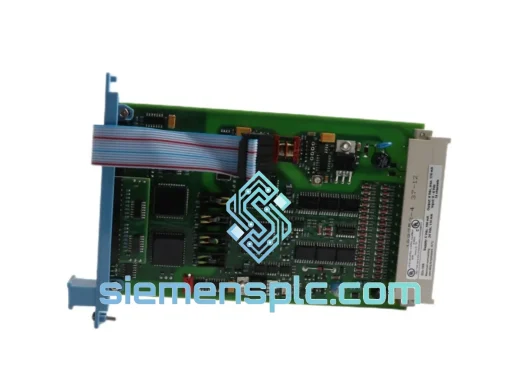
Honeywell TK-ODD321 Discrete Output Module – Safety Manager
Safety Manager
Origin US
Discrete Output Module
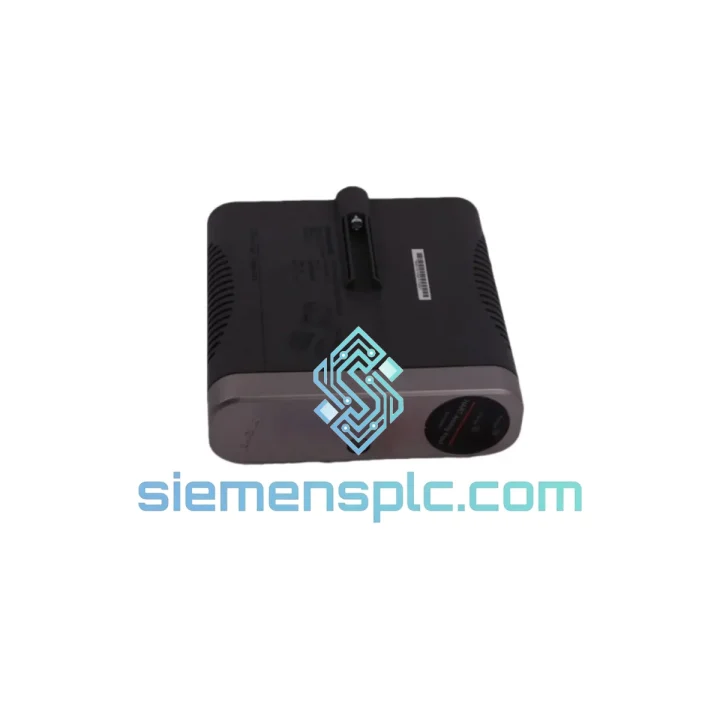
Request verified availability, condition, replacement risk review, packing options and courier lead time for 2MLQ-RY1A-CC.
Click Request Quote and the part number is inserted into the inquiry form automatically.
Core fields for model confirmation and RFQ routing. Detailed product narrative remains below.
The 2MLQ-RY1A-CC, 2MLQ-RY2A-CC, and 2MLQ-RY2B-CC are discrete relay output modules purpose-engineered for the Honeywell Safety Manager (SM) safety instrumented system platform. Each module occupies a dedicated I/O slot within the Safety Manager chassis and interfaces directly with the Safety Manager Controller (SMC) via the internal backplane bus. Their primary function is to translate logic-level safety commands into hardwired relay contact closures that actuate final control elements — solenoid valves, motor starters, alarm annunciators, and interlock circuits — in process safety applications governed by IEC 61508 and IEC 61511.
The three variants differ in channel count and contact topology: the 2MLQ-RY1A-CC provides a single-channel SPDT relay output; the 2MLQ-RY2A-CC delivers dual-channel relay outputs with independent SPDT contacts; the 2MLQ-RY2B-CC provides dual-channel relay outputs with an alternative contact configuration suited to specific field wiring architectures. All three share the same backplane communication protocol, power budget, and chassis slot footprint, enabling mixed deployment within a single Safety Manager I/O chassis without additional hardware adaptation.
These modules are deployed across oil & gas upstream and midstream facilities, petrochemical complexes, LNG terminals, power generation plants, and chemical processing units where deterministic, fail-safe discrete output is a non-negotiable design requirement. Their TÜV-certified SIL 2 rating in simplex configuration — and SIL 3 capability in redundant 1oo2 or 2oo3 architectures — positions them as the standard relay output solution within Honeywell Safety Manager-based safety instrumented functions (SIF).
Real-time Stock & RFQ: [email protected] | WhatsApp: +86 18359268345
| Parameter | 2MLQ-RY1A-CC | 2MLQ-RY2A-CC | 2MLQ-RY2B-CC |
|---|---|---|---|
| Module Function | Digital Relay Output — Safety Manager I/O | ||
| Platform Compatibility | Honeywell Safety Manager (SM) chassis only | ||
| Output Channels | 1 × SPDT relay | 2 × SPDT relay (independent) | 2 × relay (alternate contact config) |
| Contact Type | SPDT dry contact | SPDT dry contact × 2 | Dual relay, variant B topology |
| Contact Voltage Rating | 24 VDC / 120 VAC | ||
| Contact Current Rating | 2 A maximum | ||
| Galvanic Isolation | Relay coil to contact: full galvanic isolation | ||
| Safety Integrity Level | SIL 2 (simplex); SIL 3 (1oo2 / 2oo3 redundant) | ||
| Diagnostic Coverage (DC) | > 90% per IEC 61508 Part 2 | ||
| Safe Failure Fraction (SFF) | > 90% | ||
| Proof Test Interval | Per SIL verification calculation; typically 1–3 years | ||
| Backplane Interface | Safety Manager internal bus (proprietary) | ||
| Operating Temperature | 0 °C to +60 °C | ||
| Storage Temperature | −40 °C to +85 °C | ||
| Relative Humidity | 5% to 95% RH, non-condensing | ||
| Mechanical Endurance | ≥ 100,000 relay operations (rated) | ||
| Chassis Slot Requirement | 1 × standard Safety Manager I/O slot | ||
| Module Weight | Approx. 240 g | ||
| Certifications | TÜV SIL 2/3, CE, UL/CSA (refer to Honeywell datasheet) | ||
| Warranty | 12 months from shipment date | ||
The 2MLQ-RY series implements a dual-path output verification architecture. The relay coil drive circuit is controlled by two independent transistor switches in series — both must be simultaneously commanded by the SMC logic solver before the relay energizes. This AND-gate hardware topology prevents spurious output actuation from a single-point transistor failure, a critical requirement for SIL-rated discrete output in safety instrumented functions.
The module’s internal diagnostics continuously monitor relay contact feedback via a dedicated sense circuit that reads the actual contact state and compares it against the commanded state. A discrepancy between commanded and actual contact position within the module’s diagnostic scan window triggers a fault flag on the backplane, which the SMC processes as a module health event. This closed-loop contact verification eliminates the need for external contact monitoring wiring in many SIF designs, reducing field wiring complexity without sacrificing diagnostic coverage.
EMC hardening is achieved through multi-layer PCB ground plane design, transient voltage suppression (TVS) diodes on all field-side terminals, and ferrite bead filtering on the backplane interface lines. The relay coil circuit incorporates a flyback diode to suppress inductive kickback during de-energization, protecting adjacent logic circuitry from voltage spikes that would otherwise propagate through shared power rails. The module housing is constructed from conductive polymer with internal shielding planes, providing attenuation of radiated emissions consistent with EN 61000-4-3 Class A industrial environments.
The backplane communication between the SMC and the 2MLQ-RY module uses a time-deterministic token-passing protocol. Each I/O module is polled within a fixed scan cycle, and the relay output command is transmitted as a validated, CRC-checked data frame. The SMC will not accept a relay state change unless the command frame passes CRC validation on two consecutive scans — a hardware-enforced debounce mechanism that prevents transient bus noise from causing unintended relay actuation in high-EMI process environments.
Every 2MLQ-RY1A-CC, 2MLQ-RY2A-CC, and 2MLQ-RY2B-CC unit supplied by siemensplc.com is a genuine Honeywell-manufactured component sourced through verified supply channels. No refurbished, reconditioned, or third-party rebranded stock is offered. Each module undergoes a structured pre-shipment inspection protocol: label and part number verification against Honeywell’s published part numbering schema, visual inspection for physical damage or ESD exposure indicators, and relay coil continuity measurement to confirm electrical integrity prior to packaging.
Units are shipped in ESD-safe anti-static bags with foam-padded outer cartons rated for international air freight handling. Batch documentation — including commercial invoice, packing list, and certificate of conformance — is provided with every shipment. Serial number and date code records are retained for traceability in regulated industries where material documentation is required for functional safety audits.
Logistics operations are based in Xiamen, China, with established DHL Express, FedEx International Priority, and UPS Worldwide Express accounts. Standard in-stock orders are dispatched within 2–3 business days of payment confirmation. Export terms available include EXW Xiamen, FOB Xiamen, and CIF destination port. Customs documentation is prepared in compliance with HS Code classification for programmable logic controllers and safety system I/O modules, minimizing clearance delays at major import ports globally.
A 12-month warranty covers all supplied units against manufacturing defects from the shipment date. RMA procedures are straightforward: contact [email protected] with the order reference and fault description, and a replacement or credit resolution is initiated within 5 business days.
Email: [email protected]
WhatsApp: +86 18359268345
Web: siemensplc.com
Location: Xiamen, China
© 2026 siemensplc.com. All rights reserved.
We check the full part number, brand, series and visible nameplate information before quotation.
Sales confirms stock path, condition option, quantity and realistic lead time for export dispatch.
DHL, FedEx, UPS or buyer courier arrangements can be reviewed with packing requirements.
Similar brand or category products for fast comparison and multi-item RFQ lists.