Woodward
In Stock OK
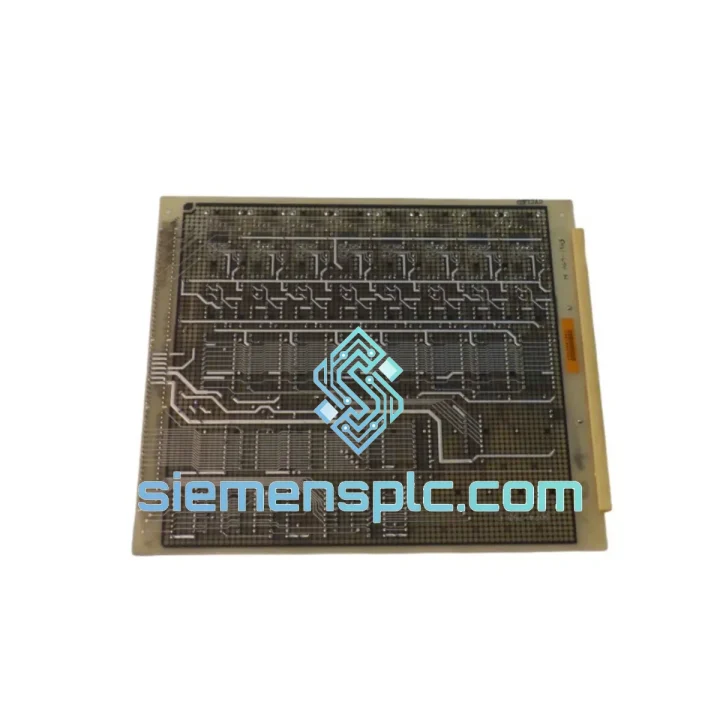
WOODWARD 5462-718 PC Board Control Module – NetCon Series
Request verified availability, condition, replacement risk review, packing options and courier lead time for 5462-718.
BrandWoodward
Part Number5462-718
ConditionAvailability Check
Lead TimeRFQ Confirmation
DocumentsDatasheet / photos by RFQ
ShippingExport packing available
Auto-filled RFQ
5462-718
Click Request Quote and the part number is inserted into the inquiry form automatically.
- Reply by email: [email protected]
- WhatsApp / Tel: +86 18359268345
- Mon-Sat 9:00-18:00 GMT+8
Procurement Data
Key Product Information
Core fields for model confirmation and RFQ routing. Detailed product narrative remains below.
- Brand
- Woodward
- Primary Part Number
- 5462-718
- Product Type
- PC Board
- Product Family
- Other series
- Manufacturer
- WOODWARD
- Country of Origin
- US
- Catalog Category
- PLCs & Controllers
- Operating Temp.
- 0°C to +70°C (board-level); derate per enclosure thermal design
- Warranty
- 12 months from date of shipment
Model confirmed for inquiry
5462-718
Send quantity, destination and urgency. The RFQ form keeps this part number attached.
Request Quote
Product Overview
WOODWARD 5462-718 PC Board: Signal Conditioning and Control Logic at the Core of Turbine Governance
The WOODWARD 5462-718 is a printed circuit board assembly engineered for deployment within WOODWARD’s modular turbine and power generation control platforms. Its primary function is to serve as the signal conditioning and logic arbitration layer between field-level sensors—speed pickups, thermocouples, pressure transducers—and the host controller’s actuator command bus. Unlike generic industrial PCBs, this board is designed around the deterministic timing requirements of rotating machinery governance, where a 5 ms deviation in fuel valve response can cascade into a full turbine trip event.
The board occupies a defined slot within WOODWARD’s backplane architecture, communicating via a parallel edge-connector interface that carries both power rails (typically +5 VDC logic and ±15 VDC analog) and multiplexed data lines. Onboard analog front-end circuitry handles signal linearization and cold-junction compensation for thermocouple inputs, while dedicated comparator stages provide overspeed detection thresholds with hardware-latched trip outputs—independent of firmware execution state. This hardware-level trip independence is a deliberate safety architecture choice: the trip signal does not wait for a CPU scan cycle to complete.
Real-time Stock & RFQ: [email protected] | WhatsApp: +86 18359268345
Technical Parameters
| Parameter | Specification |
|---|---|
| Manufacturer | WOODWARD |
| Part Number | 5462-718 |
| Module Classification | Printed Circuit Board Assembly (PCBA) |
| Logic Supply Voltage | +5 VDC ± 5% |
| Analog Supply Rails | ±15 VDC (typical WOODWARD backplane standard) |
| Operating Temperature | 0°C to +70°C (board-level); derate per enclosure thermal design |
| Storage Temperature | -40°C to +85°C |
| Relative Humidity | 5% to 95% non-condensing |
| PCB Layer Count | Multi-layer (4–6 layer, per WOODWARD manufacturing standard) |
| Connector Interface | Edge-card backplane connector, keyed per slot assignment |
| Analog Input Channels | Multiple (thermocouple, RTD, 4–20 mA compatible per board variant) |
| Digital I/O | Discrete input/output lines, 24 VDC field-side compatible |
| Isolation Architecture | Optocoupler-based galvanic isolation on discrete I/O channels |
| EMC Compliance | Designed per IEC 61000-4 series immunity requirements |
| Vibration Resistance | Per WOODWARD environmental qualification (turbine skid-mount rated) |
| Form Factor | WOODWARD standard card format; chassis-specific slot assignment |
| Weight | Approx. 300 g |
| Warranty | 12 months from date of shipment |
| Country of Origin | United States |
Hardware Logical Analysis
The 5462-718’s hardware design reflects WOODWARD’s engineering philosophy of separating safety-critical trip logic from the programmable control layer. Three architectural decisions define this board’s reliability profile:
1. Optocoupler-Based Galvanic Isolation on Discrete Channels
Each discrete input channel passes through a dedicated optocoupler stage, providing a minimum 1,500 V isolation barrier between field wiring and the board’s logic ground plane. In turbine environments where ground loops between the generator neutral and the control cabinet can inject transient voltages exceeding 200 V, this isolation prevents latch-up conditions in the CMOS logic downstream. The optocoupler’s propagation delay (typically 2–5 µs for high-speed variants) is factored into the board’s interrupt latency budget, ensuring that a field-side trip signal reaches the hardware latch within one control scan period.
2. Hardware-Latched Overspeed Trip Architecture
The board implements a comparator-based overspeed detection circuit that operates asynchronously from the main processor. A dedicated magnetic pickup signal is fed into a frequency-to-voltage converter, whose output is continuously compared against a precision voltage reference corresponding to the trip setpoint (typically 110% of rated speed). When the comparator output transitions, a hardware SR latch captures the trip state and drives the fuel valve solenoid output directly—bypassing the CPU scan cycle entirely. This architecture guarantees a trip response time under 10 ms regardless of processor load, a requirement specified in API 670 for overspeed protection systems.
3. Analog Front-End Signal Conditioning
Thermocouple inputs are routed through instrumentation amplifiers with a common-mode rejection ratio (CMRR) exceeding 80 dB at 50/60 Hz, suppressing power-frequency interference induced by proximity to generator windings. Cold-junction compensation is performed by an onboard thermistor network referenced to the board’s ambient temperature, correcting thermocouple readings to within ±1°C across the operating temperature range. The conditioned analog signals are then passed to a successive-approximation ADC with 12-bit resolution, providing a measurement granularity of approximately 0.024% of full scale—sufficient for exhaust temperature trending and alarm differentiation.
4. EMC Ground Plane Architecture
The multi-layer PCB uses a dedicated ground plane layer to minimize return current loop areas. High-frequency bypass capacitors (100 nF X7R ceramic) are placed within 2 mm of each IC power pin, suppressing switching noise from onboard logic from coupling into the analog measurement channels. The board’s edge connector ground pins are distributed at regular intervals to maintain a low-impedance return path across the full connector width, preventing ground bounce under transient load conditions.
System Integration Benefits
- Direct Slot Replacement Without Recalibration: The 5462-718 uses factory-set calibration constants stored in onboard non-volatile memory, allowing board swap without requiring a full system recalibration procedure—reducing planned maintenance windows from hours to under 30 minutes.
- Deterministic Interrupt Latency: Hardware interrupt lines from the board to the host CPU are prioritized at the backplane level, ensuring that alarm and trip signals are processed within a guaranteed latency window independent of the application program scan time.
- Diagnostic Transparency via LED Indicators: Onboard status LEDs provide immediate visual confirmation of power rail health, communication activity, and trip latch state—enabling field technicians to isolate faults without connecting diagnostic software.
- Reduced Wiring Complexity: The board’s multi-channel architecture consolidates what would otherwise require multiple discrete signal conditioners into a single card slot, reducing terminal block count and the associated wiring error probability.
- Compatibility with WOODWARD Redundancy Schemes: In dual-redundant control configurations, the 5462-718 participates in the bumpless transfer arbitration logic, ensuring that a board-level fault in the primary channel triggers a controlled handover to the standby channel without a process upset.
- Firmware-Independent Trip Execution: Because the overspeed and critical alarm trip outputs are driven by hardware comparator logic rather than firmware, the board maintains protective function even during a CPU firmware exception or watchdog reset cycle.
- Long-Term Parts Availability: WOODWARD’s modular card architecture means the 5462-718 can be sourced and stocked independently of the full control system, supporting lifecycle extension strategies for installed base systems without requiring a full platform migration.
- Standardized Backplane Interface: Adherence to WOODWARD’s defined backplane electrical standard means the board can be tested on a bench-top backplane simulator prior to installation, verifying functionality before the turbine is taken offline.
Quality Assurance & Global Logistics
Every WOODWARD 5462-718 unit supplied through siemensplc.com is sourced from verified industrial distribution channels with full part number and date code traceability. Prior to dispatch from our Xiamen, China facility, each board undergoes a structured inspection protocol: visual examination of PCB surface and component condition, part number label verification against WOODWARD OEM markings, and connector pin integrity check. Units showing evidence of rework, remarking, or counterfeit indicators are rejected at intake and not offered for sale.
A 12-month warranty covers manufacturing defects and premature failure under normal operating conditions. Each shipment is accompanied by a packing declaration, sourcing record, and—where available—OEM test documentation. For customers requiring additional quality evidence, a certificate of conformance can be issued upon request.
Logistics from Xiamen are executed via DHL Express, FedEx International Priority, and UPS Worldwide Express, with typical transit times of 3–5 business days to Europe and North America, and 2–4 business days to Southeast Asia and the Middle East. Export documentation including commercial invoice, packing list, and HS code classification (8537.10 for industrial control boards) is prepared in compliance with Chinese customs regulations and destination country import requirements. For orders requiring urgent dispatch, same-day shipping cutoff is 15:00 CST for in-stock units.
Contact Information
Email: [email protected]
WhatsApp: +86 18359268345
Web: siemensplc.com
Location: Xiamen, China
© 2026 siemensplc.com. All rights reserved.
Ready to quote
[email protected]
Send This Part Number to Sales
RFQ workflow
Quality workflow ->
Confirmation Process
01Model confirmation
We check the full part number, brand, series and visible nameplate information before quotation.
02Availability reply
Sales confirms stock path, condition option, quantity and realistic lead time for export dispatch.
03Packing & courier
DHL, FedEx, UPS or buyer courier arrangements can be reviewed with packing requirements.
Continue sourcing
Browse full catalog ->
Related Automation Parts
Similar brand or category products for fast comparison and multi-item RFQ lists.
Woodward
RFQ Ready
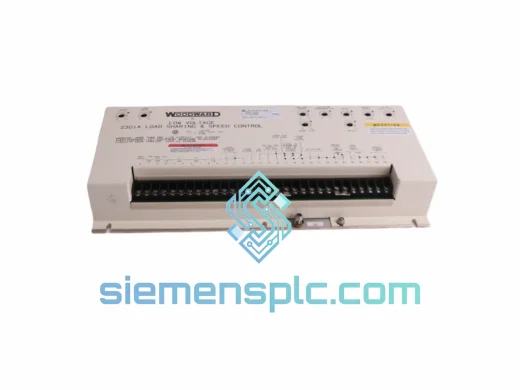
WOODWARD 9905-028 Load Sharing Speed Control Module
Origin US
Load Sharing & Speed Control Module