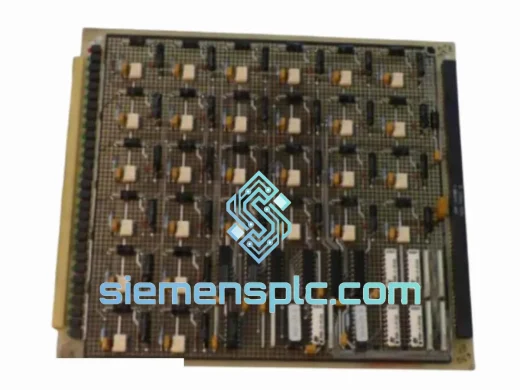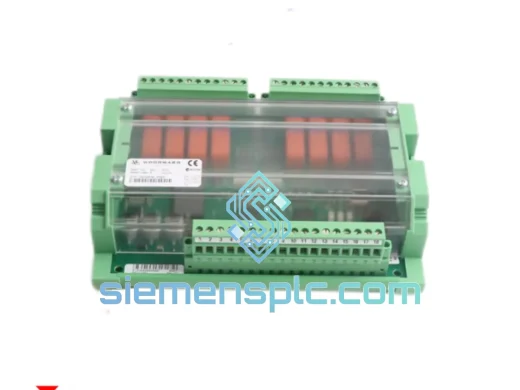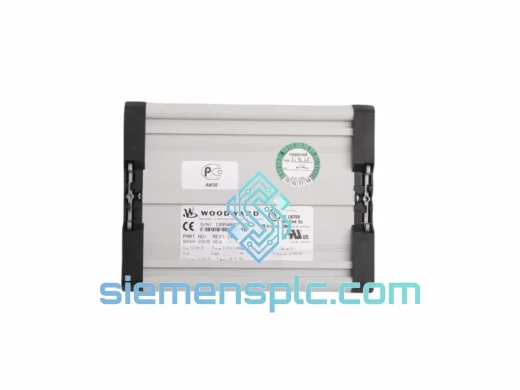
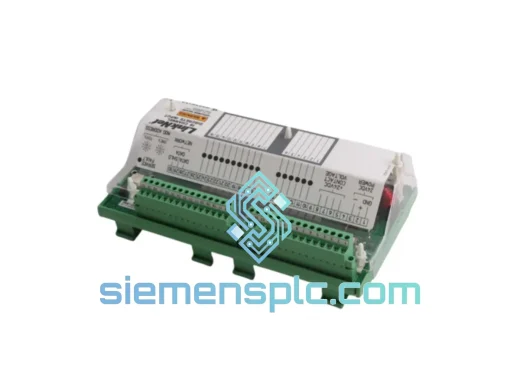
Woodward
RFQ Ready
WOODWARD 9905-971 Analog Input Module – 9900 Series
9900 Series
Origin US
Analog Input Module
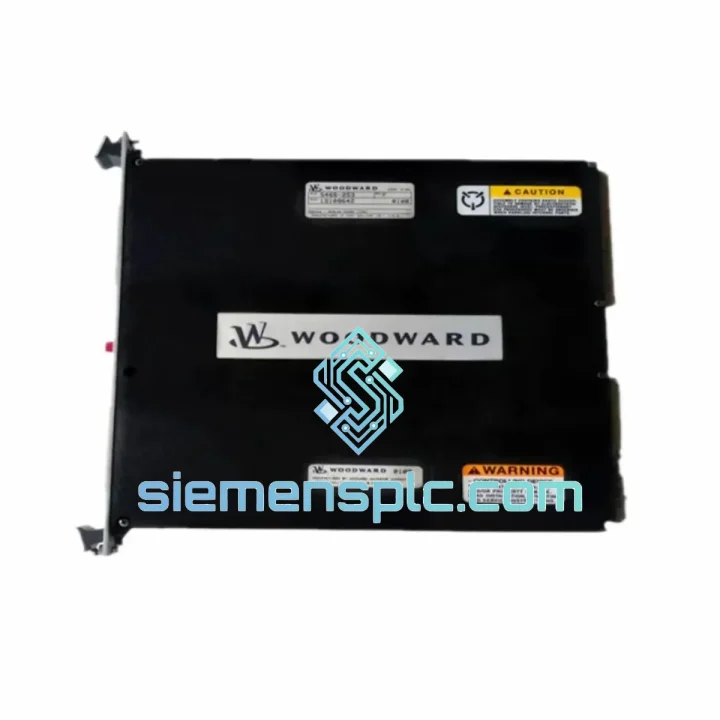
Request verified availability, condition, replacement risk review, packing options and courier lead time for 5466-253.
Click Request Quote and the part number is inserted into the inquiry form automatically.
Core fields for model confirmation and RFQ routing. Detailed product narrative remains below.
In continuous-process industries — gas turbines, steam turbines, compressor trains, and combined-cycle power plants — the analog signal chain is the nervous system of the control loop. Every governor response, every protective relay decision, every load-sharing calculation depends on the fidelity and availability of analog measurements. The WOODWARD 5466-253 Analog Combo TMR module is engineered to ensure that this signal chain never becomes a single point of failure. By implementing Triple Modular Redundancy (TMR) across both its input and output paths, the 5466-253 maintains validated, majority-voted analog data even when one of its three internal channels degrades — without interrupting the control loop, without triggering a spurious trip, and without requiring operator intervention.
The module integrates into Woodward’s TMR control platform, a distributed architecture that partitions the control system into three independent lanes — Lane A, Lane B, and Lane C — each processing identical sensor inputs through separate signal conditioning circuits. The 5466-253 participates in this lane structure at the analog I/O level: three physically isolated analog front-ends acquire the same process variable simultaneously. A cross-lane arbitration bus compares the three digitized values on every scan cycle. If one lane’s reading deviates beyond a configurable tolerance band, the majority-vote logic discards that channel’s contribution and continues outputting the consensus value derived from the two remaining lanes. This mechanism, known as 2-out-of-3 (2oo3) voting, is the same fault-tolerance principle used in flight-critical avionics and nuclear instrumentation — applied here to industrial turbine analog I/O.
The combo architecture of the 5466-253 — combining analog inputs and analog outputs on a single module — reduces the total slot count required in the TMR chassis. In a typical turbine governor application, this translates to fewer inter-module signal paths, lower wiring complexity, and a smaller thermal footprint inside the control cabinet. Each analog output channel drives actuator command signals — fuel metering valve references, inlet guide vane position setpoints, extraction pressure control references — with the same TMR integrity applied to the input side: three independent DAC circuits generate the output signal, and the final drive current is the arbitrated result, ensuring that a single DAC failure does not corrupt the actuator command.
📩 Real-time Stock & RFQ: [email protected] | WhatsApp: +86 18359268345
| Parameter | Specification |
|---|---|
| Part Number | 5466-253 |
| Manufacturer | WOODWARD |
| Module Classification | Analog Combo TMR (Triple Modular Redundancy) |
| Redundancy Architecture | 3-lane TMR with 2oo3 majority-vote arbitration |
| I/O Function | Combined analog input and analog output processing |
| Signal Isolation | Galvanic isolation between field-side and backplane bus per lane |
| Platform Compatibility | Woodward TMR control system chassis |
| Typical Input Range | 4–20 mA / 0–10 V (verify against system datasheet) |
| Typical Output Range | 4–20 mA current loop drive (verify against system datasheet) |
| Diagnostic Coverage | Continuous cross-lane comparison; per-channel fault annunciation |
| Operating Temperature | 0 °C to +60 °C (verify against OEM datasheet) |
| Module Weight | Approx. 1,750 g |
| Origin | Germany (Woodward GmbH manufacturing) |
| Warranty | 12 months functional warranty from date of shipment |
The 5466-253’s internal architecture reflects a deliberate separation of concerns between signal acquisition, cross-lane arbitration, and output drive — each stage engineered to prevent fault propagation across the TMR boundary.
Galvanic Isolation and EMC Hardening: Each of the three analog front-ends employs transformer-coupled or optocoupler-based galvanic isolation between the field wiring terminals and the module’s internal logic domain. This isolation barrier serves two functions: it blocks ground-loop currents that would introduce common-mode noise into the measurement, and it limits the fault propagation path so that a field-side wiring fault — a short to ground, a transient from a nearby VFD, or a lightning-induced surge — cannot damage the backplane logic or corrupt the cross-lane arbitration bus. The isolation withstand voltage is rated to handle the transient environments typical of turbine control rooms, where high-current motor starters and power electronics operate in close proximity.
Cross-Lane Arbitration Logic: The arbitration bus connecting Lane A, Lane B, and Lane C operates at a deterministic scan rate synchronized to the TMR controller’s execution cycle. On each scan, the three digitized analog values are compared using a windowed tolerance algorithm. If all three lanes agree within the tolerance band, the output is the average of the three — improving effective resolution beyond what any single ADC channel could achieve. If one lane deviates, the 2oo3 logic isolates it, logs a diagnostic event to the system’s fault historian, and continues outputting the consensus of the two remaining lanes. This transition is bumpless: the control loop sees no step change in the analog value, and the turbine governor continues operating without interruption.
Output Drive Integrity: On the analog output side, three independent DAC circuits generate the actuator command signal. The final output current is derived from the arbitrated digital value, ensuring that a single DAC failure — whether a stuck-at-rail condition or a drift beyond calibration tolerance — does not corrupt the actuator command. The output stage includes current-loop monitoring that detects open-circuit and short-circuit conditions on the field wiring, reporting these as diagnostic faults without interrupting the output drive from the healthy DAC channels.
Backplane Bus Interface: The module communicates with the TMR processor over a high-speed parallel backplane bus with CRC-protected data frames. Each data transfer includes a sequence counter and a health status word, allowing the processor to detect stale data or communication faults at the module level — a capability that supports the system’s overall diagnostic transparency without requiring external test equipment.
Every WOODWARD 5466-253 unit dispatched from our Xiamen facility is a genuine Woodward-manufactured component — not a counterfeit, not a remarked part, and not a third-party clone. Woodward’s manufacturing quality system for TMR control modules applies rigorous incoming material inspection, automated functional test at the board level, and system-level validation before modules leave the factory. Our procurement process sources exclusively from authorized distribution channels and documented surplus inventories with traceable provenance.
Before shipment, each unit undergoes a structured pre-dispatch inspection: visual examination of the PCB, connector pins, and module housing for physical damage or corrosion; verification that OEM labels and serial numbers are intact and unaltered; and where test equipment is available, a power-on functional check to confirm the module initializes correctly and reports no internal fault codes. Modules are packed in anti-static ESD bags, cushioned with closed-cell foam, and shipped in double-wall corrugated cartons rated for international air freight handling.
From Xiamen, China, we dispatch via DHL Express, FedEx International Priority, and UPS Worldwide — all with full tracking, commercial invoice, and packing list documentation. Transit times to major industrial hubs: Europe 3–5 business days, North America 4–6 business days, Southeast Asia 2–3 business days. For critical plant shutdowns requiring same-day dispatch, contact us before 14:00 CST to confirm cut-off eligibility. Sea freight consolidation is available for multi-module orders where air freight cost is a constraint.
All units are covered by a 12-month functional warranty from the date of shipment, covering defects in materials and workmanship under normal operating conditions. Warranty claims are processed with a target response time of 48 hours from receipt of the returned module.
📧 Email: [email protected]
📱 WhatsApp: +86 18359268345
🌐 Web: siemensplc.com
📍 Location: Xiamen, China
© 2026 siemensplc.com. All rights reserved.
We check the full part number, brand, series and visible nameplate information before quotation.
Sales confirms stock path, condition option, quantity and realistic lead time for export dispatch.
DHL, FedEx, UPS or buyer courier arrangements can be reviewed with packing requirements.
Similar brand or category products for fast comparison and multi-item RFQ lists.