
GE
In Stock OK
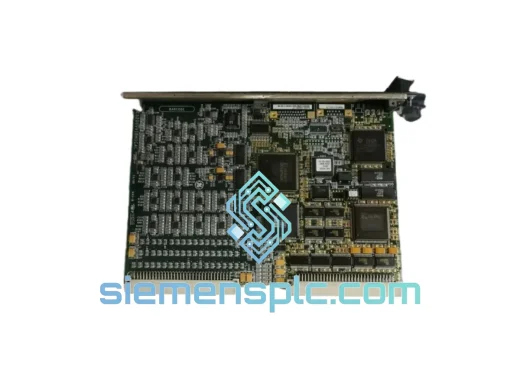
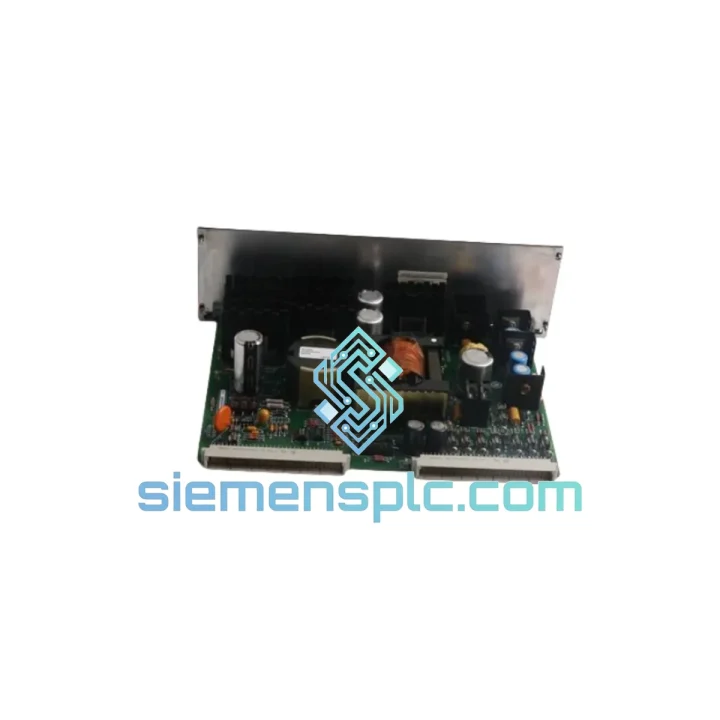
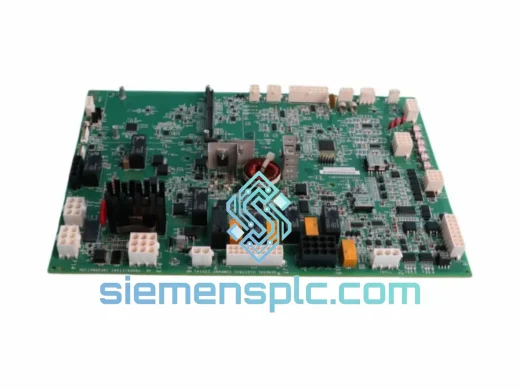
GE IS200JPDMG1RDC Turbine Control PCB – Mark VI Series
Request verified availability, condition, replacement risk review, packing options and courier lead time for IS200JPDMG1RDC.
BrandGE
Part NumberIS200JPDMG1RDC
ConditionAvailability Check
Lead TimeRFQ Confirmation
DocumentsDatasheet / photos by RFQ
ShippingExport packing available
Auto-filled RFQ
IS200JPDMG1RDC
Click Request Quote and the part number is inserted into the inquiry form automatically.
- Reply by email: [email protected]
- WhatsApp / Tel: +86 18359268345
- Mon-Sat 9:00-18:00 GMT+8
Procurement Data
Key Product Information
Core fields for model confirmation and RFQ routing. Detailed product narrative remains below.
- Brand
- GE
- Primary Part Number
- IS200JPDMG1RDC
- Product Type
- Turbine Control PCB
- Series / Family
- Mark VI
- Manufacturer
- GE Energy / GE Vernova (formerly GE Power Controls)
- Country of Origin
- US
- Catalog Category
- Industrial Automation Spares
- Operating Temp.
- 0 °C to +60 °C (continuous duty, forced-air cooled rack enclosure)
- Warranty
- 12 months against defects in materials and workmanship
- Compliance
- IEC 61508 (functional safety), IEC 61511, RoHS
Model confirmed for inquiry
IS200JPDMG1RDC
Send quantity, destination and urgency. The RFQ form keeps this part number attached.
Request Quote
Product Overview
GE IS200JPDMG1RDC — Signal Conditioning and I/O Interface Board in Mark VI Turbine Control Architecture
The IS200JPDMG1RDC is a printed circuit board manufactured by GE Energy (now GE Vernova) for deployment within the Mark VI Turbine Control System. Its primary function is to serve as a junction point and signal conditioning layer between field-wired I/O terminals and the Mark VI VME-based processor backplane. In a distributed turbine control architecture, this board handles analog and discrete signal routing, performs electrical isolation between field circuits and logic-level backplane signals, and provides the physical interface layer that allows the Mark VI controller to monitor and actuate turbine subsystems in real time.
Within a gas turbine control loop, the JPDMG1 card occupies a position between the terminal board assembly and the core processor cards. Field signals — including thermocouple inputs, RTD measurements, 4–20 mA process loops, and discrete contact closures from limit switches and solenoid feedback — arrive at the terminal board, pass through the JPDMG1 conditioning stage, and are presented to the VME processor in a normalized, noise-filtered form. The revision suffix RDC identifies a specific hardware iteration with defined component tolerances and PCB layout revisions that GE uses to track field compatibility across Mark VI rack generations.
This board is specified by control systems engineers as a direct replacement component during scheduled outage maintenance windows, as a cold-standby spare held in plant stores, or as an emergency procurement item when an unplanned card failure causes a forced outage. Its compatibility with both Simplex and Triple Modular Redundant (TMR) Mark VI configurations makes it applicable across a wide range of installed base scenarios, from single-shaft industrial gas turbines to large combined-cycle power blocks.
Real-time Stock & RFQ: [email protected] | WhatsApp: +86 18359268345
Technical Parameters
| Parameter | Value / Specification |
|---|---|
| Part Number | IS200JPDMG1RDC |
| Revision Code | RDC |
| Platform | GE Mark VI Turbine Control System |
| Form Factor | VME-compatible printed circuit board, rack-mount card |
| Manufacturer | GE Energy / GE Vernova (formerly GE Power Controls) |
| Signal Types Supported | Analog inputs (thermocouple, RTD, 4–20 mA), discrete I/O (24 VDC contact) |
| Isolation Architecture | Opto-isolated field-to-logic boundary; channel-to-channel isolation on discrete inputs |
| Operating Temperature | 0 °C to +60 °C (continuous duty, forced-air cooled rack enclosure) |
| Storage Temperature | −40 °C to +85 °C |
| Relative Humidity | 5% to 95% non-condensing |
| Supply Voltage | +5 VDC, ±15 VDC via VME backplane P1/P2 connectors |
| PCB Dimensions | Standard 6U VME card format (233.35 mm × 160 mm) |
| Connector Interface | 96-pin DIN 41612 Type C backplane connector; front-panel I/O header |
| Weight | Approx. 400 g |
| Compliance | IEC 61508 (functional safety), IEC 61511, RoHS |
| Warranty | 12 months against defects in materials and workmanship |
Hardware Logical Analysis
The IS200JPDMG1RDC implements a multi-stage signal path that addresses the principal hardware challenges of turbine control environments: high common-mode noise from large rotating machinery, ground potential differences between field junction boxes and control room panels, and the need for deterministic signal latency across all monitored channels.
Opto-isolation on discrete input channels uses phototransistor-based couplers with a minimum isolation voltage of 500 V RMS between field and logic domains. This prevents ground loop currents — common in turbine generator installations where the generator neutral and control panel ground may differ by several volts — from corrupting digital state readings or damaging logic-level components on the backplane side of the board.
Analog front-end filtering on thermocouple and RTD channels incorporates RC low-pass networks with cutoff frequencies tuned to reject 50/60 Hz power-line interference and high-frequency switching noise from variable-frequency drives operating in the same plant environment. The filter topology is a second-order passive design, which introduces no active component failure modes in the signal path and maintains accuracy across the full operating temperature range without calibration drift compensation circuitry.
EMC design practices on the PCB layout include ground plane partitioning that separates the analog signal ground from the digital logic ground, with a single-point star connection at the VME backplane connector. Decoupling capacitors are placed within 2 mm of each IC power pin to suppress high-frequency transients on the +5 VDC rail. The board’s edge connector area uses guard traces tied to chassis ground to intercept electrostatic discharge events before they reach sensitive analog nodes.
Backplane bus interface logic on the JPDMG1 card uses a registered address/data bus driver architecture. Address decoding is implemented in a PAL or CPLD device (revision-dependent), which provides deterministic decode timing and eliminates the race conditions that can occur with discrete TTL gate-based decode logic. This ensures that the VME processor’s read/write cycles to the card complete within the defined bus timeout window, preventing spurious bus errors during high-throughput scan cycles.
Thermal management on the board relies on the forced-air cooling provided by the Mark VI cabinet’s internal fan tray. Component placement follows a thermal gradient strategy: high-dissipation components (bus drivers, power regulators) are positioned near the card’s leading edge where airflow velocity is highest, while temperature-sensitive analog components (precision references, instrumentation amplifiers) are placed in the lower-dissipation zone near the card’s trailing edge.
System Integration Benefits
- Zero-modification installation: The IS200JPDMG1RDC installs directly into the existing Mark VI rack slot without wiring changes, firmware updates, or I/O mapping reconfiguration. The card’s address is set by the rack slot position, eliminating manual DIP switch configuration and the associated risk of address conflicts.
- Deterministic scan cycle contribution: The board’s registered bus interface ensures that each VME read cycle completes within a fixed, bounded latency. This is critical for Mark VI applications where the control executive runs a fixed-period scan (typically 10–40 ms) and any bus timeout would cause a watchdog fault and turbine trip.
- Diagnostic transparency via Mark VI toolset: The card exposes its channel status, fault flags, and signal quality indicators to the Mark VI Toolbox diagnostic environment. Maintenance engineers can view per-channel open-circuit detection, out-of-range alarms, and communication health without removing the card from service.
- TMR voting compatibility: In Triple Modular Redundant configurations, three IS200JPDMG1RDC cards in separate R, S, and T racks provide independent signal paths for the same field point. The Mark VI voter logic compares the three digitized values and flags disagreement before it reaches the control algorithm, enabling fault detection without process interruption.
- Reduced mean time to repair (MTTR): Because the card is a self-contained, field-replaceable unit with no on-board calibration required after installation, a trained technician can complete a card swap in under 30 minutes during a hot-standby changeover, compared to multi-hour repairs for board-level component replacement.
- Backward compatibility across Mark VI generations: The JPDMG1 card family has maintained connector and address map compatibility across multiple Mark VI hardware generations. An RDC revision card can replace earlier revision cards in the same slot without system reconfiguration, protecting the plant’s investment in existing rack infrastructure.
- Isolation of field faults from control logic: The opto-isolation barrier ensures that a field wiring fault — including a short to 120 VAC from an adjacent terminal — cannot propagate destructive voltage levels to the VME backplane. This containment characteristic limits fault propagation to the affected card and prevents cascade failures across the control rack.
- Spare parts inventory efficiency: A single IS200JPDMG1RDC card covers multiple I/O functions within the Mark VI architecture, reducing the number of unique part numbers a plant must stock to maintain full system redundancy. This consolidation lowers carrying costs and simplifies spare parts management for multi-unit power plants.
Quality Assurance & Global Logistics
Every IS200JPDMG1RDC unit dispatched from our Xiamen, China facility has passed a structured pre-shipment verification process. Visual inspection covers PCB surface condition, solder joint integrity, connector pin alignment, and component presence against the OEM reference bill of materials. Functional verification includes power-on continuity checks and, where test fixtures are available, active I/O channel verification against known reference signals.
Units are sourced from decommissioned plant spares inventories, authorized surplus distributors, and OEM-certified refurbishment channels. Each unit is accompanied by a sourcing declaration and, on request, a test report. Packaging uses anti-static (ESD) shielding bags, closed-cell foam inserts, and moisture barrier film to protect the PCB during international air and sea freight. Export documentation — including commercial invoice, packing list, and HS code classification — is prepared for all international shipments to facilitate customs clearance.
Shipments from Xiamen reach major industrial hubs in Southeast Asia within 3–5 business days by air express, Europe and the Middle East within 5–8 business days, and North America within 5–7 business days. For urgent forced-outage situations, same-day dispatch on orders confirmed before 14:00 CST is available subject to stock confirmation. All shipments are tracked end-to-end with carrier tracking numbers provided at time of dispatch.
A 12-month warranty covers defects in materials and workmanship from the date of delivery. Warranty claims are processed with a target response time of 48 hours. Extended warranty and exchange pricing options are available for plants maintaining long-term spare parts agreements.
Contact Information
Email: [email protected]
WhatsApp: +86 18359268345
Web: siemensplc.com
Location: Xiamen, China
© 2026 siemensplc.com. All rights reserved.
Ready to quote
[email protected]
Send This Part Number to Sales
RFQ workflow
Quality workflow ->
Confirmation Process
01Model confirmation
We check the full part number, brand, series and visible nameplate information before quotation.
02Availability reply
Sales confirms stock path, condition option, quantity and realistic lead time for export dispatch.
03Packing & courier
DHL, FedEx, UPS or buyer courier arrangements can be reviewed with packing requirements.
Continue sourcing
Browse full catalog ->
Related Automation Parts
Similar brand or category products for fast comparison and multi-item RFQ lists.
GE
RFQ Ready
GE IS215WETAH1CA Wind Turbine Control Module
Mark VI
Origin US
Wind Turbine Control Module