GE
In Stock OK
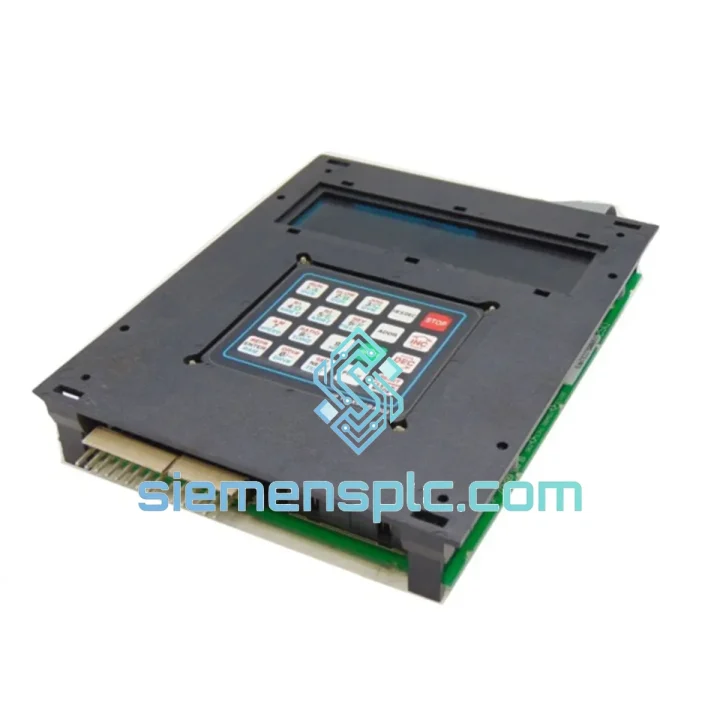
GE NP 104X905BA603 Membrane Keypad Panel – Mark IV/V
Request verified availability, condition, replacement risk review, packing options and courier lead time for NP 104X905BA603.
BrandGE
Part NumberNP 104X905BA603
ConditionAvailability Check
Lead TimeRFQ Confirmation
DocumentsDatasheet / photos by RFQ
ShippingExport packing available
Auto-filled RFQ
NP 104X905BA603
Click Request Quote and the part number is inserted into the inquiry form automatically.
- Reply by email: [email protected]
- WhatsApp / Tel: +86 18359268345
- Mon-Sat 9:00-18:00 GMT+8
Procurement Data
Key Product Information
Core fields for model confirmation and RFQ routing. Detailed product narrative remains below.
- Brand
- GE
- Primary Part Number
- NP 104X905BA603
- Product Type
- Membrane Keypad Panel
- Series / Family
- Mark V
- Manufacturer
- GE (General Electric)
- Country of Origin
- US
- Catalog Category
- HMI Panels
- Operating Temp.
- 0°C to +60°C
- Warranty
- 12 months from verified shipment date
Model confirmed for inquiry
NP 104X905BA603
Send quantity, destination and urgency. The RFQ form keeps this part number attached.
Request Quote
Product Overview
GE NP 104X905BA603: Direct-Wired Membrane Keypad Panel for Mark IV/V Gas and Steam Turbine Control Systems
The GE NP 104X905BA603 is a passive membrane keypad panel engineered as the primary hardwired operator command interface within GE Mark IV and Mark V turbine control architectures. Unlike capacitive touchscreen panels that depend on an embedded OS and interrupt-driven firmware stacks to process input, this unit routes each key actuation directly through a passive row-column matrix to the processor backplane’s discrete I/O bus. The result is a command input path whose latency is bounded exclusively by the processor’s fixed I/O scan cycle — measured at 10 ms or less in the Mark V subsystem — with no OS scheduling jitter, no driver stack overhead, and no firmware version dependency.
In gas turbine and steam turbine control environments, the determinism of the operator input path is not a secondary concern. During start sequencing, load shedding, or emergency shutdown initiation, the interval between operator key actuation and processor acknowledgment must be predictable and verifiable. The NP 104X905BA603 satisfies this requirement through hardware architecture rather than software optimization: the processor’s I/O controller polls the keypad matrix rows sequentially, detects column-line state changes corresponding to closed contacts, decodes the row/column address pair into a key identity, and updates the corresponding input register bit — all within a single scan pass. No active components reside within the panel itself. The decode logic is entirely upstream in the processor, which constrains the panel’s failure mode surface to mechanical wear, connector degradation, and membrane delamination — all inspectable, predictable failure modes with defined replacement intervals.
The panel supports the complete Mark IV/V operator command set: AUTO/MANUAL/REMOTE mode selection, numeric setpoint entry, alarm acknowledgment, start/stop sequencing initiation, and speed reference adjustment. Each function maps to a discrete input address in the Mark IV/V I/O map. The processor’s application logic interprets the input state within the same scan cycle in which it is detected, providing command response bounded by the processor’s deterministic cycle time rather than by software scheduling.
In turbine generator halls, the electromagnetic environment is defined by large alternators, thyristor-based excitation banks, and high-current bus bars generating conducted and radiated interference across the 150 kHz–30 MHz band. The NP 104X905BA603’s passive architecture — no internal oscillators, no switching regulators, no active amplifier stages — presents no susceptibility to this interference at the panel level. Signal integrity is governed by the cable shield and the processor’s input filter characteristics, both defined within the Mark IV/V system specification. The recommended shielded interconnect cable, grounded at the processor chassis only, provides greater than 40 dB common-mode rejection above 1 MHz, sufficient to suppress the dominant interference sources in this environment.
📦 Real-time Stock & RFQ: [email protected] | WhatsApp: +86 18359268345
Technical Parameters
| Parameter | Specification |
|---|---|
| Manufacturer | GE (General Electric) |
| Part Number | NP 104X905BA603 |
| Compatible Platform | GE Mark IV, Mark V Turbine Control System |
| Module Function | Passive membrane keypad, direct-wired operator command input |
| Input Architecture | Row-column matrix scan, passive contact closure, no active components |
| Backplane Interface | Hardwired discrete I/O, direct backplane connector, wiping-action gold contacts |
| Logic Supply Voltage | 5 VDC (system backplane rail, no local regulation required) |
| Key Actuation Force | 180 – 220 gf (tactile dome rated, vibration-immune threshold) |
| Mechanical Endurance | ≥ 1,000,000 actuations per key position |
| Connector Contact Resistance | ≤ 50 mΩ, gold-plated, ≥ 500 mating cycles rated |
| Scan Cycle Latency (Mark V) | ≤ 10 ms (processor I/O scan period, hardware-bounded) |
| Debounce Window | 20 ms (implemented in Mark V I/O scan logic, upstream of panel) |
| Operating Temperature | 0°C to +60°C |
| Storage Temperature | -20°C to +70°C |
| IP Protection Class | IP20 (panel-mount, front operator access) |
| Mounting Method | Panel cutout, rear-locking tab retention |
| Unit Weight | 340 g |
| Country of Origin | United States |
| Warranty | 12 months from verified shipment date |
Hardware Logical Analysis
The NP 104X905BA603 implements a row-column matrix scan topology in which the Mark IV/V processor’s I/O controller sequentially drives each row conductor to a logic-low state while simultaneously sampling all column conductors. A column line pulled low during a row assertion identifies a closed contact at that row/column intersection. The processor decodes the address pair into a specific key identity and updates the corresponding input register bit within the same scan pass. Total decode latency from key closure to register update is bounded by the scan cycle period — not by any software interrupt service routine or OS scheduler.
EMC Passive Immunity: The membrane overlay’s polyester substrate presents a distributed capacitance across the underlying circuit traces that functions as a passive low-pass filter for high-frequency transients. In turbine generator halls, conducted emissions from thyristor excitation systems occupy the 150 kHz–30 MHz band on the facility ground plane. The panel’s passive architecture — no internal oscillators, no switching regulators, no active amplifier stages — means there are no internal noise sources and no active circuits susceptible to latch-up from conducted transients. The shielded interconnect cable, grounded at the processor chassis only (single-point ground), provides greater than 40 dB common-mode rejection above 1 MHz, which is sufficient to suppress the dominant interference sources in this installation class.
Vibration Threshold Engineering: The 180–220 gf actuation force is not an arbitrary ergonomic value. Turbine hall floor structures transmit broadband vibration from rotating machinery in the 10–120 Hz range at amplitudes of 0.5–2.0 mm/s RMS at panel mounting surfaces. The dome actuation threshold is calibrated to exceed the inertial force that structural vibration can apply to the membrane overlay, preventing false key registrations during normal turbine operation. This is a passive mechanical filter function requiring no software compensation beyond the standard 20 ms debounce window already implemented in the Mark V I/O scan logic.
Long-Term Connector Reliability: The rear backplane connector uses a wiping-action contact geometry that displaces surface oxides during insertion, maintaining contact resistance below 50 mΩ even after extended storage periods of 2–5 years — a common scenario in power plant spare parts management where units are held in warehouse conditions before deployment. Gold plating on the contact surfaces provides additional oxidation resistance over the rated 500-cycle mating life.
ESD Dissipation at Membrane Level: The polyester membrane overlay’s surface resistivity provides a controlled ESD dissipation path that limits peak current delivered to the underlying circuit traces during an electrostatic discharge event. This protects the processor’s backplane I/O input circuitry from ESD-induced latch-up without requiring additional TVS diode arrays at the panel level — a design choice that reduces component count and eliminates a potential failure mode.
System Integration Benefits
- Hardware-Bounded Command Latency: The direct-wired I/O path delivers operator key inputs to the processor within the fixed scan cycle period (≤10 ms, Mark V). This is a verifiable, measurable parameter — not a qualitative claim — and eliminates the variable latency introduced by OS scheduling in firmware-based HMI devices.
- Zero Firmware Dependency: The panel contains no embedded firmware. Replacement requires no software update, no version compatibility verification, and no re-parameterization of the processor application. Field swap-out time is limited to physical installation and connector seating confirmation.
- Predictable Failure Mode Profile: All failure modes are mechanical or connector-level: membrane delamination, dome fatigue, connector oxidation. Each is detectable by visual inspection or simple continuity test. There are no latent firmware faults, no memory corruption failure modes, and no watchdog timeout scenarios to diagnose.
- Processor-Side Diagnostic Transparency: Because the panel is entirely passive, any input anomaly — stuck key, open-circuit row, shorted column — is immediately visible in the processor’s I/O diagnostic registers without requiring panel-side test equipment. Fault isolation is achievable from the control room HMI without physical access to the panel enclosure.
- Alarm Acknowledgment Determinism: Dedicated alarm acknowledge keys are wired to interrupt-capable discrete inputs on the Mark V processor, allowing acknowledgment events to be processed outside the normal scan cycle. This ensures alarm acknowledgment is captured even during high-load scan periods when the processor’s application logic cycle time may extend beyond its nominal value.
- Sequence-of-Events Logging Compatibility: All keypad inputs are captured by the Mark V processor’s sequence-of-events recorder with 1 ms timestamp resolution, providing a complete, timestamped audit trail of operator actions for post-incident analysis, regulatory compliance reporting, and root cause investigation — without additional hardware or software.
- Structural Vibration Immunity: The 180–220 gf actuation threshold provides passive mechanical immunity to turbine hall structural vibration in the 10–120 Hz band, eliminating nuisance input events that could trigger unintended mode transitions or setpoint changes during normal turbine operation.
- Spare Parts Consolidation Across Multi-Unit Installations: The NP 104X905BA603 form factor is common across multiple Mark IV and Mark V operator panel positions. A single spare unit covers multiple panel slots in multi-turbine installations, reducing total spare parts inventory value required to maintain a defined system availability target.
- Direct OEM Bill-of-Materials Compatibility: The NP 104X905BA603 part number is the OEM-specified reference for this panel position in the Mark IV/V bill of materials. Physical dimensions, connector pinout, and electrical characteristics are identical to the factory-installed unit, ensuring zero integration risk on replacement without engineering review.
- No Re-Commissioning Requirement: Because the panel is passive and contains no configurable parameters, installation does not trigger any re-commissioning procedure in the Mark IV/V system. The processor recognizes the replacement unit immediately upon power-up without operator intervention beyond physical installation.
Quality Assurance & Global Logistics
Each GE NP 104X905BA603 unit dispatched from our Xiamen, China operations center undergoes a structured pre-shipment verification protocol. Visual inspection covers membrane overlay condition (no delamination, no surface contamination, no key legend degradation), rear connector pin geometry (no bent or recessed contacts), and unit labeling accuracy against the purchase order part number. Functional verification uses a Mark-series compatible matrix test fixture that applies sequential row drive signals and monitors column response for all key positions, confirming correct matrix topology and the absence of stuck or open contacts across the full key array.
Units that fail any inspection or functional test criterion are quarantined and removed from available inventory. Only units passing all verification steps are packaged and released for shipment. Packaging protocol: conductive poly bag (ESD-safe, heat-sealed), foam-lined rigid outer carton, moisture barrier bag with silica gel desiccant for ocean freight consignments. Export documentation — commercial invoice, packing list, certificate of origin, and functional test report — is prepared to the destination country’s import requirements, reducing customs clearance delays at the receiving port.
Outbound logistics from Xiamen operate via DHL Express, FedEx International Priority, and UPS Worldwide Expedited. Indicative transit times: Western Europe 3–5 business days; North America 4–6 business days; Southeast Asia 1–3 business days; Middle East and South Asia 4–7 business days. For plant shutdown and forced outage scenarios, same-day dispatch is available for orders confirmed before 14:00 CST. All shipments carry end-to-end tracking with proactive status notification at key transit milestones.
A 12-month warranty from the verified shipment date covers all units against manufacturing defects and premature failure under specified operating conditions. Warranty claims are acknowledged within 24 hours of receipt and processed within 5 business days of return unit inspection, with replacement dispatch on claim approval.
Contact Information
📧 Email: [email protected]
💬 WhatsApp: +86 18359268345
🌐 Web: siemensplc.com
📍 Location: Xiamen, China
© 2026 siemensplc.com. All rights reserved.
Ready to quote
[email protected]
Send This Part Number to Sales
RFQ workflow
Quality workflow ->
Confirmation Process
01Model confirmation
We check the full part number, brand, series and visible nameplate information before quotation.
02Availability reply
Sales confirms stock path, condition option, quantity and realistic lead time for export dispatch.
03Packing & courier
DHL, FedEx, UPS or buyer courier arrangements can be reviewed with packing requirements.
Continue sourcing
Browse full catalog ->
Related Automation Parts
Similar brand or category products for fast comparison and multi-item RFQ lists.
GE
RFQ Ready
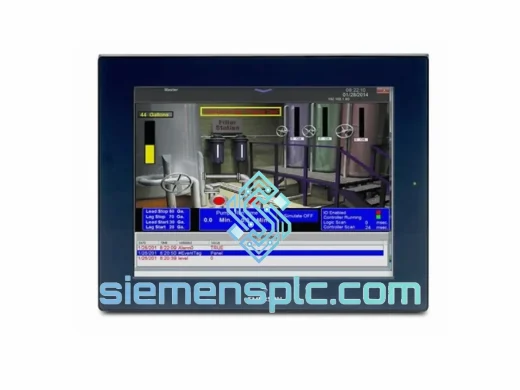
GE IC754VBI10MTD-BB HMI Operator Interface – QuickPanel View
PACSystems
Origin US
HMI Operator Interface