FOXBORO
RFQ Ready
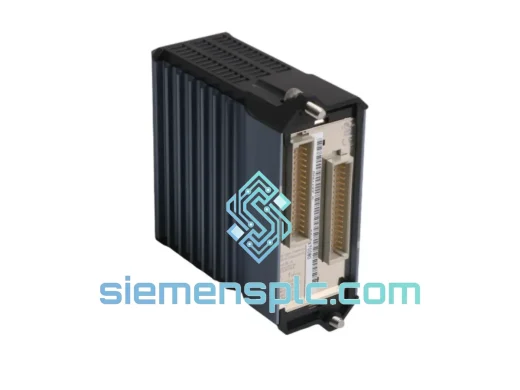
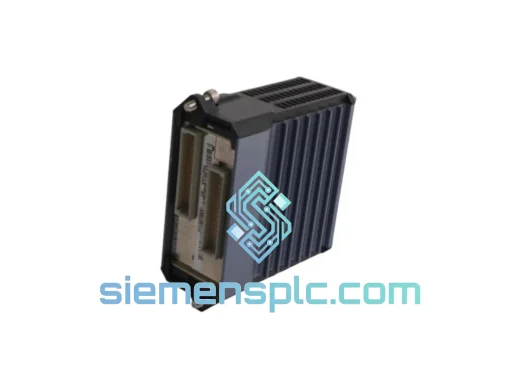
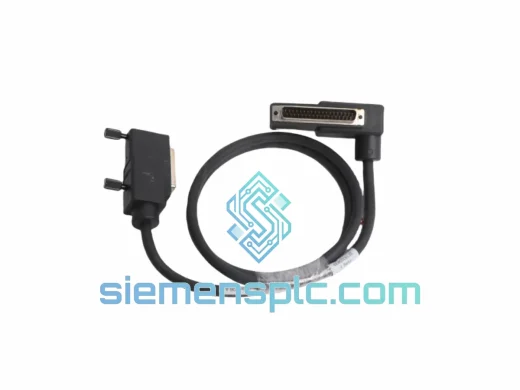
FOXBORO RH916DB DCS Termination Cable – I/A Series
I/A Series
Origin FR
DCS Termination Cable
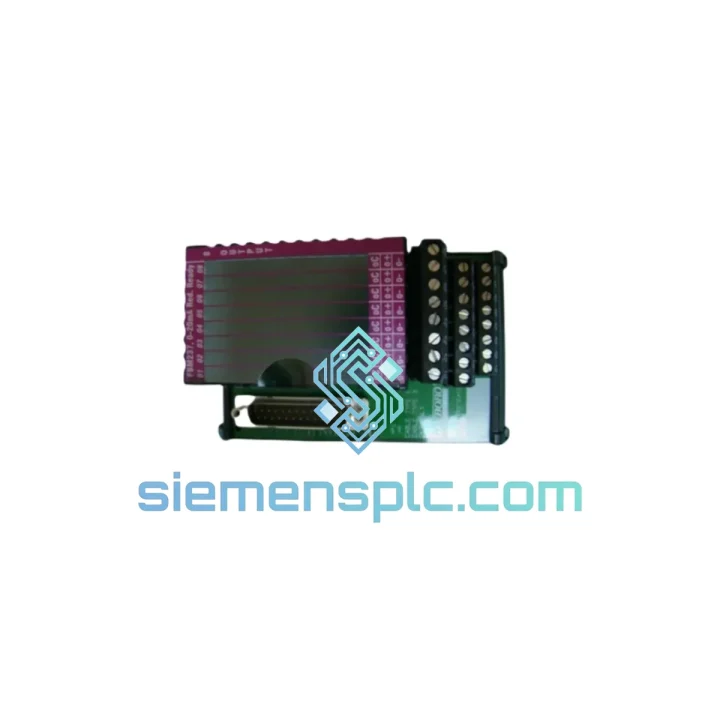
Request verified availability, condition, replacement risk review, packing options and courier lead time for P0916ACOB.
Click Request Quote and the part number is inserted into the inquiry form automatically.
Core fields for model confirmation and RFQ routing. Detailed product narrative remains below.
Within a distributed control system, the analog input module is the first point of contact between the physical process and the control logic. The Foxboro P0916ACOB occupies this position in the I/A Series architecture as a dedicated thermocouple input module — a device whose function is not general-purpose signal conditioning, but the precise acquisition of millivolt-range thermocouple electromotive force (EMF) signals under the demanding conditions of continuous industrial operation.
The I/A Series platform was architected around a modular, distributed field control philosophy. Field Control Processors (FCPs) handle loop execution, while dedicated I/O modules like the P0916ACOB handle signal-layer tasks: linearization, cold junction compensation, analog-to-digital conversion, and isolation. This separation of concerns is not incidental — it is a deliberate design choice that allows each layer to be optimized independently. The P0916ACOB is the product of that optimization applied to thermocouple measurement.
Thermocouple signals present specific engineering challenges that distinguish them from standard 4–20 mA process signals. The output voltage is in the microvolt-to-millivolt range, varies nonlinearly with temperature according to NIST ITS-90 reference tables, and is subject to cold junction error at the point where the thermocouple wire terminates at the module’s terminal block. The P0916ACOB addresses each of these challenges through hardware design: a high-resolution ADC front-end capable of resolving low-level TC signals, onboard linearization referenced to standard TC type curves, and automatic cold junction compensation (CJC) using an integrated reference junction temperature sensor. The result is a calibrated temperature value delivered to the FCP over the I/A Series fieldbus backplane — not a raw millivolt reading requiring further processing in the control strategy.
📩 Real-time Stock & RFQ: [email protected] | WhatsApp: +86 18359268345
| Parameter | Specification |
|---|---|
| Part Number | P0916ACOB |
| Manufacturer | Foxboro (Schneider Electric) |
| Series | I/A Series Distributed Control System |
| Module Function | Thermocouple Analog Input |
| Input Signal Type | Thermocouple (millivolt EMF) |
| Supported TC Types | Per Foxboro I/A Series engineering specification (J, K, T, E, R, S, B typical) |
| Cold Junction Compensation | Automatic, internal reference junction sensor |
| Linearization | Hardware/firmware-based, NIST ITS-90 referenced |
| Channel Isolation | Channel-to-channel and channel-to-backplane galvanic isolation |
| Backplane Interface | I/A Series fieldbus (proprietary Foxboro backplane protocol) |
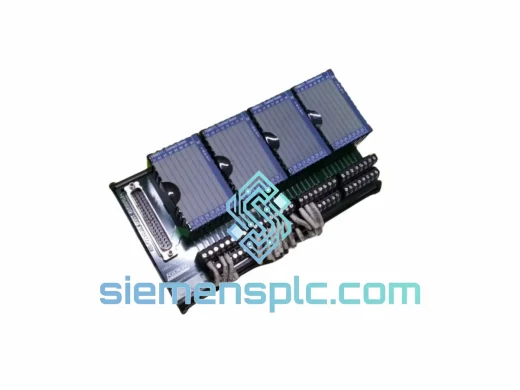
| Mounting | I/A Series baseplate / carrier assembly (P0914 series compatible) |
| Operating Temperature | 0°C to 60°C (industrial enclosure rated) |
| Power Supply | Derived from I/A Series baseplate bus |
| Diagnostics | Open-circuit detection, out-of-range flagging, CJC fault reporting |
| Compliance | Foxboro I/A Series system standards; CE marked |
| Warranty | 12 months from date of shipment |
The P0916ACOB’s hardware architecture reflects the constraints of thermocouple measurement in an industrial DCS environment. Several design decisions are worth examining from an engineering standpoint.
Differential Input Front-End and Common-Mode Rejection: Thermocouple circuits in plant environments are susceptible to common-mode noise induced by nearby power cables, variable-frequency drives, and ground potential differences across long field cable runs. The P0916ACOB employs a differential input topology with high common-mode rejection ratio (CMRR), ensuring that noise voltages appearing equally on both TC leads are attenuated before reaching the ADC. This is not a software filter — it is a hardware characteristic of the input amplifier stage that operates before digitization.
Galvanic Isolation Architecture: Each input channel is galvanically isolated from the backplane bus. This isolation serves two functions: it prevents ground loops — a chronic source of measurement error in multi-point thermocouple installations — and it protects the backplane electronics from field-side transient overvoltages. The isolation barrier is implemented using optocoupler or transformer-based technology, providing a defined withstand voltage between field and system sides. In practice, this means a fault on one TC channel does not propagate to adjacent channels or to the FCP.
Cold Junction Compensation Accuracy: The accuracy of any thermocouple measurement is bounded by the accuracy of the cold junction compensation. The P0916ACOB integrates a precision temperature sensor at the terminal block reference junction. This sensor’s output is used in real time to correct the TC EMF reading, compensating for ambient temperature variation at the module’s installation location. The CJC sensor is calibrated as part of the module’s factory calibration process, and its contribution to overall measurement uncertainty is accounted for in the module’s published accuracy specification.
EMC Design Compliance: The module’s PCB layout and shielding are designed to meet industrial EMC standards. Filtering on the input lines suppresses high-frequency interference without introducing phase lag that would degrade the dynamic response of fast temperature loops. The module housing provides additional shielding continuity when installed in a properly grounded I/A Series enclosure.
Open-Circuit Detection: A broken thermocouple wire is a common field failure mode. The P0916ACOB implements a hardware open-circuit detection mechanism — typically a small bias current injected into the TC circuit — that drives the input to a defined out-of-range state when continuity is lost. This state is reported to the FCP as a diagnostic flag, allowing the control strategy to initiate a safe fallback action rather than acting on a frozen or erroneous temperature value.
Every P0916ACOB unit offered through siemensplc.com is sourced from verified supply channels — authorized distributors, documented surplus inventories, or decommissioned plant assets with traceable chain of custody. Foxboro modules are not interchangeable with counterfeit or rebranded alternatives; the I/A Series system performs module identity verification at startup, and non-genuine modules will fail to initialize on the backplane. Our sourcing process is structured to ensure that only genuine Foxboro hardware reaches our customers.
Prior to shipment, each module undergoes a structured inspection protocol: visual examination of PCB, connectors, and label integrity; verification of firmware revision markings against the ordered specification; and where test equipment permits, power-on functional verification. Modules that do not pass inspection are not offered for sale.
Shipments originate from Xiamen, China — a major logistics hub with direct access to DHL Express, FedEx International Priority, and UPS Worldwide Express services. Transit times to major industrial centers in Europe, the Middle East, Southeast Asia, and the Americas typically range from 3 to 7 business days via express courier. All shipments include full export documentation: commercial invoice, packing list, and certificate of origin where required. For customers in regions with specific import requirements, our logistics team can coordinate additional documentation including FORM E (ASEAN), EUR.1, or other preferential origin certificates as applicable.
A 12-month warranty is provided on all units from the date of shipment. Dead-on-arrival claims are resolved with priority — replacement shipment or full refund within 5 business days of confirmed DOA status. Post-delivery technical support is available from our engineering team for installation and commissioning queries.
Email: [email protected]
WhatsApp: +86 18359268345
Web: siemensplc.com
Location: Xiamen, China
© 2026 siemensplc.com. All rights reserved.
We check the full part number, brand, series and visible nameplate information before quotation.
Sales confirms stock path, condition option, quantity and realistic lead time for export dispatch.
DHL, FedEx, UPS or buyer courier arrangements can be reviewed with packing requirements.
Similar brand or category products for fast comparison and multi-item RFQ lists.