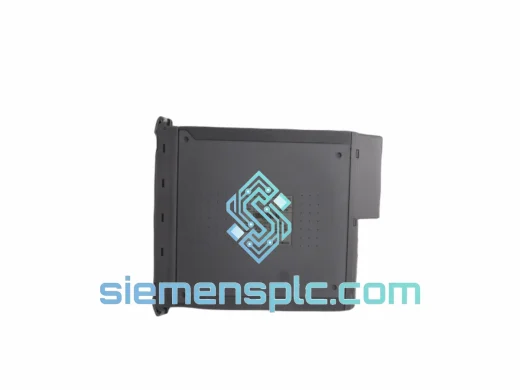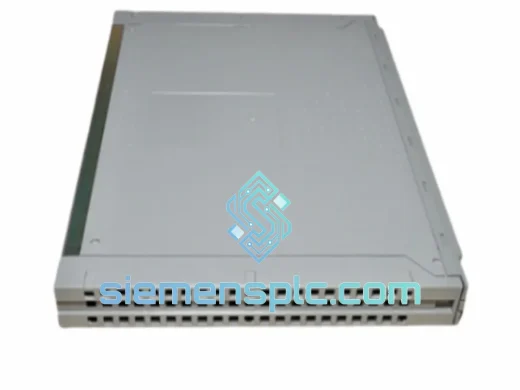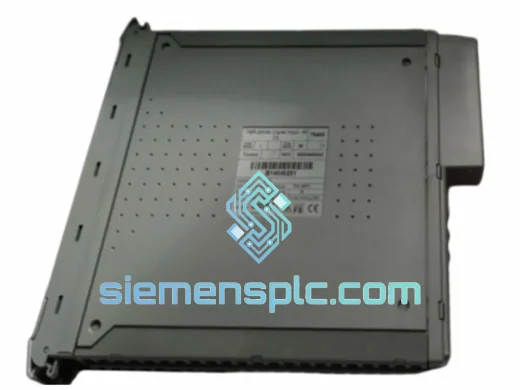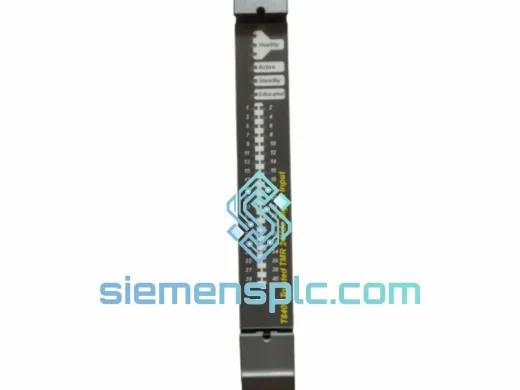
ICS TRIPLEX
RFQ Ready
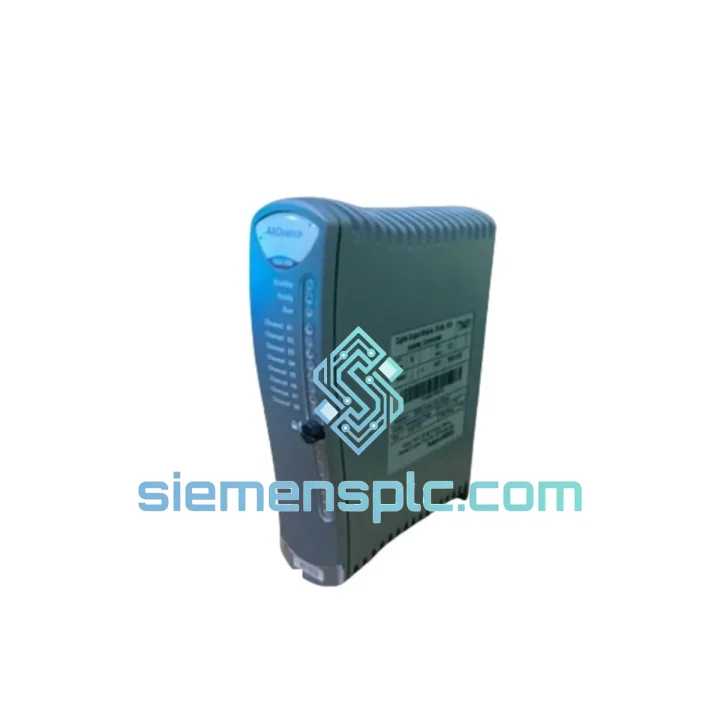
ICS Triplex T8461CX Digital Output Module
Trusted
Origin GB
Digital Output Module
Request verified availability, condition, replacement risk review, packing options and courier lead time for T9833.
Click Request Quote and the part number is inserted into the inquiry form automatically.
Core fields for model confirmation and RFQ routing. Detailed product narrative remains below.
The ICS Triplex T9833 is a 16-channel, Triple Modular Redundant (TMR) analogue input module engineered for deployment within the Trusted™ TMR Safety System platform. Its primary function is the acquisition of 4–20 mA field signals from process transmitters — pressure, temperature, flow, and level — and the delivery of those signals to the TMR controller via a fault-tolerant, voted data path. In a Safety Instrumented System (SIS), the analogue input layer is the first point of contact between the physical process and the logic solver. Any degradation at this layer — whether from channel failure, signal drift, or electrical interference — directly compromises the integrity of the Safety Instrumented Function (SIF). The T9833 addresses this by implementing three independent, galvanically isolated signal acquisition paths per channel, with 2-out-of-3 (2oo3) voting logic executed at the module level before data is passed to the controller backplane.
Deployed across oil & gas platforms, petrochemical reactors, LNG terminals, and power generation facilities, the T9833 operates in environments where IEC 61508 SIL 3 compliance is a baseline requirement, not an option. Its architecture is not a software overlay on a standard I/O module — it is a hardware-native TMR design where redundancy is embedded at the silicon and circuit board level. This distinction is critical for functional safety engineers performing FMEA and SIL verification calculations: the T9833’s hardware fault tolerance (HFT) of 2 means that two simultaneous random hardware failures within a single module do not result in a dangerous undetected failure at the SIF output.
Real-time Stock & RFQ: [email protected] | WhatsApp: +86 18359268345
| Parameter | Specification |
|---|---|
| Part Number | T9833 |
| Manufacturer | ICS Triplex (Rockwell Automation) |
| Platform | Trusted™ TMR Safety System |
| Module Classification | Analogue Input (TA – Trusted Analogue) |
| Channel Count | 16 channels per module |
| Redundancy Architecture | Triple Modular Redundant (TMR), 2oo3 voting |
| Hardware Fault Tolerance (HFT) | 2 (per IEC 61508) |
| Signal Input Type | 4–20 mA current loop |
| HART Support | Compatible with HART-enabled field transmitters |
| Isolation Type | Channel-to-channel galvanic isolation |
| Input Impedance | ≤ 250 Ω (typical, loop-powered configuration) |
| Resolution | 12-bit ADC per channel leg (3 legs per channel) |
| Accuracy | ±0.1% of full scale (typical, at 25°C) |
| Operating Temperature | 0°C to +60°C |
| Storage Temperature | -40°C to +85°C |
| Relative Humidity | 5% to 95% non-condensing |
| Power Consumption | Supplied via Trusted TMR chassis backplane |
| Form Factor | Rack-mount, Trusted TMR chassis compatible |
| Safety Certification | IEC 61508 SIL 3, IEC 61511 |
| Diagnostic Coverage | > 99% (DC, per IEC 61508 FMEA) |
| Hot-Swap | Supported (live replacement under TMR operation) |
| Weight | Approx. 400 g |
| Warranty | 12 months from date of shipment |
The T9833’s internal architecture is structured around three independent analogue front-end (AFE) circuits, each serving one leg of the TMR triad. Each AFE consists of a dedicated signal conditioning stage, a 12-bit successive approximation register (SAR) ADC, and an optocoupler-based isolation barrier. The three digitized values from each channel’s three legs are passed to a dedicated voting logic ASIC, which implements 2oo3 majority voting in hardware — not firmware — before the result is written to the backplane data bus. This hardware-level voting eliminates the latency and non-determinism that would be introduced by software-based voting in the controller CPU.
Galvanic Isolation Architecture: Each of the 16 channels is galvanically isolated from every other channel and from the module’s internal logic supply. Isolation is achieved via optocoupler barriers rated for ≥ 500 V DC working isolation voltage. This prevents ground potential differences between field instruments — common in large industrial plants with distributed earthing — from creating common-mode interference that would corrupt ADC readings. In environments with variable-frequency drives (VFDs), high-power switchgear, or welding equipment operating nearby, this isolation is not a convenience feature; it is a functional requirement for signal accuracy.
EMC Design: The T9833 PCB layout follows IEC 61000-4 series EMC design rules. Signal traces are routed with controlled impedance, and the analogue signal paths are physically separated from digital logic traces by a ground plane layer. Ferrite bead filters are placed at the module’s field terminal interface to suppress conducted RF interference from cable runs. The module housing provides shielding continuity with the Trusted TMR chassis, which is itself designed to meet IEC 61000-6-2 (industrial immunity) and IEC 61000-6-4 (industrial emissions) standards.
Diagnostic Self-Test Engine: An embedded microcontroller within the T9833 executes a continuous background diagnostic cycle that checks ADC linearity, reference voltage stability, isolation barrier integrity, and backplane communication health. Detected faults are classified by severity and reported to the Trusted controller via the backplane diagnostic channel, where they are logged with timestamp and channel address. This diagnostic transparency allows maintenance engineers to identify degrading channels before they reach a failure state, supporting a predictive maintenance model rather than a reactive one.
Backplane Interface: The T9833 communicates with the Trusted TMR controller via the proprietary ICS Triplex TMR backplane bus, which operates with deterministic cycle times. The backplane protocol includes CRC error checking on all data frames, ensuring that a corrupted data transfer is detected and flagged rather than silently passed to the logic solver. This end-to-end data integrity mechanism is a key contributor to the module’s high diagnostic coverage figure.
Every ICS Triplex T9833 unit supplied by siemensplc.com is sourced through verified industrial supply channels with full traceability documentation. Our procurement process excludes grey-market and unverified surplus sources. Each unit undergoes a structured incoming inspection protocol covering physical condition assessment, label and revision marking authentication, connector pin integrity verification, and where test infrastructure permits, powered functional diagnostics with channel-level signal injection testing.
Anti-counterfeit screening is applied to all safety-critical modules. This includes comparison of PCB revision markings, component date codes, and housing mold characteristics against reference documentation. Units that do not pass authentication are quarantined and not offered for sale.
Logistics operations are based in Xiamen, China — a major export hub with direct access to international freight carriers including DHL Express, FedEx International Priority, and UPS Worldwide Expedited. Standard export documentation — commercial invoice, packing list, and certificate of origin — is prepared for all shipments. For customers requiring additional documentation such as inspection certificates or material test reports, these are prepared upon request prior to shipment. Typical dispatch time for in-stock units is 1–3 business days after purchase order confirmation. Air freight transit times to major industrial hubs: Europe 3–5 days, North America 4–6 days, Middle East 3–4 days, Southeast Asia 2–3 days. All shipments are fully insured and tracked from dispatch to delivery confirmation.
Email: [email protected]
WhatsApp: +86 18359268345
Web: siemensplc.com
Location: Xiamen, China
© 2026 siemensplc.com. All rights reserved.
We check the full part number, brand, series and visible nameplate information before quotation.
Sales confirms stock path, condition option, quantity and realistic lead time for export dispatch.
DHL, FedEx, UPS or buyer courier arrangements can be reviewed with packing requirements.
Similar brand or category products for fast comparison and multi-item RFQ lists.