MKS Instruments
RFQ Ready
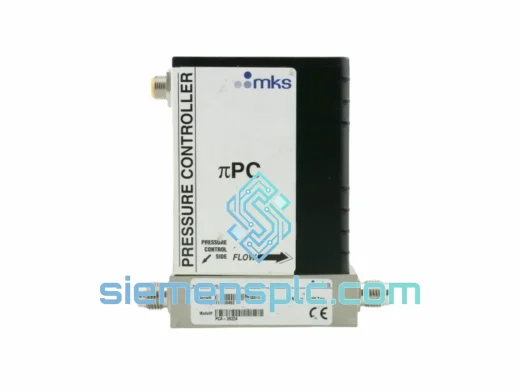
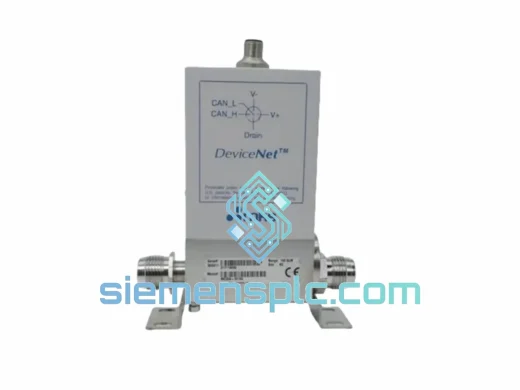
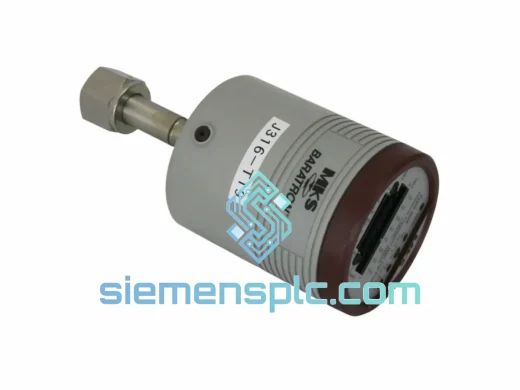
MKS 624A12TBC Capacitance Manometer
4A12TBC Baratron 600 Series
Origin US
Capacitance Manometer
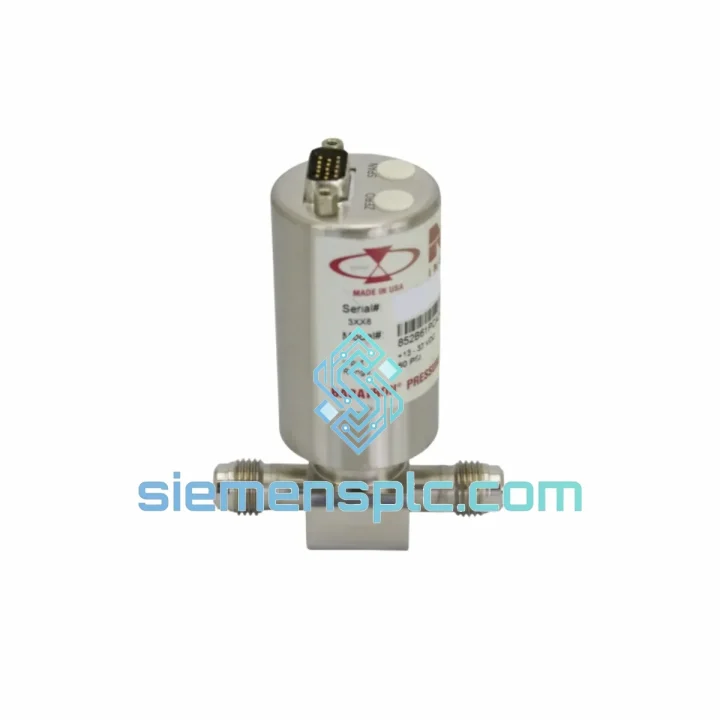
Request verified availability, condition, replacement risk review, packing options and courier lead time for 1350-01083.
Click Request Quote and the part number is inserted into the inquiry form automatically.
Core fields for model confirmation and RFQ routing. Detailed product narrative remains below.
Pressure fault on your CVD or etch tool. The Baratron is gone — zero drift, dead output, or a reading that’s lying to your process controller. Your recipe is locked out, your wafers are on hold, and every hour the chamber sits idle is burning through your OEE budget. You don’t need a catalog quote with a 6-week lead time. You need a verified, export-ready 1350-01083 moving toward you today.
We carry the MKS Instruments 1350-01083 Baratron capacitance manometer in stock at our Xiamen facility — inspected, documented, and ready for DHL Express or FedEx International Priority pickup within 24 hours of order confirmation. This is a direct-supply operation backed by ten years of field-support experience across semiconductor, solar, and industrial vacuum applications. No brokers. No gray-market risk. One call closes the gap between your downtime and your next production run.
URGENT REQUIREMENT? Contact: [email protected] | WhatsApp: +86 18359268345
| Parameter | Specification |
|---|---|
| Manufacturer | MKS Instruments |
| Part Number | 1350-01083 |
| Series | Baratron® Capacitance Manometer |
| Measurement Principle | Capacitance — gas-independent, temperature-compensated |
| Wetted Material | Inconel / Hastelloy diaphragm (welded, no elastomers) |
| Compatible OEM Cross-Refs | 0100-01692 (AMAT) / 0100-20458 / 852B61PCA2GC / M9313-00126 / 960560-G4B |
| Typical Platform Use | Applied Materials, Lam Research, Tokyo Electron — CVD, PVD, ALD, Etch |
| Signal Conditioner Pairing | MKS PDR-C-2C / 670 Series |
| Excitation Voltage | ±15 VDC |
| Weight | 2,600 g |
| Country of Origin | USA |
| Stock Status | ✔ Ready to Ship — Xiamen, China |
| Export Lead Time | 24–48 hrs post order confirmation |
| Condition | New / Tested — confirm with sales team at order |
The 1350-01083 is a workhorse Baratron configuration deployed across multiple generations of OEM vacuum platforms. When you’re standing in front of a failed unit with a shift supervisor breathing down your neck, here’s what actually matters — no fluff, no manual-quoting.
Fault Pattern 1 — Zero Drift Beyond 0.5% FS:
Diaphragm fatigue is the primary suspect, especially in chambers running corrosive halogen chemistry (NF₃, HCl, F₂-based precursors). A stable but shifted zero can sometimes be recovered by recalibration at the signal conditioner — but treat it as a borrowed window, not a fix. Order the replacement while you recalibrate. If the drift is progressive across shifts, the diaphragm is fatiguing and will fail completely without warning.
Fault Pattern 2 — Noisy or Oscillating Output:
Before you pull the transducer, swap the cable. Shielding failures on long cable runs between the Baratron and the PDR-C-2C or 670 conditioner produce noise signatures that are indistinguishable from a failing sensor. Check the cable first — it’s a 10-minute swap versus a 2-hour transducer replacement. If the noise persists after a known-good cable, the sensing element is compromised.
Fault Pattern 3 — Flat-Line Output (0 VDC or Full-Scale Lock):
Verify ±15 VDC excitation at the transducer connector before condemning the unit. A failed power supply rail in the signal conditioner will produce a dead or pegged output that looks exactly like a ruptured diaphragm. Measure at the connector, not at the conditioner output. If excitation is confirmed good, the diaphragm has failed — replace immediately.
Fault Pattern 4 — Sluggish or Lagging Response:
Particulate contamination on the sensing diaphragm. This is common in etch chambers after a process excursion or a failed endpoint. Do not attempt to clean the sensing cavity — you will damage the diaphragm surface and introduce calibration errors that are worse than the original fault. Replace the unit.
Replacement Procedure — Field Checklist:
Semiconductor process chambers are not forgiving environments. Temperature swings, corrosive chemistry, mechanical vibration from turbomolecular and roughing pumps, and continuous thermal cycling across thousands of process runs — most sensors degrade within months under these conditions. The Baratron 1350-01083 is engineered specifically for this operating reality.
The sensing element is fully isolated from the process gas. The only wetted surface is the Inconel or Hastelloy diaphragm — welded, not bonded, with no elastomers in the sensing cavity. This matters when your process chemistry includes NF₃ chamber cleans, HCl-based etch, or aggressive fluorine-containing ALD precursors that destroy O-ring-sealed sensors in weeks. The Baratron sensing cavity will outlast the process chemistry that kills everything else in the gas path.
Thermal compensation is integrated into the transducer body. Heated Baratron variants maintain the sensing element above the condensation point of low-vapor-pressure precursors — critical for ALD and CVD applications where precursor condensation on a cold sensor produces catastrophic zero errors and potential diaphragm damage. The 1350-01083 configuration includes compensation circuitry that holds output drift within specification across the full thermal range of the tool environment, not just at a single calibration temperature.
Vibration immunity is inherent to the capacitance sensing geometry. Unlike piezoelectric pressure sensors that require isolation mounts to avoid false readings from pump vibration and facility mechanical noise, the Baratron’s capacitance design is insensitive to the vibration frequencies generated by turbomolecular pumps, dry roughing pumps, and HVAC systems. Mount it per MKS installation guidelines and it reads accurately through a pump swap, a forklift passing the tool bay, or a minor seismic event that would send a piezo sensor into alarm and trigger a false process abort.
Long-term calibration stability is where the Baratron justifies its cost over the service life of the tool. In stable process environments with clean chemistry, 12–24 month calibration intervals are achievable. In aggressive etch chambers, 6-month intervals are more realistic — but the sensor drifts predictably and visibly, giving you warning before it corrupts your process data. It does not fail silently.
Our stocking facility is in Xiamen, Fujian Province — a primary export hub with direct air freight access through Xiamen Gaoqi International Airport and sea freight through Xiamen Port. We have been moving industrial automation and process control components to production facilities across Asia, Europe, the Middle East, and the Americas for over a decade.
Export Process — Step by Step:
Production stopped? Skip the web form queue.
Email: [email protected]
WhatsApp: +86 18359268345
Web: siemensplc.com
© 2026 siemensplc.com. All rights reserved.
We check the full part number, brand, series and visible nameplate information before quotation.
Sales confirms stock path, condition option, quantity and realistic lead time for export dispatch.
DHL, FedEx, UPS or buyer courier arrangements can be reviewed with packing requirements.
Similar brand or category products for fast comparison and multi-item RFQ lists.