Honeywell
RFQ Ready
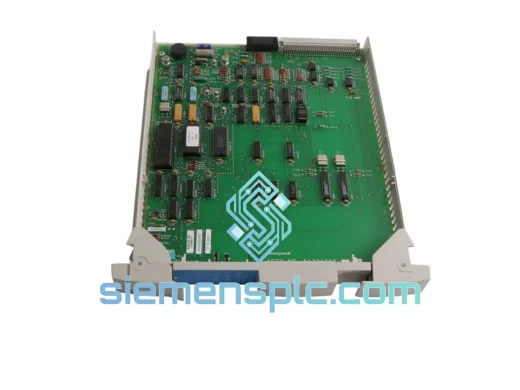
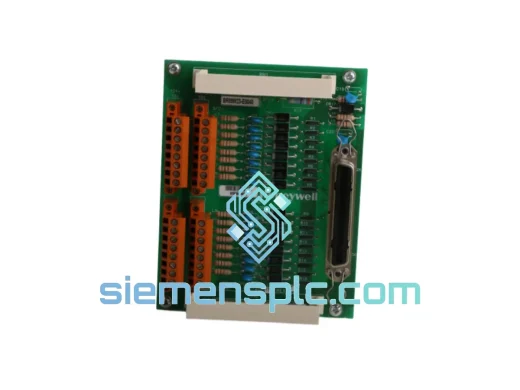
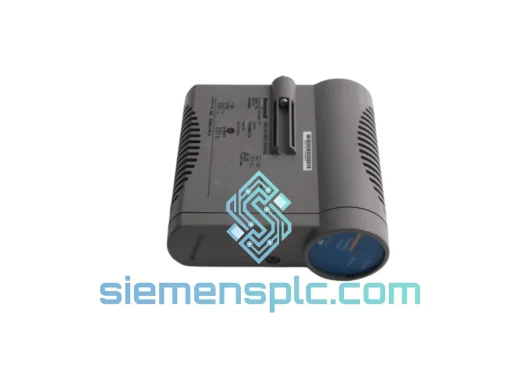
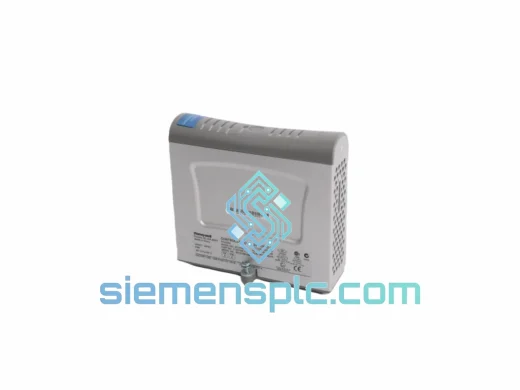
Honeywell SC-PCMX01 51307195-175 DCS Terminal Unit
Experion PKS
Origin US
DCS Terminal Unit
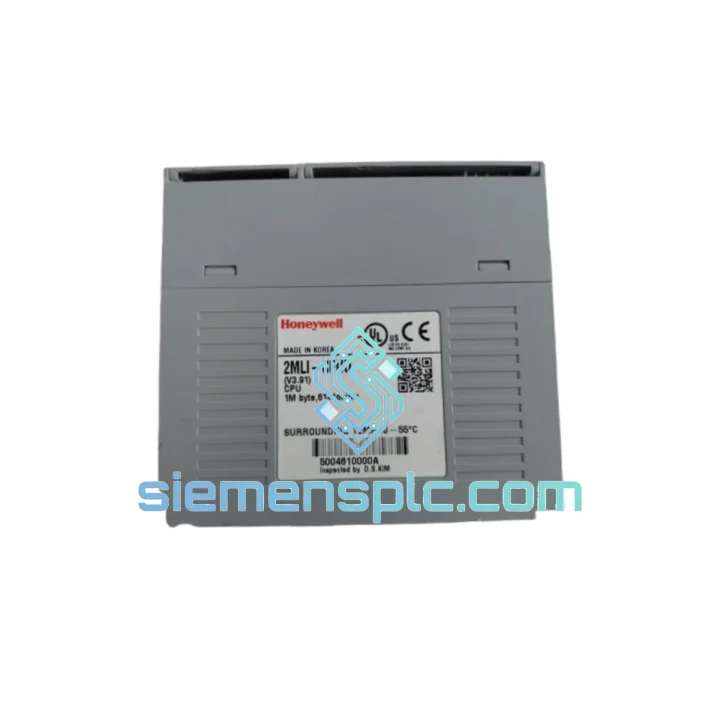
Request verified availability, condition, replacement risk review, packing options and courier lead time for 2MLI-CPUU.
Click Request Quote and the part number is inserted into the inquiry form automatically.
Core fields for model confirmation and RFQ routing. Detailed product narrative remains below.
The Honeywell 2MLI-CPUU is the central processing unit of the Honeywell Safety Manager (SM) platform — a dedicated safety instrumented system (SIS) controller engineered to IEC 61508 SIL 3 requirements. Within a safety control loop, this module occupies the deterministic execution layer: it receives validated field inputs from I/O modules over the internal backplane bus, executes the safety application program in a fixed scan cycle, and drives output modules with a guaranteed response latency. Unlike general-purpose PLCs that share processing bandwidth across multiple task classes, the 2MLI-CPUU is architected exclusively for safety-critical logic execution, with hardware-enforced separation between the safety partition and any non-safety communication tasks.
The module operates within the Safety Manager rack alongside redundant power supplies and I/O modules, communicating over Honeywell’s proprietary high-speed backplane. Its dual-CPU redundancy architecture — when paired with a second 2MLI-CPUU — implements a 1oo2D (one-out-of-two with diagnostics) voting logic at the hardware level, enabling continuous cross-comparison of execution results between the two processors. Any divergence triggers a controlled safe-state transition without operator intervention. This architecture is particularly suited to process industries where spurious trips carry significant economic consequences and where undetected dangerous failures must be bounded to a probability density below 10⁻⁷ per hour.
Real-time Stock & RFQ: [email protected] | WhatsApp: +86 18359268345
| Parameter | Specification |
|---|---|
| Part Number / SKU | 2MLI-CPUU |
| Manufacturer | Honeywell Process Solutions |
| Platform | Safety Manager (SM) Series |
| Safety Integrity Level | SIL 3 (IEC 61508) |
| CPU Architecture | Dual-redundant 1oo2D voting processor |
| Backplane Interface | Honeywell proprietary high-speed serial backplane bus |
| Application Memory | Non-volatile flash; retains program on power loss |
| Scan Cycle | Deterministic; configurable via Safety Builder engineering tool |
| Communication Ports | Ethernet (FTE — Fault Tolerant Ethernet) for supervisory integration |
| Operating Temperature | 0 °C to +60 °C |
| Storage Temperature | −40 °C to +85 °C |
| Relative Humidity | 5 % to 95 % non-condensing |
| Supply Voltage | 24 V DC (supplied via rack backplane from redundant PSU) |
| Power Consumption | ≤ 15 W (typical under full I/O load) |
| EMC Compliance | IEC 61000-4 series (ESD, EFT, surge, conducted/radiated immunity) |
| Form Factor | Single-width rack-mount module; front-panel LED diagnostics |
| Country of Origin | United States |
| Condition | Genuine OEM — New / Surplus New (specify at inquiry) |
| Warranty | 12 months from date of shipment |
Backplane Bus Processing and Determinism: The 2MLI-CPUU interfaces with the Safety Manager rack via a dedicated backplane bus that operates independently of any external network traffic. The bus arbitration logic ensures that I/O scan data is transferred to the CPU within a bounded latency window on every scan cycle. This hard real-time characteristic is enforced at the silicon level — the bus controller does not yield to lower-priority tasks, which eliminates jitter accumulation across extended operating periods. In high-demand safety applications such as emergency shutdown (ESD) systems, this determinism is not a software feature but a hardware constraint baked into the module’s bus interface controller.
1oo2D Redundancy Arbitration Logic: When two 2MLI-CPUU modules are installed in a redundant configuration, the arbitration logic continuously compares the output vectors of both processors on a per-scan-cycle basis. The comparison is performed in dedicated comparison hardware, not in the application software layer, which means the diagnostic coverage of the cross-comparison is independent of the application program’s correctness. If the output vectors diverge beyond a configurable tolerance window, the arbitration logic classifies the fault, logs a diagnostic event, and initiates a controlled safe-state output. The primary CPU designation is managed by the arbitration logic based on health status, with bumpless switchover to the secondary CPU if the primary fails a self-test.
EMC Design and Isolation Architecture: The module’s PCB layout implements multi-layer ground plane separation between the backplane interface circuitry and the CPU core logic. Transient suppression components are placed at the backplane connector interface to clamp EFT (electrical fast transient) bursts per IEC 61000-4-4 before they reach the processor bus. The power input stage includes LC filtering to attenuate conducted emissions from the rack power supply. These design measures allow the 2MLI-CPUU to maintain correct operation in environments with significant electromagnetic interference — common in substations, compressor stations, and heavy industrial facilities where variable-frequency drives and high-current switching equipment operate in proximity to control panels.
Non-Volatile Program Retention: The application program and configuration data are stored in on-board flash memory with error-correcting code (ECC) protection. On power restoration, the CPU performs a memory integrity check before resuming execution, preventing corrupted program images from being loaded into the execution engine. This is a hardware-enforced safeguard, not a software watchdog, which means it operates even if the operating system layer has not yet initialized.
Every Honeywell 2MLI-CPUU unit supplied by siemensplc.com is sourced through verified industrial automation channels with documented chain of custody. Prior to dispatch, each module undergoes a structured inspection protocol: physical integrity verification of connectors, PCB, and OEM labeling; power-on functional check where test infrastructure permits; and ESD-safe packaging in anti-static bags with foam-cushioned outer cartons. A traceable inspection record accompanies each shipment.
Logistics operations are based in Xiamen, China — a major export hub with direct access to international express carriers including DHL, FedEx, and UPS. Standard export documentation is prepared for every shipment: commercial invoice, packing list, and certificate of origin. HS Code 8537.10 applies to this product category for customs classification. Typical dispatch lead time from confirmed stock is 3–5 business days. For time-critical plant maintenance scenarios, expedited air freight options with next-flight-out routing are available on request. The 12-month warranty covers manufacturing defects and functional failures under normal operating conditions, with replacement or credit resolution processed within agreed service timelines.
Email: [email protected]
WhatsApp: +86 18359268345
Web: siemensplc.com
Location: Xiamen, China
© 2026 siemensplc.com. All rights reserved.
We check the full part number, brand, series and visible nameplate information before quotation.
Sales confirms stock path, condition option, quantity and realistic lead time for export dispatch.
DHL, FedEx, UPS or buyer courier arrangements can be reviewed with packing requirements.
Similar brand or category products for fast comparison and multi-item RFQ lists.