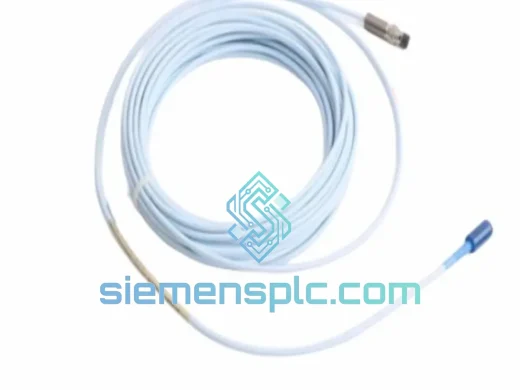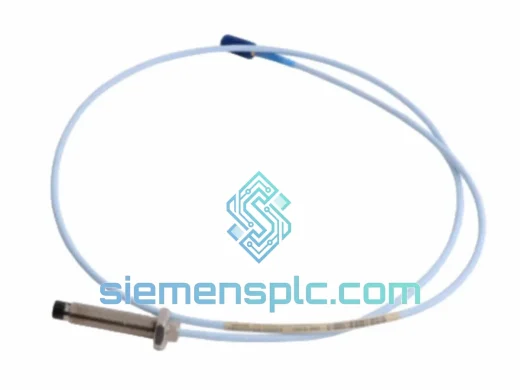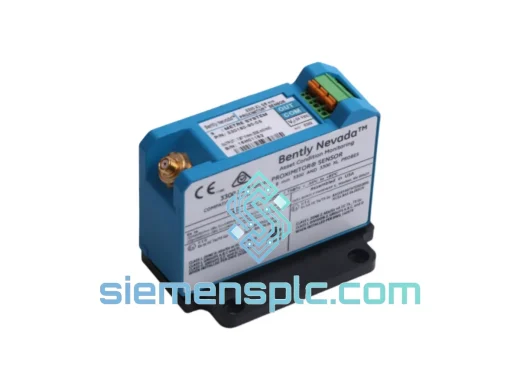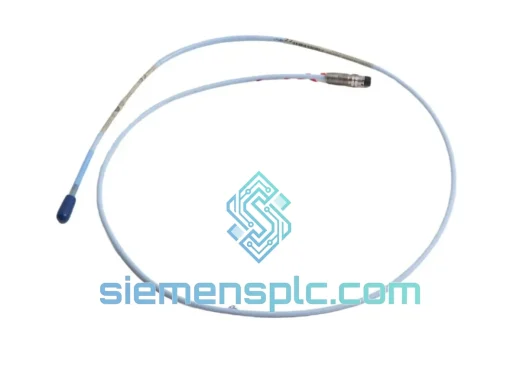
Bently Nevada
RFQ Ready
Bently Nevada 330196-05-30-10-00 Proximity Probe – 3300 XL ETR
3301
Origin US
Proximity Probe
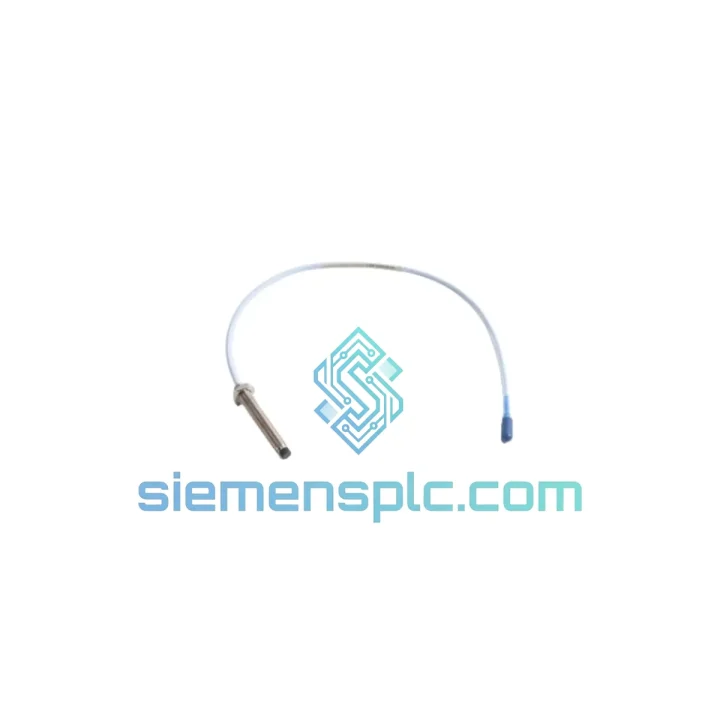
Request verified availability, condition, replacement risk review, packing options and courier lead time for 330103-00-12-10-02-05.
Click Request Quote and the part number is inserted into the inquiry form automatically.
Core fields for model confirmation and RFQ routing. Detailed product narrative remains below.
A tripped compressor train. A 3500 rack locked in Not OK. Your operations manager on the phone. You’ve already traced the fault to the proximity probe — the Bently Nevada 330103-00-12-10-02-05 — and now the only question is how fast you can get a verified replacement on-site. Authorized distributor lead time: 6 to 14 weeks. Our Xiamen warehouse lead time: same-day dispatch, 2–5 business days to your door.
We stock this part because rotating machinery doesn’t schedule its failures around procurement cycles. The 330103-00-12-10-02-05 is a high-attrition item on gas turbines, centrifugal compressors, and steam turbine trains worldwide. We know the failure modes, we know the replacement pitfalls, and we keep physical inventory on the shelf so your plant doesn’t stay down waiting for a box to cross an ocean.
Every unit is 100% original Bently Nevada — no rebranded substitutes, no refurbished cores. Full documentation package available on request: calibration certificate, certificate of origin, and OEM datasheet.
⚡ URGENT REQUIREMENT? Contact: [email protected] | WhatsApp: +86 18359268345
| Part Number | 330103-00-12-10-02-05 ✅ Ready to Ship |
| Manufacturer | Bently Nevada (Baker Hughes) |
| Series | 3300 XL 8mm Proximity Transducer System |
| Sensing Principle | Eddy Current — Non-contact displacement measurement |
| Probe Tip Diameter | 8 mm |
| Integral Cable Length | 1.2 m (3.94 ft) |
| Output Sensitivity | 7.87 V/mm (200 mV/mil) nominal |
| Linear Measurement Range | 0.25 mm – 2.26 mm (10 – 89 mil) |
| Nominal Gap Voltage | −10.4 VDC @ 1.0 mm gap on AISI 4140 steel |
| Supply Voltage | −24 VDC (supplied via Proximitor®) |
| Probe Operating Temp. | −35°C to +121°C |
| Probe Body | 316 Stainless Steel |
| Probe Tip Material | PEEK (Polyether Ether Ketone) |
| Cable Jacket | Fluoropolymer — oil and solvent resistant |
| Connector | MIL-spec coaxial, IP67 when mated |
| Mounting Thread | M10 × 1.0 |
| Compatible Proximitor® | 330180 / 330185 (3300 XL 8mm) |
| Compatible Extension Cable | 330130 / 330180 Series |
| Certifications | CE, ATEX Zone 1/2, FM, CSA, API 670 |
| Country of Origin | USA |
| Stock Location | ✅ Xiamen, China — Available Now |
Ten years of field calls on rotating machinery teaches you one thing: most post-replacement problems are not hardware failures — they are commissioning errors made under time pressure. Work through this sequence before you declare the probe faulty.
Step 1 — Confirm the fault is in the probe, not the cable or Proximitor®. With the machine at rest and the system powered, measure DC voltage at the Proximitor® output terminal. Healthy reading at nominal 1.0 mm gap: −10.4 VDC ± 1 V. Reading at supply rail (−24 VDC) means an open circuit — broken integral cable or probe tip failure. Reading near 0 VDC points to a short in the extension cable or a failed Proximitor® driver stage. Swapping the probe without this check is a coin flip.
Step 2 — Verify system matching before you touch the mounting hardware. The 330103-00-12-10-02-05 is factory-calibrated as a matched set: probe + extension cable + Proximitor® must share the same calibration curve. Mixing a 5mm Proximitor® shifts the scale factor by ~40%. The 3500 rack will show OK status while reporting vibration amplitudes that are completely wrong. Check the Proximitor® label. If it doesn’t say 3300 XL 8mm, stop and source the correct unit.
Step 3 — Gap setting under time pressure. Target: 1.0 mm ± 0.1 mm against AISI 4140 steel. Use a non-magnetic feeler gauge — a steel gauge distorts the eddy current field and gives a false mechanical reading. Confirm electrically: adjust until Proximitor® output reads −10.4 VDC ± 0.5 VDC. Write down the as-left gap voltage. That number is your baseline for the next outage trend comparison.
Step 4 — 3500 Rack Configuration Software check. If this rack previously ran a 7200 series probe, the transducer type, scale factor, and OK limits are wrong. Open the configuration software and set: Transducer Type = 3300 XL 8mm, Scale Factor = 7.87 V/mm, OK Limits = −2 VDC / −18 VDC. Five minutes here prevents hours of unexplained alarm behavior.
Common fault codes after replacement:
The 330103-00-12-10-02-05 is not a laboratory instrument. It is designed to survive the environments that destroy lesser hardware — and the material choices reflect that.
The probe body is 316 stainless steel. In chloride-rich environments — offshore platforms, coastal petrochemical plants, cooling tower proximity — 304 stainless develops pitting corrosion at the mounting thread within 18 months. 316 does not. The PEEK tip maintains dimensional stability and dielectric properties across the full −35°C to +121°C operating range without creep or outgassing. Creep in the tip material shifts the effective gap over time and produces a slow calibration drift that is nearly impossible to distinguish from shaft centerline migration without a documented baseline.
The fluoropolymer cable jacket resists continuous immersion in turbine lube oil, hydraulic fluid, and the aggressive cleaning solvents used during major overhauls. It does not swell, crack, or delaminate under thermal cycling — a failure mode that is common in PVC-jacketed cables used in non-OEM substitutes.
For installations on reciprocating compressors or other high-vibration machinery (sustained levels above 20 g), secure the M10 × 1.0 mounting thread with a medium-strength thread-locking compound — Loctite 243 or equivalent rated for the local temperature. Torque to 2.3 N·m. Probe backing-out under vibration produces a slow positive drift in gap voltage that appears in trend data as shaft centerline migration. It is a documented failure mode and it is entirely preventable.
For ATEX-classified installations: the probe is a passive component. System ATEX certification is held at the Proximitor® level. Confirm that the complete installed system — probe, extension cable, and Proximitor® — carries the appropriate certificate for your gas group (IIA, IIB, or IIC) and temperature class. We supply the relevant certificate documentation on request.
Our warehouse is in Xiamen, Fujian Province — a primary export hub with daily international freight departures via DHL Express, FedEx International Priority, and UPS Worldwide Express. We do not transship through Shanghai or Shenzhen. Direct Xiamen routing eliminates the 24–48 hour delay that transshipment adds to time-critical industrial orders.
Dispatch and transit commitments:
Every shipment includes a commercial invoice, packing list, and certificate of origin. For procurement teams requiring HS code pre-classification (HS 9031.80), MSDS documentation, or import permit support, contact us before placing the order. Plant-down emergency? WhatsApp us directly — we confirm physical stock in real time and can issue an airway bill within hours of payment confirmation.
📧 Email: [email protected]
📱 WhatsApp: +86 18359268345
🌐 Web: siemensplc.com
© 2026 siemensplc.com. All rights reserved.
We check the full part number, brand, series and visible nameplate information before quotation.
Sales confirms stock path, condition option, quantity and realistic lead time for export dispatch.
DHL, FedEx, UPS or buyer courier arrangements can be reviewed with packing requirements.
Similar brand or category products for fast comparison and multi-item RFQ lists.