Bently Nevada
RFQ Ready
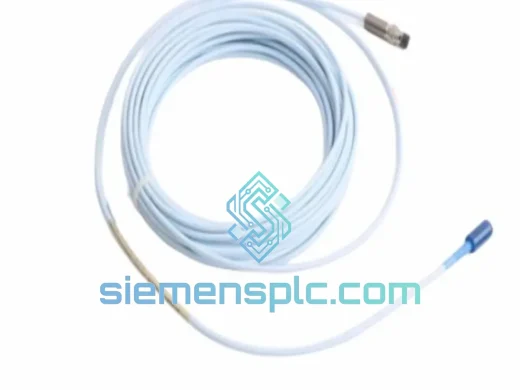
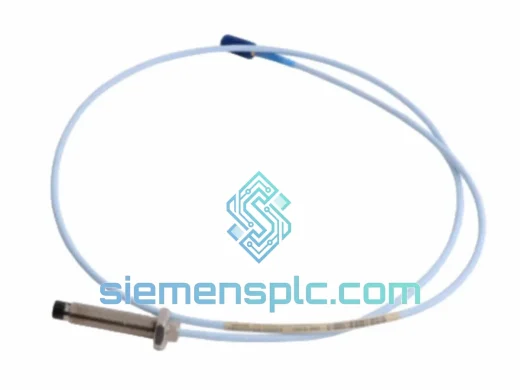
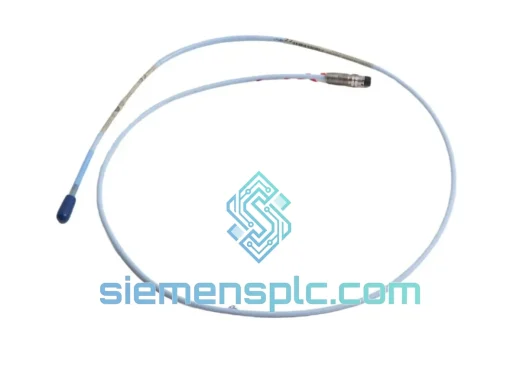
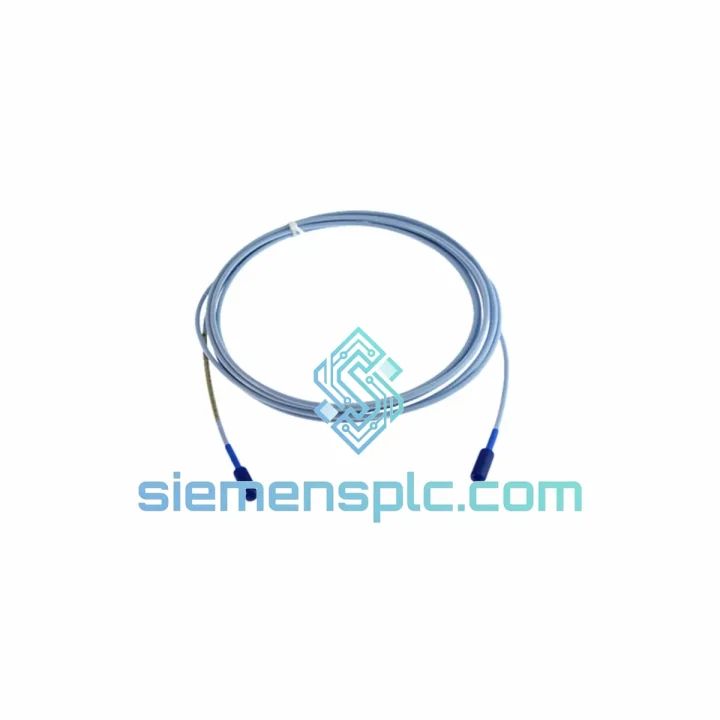
Bently Nevada 330196-05-30-10-00 Proximity Probe – 3300 XL ETR
3301
Origin US
Proximity Probe
Request verified availability, condition, replacement risk review, packing options and courier lead time for 330103-00-13-10-12-05.
Click Request Quote and the part number is inserted into the inquiry form automatically.
Core fields for model confirmation and RFQ routing. Detailed product narrative remains below.
Every hour a critical rotating machine sits idle costs real money — compressor trains, steam turbines, and centrifugal pumps don’t wait for slow supply chains. When your Bently Nevada 330103-00-13-10-12-05 proximity probe fails, the 3300 XL monitoring loop goes blind. Shaft radial vibration data disappears. Your protection system either trips on a spurious alarm or — worse — runs dark while a bearing degrades toward catastrophic failure. Neither outcome is acceptable.
We stock the 330103-00-13-10-12-05 in Xiamen and ship globally via DHL Express and FedEx International Priority. Same-day dispatch on confirmed orders placed before 15:00 CST. This is not a lead-time quote — it is a ready unit.
URGENT REQUIREMENT? Contact: [email protected] | WhatsApp: +86 18359268345
| Parameter | Specification | Status |
|---|---|---|
| Part Number | 330103-00-13-10-12-05 | ✔ Ready to Ship |
| Brand | Bently Nevada (Baker Hughes) | |
| Series | 3300 XL Proximity Transducer System | |
| Probe Tip Diameter | 8 mm | |
| Integral Cable Length | 1.0 m (100 cm) armored | |
| Connector Type | 5-pin radial (3300 XL compatible) | |
| Sensing Range | 0 – 2.54 mm (0 – 100 mil) | |
| Scale Factor | 7.87 V/mm (200 mV/mil) nominal | |
| Operating Temperature | −35 °C to +177 °C (probe body) | |
| Mounting Thread | M10 × 1 metric | |
| Target Material | AISI 4140 or equivalent ferromagnetic alloy | |
| Standard Compliance | API 670, CE, FM, CSA | |
| Origin | USA (Bently Nevada / Baker Hughes) | |
| Condition | New-in-box (NIB) / Tested surplus — stated per quotation | ✔ Ready to Ship |
Fault Scenario 1 — Gap Voltage Out of Range (OK LED off, -24 VDC rail present)
The most common field failure mode. The 3300 XL proximitor expects a gap voltage between −10 VDC and −18 VDC at nominal 1.0 mm gap. If you’re reading outside this window — typically −2 VDC (probe shorted/damaged tip) or −24 VDC (open circuit, broken cable) — the probe itself is the first suspect, not the proximitor. Before condemning the probe, verify the extension cable connector seating and check for moisture ingress at the junction box. A corroded 5-pin connector will mimic a failed probe.
Fault Scenario 2 — High 1× Vibration Spike After Maintenance
If vibration amplitude jumps immediately after a probe swap, the gap is wrong. The 330103-00-13-10-12-05 requires a physical gap of 1.0 mm ± 0.25 mm to operate within the linear range. Use a non-ferrous feeler gauge or a calibrated gap-setting tool. Do not rely on the monitor’s OK status alone — a probe sitting at 0.5 mm gap will still show OK but will clip the waveform at high amplitudes, masking real shaft motion.
Fault Scenario 3 — Intermittent Signal / Noise Floor Elevated
Check the armored cable for kink damage, especially at the probe body exit and at any conduit entry points. The 330103 series uses a coaxial construction inside the armor — a single crush point introduces impedance discontinuity that appears as broadband noise on the spectrum. If the cable passes visual inspection, perform a static impedance check: disconnect from the proximitor and measure tip-to-shield resistance. Values below 50 Ω indicate internal cable damage.
Replacement Procedure — Step by Step
Configuration Note — Proximitor Matching
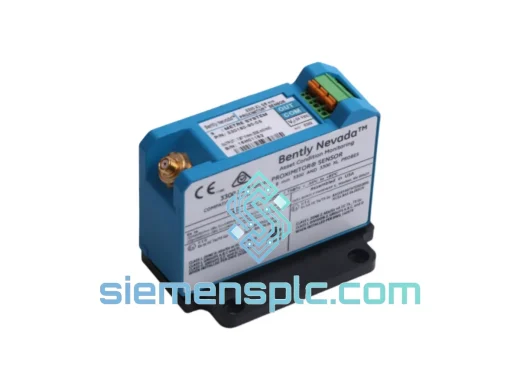
The 330103-00-13-10-12-05 is calibrated for use with the 3300 XL 8mm Proximitor (330180 series). Do not substitute a 5mm proximitor — the scale factor will be incorrect and your vibration readings will be off by a factor that will not be obvious from the monitor display alone. If you are replacing a probe in a mixed-vintage system, verify the proximitor label before ordering.
The 330103-00-13-10-12-05 is not a laboratory instrument. It was designed from the ground up for continuous operation in environments that destroy lesser sensors.
The stainless steel armored cable withstands mechanical abuse that would sever standard instrumentation cable — repeated flexing during maintenance access, contact with hot pipe insulation, and incidental impact from tools. The armor is not just cosmetic; it maintains the coaxial geometry of the internal conductors under compression and bending loads, preserving signal integrity where unarmored cable would fail within weeks.
Probe body materials are selected for chemical resistance to the fluids common in turbomachinery environments: lube oil, seal gas, process condensate, and cleaning solvents. The tip face withstands continuous oil mist exposure without degradation of the eddy current field geometry — a failure mode seen in cheaper alternatives that use non-homogeneous tip materials.
Thermal performance is genuine, not marketing copy. The −35 °C to +177 °C operating range covers everything from outdoor installations in northern climates to probe positions adjacent to high-temperature bearing housings on steam turbines. The scale factor drift across this range is within the API 670 tolerance band, meaning your alarm setpoints remain valid without temperature compensation.
Vibration immunity is inherent to the eddy current measurement principle — the probe has no moving parts, no resonant mechanical elements, and no wear surfaces. It will outlast the machine it monitors if installed correctly and protected from cable damage.
Our warehouse is located in Xiamen, Fujian Province, China — a major international freight hub with direct DHL Express and FedEx International Priority connections to over 220 countries and territories. This is not a drop-ship arrangement. Stock is physically on our shelves.
Standard dispatch timeline: Orders confirmed with payment before 15:00 CST ship same business day. Orders confirmed after 15:00 CST ship the following morning. We do not batch orders — each confirmed unit goes out individually to protect your timeline.
Transit times (typical, not guaranteed):
Every shipment includes a commercial invoice, packing list, and country-of-origin documentation. For customers requiring import clearance support, we provide HS code classification (HS 9031.80 for proximity transducers) and can prepare additional customs documentation on request. Duties and import taxes are the buyer’s responsibility; we will not under-declare shipment value.
Tracking numbers are issued within 2 hours of dispatch and sent directly to your registered email. For time-critical shipments, WhatsApp notification is available — contact us at the number below to activate this option.
Email: [email protected]
WhatsApp: +86 18359268345
Web: siemensplc.com
© 2026 siemensplc.com. All rights reserved.
We check the full part number, brand, series and visible nameplate information before quotation.
Sales confirms stock path, condition option, quantity and realistic lead time for export dispatch.
DHL, FedEx, UPS or buyer courier arrangements can be reviewed with packing requirements.
Similar brand or category products for fast comparison and multi-item RFQ lists.