Bently Nevada
RFQ Ready
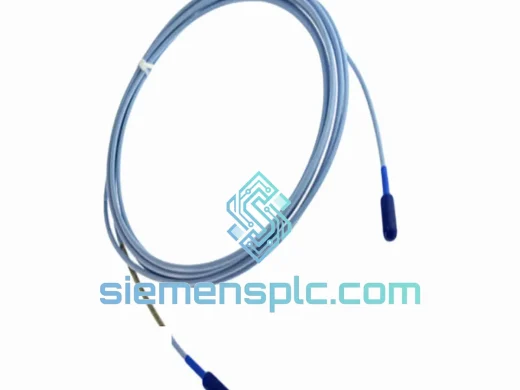
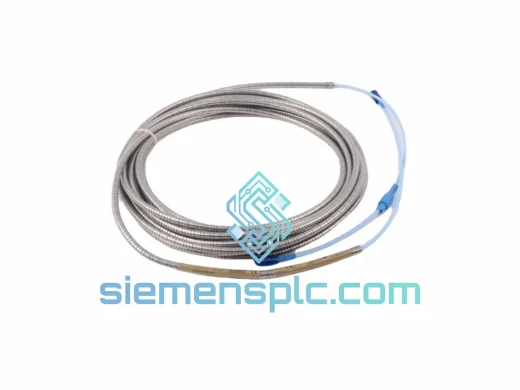
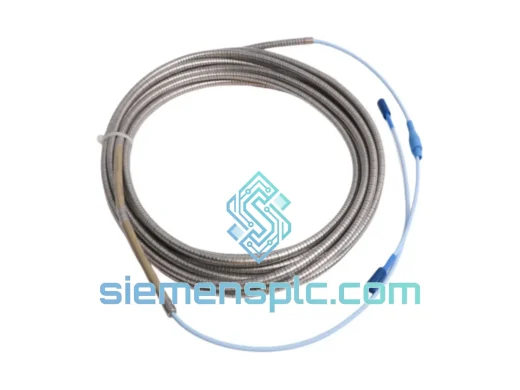
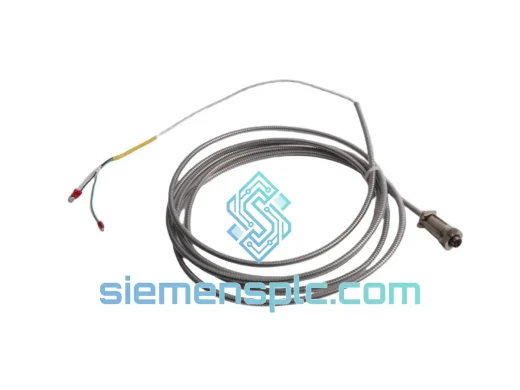
Bently Nevada 84661-12 Velomitor Interconnect Cable
3300 Series
Origin US
Vibration Monitoring Cable
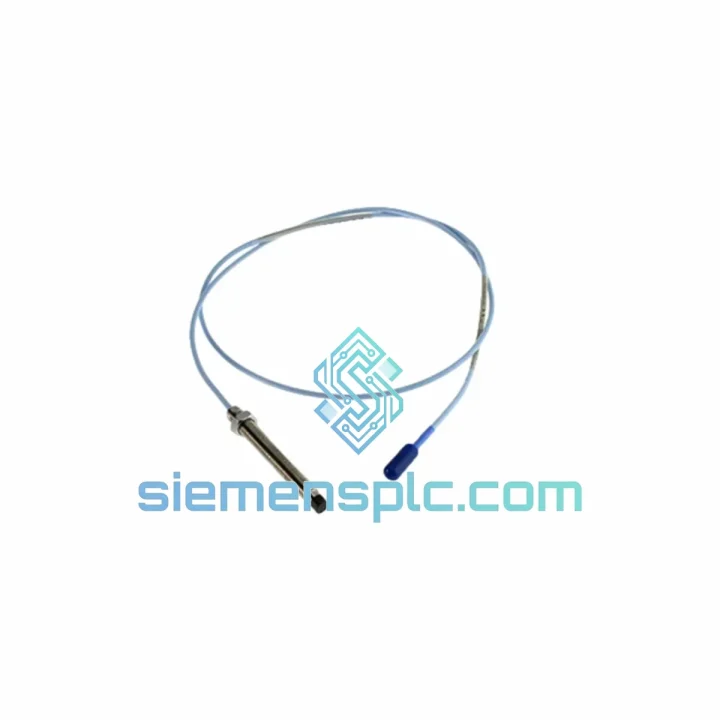
Request verified availability, condition, replacement risk review, packing options and courier lead time for 330130-045-12-00.
Click Request Quote and the part number is inserted into the inquiry form automatically.
Core fields for model confirmation and RFQ routing. Detailed product narrative remains below.
Every hour a turbine, compressor, or pump train sits idle because of a failed proximity transducer cable costs real money — production loss, penalty clauses, emergency labor. The Bently Nevada 330130-045-12-00 is a precision armored extension cable for the 3300 XL proximity transducer system, and we keep verified stock on the shelf specifically for situations like yours. No lead-time games, no broker markups, no waiting on OEM allocation queues. You call, we ship.
URGENT REQUIREMENT? Contact: [email protected] | WhatsApp: +86 18359268345
| Parameter | Specification | Status |
|---|---|---|
| Part Number | 330130-045-12-00 | ✅ Ready to Ship |
| Manufacturer | Bently Nevada (Baker Hughes) | OEM Original |
| Platform | 3300 XL Proximity Transducer System | — |
| Cable Function | Extension Cable (Probe ↔ Proximitor) | — |
| Total Assembly Length | 45 ft (13.72 m) — suffix -045 | — |
| Extension Cable Length | 12 ft (3.66 m) — suffix -12-00 | — |
| Connector Type | Bently Nevada coaxial, 3300 Series standard | — |
| Characteristic Impedance | 50 Ω nominal | — |
| System Sensitivity | 200 mV/mil (7.87 V/mm) — matched system | — |
| Operating Temperature | –40 °C to +85 °C | — |
| Jacket / Armor | Stainless steel armor, PTFE inner dielectric | — |
| Compliance | API 670 compatible | — |
| Country of Origin | USA | — |
| Weight | Approx. 210 g | — |
| Dispatch Location | Xiamen, China | ✅ Ready to Ship |
After ten years of field work on rotating machinery protection systems, here is what actually goes wrong with 3300 Series extension cables — and what to check before you condemn the cable or the proximitor.
Symptom: Proximitor output reads –24 VDC (full negative rail) or open-circuit voltage
This is the most common failure presentation. The proximitor is not seeing the probe’s RF oscillator signal. Before replacing the cable, disconnect the extension cable at both ends and measure DC resistance on the center conductor and shield separately. A good cable reads <2 Ω on the center conductor and <1 Ω on the shield. Any open circuit or resistance >10 Ω on the center conductor points to a broken inner conductor — typically at the connector crimp or at a flex point near a conduit entry. Replace the cable; do not attempt to re-terminate in the field unless you have the correct Bently Nevada coaxial tooling and a calibrated impedance reference.
Symptom: Intermittent vibration alarm with no corresponding process change
Armor fatigue is the culprit in 70% of these cases. The stainless steel armor work-hardens over years of vibration cycling and eventually cracks, allowing the inner conductor to flex against the shield and create intermittent shorts. Run a continuity check while flexing the cable along its length — any resistance spike confirms the fault location. Replace the full cable; splicing is not acceptable on a safety-critical measurement loop.
Symptom: System sensitivity drift — gap voltage no longer matches the calibration chart
The 3300 Series is a matched-impedance system. The probe, extension cable, and proximitor are calibrated together as a set. If you substitute a cable with a different length suffix (e.g., -060 instead of -045) or a non-OEM cable with incorrect capacitance, the system sensitivity shifts and your gap-to-voltage conversion is wrong. This will not trigger a cable fault alarm — it will silently corrupt your vibration and position readings. Always verify the -045 suffix matches your proximitor’s calibrated cable length before installation. If you are unsure, pull the proximitor’s calibration certificate or check the nameplate on the existing proximitor/driver module.
Replacement Procedure — Field Checklist:
Common Fault Codes on Bently Nevada 3500 Rack (if your system uses 3500 monitors with 3300 Series transducers):
The 330130-045-12-00 is not a commercial-grade cable. It is built to survive the environments where rotating machinery actually lives: steam turbine pedestals running at 150 °C ambient, offshore compressor decks with salt spray and constant vibration, refinery hot sections with hydrocarbon mist and thermal cycling. The stainless steel armor is not decorative — it is a mechanical shield against the abrasion, crush loads, and rodent damage that destroy standard instrumentation cables within months in these environments.
The PTFE inner dielectric maintains its electrical properties across the full operating temperature range without the capacitance drift that degrades measurement accuracy in PVC or polyethylene-insulated cables. In high-vibration installations, the armor’s flexibility is engineered to resist work-hardening fatigue over a service life measured in years, not months — provided the cable is routed correctly and not subjected to bend radii below the minimum specification.
Units in our inventory are stored in climate-controlled conditions, individually bagged, and inspected for connector integrity and armor continuity before dispatch. We do not ship cables that have been stored in uncontrolled environments or show any signs of connector corrosion or armor damage. If a unit does not pass our pre-shipment check, it does not leave the warehouse.
Our dispatch hub is in Xiamen, China — one of the most logistics-connected ports in Asia, with direct DHL and FedEx express lanes to every major industrial hub globally. Here is how a typical emergency order moves:
Every shipment includes a full commercial invoice, packing list, and certificate of origin for customs clearance. For regulated industries (nuclear, offshore, power generation), we can provide additional traceability documentation on request. We handle export classification and customs documentation in-house — no delays waiting on a freight forwarder to sort paperwork.
For bulk orders or planned maintenance kits, sea freight consolidation from Xiamen is available with competitive lead times. Contact us for a freight quote alongside your parts quote.
Email: [email protected]
WhatsApp: +86 18359268345
Web: siemensplc.com
© 2026 siemensplc.com. All rights reserved.
We check the full part number, brand, series and visible nameplate information before quotation.
Sales confirms stock path, condition option, quantity and realistic lead time for export dispatch.
DHL, FedEx, UPS or buyer courier arrangements can be reviewed with packing requirements.
Similar brand or category products for fast comparison and multi-item RFQ lists.