TRICONEX
RFQ Ready
TRICONEX 4351B Communication Module – Tricon TMR
Tricon
Origin US
Communication Module
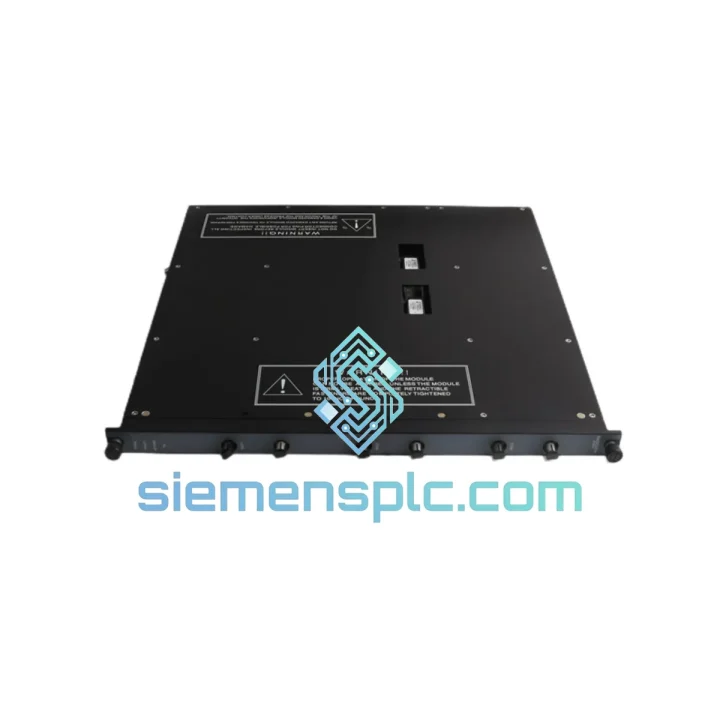
Request verified availability, condition, replacement risk review, packing options and courier lead time for 4329.
Click Request Quote and the part number is inserted into the inquiry form automatically.
Core fields for model confirmation and RFQ routing. Detailed product narrative remains below.
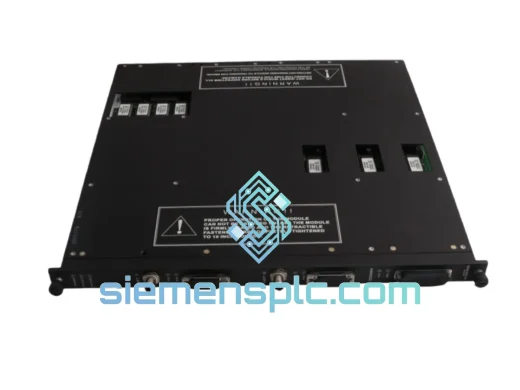
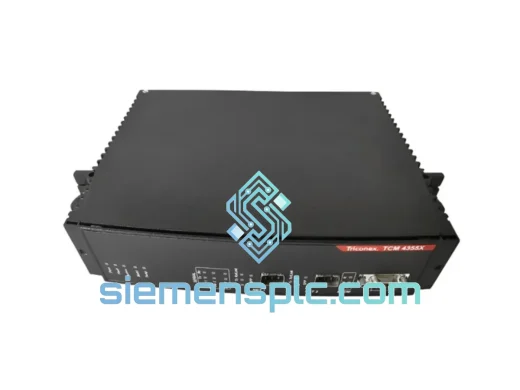
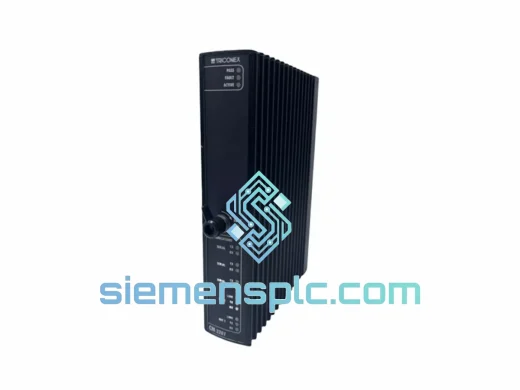
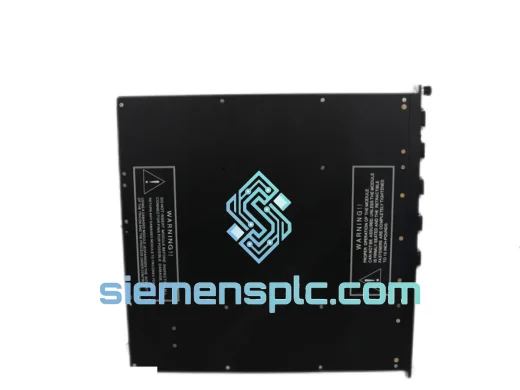
The TRICONEX 4329 is a dedicated peer-to-peer communication module engineered for deployment within the Tricon Triple Modular Redundant (TMR) Safety Instrumented System platform. Its primary function is to establish a high-speed, optically isolated, deterministic data link between two or more Tricon main chassis units operating as distributed safety controllers within a single SIS topology. In multi-controller configurations — common in large-scale refining, LNG, and power generation facilities — the 4329 carries cross-controller voting data, process variable synchronization packets, and diagnostic state information across a dedicated 5 Mbps proprietary peer network, entirely independent of the plant DCS or SCADA infrastructure.
Unlike general-purpose fieldbus communication cards, the 4329 is not a gateway device. It does not translate protocols or bridge to Modbus, PROFIBUS, or OPC-UA. Its sole function is controller-to-controller peer transport within the Tricon ecosystem, which is precisely what makes it indispensable in SIL 3 architectures where shared-medium communication introduces unacceptable latency variance. The module occupies a single slot in the Tricon Main Chassis and integrates directly with the backplane bus, presenting zero additional software configuration burden to the TriStation 1131 programming environment.
Real-time Stock & RFQ: [email protected] | WhatsApp: +86 18359268345
| Part Number | 4329 |
| Manufacturer | TRICONEX (Schneider Electric) |
| Module Category | Peer-to-Peer Communication Module |
| Compatible Platform | Tricon TMR Safety System v9 / v10 |
| Chassis Slot Type | Single-slot, Tricon Main Chassis |
| Peer Network Protocol | Proprietary Triconex Peer Protocol |
| Network Data Rate | 5 Mbps (dedicated point-to-point) |
| Port Configuration | Dual peer ports (primary + redundant path) |
| Signal Interface | RS-485 differential, transformer-coupled |
| Electrical Isolation | Optical isolation on all network ports |
| Backplane Supply Voltage | 5 VDC (chassis backplane) |
| Auxiliary Supply | 24 VDC (chassis-dependent) |
| Power Consumption | ≤ 8 W (typical) |
| Operating Temperature | 0°C to +60°C |
| Storage Temperature | −40°C to +85°C |
| Relative Humidity | 5% to 95% RH, non-condensing |
| Vibration Compliance | IEC 60068-2-6 |
| Shock Compliance | IEC 60068-2-27 |
| EMC Standard | EN 61000-4 series (CE marked) |
| Functional Safety Rating | IEC 61508 SIL 3 (system-level, Tricon platform) |
| Process Safety Standard | IEC 61511 compliant SIS application |
| Hazardous Area Approvals | FM, CSA, ATEX (zone per system config) |
| Form Factor | Single-slot card, ~233 × 25 × 280 mm |
| Weight | Approx. 300 g |
| Country of Origin | USA |
| Warranty | 12 months from shipment date |
The 4329’s internal architecture is built around a dedicated peer communication ASIC that manages the full duplex RS-485 differential signaling layer independently of the Tricon Main Processor (MP) modules. This separation of concerns is architecturally significant: the MP modules are not burdened with peer protocol stack execution, which preserves their deterministic scan cycle budget for safety logic execution. The peer ASIC handles framing, CRC error detection, and retransmission arbitration autonomously, delivering pre-validated data packets to the backplane for MP consumption.
Optical Isolation Architecture: Each peer port incorporates a discrete optocoupler stage rated for ≥2,500 V isolation between the field-side network cable and the backplane logic domain. This galvanic break is critical in multi-chassis installations where ground potential differences between physically separated control rooms or junction boxes can reach tens of volts under fault conditions. Without this isolation, a ground fault on the peer cable would propagate directly into the backplane, potentially corrupting all three TMR paths simultaneously — a single-point failure mode that would invalidate the SIL 3 architecture.
Transformer Coupling on RS-485 Lines: Beyond optical isolation, the RS-485 differential pairs are transformer-coupled at the port output stage. This provides common-mode noise rejection exceeding 40 dB across the 10 kHz–10 MHz band, which is the primary EMI emission range of variable frequency drives, switchgear, and high-current bus bars commonly co-located with SIS panels in process plant environments. The transformer coupling also eliminates DC bias accumulation on long cable runs, maintaining signal eye margin on peer links up to 1,200 m in length.
Dual-Port Redundancy Logic: The 4329 presents two independent peer ports. In a standard deployment, both ports connect to the corresponding 4329 in the remote chassis via separate physical cable paths — typically routed through different cable trays or conduits. The peer ASIC implements an active/standby arbitration scheme: the primary port carries live traffic while the standby port continuously monitors link quality. Switchover to the standby path occurs within one peer scan cycle (sub-millisecond) upon detection of primary path degradation, with no data loss to the MP modules. This path-level redundancy is independent of the TMR voting redundancy at the processor level, providing a two-layer fault tolerance structure for the communication link itself.
Backplane Bus Integration: The 4329 interfaces to the Tricon chassis backplane via a high-density edge connector that carries both the peer data payload and the module health status register. The MP modules poll the 4329 health register on every scan cycle; a module fault or peer link degradation is immediately reflected in the Tricon system diagnostic word, triggering an alarm in TriStation 1131 without requiring any user-defined diagnostic logic. This hardware-level self-reporting reduces the diagnostic coverage burden on the application programmer.
Every TRICONEX 4329 unit dispatched from our Xiamen, China facility undergoes a structured incoming inspection protocol before being offered for sale. Visual examination covers PCB surface condition, connector pin integrity, label authenticity, and housing completeness against reference unit photographs. Serial numbers are logged and cross-referenced where TAC database access permits. Functional verification is performed in a compatible Tricon chassis using TriStation 1131 diagnostic tools, confirming peer port communication, LED status behavior, and fault register response. Units that do not pass all inspection stages are quarantined and not offered for sale.
Storage conditions in our Xiamen warehouse maintain temperature between 15°C and 25°C with relative humidity below 60%, with continuous data logging. All modules are stored in anti-static ESD shielding bags with desiccant packs inside foam-lined secondary packaging. Pre-shipment repackaging uses double-wall corrugated outer cartons with ESD-sensitive and fragile labeling per IATA handling standards.
Shipping Options from Xiamen, China: DHL Express (2–4 business days to most destinations), FedEx International Priority, UPS Worldwide Expedited, air freight for bulk orders, and sea freight (LCL/FCL) for non-urgent large-volume procurement. In-stock units are dispatched within 1–3 business days of order confirmation. Full export documentation — commercial invoice, packing list, country-of-origin declaration, and HS code classification — is provided with every international shipment to facilitate customs clearance. The 12-month warranty covers manufacturing defects and confirmed authenticity issues from the shipment date.
Email: [email protected]
WhatsApp: +86 18359268345
Web: siemensplc.com
Location: Xiamen, China
© 2026 siemensplc.com. All rights reserved.
We check the full part number, brand, series and visible nameplate information before quotation.
Sales confirms stock path, condition option, quantity and realistic lead time for export dispatch.
DHL, FedEx, UPS or buyer courier arrangements can be reviewed with packing requirements.
Similar brand or category products for fast comparison and multi-item RFQ lists.