Honeywell
RFQ Ready
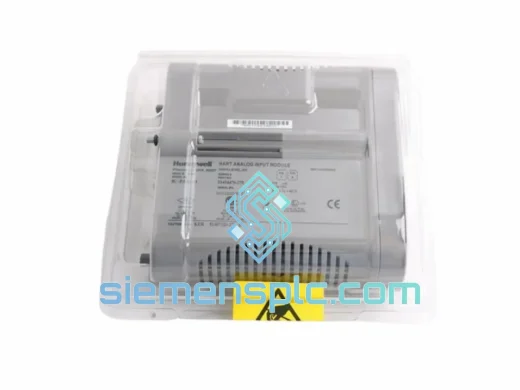
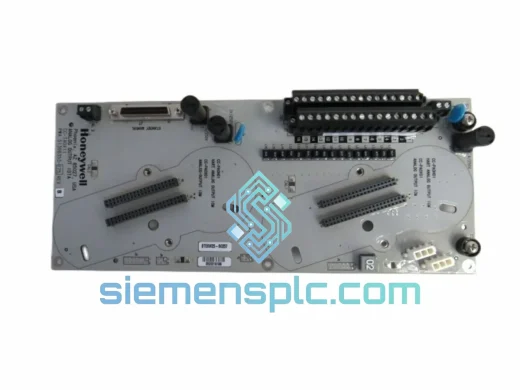
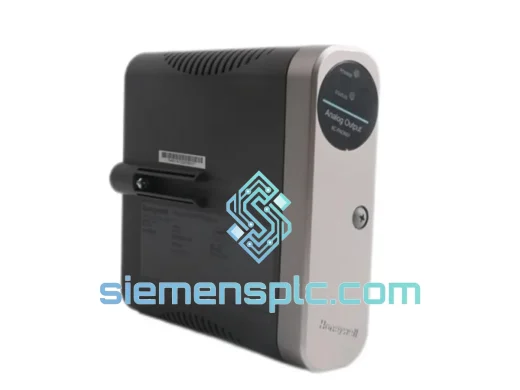
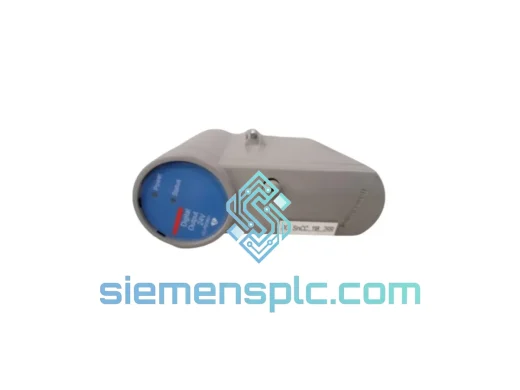
Honeywell CC-PDOB11 Digital Output Module – Experion PKS C300
Experion PKS
Origin US
Digital Output Module
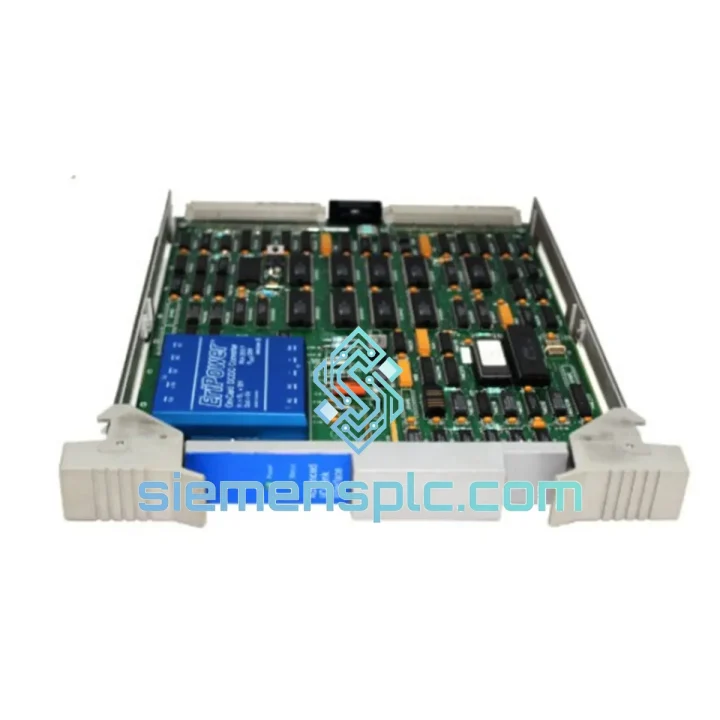
Request verified availability, condition, replacement risk review, packing options and courier lead time for 51303979-500.
Click Request Quote and the part number is inserted into the inquiry form automatically.
Core fields for model confirmation and RFQ routing. Detailed product narrative remains below.
The Honeywell 51303979-500 is a dedicated I/O Link Interface module engineered for integration within Honeywell’s TDC 3000 distributed control system architecture. Its primary function is to establish and maintain the deterministic communication path between field-mounted I/O subsystems and the High-Level Network (HLN) or Local Control Network (LCN), depending on system topology. Unlike generic fieldbus adapters, this module operates on Honeywell’s proprietary I/O Link protocol — a time-division multiplexed serial bus that enforces fixed scan cycle timing, a prerequisite for closed-loop process control in refinery, power generation, and chemical manufacturing environments.
The -500 revision suffix denotes a specific hardware generation within the 51303979 family. Each revision increment in Honeywell’s DCS module lineage typically corresponds to changes in ASIC mask revision, EEPROM firmware compatibility, or backplane connector tolerance. Procurement engineers must match the revision suffix to the system’s Bill of Materials to avoid firmware handshake failures during hot-swap replacement.
Real-time Stock & RFQ: [email protected] | WhatsApp: +86 18359268345
| Parameter | Specification |
|---|---|
| Part Number | 51303979-500 |
| Manufacturer | Honeywell Process Solutions |
| Module Classification | I/O Link Interface (ILI) |
| Target Platform | TDC 3000 / PlantScape / Experion PKS (R100–R400) |
| Communication Bus | Honeywell proprietary I/O Link (serial, time-division multiplexed) |
| Backplane Interface | Card cage edge connector, 96-pin DIN 41612 compatible |
| Operating Voltage | +5 VDC via backplane (±5% tolerance) |
| Power Consumption | ≤ 3.5 W (typical at full I/O scan load) |
| Operating Temperature | 0°C to +60°C ambient |
| Storage Temperature | -40°C to +85°C |
| Relative Humidity | 5% to 95% non-condensing |
| EMC Compliance | IEC 61000-4-2 (ESD), IEC 61000-4-4 (EFT), IEC 61000-4-5 (Surge) |
| Module Weight | 220 g |
| Form Factor | Single-slot card cage module |
| Isolation | Optical isolation on I/O Link bus interface |
| Diagnostic LED Indicators | Power OK, Link Active, Fault (3-LED array) |
| MTBF (estimated) | > 150,000 hours at 40°C ambient |
| Warranty | 12 months from date of shipment |
The 51303979-500 implements a dual-layer isolation architecture at its I/O Link bus interface. The primary isolation barrier uses high-speed optocouplers rated for ≥ 2,500 V RMS isolation voltage, which decouples the module’s internal logic ground from the field-side bus common. This is not a passive protection measure — it actively prevents ground loop currents, which in industrial environments with long cable runs between marshalling cabinets and field junction boxes can reach tens of milliamps and introduce measurable noise into the data stream.
The bus arbitration logic within the module operates on a fixed master-slave polling model. The ILI acts as the bus master, issuing time-slotted poll commands to each downstream I/O module address in a deterministic sequence. The maximum poll cycle time is bounded by the number of configured I/O addresses and the bus baud rate — a design constraint that makes scan time predictable and auditable, unlike Ethernet-based fieldbus variants where collision avoidance introduces jitter.
EMC hardening on the -500 revision includes transient voltage suppression (TVS) diodes on all bus lines, a common-mode choke at the cable entry point, and a shielded PCB layer stack that routes high-frequency switching signals away from the analog reference plane. These measures collectively reduce conducted emissions and improve immunity to the fast transients generated by variable-frequency drives and contactor switching — both common noise sources in the process plant environments where TDC 3000 systems are deployed.
The module’s watchdog timer circuit monitors internal firmware execution. If the main processor fails to reset the watchdog within the configured timeout window (typically 100–500 ms), the module asserts a hardware fault signal on the backplane, triggering a controller-level alarm and initiating a safe-state output hold. This fail-safe behavior is a hardware-enforced function, not dependent on software execution, which is a critical distinction for SIL-rated control loops.
Every 51303979-500 unit dispatched from our Xiamen, China facility undergoes a structured pre-shipment verification process. Visual inspection confirms PCB integrity, connector pin condition, and label authenticity against Honeywell’s known genuine part markings. Functional verification is performed using a dedicated card cage test fixture that replicates the TDC 3000 backplane electrical environment — power rails, bus signals, and watchdog timing — confirming that the module initializes correctly, passes its internal self-test sequence, and communicates on the I/O Link bus without error flags.
Genuine Honeywell modules are distinguished by specific PCB silkscreen markings, date codes, and component placement patterns that are consistent across production batches. Our sourcing team cross-references these physical characteristics against Honeywell’s published part identification guidelines before any unit enters inventory. We do not accept modules that fail authentication checks, regardless of the claimed source.
Packaging follows IEC 60068-2 transport protection standards. Each module is placed in a conductive anti-static bag, cushioned within a foam-lined inner carton, and sealed in a corrugated export carton rated for international air freight handling. Shipments are dispatched via DHL Express, FedEx International Priority, or UPS Worldwide Expedited, with full export documentation including commercial invoice, packing list, and certificate of origin. Typical transit time to Europe and North America is 3–5 business days from dispatch. Expedited same-day dispatch is available for orders confirmed before 14:00 CST.
A 12-month warranty covers all units against manufacturing defects and functional failure under normal operating conditions. Warranty claims are processed with a target replacement dispatch of 48 hours from fault confirmation, minimizing plant downtime exposure.
Email: [email protected]
WhatsApp: +86 18359268345
Web: siemensplc.com
Location: Xiamen, China
© 2026 siemensplc.com. All rights reserved.
We check the full part number, brand, series and visible nameplate information before quotation.
Sales confirms stock path, condition option, quantity and realistic lead time for export dispatch.
DHL, FedEx, UPS or buyer courier arrangements can be reviewed with packing requirements.
Similar brand or category products for fast comparison and multi-item RFQ lists.