Honeywell
RFQ Ready
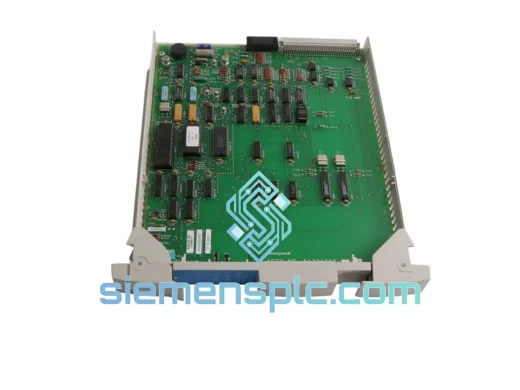
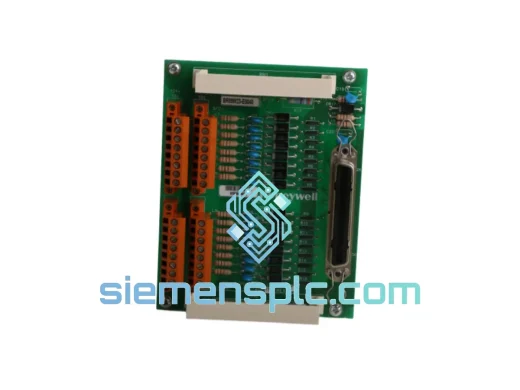
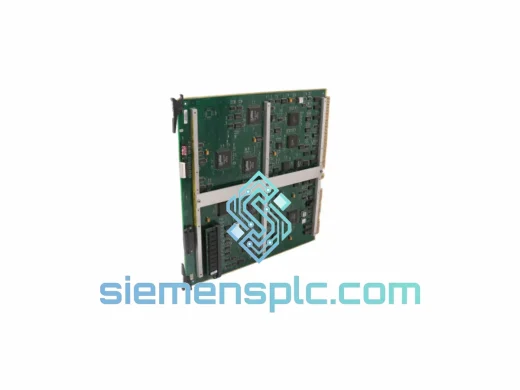
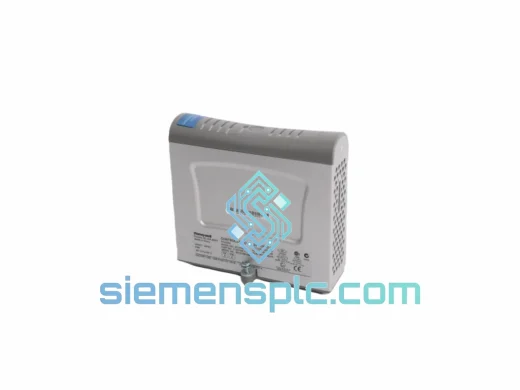
Honeywell SC-PCMX01 51307195-175 DCS Terminal Unit
Experion PKS
Origin US
DCS Terminal Unit
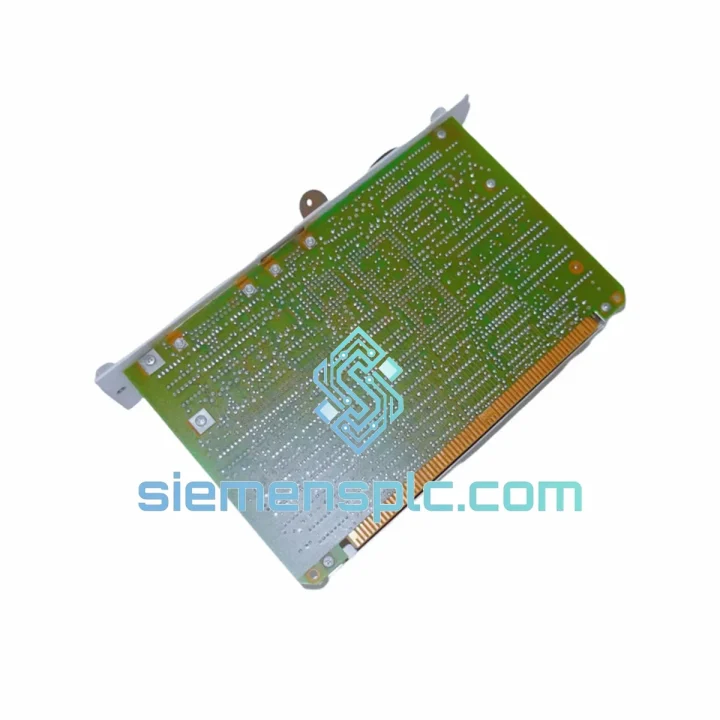
Request verified availability, condition, replacement risk review, packing options and courier lead time for 9010-012.
Click Request Quote and the part number is inserted into the inquiry form automatically.
Core fields for model confirmation and RFQ routing. Detailed product narrative remains below.
The Honeywell 9010-012 is a logic processor controller belonging to the Honeywell 9010 Series, a platform engineered for deterministic process control in continuous and batch manufacturing environments. Within a distributed control system (DCS) or hybrid PLC architecture, the 9010-012 occupies the role of the primary execution engine — it interprets ladder logic or function block programs, manages I/O scan cycles, and arbitrates communication between field devices and the supervisory layer.
Unlike general-purpose computing modules, the 9010-012 is designed around a fixed-cycle execution model. Its processor does not share computational resources with background tasks during the control scan; instead, the scan cycle is isolated at the firmware level, ensuring that analog PID loops and discrete interlock logic execute within a bounded, repeatable time window. This architecture is a prerequisite for applications where process deviation beyond a defined tolerance — such as reactor temperature excursion or pressure relief sequencing — carries safety or regulatory consequences.
The module interfaces with the 9010 Series backplane via a proprietary parallel bus. This bus carries both power and data, allowing the processor to address I/O modules without external wiring between slots. The backplane arbitration logic assigns slot priority during simultaneous I/O requests, preventing bus contention that would otherwise introduce jitter into the scan cycle. Engineers integrating the 9010-012 into existing 9010 Series racks benefit from this slot-transparent addressing: the processor enumerates connected modules at startup and builds an internal I/O map without manual address assignment in most configurations.
The 9010-012 supports both local and remote I/O expansion. Local I/O resides on the same rack and communicates over the backplane bus at full bandwidth. Remote I/O drops connect via a serial or fieldbus link, with the processor managing polling intervals independently of the local scan. This separation allows engineers to assign time-critical loops to local I/O while offloading status monitoring and non-critical actuator commands to remote drops, optimizing overall system determinism without requiring additional hardware.
Program memory in the 9010-012 is battery-backed SRAM, retaining the application program and data table values through power interruptions. The battery circuit includes a low-voltage detection flag that the processor exposes as a diagnostic bit in the data table, allowing the SCADA or HMI layer to generate a maintenance alert before memory integrity is at risk. This design avoids the cold-start data loss that occurs in systems relying solely on capacitor-backed retention.
The module’s communication port supports peer-to-peer messaging with other 9010 Series processors on the same network segment, enabling producer-consumer data exchange without host intervention. This is particularly relevant in multi-unit processes where one controller must act on a setpoint or permissive generated by an adjacent unit — the 9010-012 can receive that data asynchronously and incorporate it into the next scan cycle without polling overhead.
From a maintenance perspective, the 9010-012 provides front-panel LED indicators for processor run state, I/O fault status, and communication activity. These indicators allow field technicians to perform a first-pass diagnostic without connecting a programming terminal, reducing mean time to diagnose (MTTD) during unplanned shutdowns. The module is designed for hot-swap in systems where the rack power supply supports it, though program re-download is required after replacement unless a memory backup unit is installed.
Real-time Stock & RFQ: [email protected] | WhatsApp: +86 18359268345
| Part Number | 9010-012 |
| Manufacturer | Honeywell |
| Series | Honeywell 9010 Series |
| Module Classification | Logic Processor Controller |
| Execution Model | Fixed-cycle deterministic scan |
| Program Memory Type | Battery-backed SRAM |
| Backplane Interface | Proprietary parallel bus, slot-transparent I/O addressing |
| I/O Expansion | Local (backplane) + Remote (serial/fieldbus drop) |
| Communication | Peer-to-peer producer-consumer messaging |
| Diagnostic Indicators | Front-panel LEDs: Run, I/O Fault, Comm Activity |
| Battery Low Detection | Exposed as diagnostic bit in data table |
| Operating Environment | Industrial process control, DCS/PLC hybrid architectures |
| Typical Applications | Oil & Gas, Chemical, Power Generation, Pharmaceutical, Water Treatment |
| Country of Origin | USA |
| Weight | 1,070 g |
| Condition Available | New / Surplus / Refurbished (specify on inquiry) |
| Warranty | 12 months (new units) |
The 9010-012 processor module is built around a hardware architecture that prioritizes signal integrity and electromagnetic compatibility (EMC) in electrically noisy industrial environments. Several design decisions at the board level contribute to its field reliability:
Optical Isolation on I/O Interfaces: Digital I/O channels interfacing with field devices pass through optocoupler stages that galvanically isolate the processor’s logic circuitry from field-side voltage transients. This isolation barrier — typically rated to withstand common-mode voltages in the range of several hundred volts — prevents ground loop currents and inductive kickback from relay coils or solenoid valves from propagating into the processor bus. The result is a measurable reduction in spurious interrupt events during field switching operations.
EMC Shielding and Filtering: The module’s PCB layout employs ground plane segmentation to separate analog signal return paths from digital switching return paths. Decoupling capacitors are placed at the power entry points of each functional block, suppressing high-frequency noise generated by the processor clock and backplane bus drivers. The module housing provides additional shielding, and the backplane connector includes filtered pins on power rails to attenuate conducted emissions from adjacent modules.
Watchdog Timer Architecture: An independent hardware watchdog timer monitors the processor’s scan cycle completion. If the scan does not complete within the configured timeout window — due to a software fault, memory error, or bus hang — the watchdog asserts a fault output and forces the processor into a safe state. This mechanism operates independently of the application firmware, meaning it cannot be disabled by a software bug in the user program. The watchdog timeout is configurable within the programming environment, allowing engineers to tune it to the application’s worst-case scan time with an appropriate margin.
Redundancy Arbitration Logic: In redundant processor configurations, the 9010-012 participates in a primary/backup arbitration scheme managed by dedicated hardware logic on the module. The arbitration circuit monitors heartbeat signals exchanged between the primary and backup processors over a dedicated synchronization link. If the primary processor fails to assert its heartbeat within the defined interval, the backup module assumes control within a switchover time that is deterministic and documented in the hardware specification. This switchover does not require host intervention and is transparent to the I/O modules on the backplane.
Every Honeywell 9010-012 unit supplied by siemensplc.com is sourced through verified supply chain channels — authorized distributors, documented OEM surplus, and traceable secondary market sources. Each unit undergoes visual inspection for physical integrity, connector condition, and label authenticity before dispatch. Functional verification is performed where test fixtures are available, and test reports are provided on request.
Anti-counterfeit traceability is maintained through supply chain documentation retained for each unit. Certificate of conformance is available for new units. Refurbished units carry a 90-day warranty and include test documentation. New and surplus units carry a 12-month warranty covering manufacturing defects and functional failure under normal operating conditions.
Logistics operations are based in Xiamen, China — a major export hub with direct access to international freight carriers including DHL, FedEx, UPS, and TNT. Standard export documentation (commercial invoice, packing list, certificate of origin) is prepared for all international shipments. Customs HS code classification is provided to facilitate smooth clearance. Expedited shipping options are available for urgent requirements, with typical transit times of 3–7 business days to major industrial regions in Southeast Asia, the Middle East, Europe, and the Americas. Bulk orders and long-term supply agreements are accommodated with dedicated account management.
Email: [email protected]
WhatsApp: +86 18359268345
Web: siemensplc.com
Location: Xiamen, China
© 2026 siemensplc.com. All rights reserved.
We check the full part number, brand, series and visible nameplate information before quotation.
Sales confirms stock path, condition option, quantity and realistic lead time for export dispatch.
DHL, FedEx, UPS or buyer courier arrangements can be reviewed with packing requirements.
Similar brand or category products for fast comparison and multi-item RFQ lists.